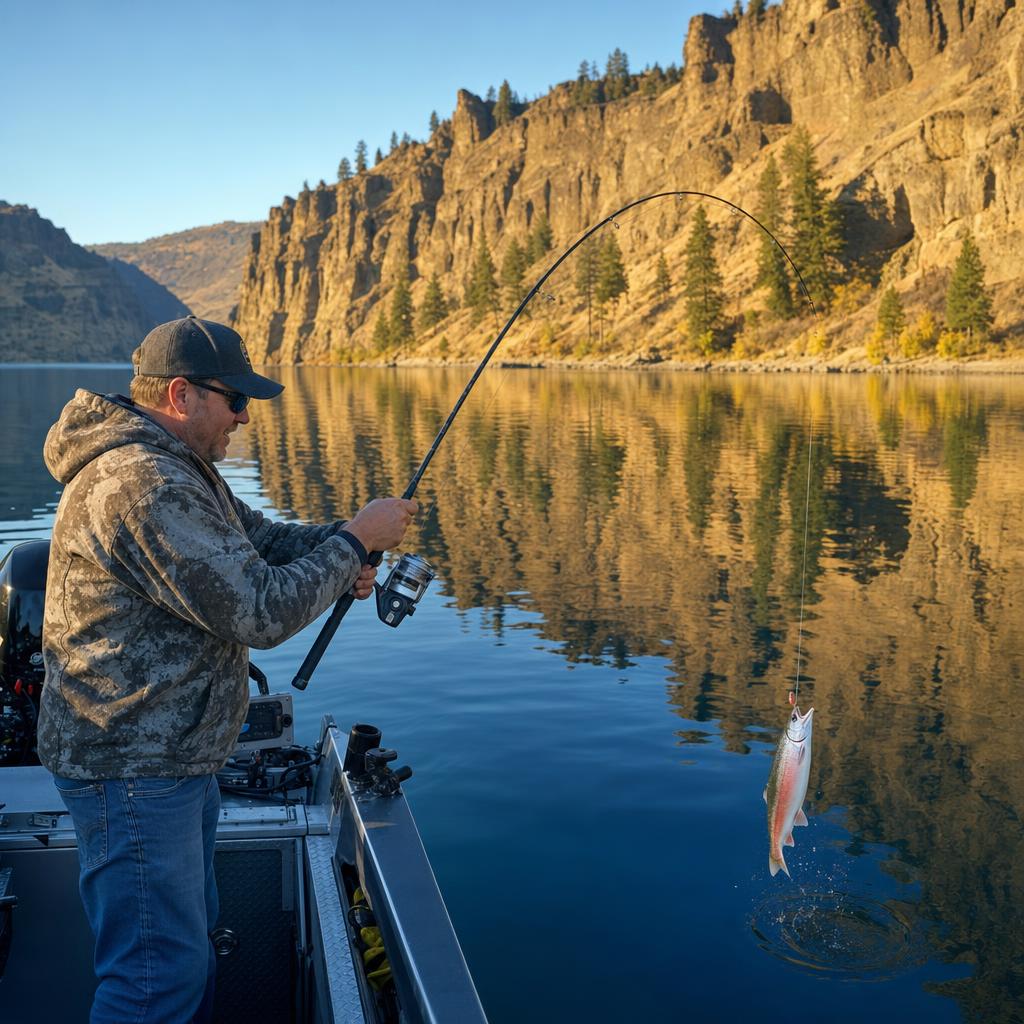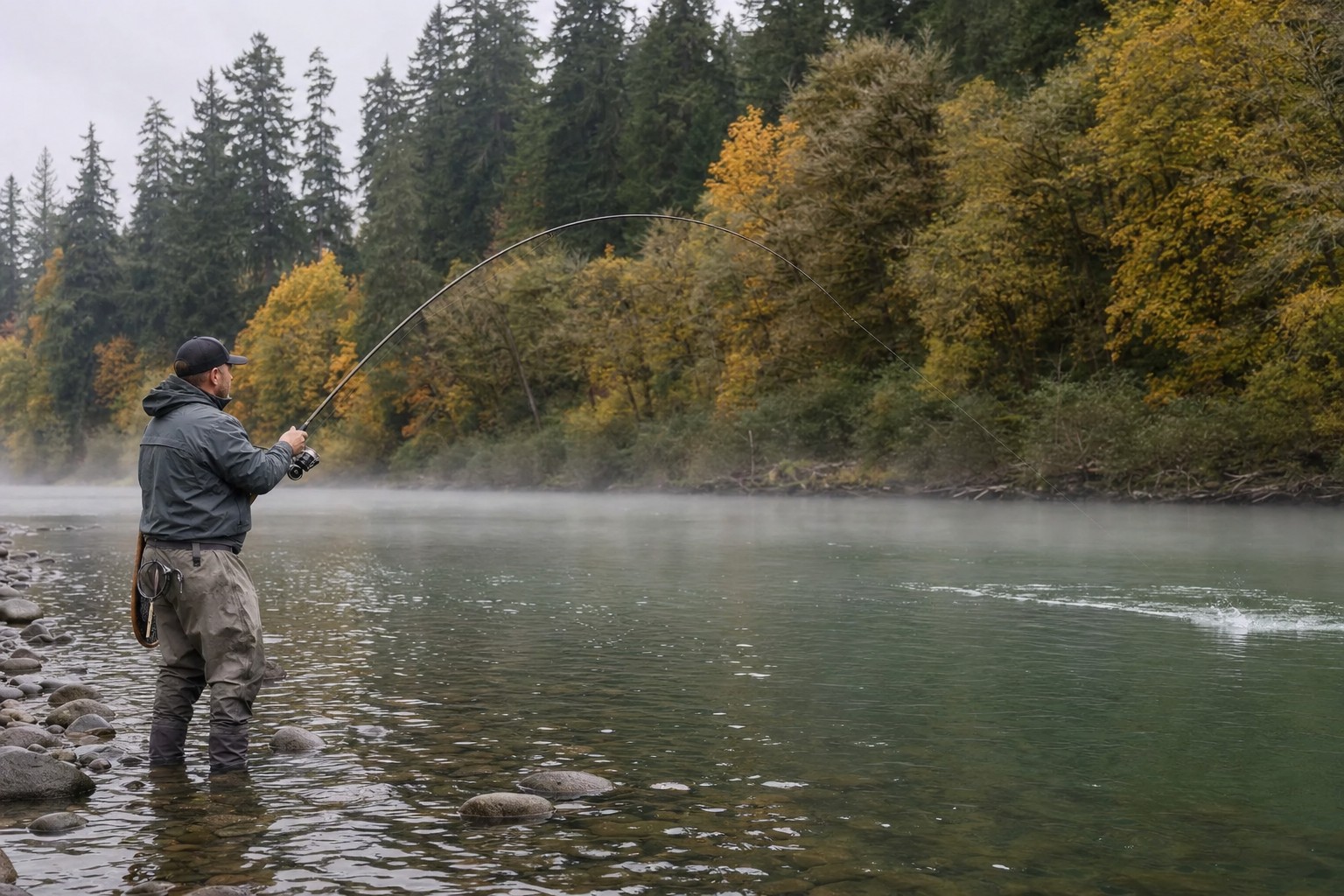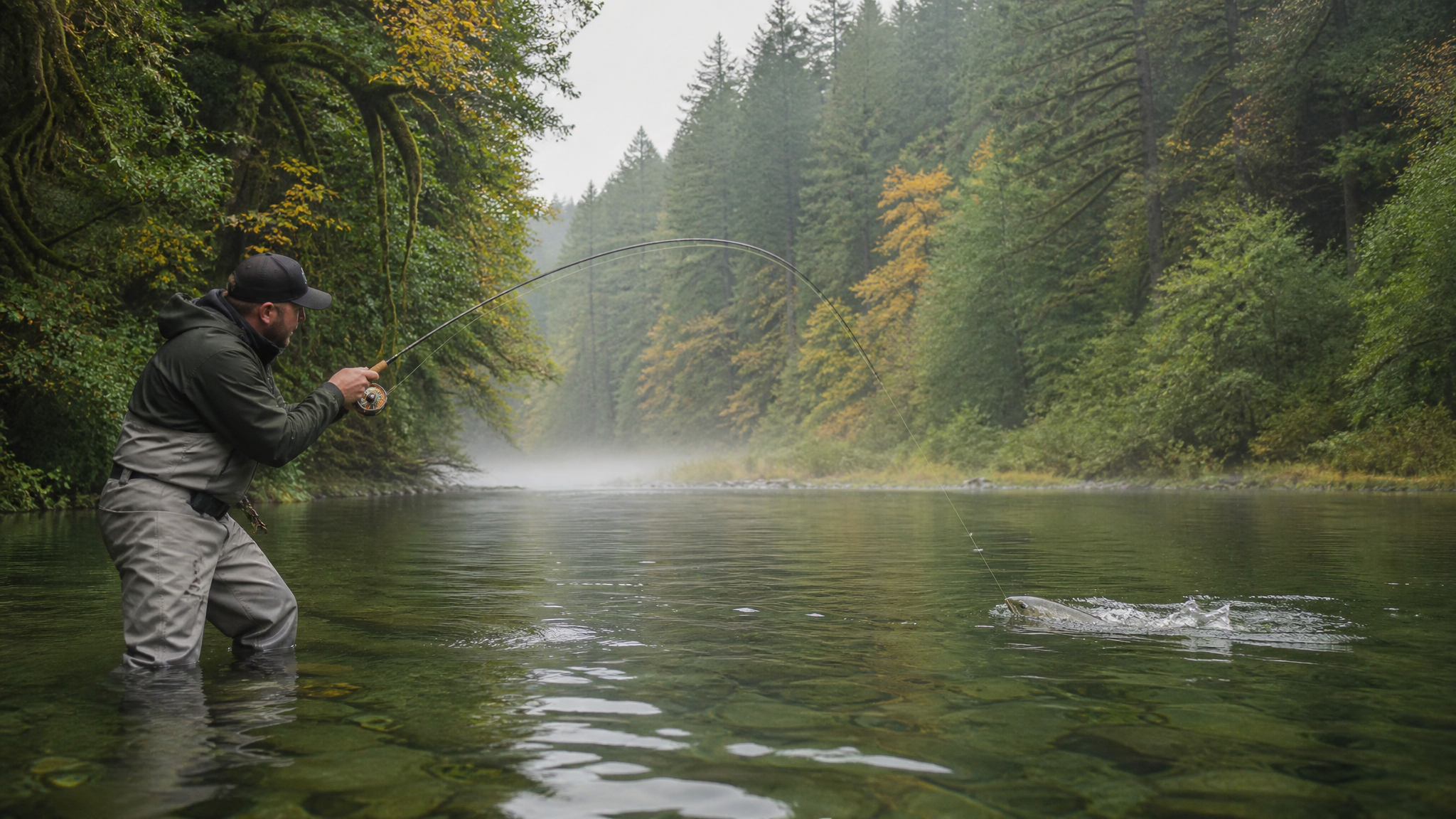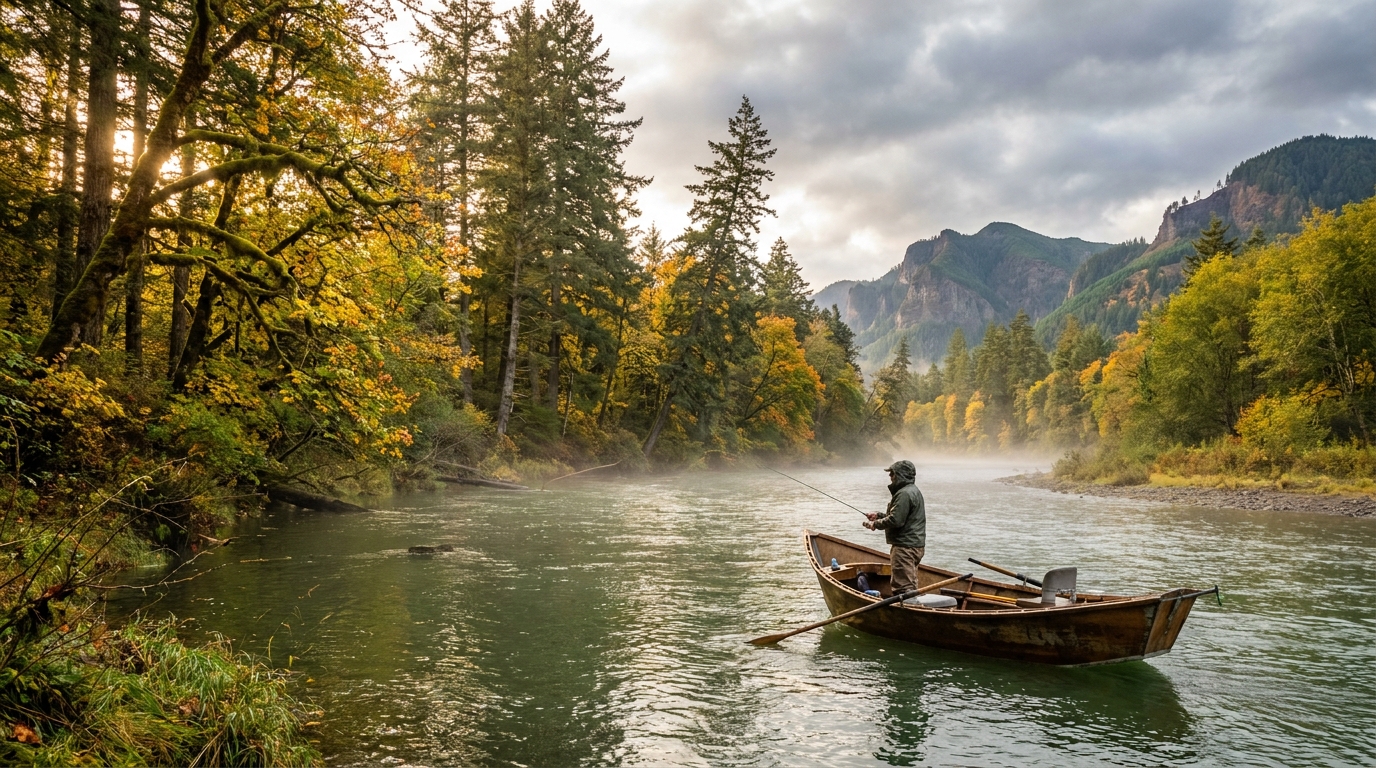
July is the time to start thinking about fall chinook. By the time the Alsea River turns green and the first rains push into the Coast Range, the anglers who did their homework in summer are the ones backing down the boat ramp with confidence. This is your preview — timing, access, tactics, and gear — so you're not figuring it out on the water in September.
The Alsea Chinook Run: What to Expect in 2026
The Alsea River drains roughly 770 square miles of the Oregon Coast Range before emptying into Alsea Bay near Waldport. It's a mid-sized coastal system — smaller than the Tillamook, bigger than the Siletz — and it receives both fall chinook (king) salmon and coho. For most anglers, it's the fall chinook that draws the crowd. ODFW preseason forecasts put the 2026 Alsea fall chinook run in the moderate category, with returning adults expected from late August through November, peaking in September and October depending on rainfall and ocean temperature.
Watch the ODFW weekly run updates beginning in mid-August. The first fish show in the bay and tidewater well before the river opens to retention. Early ocean entries often hold in the estuary — Alsea Bay, Waldport Boat Basin, and the tidal reaches below Waldport — where anglers in the know intercept them before they push upriver.
Key Access Points and Stretches
Alsea Bay and Tidewater (Miles 0–5)
The bay itself is open for chinook retention under tidal regulations — check current ODFW emergency rules, which can change season to season. Boat launches at the Waldport Marina and along the bay give access to the estuary. Trolling spinners and kwikfish rigs through the tide rips produces fish, especially on incoming tides when fresh salmon push in from the ocean.
Highway 34 Corridor (Miles 5–30)
This is the heart of the Alsea fishery. The highway follows the river from Waldport to Alsea, providing bank access at numerous pullouts and ODFW-managed public fishing areas. The stretch from Tidewater to the confluence of the North Fork is the most heavily fished and often the most productive. Look for drift boats launching at the Tidewater Boat Ramp and floating to Alsea or Harlan. Key holding water includes the gravel bars and deep bends below Harlan, the confluence pool at the North Fork, and the deeper runs near Alsea township.
Upper Alsea (Above Alsea Township)
The upper river above Alsea township holds fewer chinook but sees less pressure. The fish that reach this stretch by October are often chrome-bright early arrivals. Bank access requires more hiking along logging roads and private land — get permission or stick to ODFW access sites.
Proven Tactics for Alsea Fall Chinook
Drift Fishing with Roe
Nothing consistently outperforms cured roe on the Alsea. Prepare your roe cures in July and August — a borax-based cure tightened with BorX O Fire or Atlas Mike's Bite produces a firm, scent-releasing skeins that holds together through the current. Fish roe under a bobber in deeper pools on a 10–14 lb leader with a size 2 or 4 octopus hook. Weight with enough pencil lead to tick the bottom — two ticks per cast is the target drift speed.
Spinners and Spoons from the Bank
Bank anglers who can't or won't run bait have good results with large spinners — Blue Fox #5 and #6 in chartreuse, silver blade combinations — and heavy spoons like the Pixee and Krocodile in 3/4 to 1 oz sizes. Cast quartering upstream and retrieve through the current at mid-depth. Hit the seams between fast and slow water, and work the tailouts — fish lay in the gravel at tailouts during low-light hours.
Plug Fishing from a Drift Boat
Back-bouncing or hot-shotting plugs from a drifting boat is extremely effective when the river is running 2–3 feet of visibility. Kwikfish K14–K16 in clown, green pirate, and flame patterns with sardine wraps are the Alsea standard. Control your boat speed to keep plugs working in front of known holding lies — deep buckets at the bottom of rapids, seam lines along gravel shelves.
Gear Setup
- Rod: 9'6"–10'6" medium-heavy salmon rod rated 15–30 lb, fast to moderate-fast action
- Reel: Level-wind baitcaster or centerpin for float fishing; 300–400 yards of backing
- Main line: 30 lb monofilament or 65 lb braid to a 15–20 lb fluorocarbon leader
- Terminal: Size 2–4 Gamakatsu or Owner octopus hooks for bait, 2/0–3/0 for spinners
- Weights: Pre-tied slinky drift rigs or assorted pencil lead from 1–3 oz
Regulations Check Before You Go
The Alsea is subject to annual regulation changes, in-season emergency closures, and coho retention restrictions that vary by forecast. Before any trip, pull up the current ODFW Sport Fishing Regulations at myodfw.com and check the in-season emergency rule updates for the North Coast Zone. Key points to verify: current open dates for the main stem, any selective harvest gear rules, daily bag limit, size minimums, and whether coho retention is open. Clipped or unclipped adipose fin status determines whether coho may be kept — hatchery fish have a clipped fin, wild fish do not.
The July Scouting Advantage
Drive the river now, before the crowds show up. Look for bank access points, note where gravel bars have shifted after spring runoff, and scout the depth and character of your target runs. Talk to the locals at the Tidewater Market or the Waldport tackle shops — they'll tell you how the summer steelhead fishing has been, and that's a reliable indicator of what the river is doing structurally. Book your camping at Alsea Falls or Carl Washburne State Park early. By Labor Day weekend, everything fills up.
Do the work now. September will take care of itself.