Of all the Western archery hunts, few test a bowhunter like archery pronghorn. The country is open. The animals see everything. You can watch a buck feeding at 400 yards and spend three hours trying to close to 40 — and still blow it. Oregon's Hart Mountain Unit offers one of the most challenging and rewarding archery pronghorn experiences in the Pacific Northwest, and the draw odds have been slowly improving. If you're sitting on a tag, or putting in for the first time, here's what you need to know.
The Hart Mountain Landscape
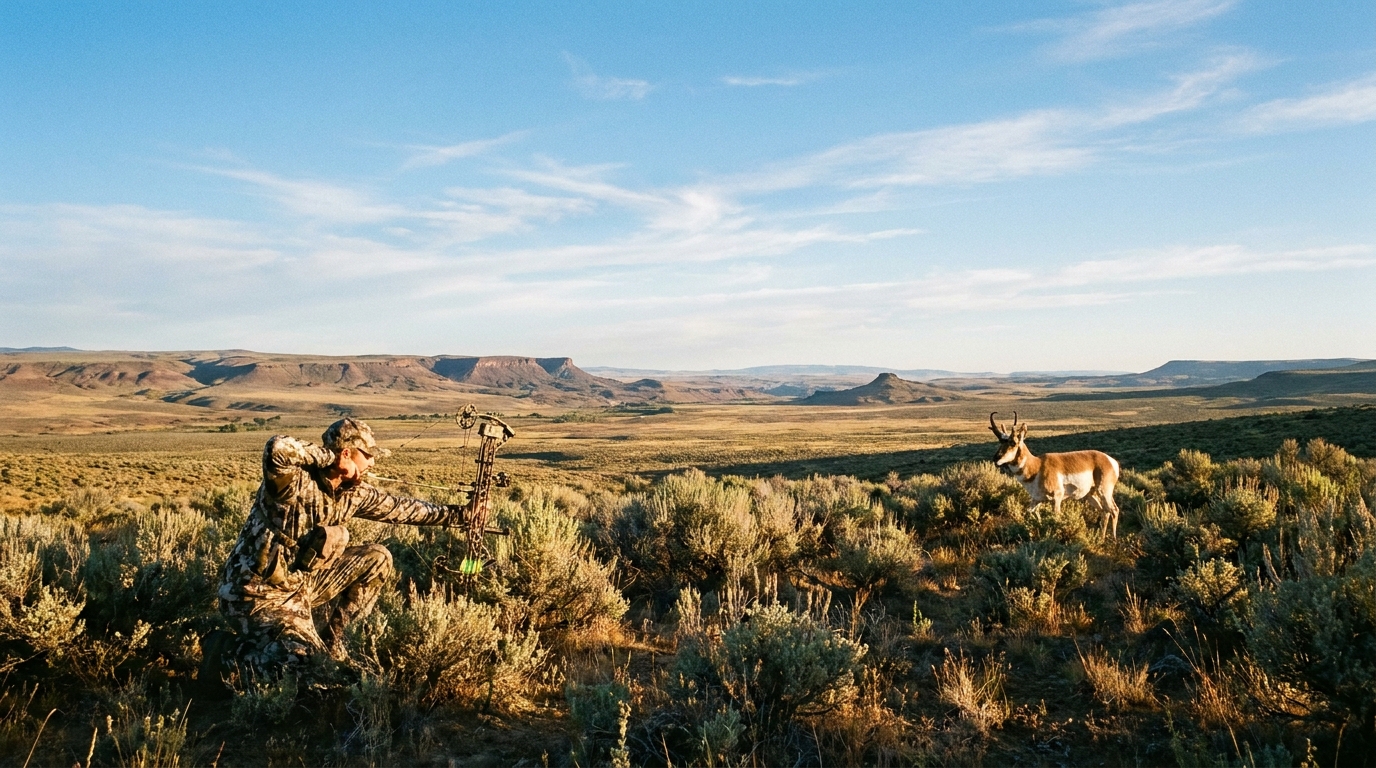
Hart Mountain National Antelope Refuge and the surrounding BLM high desert in Lake County sit at elevations between 5,000 and 8,000 feet. The north escarpment drops off dramatically toward Warner Valley, creating dramatic terrain changes that influence pronghorn movement. The majority of the archery hunting happens on the open sage flats, bunch grass benches, and alkali basins that stretch for miles east and south of the refuge boundary. Pronghorn thrive here — it's exactly the open country they evolved for.
Summer temperatures can exceed 95°F in the valleys, dropping to the 40s at night on the upper plateau. Early season archery in August means hunting in heat. Bring more water than you think you need, and expect to do most of your moving in the first and last two hours of light.
Tag Drawing and Season Dates
Oregon pronghorn tags are drawn through the ODFW controlled hunt system. The Hart Mountain Unit (Unit 55) typically offers separate rifle, muzzleloader, and archery tags. Archery seasons generally open in mid-August and run through early September, before rifle season. Draw odds for archery tags are better than rifle in most years — check the current ODFW draw statistics at myodfw.com before applying.
Bonus points matter on this draw. Apply consistently, because the premium units in southeast Oregon can take 3–8+ years to draw depending on the year and tag type. If you've drawn, you know what you spent to get here — don't cut corners on preparation.
Scouting Hart Mountain Before the Season
Pronghorn are visible from a long way off. A quality 10x42 binocular and a 65–80mm spotting scope are non-negotiable. Drive the main roads on the refuge and the BLM two-tracks south and east of the refuge boundary in July and early August. You'll find bucks in bachelor groups, often bedded on elevated benches where they can see in every direction. Note water sources — natural springs and developed stock tanks hold pronghorn reliably in August's heat. Map the locations with OnX Hunt (Oregon layer). These water sources become the anchor points for your approach strategy.
The best tactic for archery pronghorn is water hole hunting. A properly positioned ground blind at an active water source can close the gap on an otherwise impossible target. Set blinds early — 7–10 days before the season if possible — and let the pronghorn habituate to them before you climb in. Pronghorn are extraordinarily spooky about anything new in their environment, but they acclimate faster than most hunters expect once they determine something isn't a threat.
Ground Blind Setup for Water Holes
- Position blind 20–35 yards from the tank's edge, on the downwind side. Pronghorn nearly always approach water from upwind, so place yourself where you'll get a clean, close shot without being winded.
- Brush in the blind with native sage and grass. Don't use brush you've cut and hauled in — use what's growing around it. Cut, then reposition adjacent plants.
- Use a quality scent-elimination protocol. Spray down with Scent Killer before every sit. Pronghorn have exceptional noses and will flare wildly if they catch even faint human odor.
- Bring a camp chair or low stool. You may spend 4–6 hours in the blind without movement. Be comfortable enough to stay still.
- Shoot your bow from a seated position before the season. Most bowhunters practice from a standing position and discover too late they can't anchor consistently from a chair.
Spot-and-Stalk: When Blinds Don't Work
If pronghorn are avoiding your water hole or using a different source, you'll need to stalk. This is where archery pronghorn gets humbling. The ground offers almost no cover — sagebrush tops out at two feet in most areas. Use every fold in the terrain you can find. Washes, dry creek beds, and slight rises in the ground can screen you for surprisingly long approaches if you commit to crawling the last 100 yards.
Move only when the buck's head is down feeding or when he looks away. Freeze immediately the moment he lifts his head. A pronghorn's reaction to movement is instantaneous — the moment you're seen, the hunt is over. Patience measured in minutes, not seconds, is what separates successful stalk hunters from those who return to camp empty-handed.
Shot Placement and Arrow Selection
Pronghorn are not large animals. A mature Oregon buck will weigh 90–110 pounds. They're built lean and low to the ground, with a surprisingly small vital zone for their visual profile. Aim for the classic heart/lung zone — just behind the shoulder, at the centerline of the body. Slightly high and slightly back is better than slightly forward or low on a broadside shot.
Arrow selection matters more than many bowhunters acknowledge. A mid-weight build around 8–9 grains per inch of arrow with a two-blade fixed-head broadhead produces the pass-throughs you need for a clean blood trail in open country. Mechanical broadheads that perform brilliantly on whitetail in the timber can fail on an angled shot on pronghorn when you need total penetration. Test your broadheads on simulated hide and rib before the season.
Camp and Logistics
Hart Mountain has a primitive campground at the refuge headquarters with vault toilets and no hookups. Cell service is essentially nonexistent on the refuge. Download your OnX maps offline before leaving pavement. Fuel up in Lakeview — there's nothing at Hart Mountain. Bring enough water to be self-sufficient; the springs on the refuge are not treated and carry a risk of Giardia unless filtered.
Pack your cooler with serious ice capacity. August temperatures will spoil meat fast if you're not careful. Quartering and hanging in the shade, then icing immediately, is the field protocol. Pronghorn cool faster than elk, but in 90-degree heat you have no margin for delay after the shot.
This hunt will test you. The country is unforgiving, the animals are nearly impossible to fool, and success is far from guaranteed. That's exactly why a pronghorn taken on the archery season at Hart Mountain is something you'll tell stories about for the rest of your hunting life.