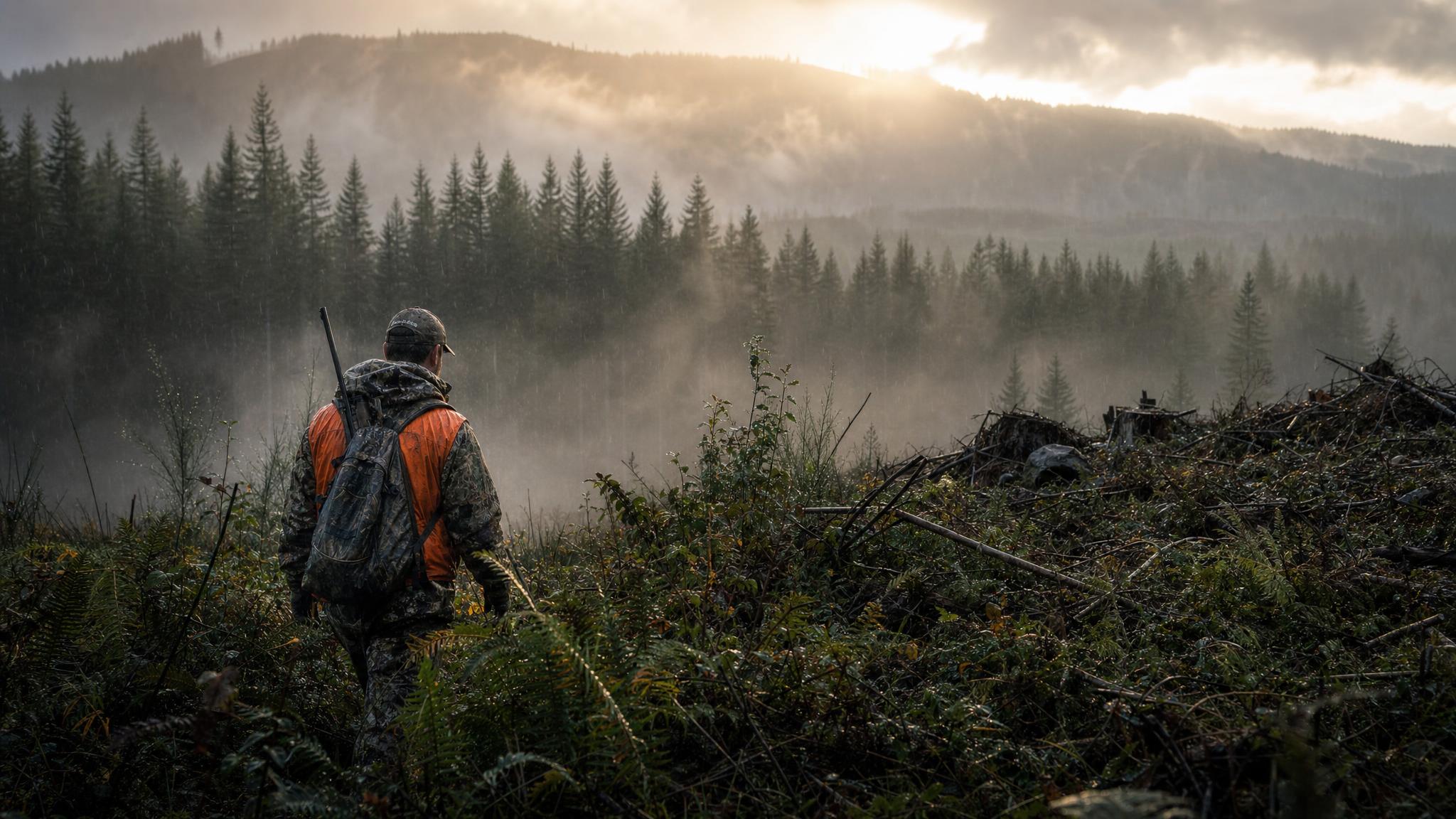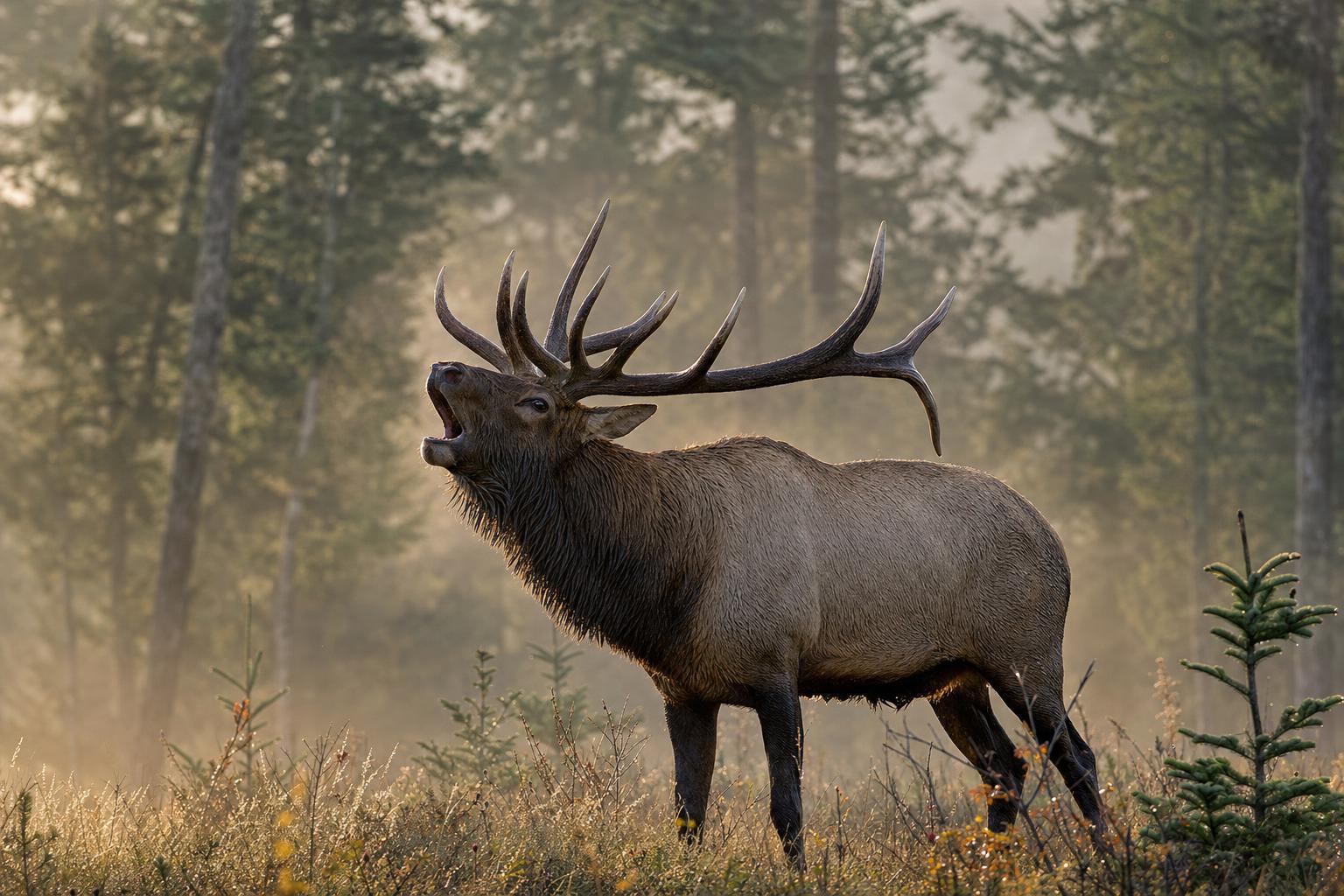
Oregon's general archery elk season opens the last Saturday of August. That puts us about seven weeks out as of early July—close enough that the decisions you make right now will directly determine your success come opening morning. Bulls are still in velvet, summer patterns are locked in, and the high country is as accessible as it gets all year. If you're not glassing elk right now, someone else is glassing yours.
Here's how to spend the next seven weeks, from unit confirmation to first light on opening day.
Confirm Your Unit and Study the Regs
Oregon's general archery elk tag is valid statewide, but that doesn't mean everywhere is equal. Start by confirming which hunt unit or units you're targeting and pulling the current ODFW season summary for that zone. Pay attention to:
- Whether the unit has general season or controlled antlerless tags active
- Any late-season closure areas that might funnel animals in early season
- Wilderness boundaries and motor vehicle use restrictions on adjacent National Forest ground
- Any burn areas from recent fire seasons that change elk distribution
Units worth targeting for public land archery elk in 2026 include the Chesnimnus, Starkey, Murderers Creek, and Wenaha units in northeast Oregon, and the North Cascades, McKenzie, and Santiam units in the west. The key is matching available habitat to your physical ability to access it. Miles on a topo map lie—elevation change tells the truth.
July Glassing: Summer Patterns and Velvet Bulls
July elk are creatures of routine. Bulls in velvet need security cover, mineral-rich forage, and water, and they'll use the same meadow edges and seeps day after day until early August when velvet starts to shed and behavior shifts toward pre-rut staging. This predictability is the whole point of summer scouting.
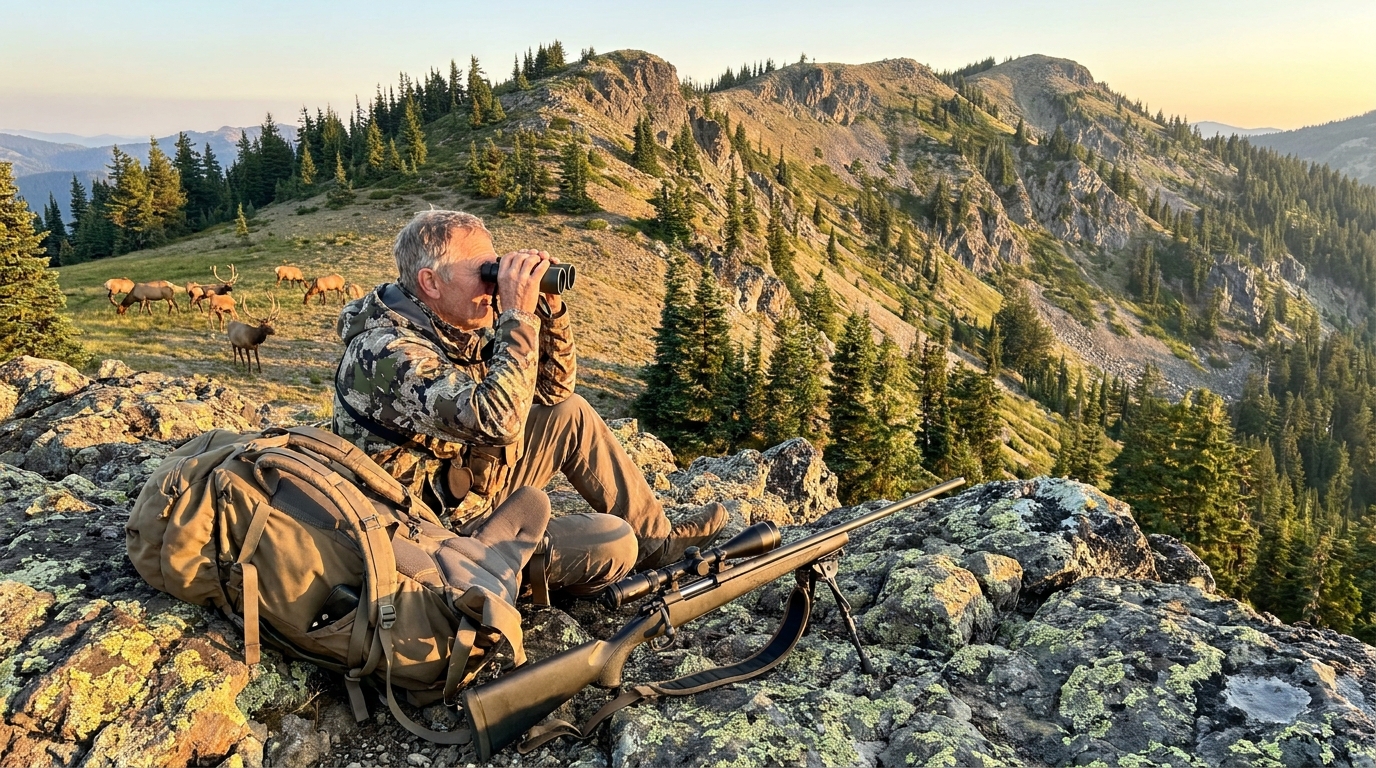
Get to your glassing points by first light. Use terrain to your advantage—glass from ridgelines and high saddles overlooking open parks, burned clearings, and south-facing slopes with new growth. Elk movement compresses in summer heat; you'll see most activity in the first two hours of daylight and the last 90 minutes before dark. Midday, they're bedded in timber.
When you find a good bull, don't push into his bedroom to get a closer look. Mark the location on OnX or Gaia GPS, note the terrain features he's using, and back out clean. A pressured bull in July becomes a nocturnal bull in September. The goal right now is inventory—how many elk are using this drainage, where are the travel corridors, where is the water.
Physical Prep: The Honest Conversation
Every elk hunter thinks they're in better shape than they are until mile four of a 6,000-foot day. July is the last window for meaningful fitness work before the season. That doesn't mean you need to become a marathon runner—it means you need to be able to carry 60 pounds of elk and gear over rough terrain without your knees giving out.
The most effective prep is weighted hiking. Find the steepest terrain near you and walk it. Start at 30 pounds in your pack, add 5 pounds per week, and aim for two-hour sessions minimum three times a week. If you can get to actual mountain terrain on weekends, do it. Legs that feel fine on a treadmill will not feel fine on a 40 percent slope at 7,000 feet.
Supplement with shooting practice under physical duress. After a hard hike or run, draw your bow and shoot. Holding at full draw when your heart rate is elevated and your legs are burning is exactly the scenario you'll face at 30 yards from a bull. Practice it now.
Gear Check: Do It Now, Not in Camp
Pull everything out in July and run a full gear audit. Arrow flight changes after a season of shooting—re-tune your bow, check arrow spine consistency, and replace any nocks or vanes showing wear. If you're running mechanical broadheads, confirm your fixed-blade backup plan. Broadheads that fly differently from your field points need to be solved at the bench, not on the mountain.
- Bow: Inspect strings for fraying, check cam timing, verify draw weight and length haven't shifted
- Arrows: Straightness check every arrow; retire any that are bent or have suspect spines
- Pack system: Load your full backcountry kit and wear it on a day hike before the season—find the hot spots and pressure points now
- Glass: Clean your binos and spotting scope, check tripod connections
- Calls: Practice your cow calls and bugles now, not the week before the opener
OnX and Digital Scouting
If you haven't ground-truthed your unit yet, digital scouting in July is your backup. Study satellite imagery for water sources, wallows, and mineral licks near elk sign. Historical wallow locations show up as distinct dark patches on summer satellite imagery. Compare 2024 and 2025 imagery to 2026—drought years move elk off traditional water.
Mark every trailhead, camp spot, water cache location, and glassing point before you go. Download offline maps for your unit. Cell service disappears in the areas elk live. A phone that can't navigate without a signal is just a camera.
The Week Before the Opener
Make your final glass trip the week before the opener if possible. Bulls will be transitioning out of velvet by mid-August, and their behavior starts to change—slightly less predictable, slightly more aggressive. If you can catch a bull in a specific location during the transition, you're going into opening day with a target instead of a hope.
The Oregon archery elk season is one of the best opportunities in the West for public land hunters willing to put in the legwork. Seven weeks is enough time to make this season the one you've been working toward. Use July right.