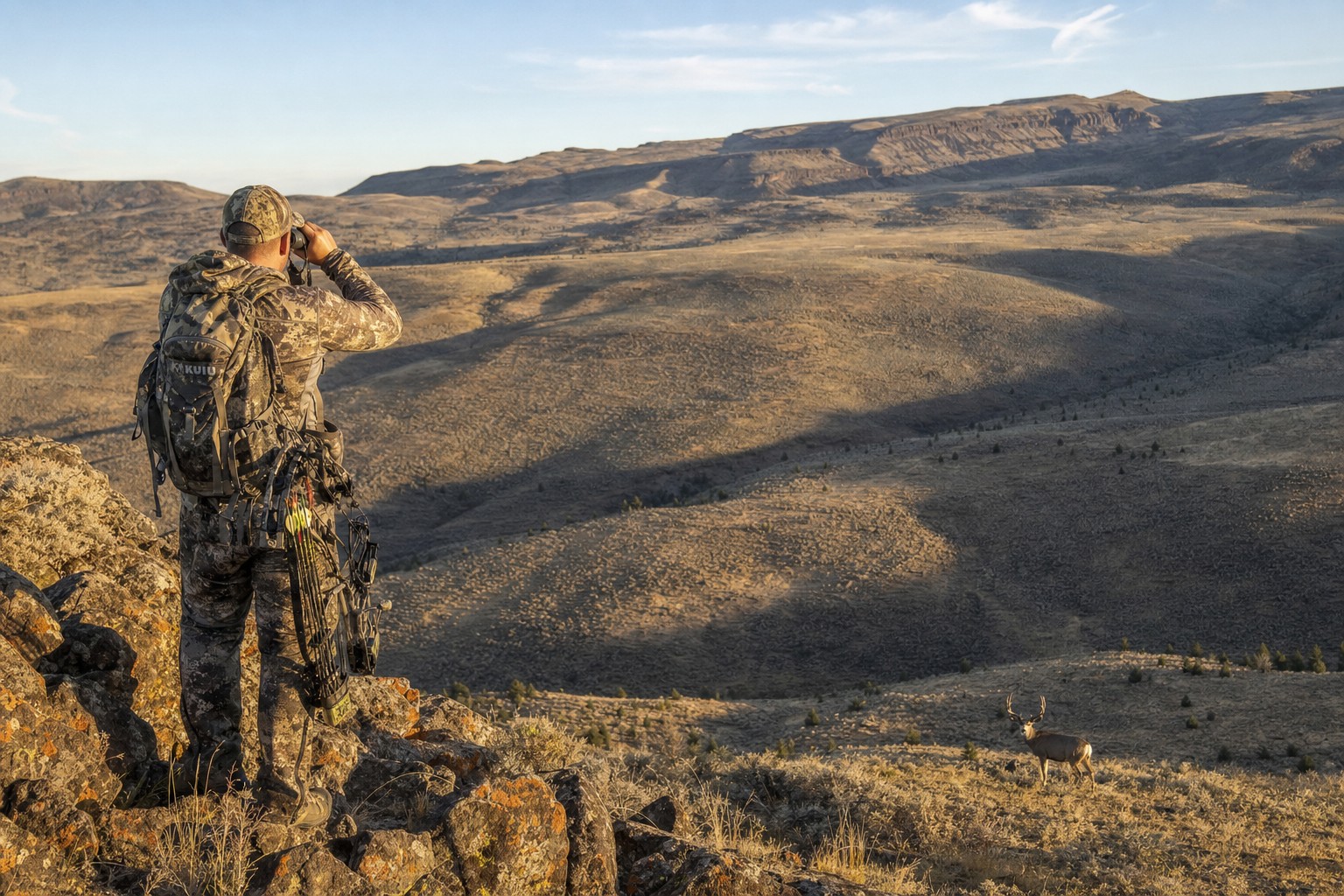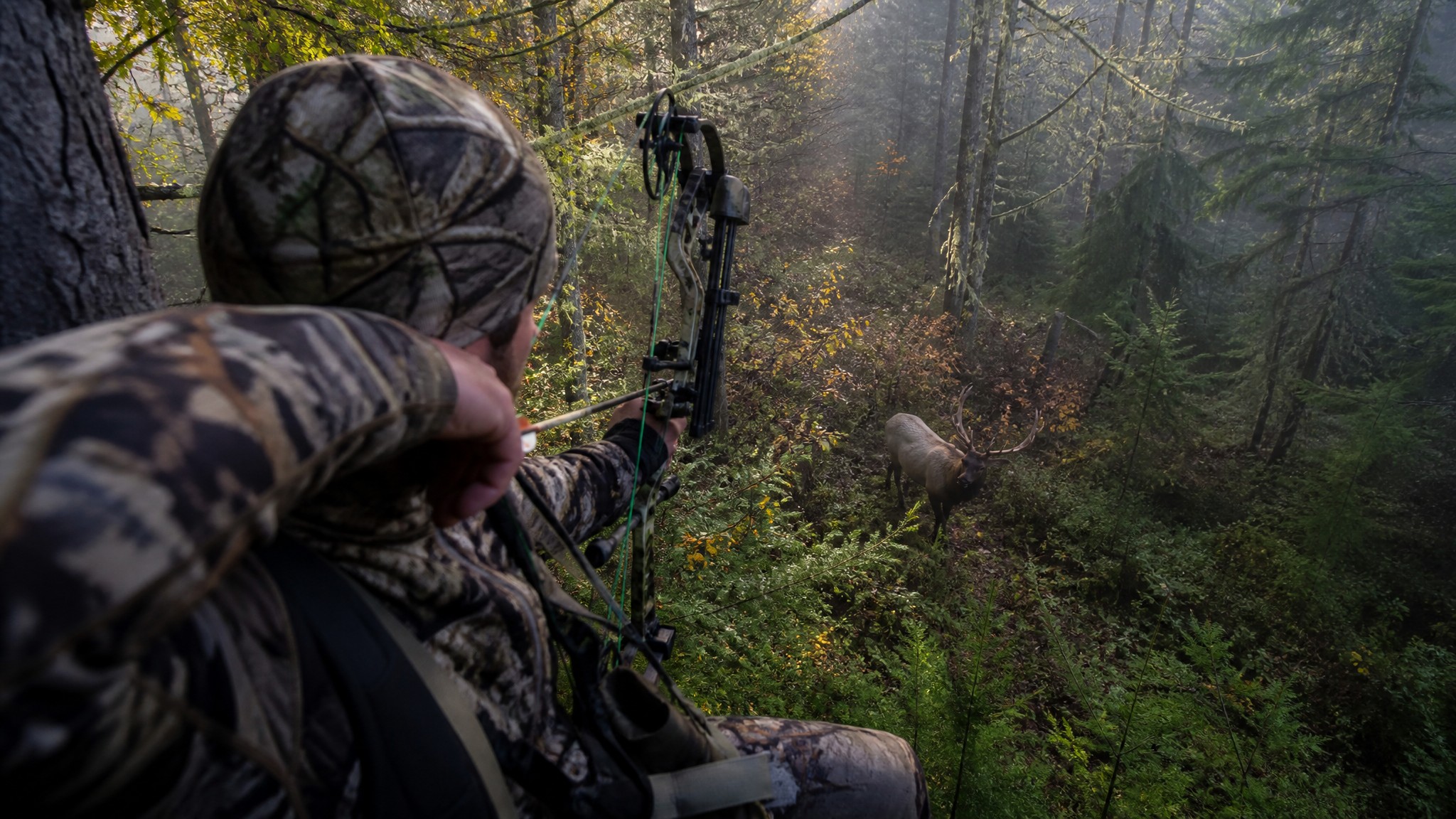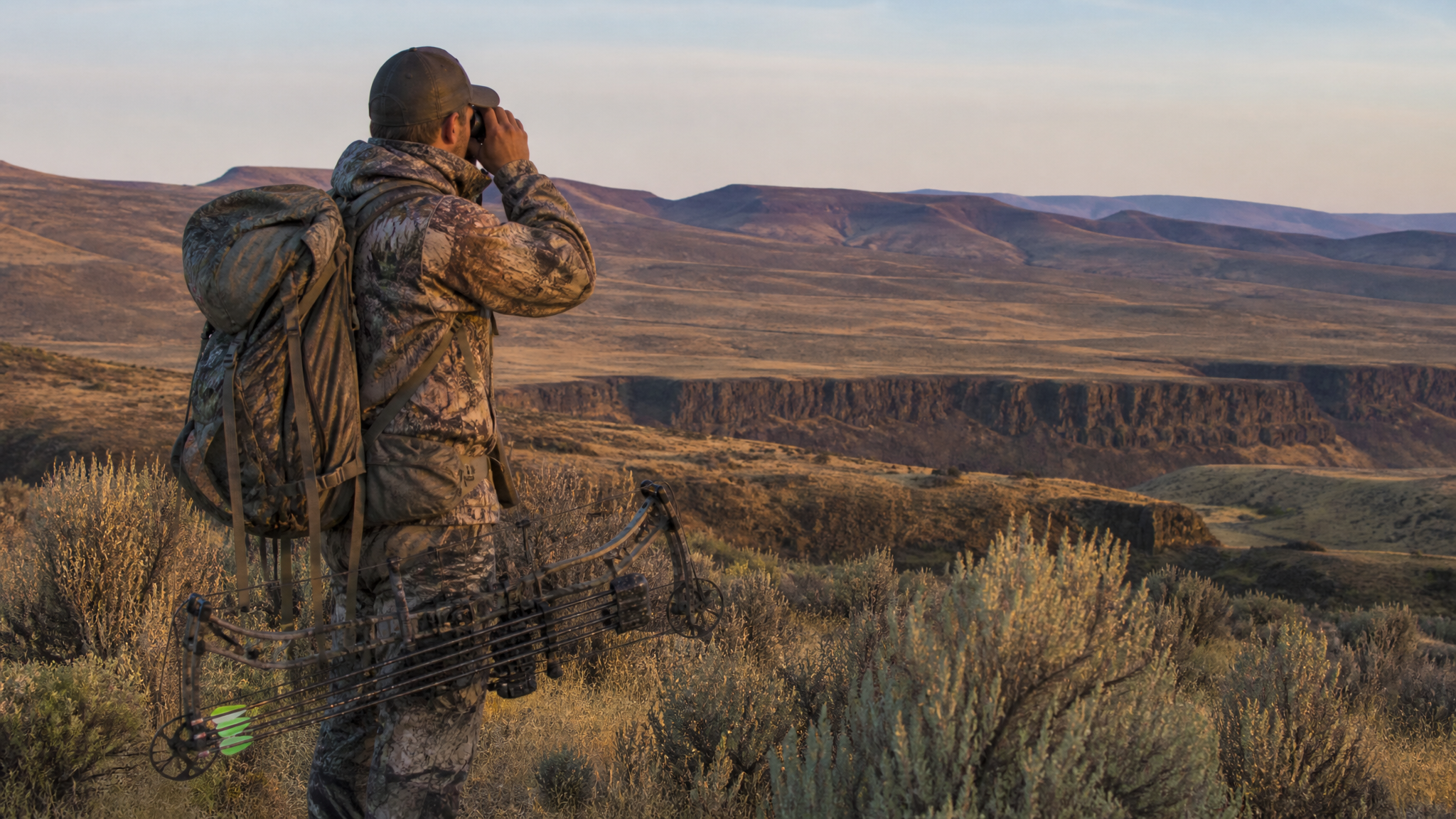
Here's the honest truth about bowhunting success: the shot that kills a bull at 35 yards on day three of a backcountry elk hunt isn't made under good conditions. It's made after miles of hiking, with burning legs, a pounding heart, and nerves that are screaming. The only way to make that shot is to practice under conditions that simulate it—and July is your last real window to do that before Oregon's archery seasons open in late August.
This is a practical four-week plan for Pacific Northwest bowhunters. It covers physical conditioning, structured shooting practice, and the mental habits that separate consistent performers from one-hit wonders. You don't need a gym membership or a coach. You need a bow, some arrows, a place to walk with weight on your back, and about an hour a day.
Week 1: Build the Base
The first week is about assessment and foundation. Before you can train toward peak fitness, you need to know where you're starting. Do a test: load your hunting pack to 35 pounds and walk the steepest terrain you have access to for 90 minutes. Note how your legs and lungs feel, whether your hips are sore after, and how steady your bow hand is when you draw at the end of the hike.
That test tells you the truth. Most bowhunters are stronger than they think from the waist up and weaker than they realize from the waist down. Elk country punishes weak legs and underprepared lungs far more than weak arms.
Week 1 Shooting Focus: Form Verification
Don't shoot long distances in week one. Go back to 10 and 15 yards and rebuild your shot cycle from scratch. Check every anchor point, every grip position, every draw stop. Film yourself with your phone from the side. Flaws that feel invisible in June become misses in September. Fix them now, not after you've grooved them for another 200 shots.
Week 2: Add Stress to Shooting
Week two introduces the most important training concept most bowhunters never practice: shooting under physical stress. After any workout—a weighted hike, a set of box jumps, or even a fast jog around the block—pick up your bow and shoot immediately. Don't wait for your heart rate to drop. Shoot at 20 yards, then 30, while your pulse is still elevated.
This is uncomfortable and humbling. You will shoot worse than you do from a bench after five minutes of standing still. That's exactly the point. The discomfort is the training. Over four weeks, your groups under stress will tighten significantly as your body learns to execute a consistent shot cycle regardless of what your cardiovascular system is doing.
Stress Shooting Protocol
- 20 burpees, immediately draw and shoot 3 arrows at 20 yards
- Run 200 meters, shoot 3 arrows at 30 yards
- Weighted pack hike, shoot 5 arrows at various distances on arrival
- Hold at full draw for 15 seconds before releasing (builds mental fortitude and identifies back-tension issues)
Week 3: Distance and Unknown Yardage
If you've been shooting exclusively at known distances from a shooting lane, week three is the intervention. Take your bow to a 3D archery course or set up a target in terrain where you have to estimate yardage before ranging it. Shoot at your estimated distance first, then confirm with your rangefinder. The gap between what you think a distance is and what it actually is will shrink rapidly with practice—and that gap kills elk.
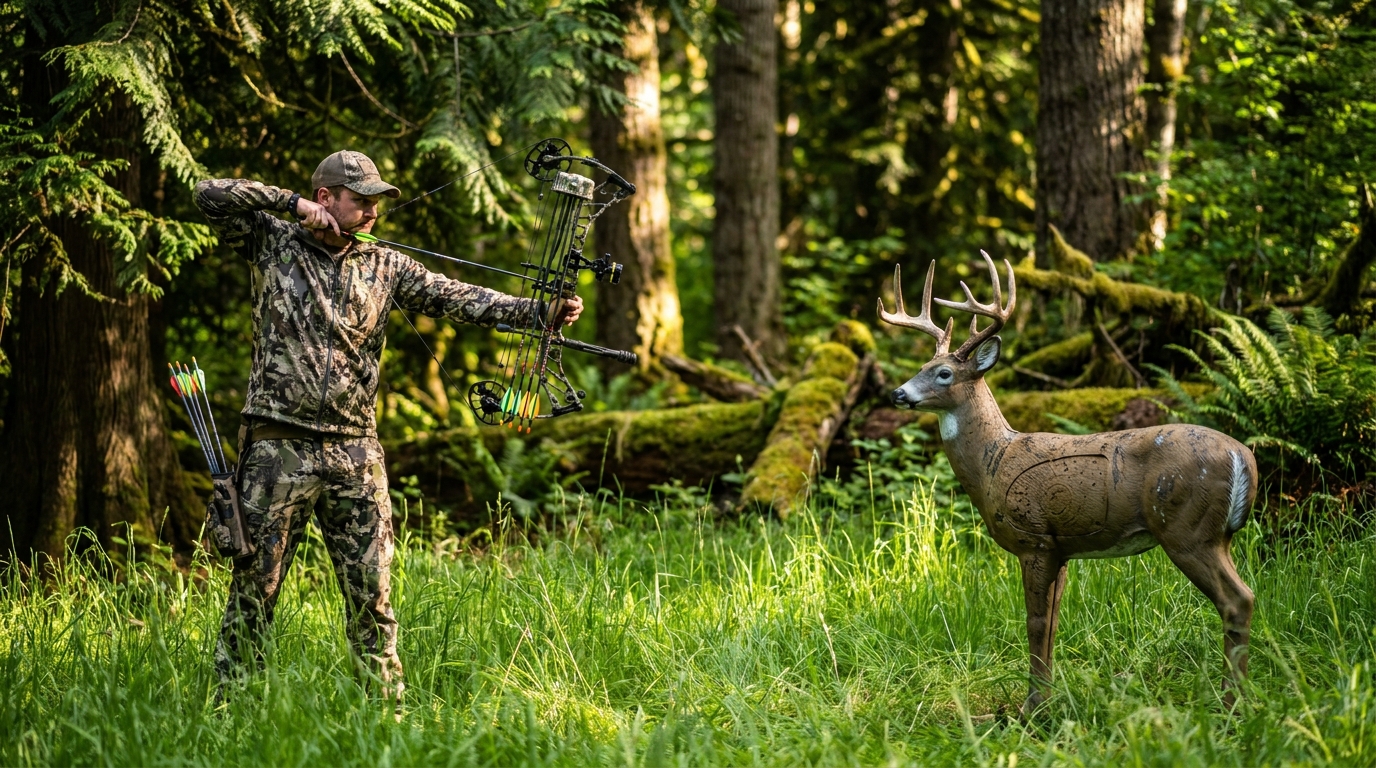
July is also when Oregon's 3D archery circuit is in full swing. The Cascade Traditional Archers, Willamette Valley Bowhunters, and Archery Shooters Association clubs all host summer 3D shoots within driving distance of most Pacific Northwest bowhunters. Sign up for one. Shooting at foam animals in the woods under a time limit replicates hunting conditions better than any backyard range session.
Distance Work at Home
If you don't have access to a 3D course, extend your home practice distances. Most bowhunters practice predominantly at 20 yards. Move your target to 40, then 50. You don't have to shoot these distances in the field—but an archer comfortable at 50 yards is disproportionately confident and accurate at 30.
Week 4: Peak and Taper
The final week before the season opener should not be your hardest training week. It should be your most confident one. Reduce physical training volume, keep shooting volume moderate, and focus on putting together clean, unhurried shot cycles at ethical hunting distances—20 to 40 yards for most bowhunters in Oregon's timber country.
Spend time shooting from hunting positions: kneeling, sitting on a stump, shooting through a simulated window (two stakes and a horizontal bar). Most elk are not killed from a comfortable standing position on level ground. They're killed awkwardly, at odd angles, from positions you've never practiced—unless you have.
Physical Conditioning Summary
Here's the simplified weekly physical framework that underpins all four weeks:
- 3 days/week: Weighted pack hike, minimum 60 minutes, minimum 30-pound pack. Increase weight by 5 pounds each week.
- 2 days/week: Bodyweight strength work focused on legs, core, and back. Squats, lunges, step-ups, planks, and rows are the priority movements.
- 1 day/week: Long slow aerobic work—a 2- to 3-hour hike without a pack. This builds the aerobic base that powers everything else.
- 1 day/week: Full rest or very light activity.
Gear Check During Training
Use your July shooting sessions to finalize equipment decisions. If you're switching broadheads, do it now and confirm flight matches your field points. If you're adjusting draw weight, allow four weeks for your muscles to adapt before opening day. If your peep sight shifts after a hard pack session due to string twist, your bow needs a trip to the pro shop—not to the elk woods.
July training isn't glamorous. It's not glassing velvet bulls from a ridgeline or packing camp into a remote unit. It's grinding out early morning hikes and shooting until your form is automatic. But come opening morning, when a five-point bull steps into a clearing at 38 yards and your heart rate is through the roof, the work you put in this month is the only thing standing between a tagged bull and a long walk out empty-handed.
The window is open. Use it.