Tree saddles get a lot of press right now in bowhunting circles, and for good reason — they're compact, light, and offer 360-degree shooting capability. But hang-on stands remain the most practical elevated hunting platform for the majority of Pacific Northwest bowhunters, and they're far more forgiving in terms of learning curve. If you're hunting blacktail deer in the Coast Range, Roosevelt elk in western Oregon drainages, or mule deer and whitetails in the Blues or Wallowas, a well-hung set is often the difference between a shot and a skunked morning.
This guide covers selecting a stand for PNW tree species, hanging it correctly, and the safety practices that keep you hunting for decades rather than ending your season in a ER.
Choosing the Right Stand for PNW Timber
Pacific Northwest tree species present different challenges than the Midwest hardwoods most treestand manufacturers designed around. You're typically working with:
- Douglas fir: Predominant in the Coast Range and western Cascades. Straight-grained, often with persistent dead branches. Bark can be very thick (3–5 inches on old growth) affecting strap placement.
- Red alder: Common in riparian areas where blacktail deer travel. Smooth bark, more uniform diameter, but often leans and may have a smaller optimal diameter range.
- Ponderosa pine: Eastern Oregon and east Cascades. Plated bark, good grip for straps, often very straight.
- Bigleaf maple and Oregon white oak: Excellent stand trees in valley bottoms and transition zones. Hardwood structure, good limb coverage for concealment.
Platform size matters more in the PNW
Western hunters often shoot from awkward positions — kneeling, sitting, or pivoting hard to cover a deer that came from an unexpected angle. A larger platform (20"x30" or bigger) gives you room to reposition your feet without making noise. Stands like the Lone Wolf Alpha II, Millennium M150, and Summit Viper SD are popular with PNW bowhunters for this reason. Don't sacrifice platform space for a few ounces of pack weight if you're hanging the stand at the beginning of the season and leaving it.
Weight rating and attachment system
Choose a stand rated to at least 300 pounds — your body weight plus clothes, pack, bow, and safety harness adds up. Look for a ratchet strap or Loc-On attachment system rather than a single chain design. Ratchet straps self-cinch tightly against tree bark, compensate for bark compression over time, and work with round tree profiles more reliably. On thick-barked Douglas firs, a chain attachment can sit proud of the bark and create a leveling problem that a strap system handles more naturally.
Hang Height: The Right Answer for PNW Conditions
The "get as high as possible" mantra from Midwest whitetail hunting doesn't always translate west of the Cascades. Here's the reality:
Blacktail deer
Blacktail live in tight, vegetated country where sight lines are short. Hanging at 20+ feet often puts you above the available shooting lanes — you end up with angled shots through brush that are worse than what you'd have from 14 feet. The concealment advantage of extreme height is also less relevant when you're surrounded by fir boughs and sword ferns. Most experienced blacktail hunters hang at 15–18 feet, sometimes less if the natural concealment is dense enough.
Mule deer and whitetail in eastern Oregon
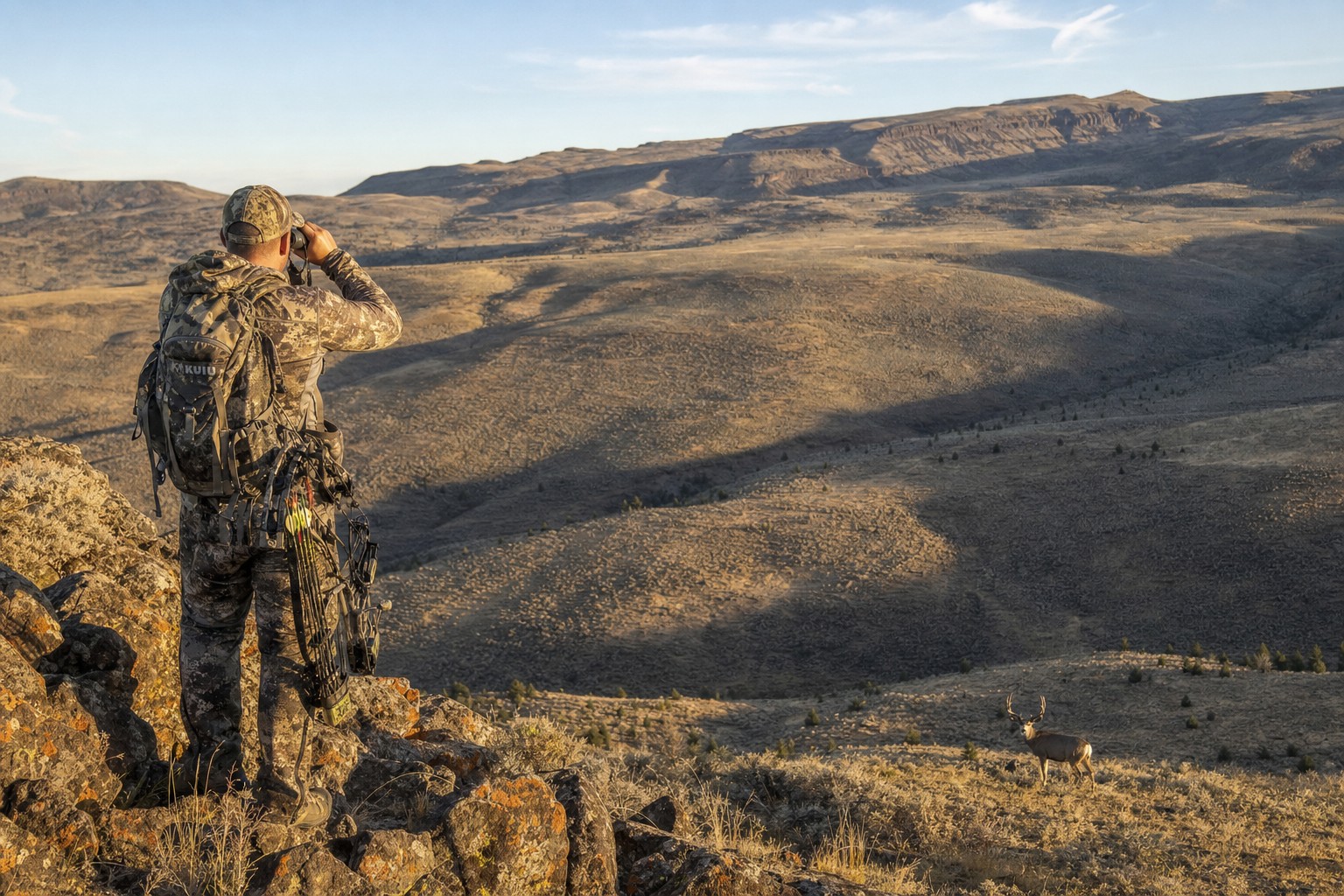
More open terrain means deer are more likely to look up. 18–22 feet is a reasonable height in ponderosa pine or open oak country. The steeper the terrain, the less height matters — a stand hung on a hillside at 16 feet may be at eye level with deer approaching from uphill, so terrain topography matters as much as raw stand height.
Elk
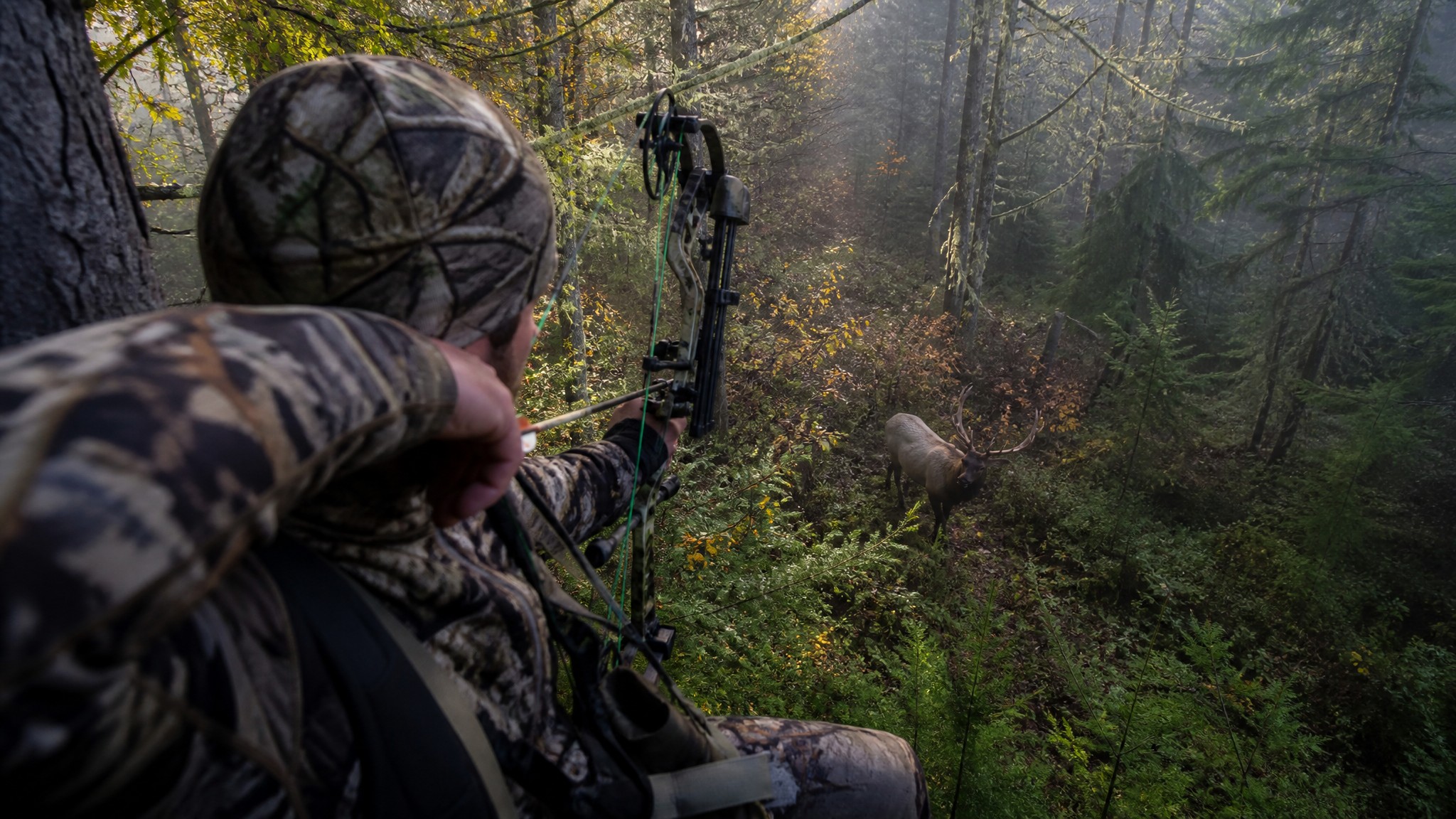
Elk have their nose in the air more than deer, but they also have their eyes higher. Most elk stand setups are compromise decisions based on what the timber provides. If you're hanging a mock-scrape or wallow setup, 15–17 feet often works in heavy timber where scent dissipates sideways through dense vegetation before reaching elk-nose level.
Hanging the Stand: Step-by-Step
- Scout before you hang. Visit the site in the off-season to select the tree, confirm the shooting lanes, and identify the approach path deer or elk actually use. June and July are ideal for this in Oregon.
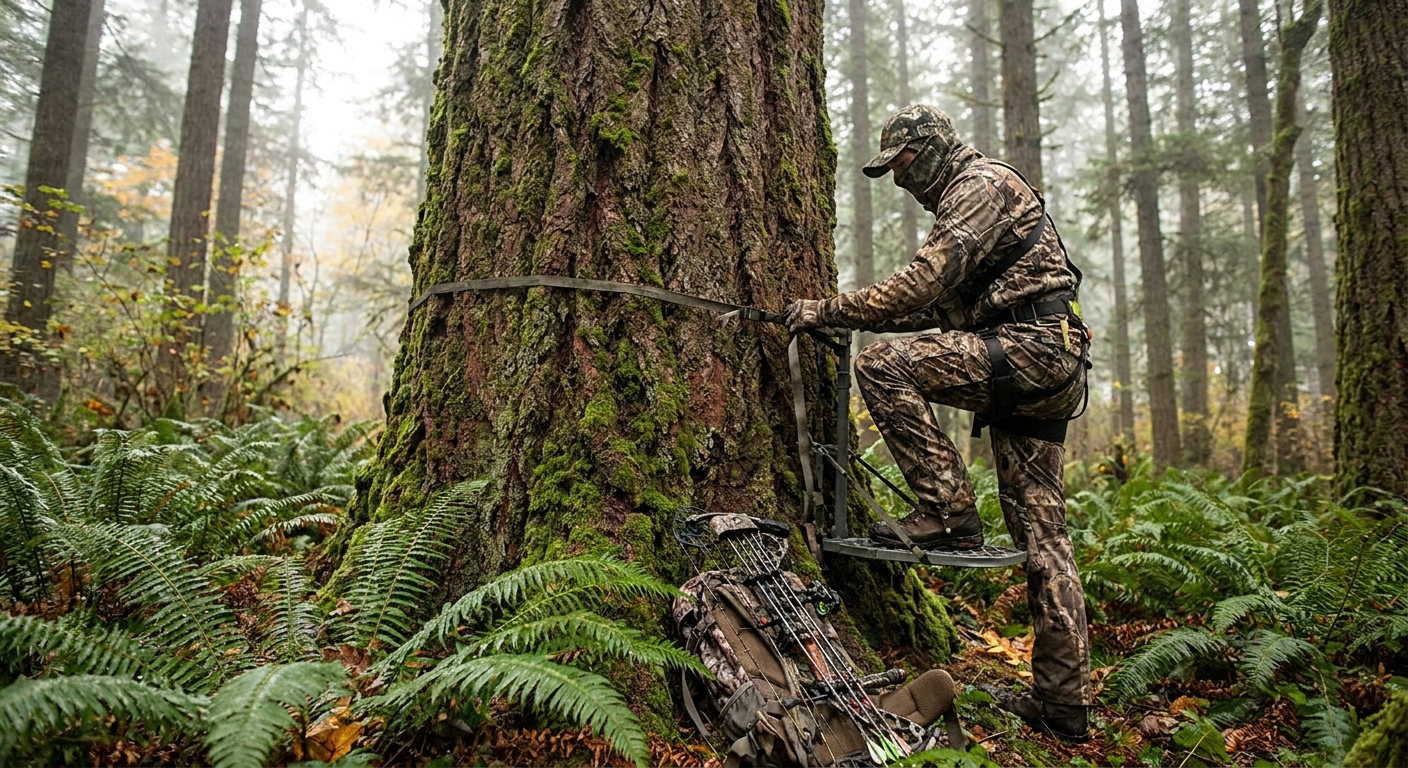
- Wear your harness from the ground. This is non-negotiable. Attach your lineman's belt to the tree before stepping off the ground. Work your way up using the lineman's belt as your primary safety — your lifeline connects to the tree, not the stand that isn't hung yet.
- Level the platform. Most stands have a pivot mechanism at the tree attachment that allows the platform to angle slightly forward for level feel. Set this before final tightening. A platform that angles back toward the tree is fatiguing and creates a false sense of security; it can cause your heels to slip.
- Tighten the straps with full body weight on the platform. Some compression of bark and strap occurs when you first stand on the stand. Tighten again after settling your weight.
- Install your lifeline immediately. A continuous loop lifeline (Prussik knot system or commercial lifeline like Hunter Safety System's Evo-Dri) runs from ground to stand height and allows you to maintain fall arrest connection during ascent and descent — the most dangerous moments for treestand hunters.
- Trim shooting lanes with hand pruners while at height if needed. Don't lean far off the platform to reach branches — use a telescoping pruner from a stable footing.
Stand Safety Numbers Every PNW Hunter Should Know
- ~75% of treestand accidents happen during ascent or descent — not while sitting. A lifeline solves this.
- Inspect straps and welds annually. UV degradation, winter moisture, and bark acids attack nylon straps faster than you expect. Replace any strap with cracking, fraying, or significant UV fading.
- Never hang with a single attachment point. Use a primary strap plus a backup safety strap or carabiner to the tree.
- Tell someone where you are. Pin your exact location in onX Maps, share it, and set a check-in time before every hunt. Solo treestand hunting in remote Oregon timber is the scenario where a fall with no one knowing your location can turn fatal.
Hang-On vs. Climber in PNW Timber
Climber stands require a tree with no branches from ground to hang height — rare in the Coast Range and western Cascades, which is why climbers are uncommon west of the Cascades despite their popularity elsewhere. A hang-on stand with screw-in steps or strap-on climbing sticks works on virtually any tree species. If you're hunting primarily in eastern Oregon ponderosa country where straight, branch-free trunks are common, a climber becomes a more viable option — faster setup, no hardware left in the field.
Getting Ready for September
The Oregon archery deer and elk openers are still months out, but now — mid-June — is the right time to hang your stands while vegetation is at full leaf and you can evaluate sight lines realistically. Hanging in August after everything is established is a noise-and-scent risk during the pre-rut period when deer are already patterning nearby. Get it done early, let the woods settle, and be ready when the season opens.
Do it right from the ground up, use a harness every single time, and that stand will put you in position for shots that you'd never get from the ground.