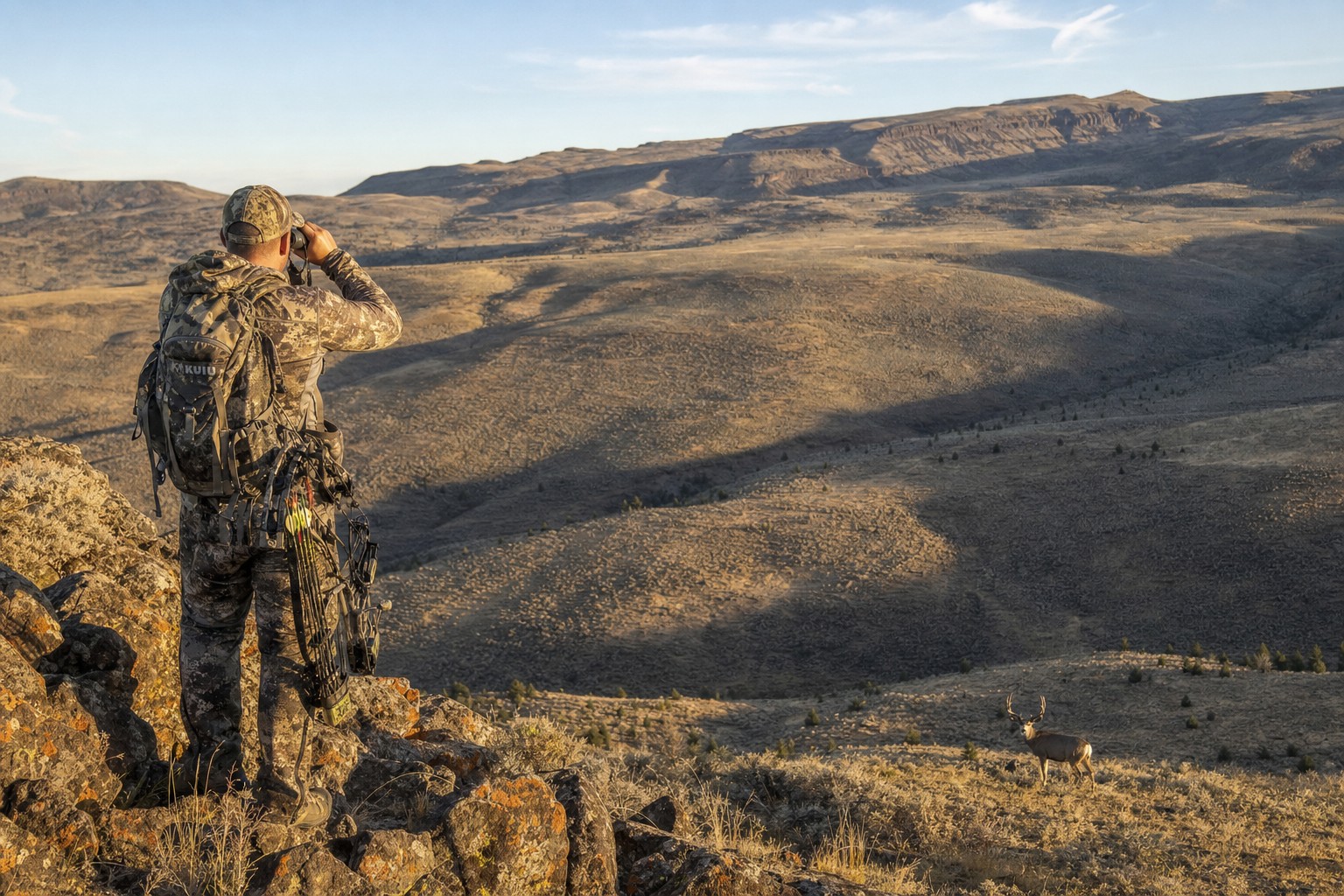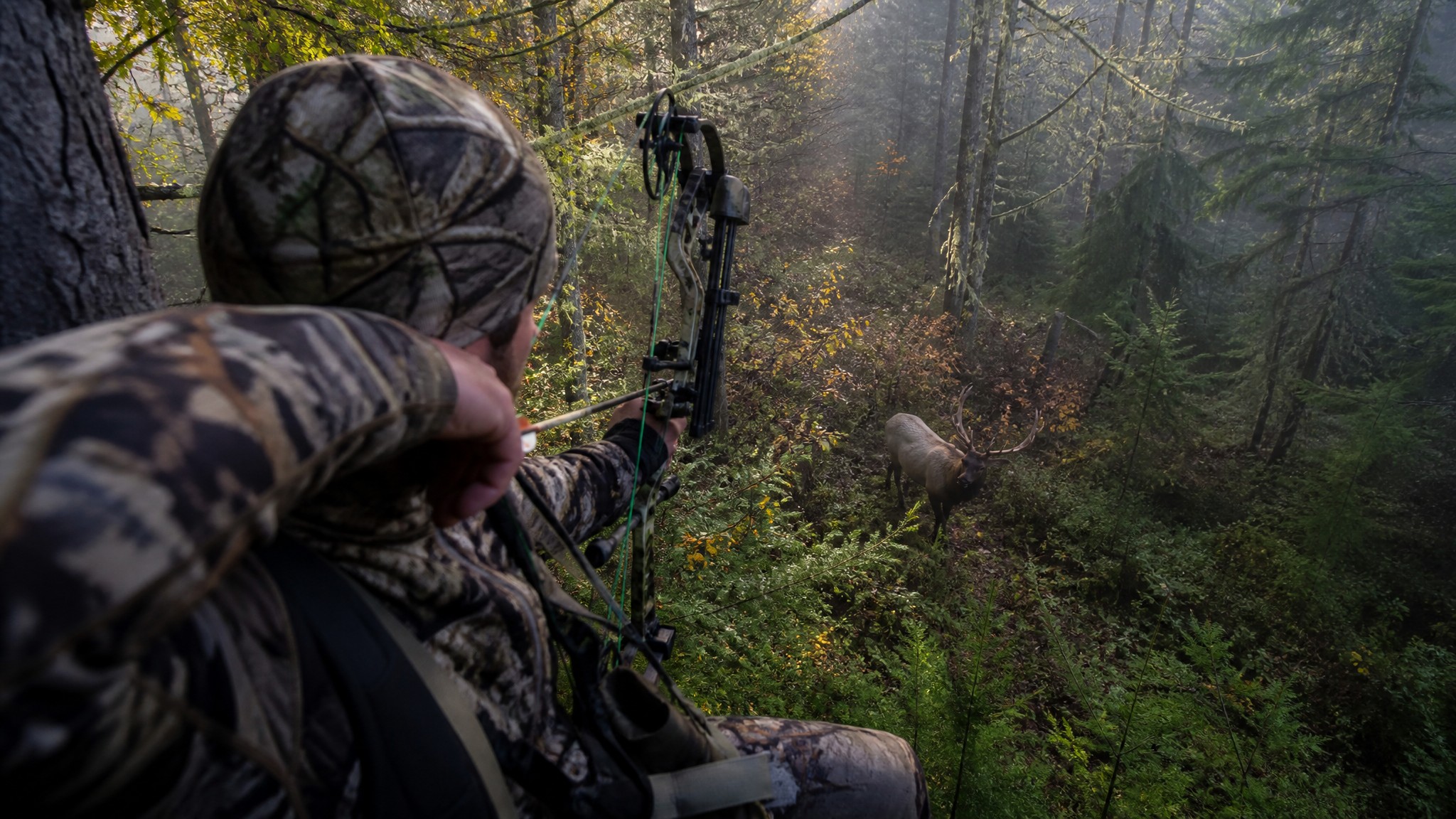
The arrow flies. The deer or elk lurches and crashes into the brush. Your heart is pounding. Now what? The decisions you make in the next 30 seconds — and over the next several hours — will determine whether you recover that animal. Blood trailing and recovery is a skill most hunters learn through hard experience, but there's no reason to lose animals to avoidable mistakes. Here's what actually works in Oregon's varied terrain, from the Coast Range rainforest to the eastern desert.
The First 30 Seconds: What to Do Right Now
Before you move, mark the exact spot where the animal was standing when you shot. Use your rangefinder's memory, a piece of orange tape on a nearby branch, or drop a hat. This is your "last seen" point and it anchors your entire search. Watch the animal's direction of travel as long as you can see it. Note every detail — the height of brush it entered, any sounds it made (crashing, thrashing, or silence).
Then sit down and wait. This is the hardest part. The urge to immediately follow the deer is almost overwhelming, but it's also the single most common reason hunters bump wounded animals and push them miles away. A well-hit deer will bed down and die quickly if left undisturbed. A pressured deer will run. For a suspected liver or lung hit, wait a minimum of 30–45 minutes before trailing. For a marginal hit — low in the body, far back — wait a full 4–6 hours. Overnight if necessary.
Reading the Hit at the Arrow
Your arrow tells a story. Recover it before you begin trailing. A bright red, frothy, bubbly blood indicates a double-lung hit — this deer is dead within 100 yards. Dark red blood with little to no bubbles usually signals a single lung hit or liver hit — wait longer, but expect a recovery within 200–300 yards. Watery, pinkish blood with a bad smell suggests a gut hit. Wait overnight and approach with extreme caution in the morning.
Stomach contents on the arrow shaft confirm a gut hit — a musty, foul odor is unmistakable. Green material means colon or intestinal hit. Both require extended waiting periods and careful, slow trailing. Gut-shot deer that are pressured have been known to travel 2–3 miles before expiring.
Reading Blood Sign
Not all blood trails are the same, and reading them correctly tells you how to proceed.
- Heavy two-sided blood: Exit wound is working. The animal is hit well and leaving a wide trail. Follow steadily but not frantically.
- One-sided blood: Only entrance wound bleeding externally, or the exit is high on the body. Blood may be spraying upward and landing on brush at chest height rather than on the ground.
- Blood that stops: The wound has clotted, the animal has bedded, or blood is pooling internally. This is common with high lung or muscle hits. Grid the area carefully and look for beds.
- Drops widely spaced: Animal is moving fast and still has energy. Back off, wait more, and let the hit do its work.
The Systematic Search: When the Trail Goes Cold
Blood trails in Oregon's wet forest conditions are challenging — rain washes blood, leaves absorb it, and light fades quickly under the canopy. When the trail goes cold, don't panic and don't quit. Execute a systematic grid search.
- Mark your last confirmed blood with orange flagging tape
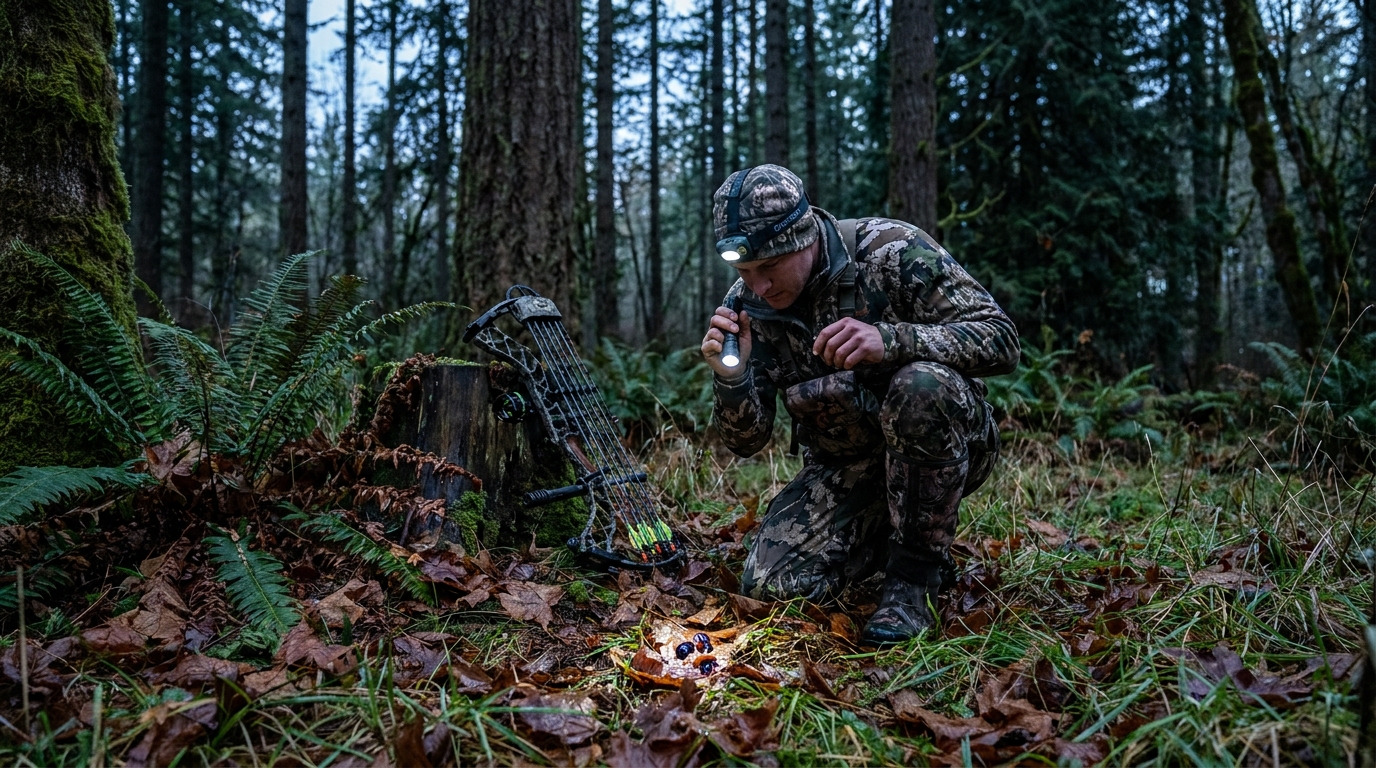
- Use a powerful flashlight — blood fluoresces under direct light even when invisible to the naked eye. A UV flashlight is worth its weight in gold at this stage.
- Walk concentric circles around the last blood, expanding outward in 10-yard increments
- Look for beds — a bed of flattened grass with blood pooling often means the animal expired nearby
- Check water sources. Wounded deer and elk almost always head for water. In dry eastern Oregon, water crossings often reveal heavy blood in the gravel or sand.
- Look uphill. Gut-shot deer frequently climb before lying down.
Using Tracking Dogs
Oregon allows the use of leashed dogs to track wounded big game. If you've lost a blood trail after a thorough search, a scent-trained tracking dog can be the difference between a recovered animal and a wasted one. Several hunting dog trainers in western Oregon offer recovery services — save a contact in your phone before the season. The Deer Search network and various state Facebook hunting groups maintain lists of local tracking dog handlers. There's typically no charge, just pay it forward by mentoring a new hunter.
Recovery in Specific Oregon Terrain
Coast Range Timber
Dense brush, standing water, and ferns make trailing difficult. Flag your trail aggressively with orange tape — it's easy to become disoriented under the canopy at night. Blood on wet sword ferns can be nearly invisible; get low and use a bright flashlight held at ground level.
Eastern Oregon High Desert
Lava rock and gravel absorb blood poorly and tracking can be very difficult. Look for disturbed soil, scuffed rocks, and turned-over pebbles to follow a running deer. Dark blood on basalt is nearly invisible — again, a UV light is a game-changer here.
River Bottoms and Willows
Animals hit near rivers sometimes wade across or travel along the bank. Always check both sides of water crossings. If an animal crosses a river, it may be only a short distance on the other side.
Don't Give Up
Most hunters give up too early. If you made a shot on an animal, you owe it a thorough recovery effort. Return the next morning if you run out of daylight. Bring a partner with fresh eyes. The deer that seems lost at midnight has often traveled less than 150 yards from the last blood. Be persistent, be systematic, and trust the process. That animal deserves to be recovered — and your freezer deserves to be full.