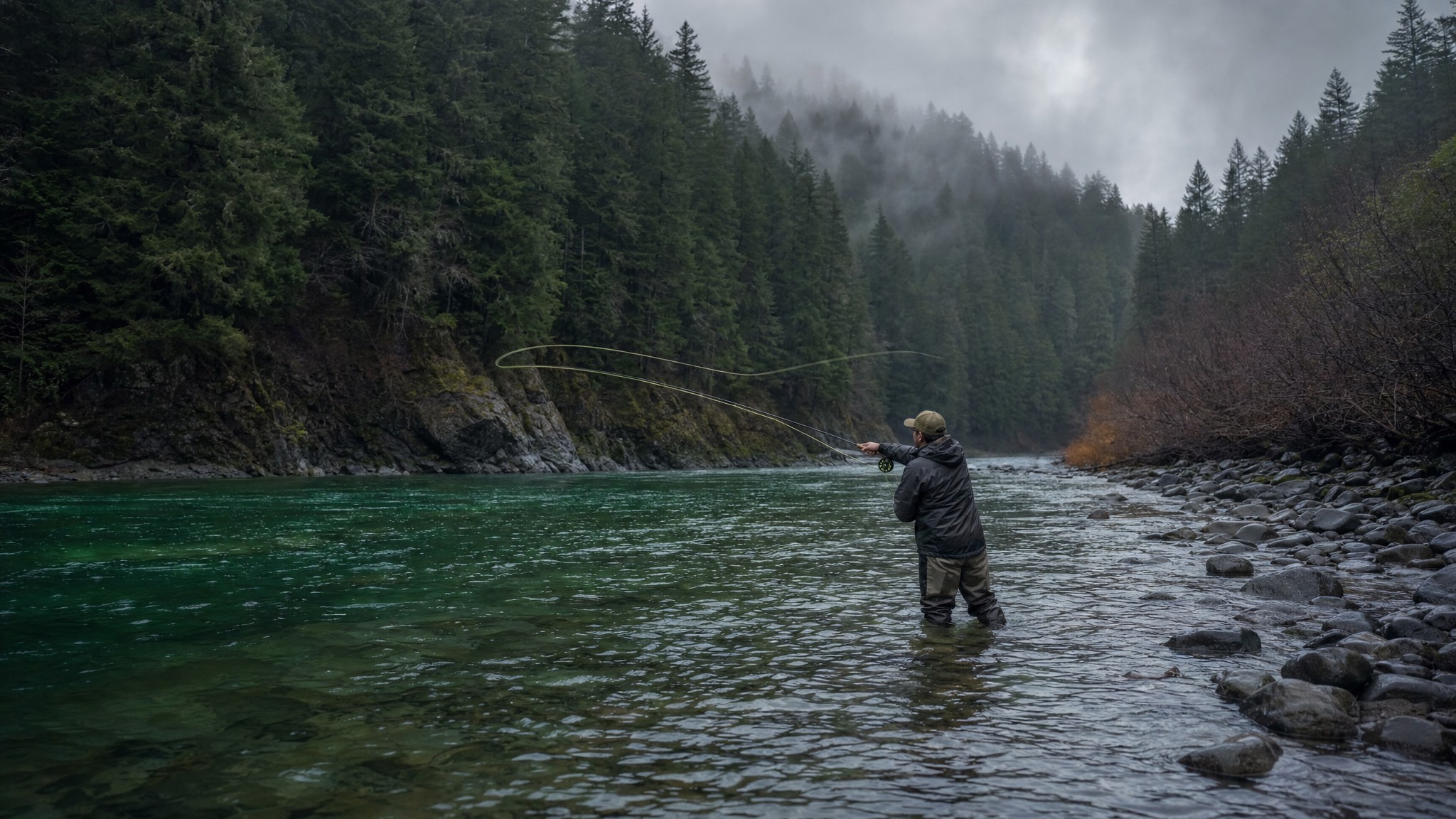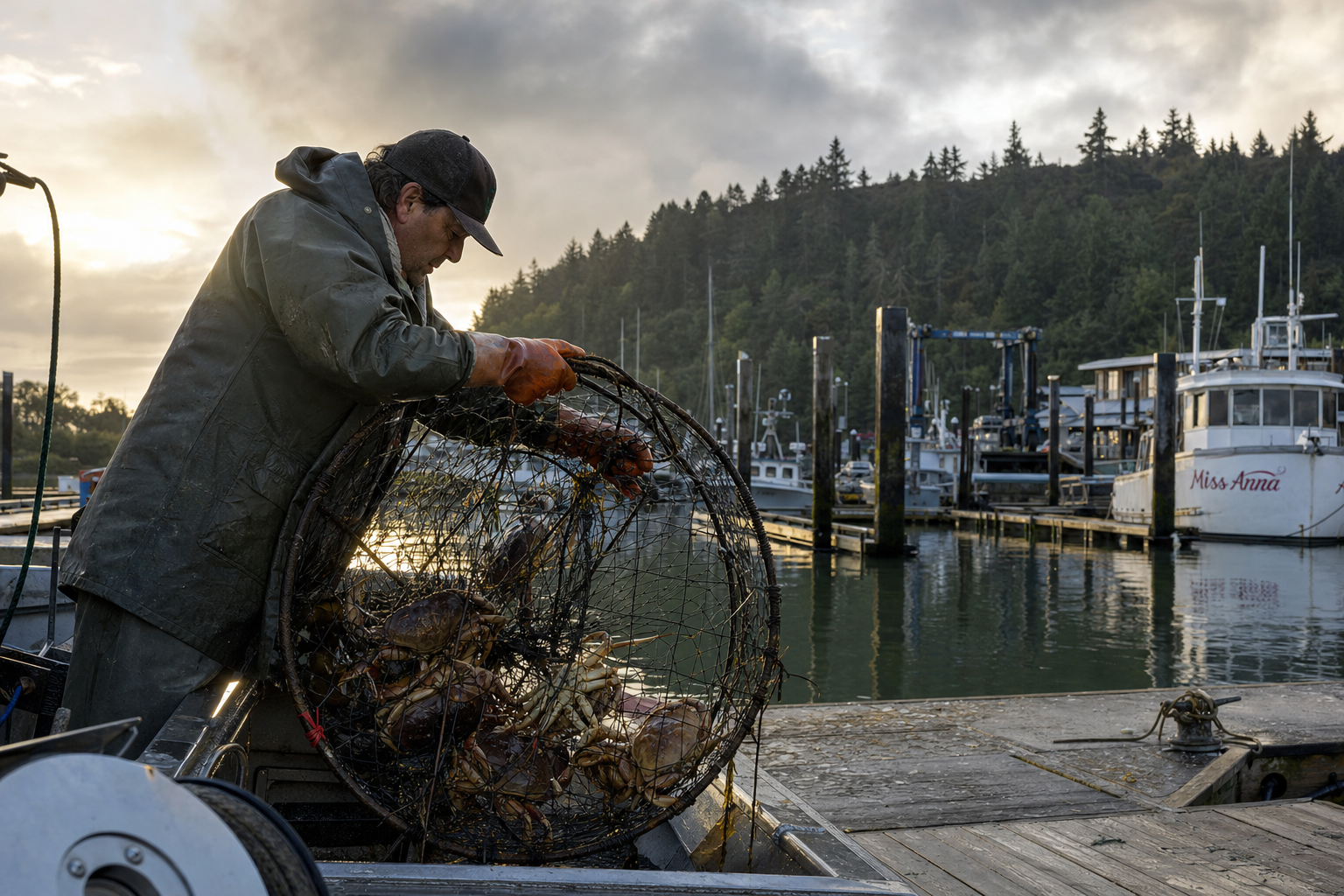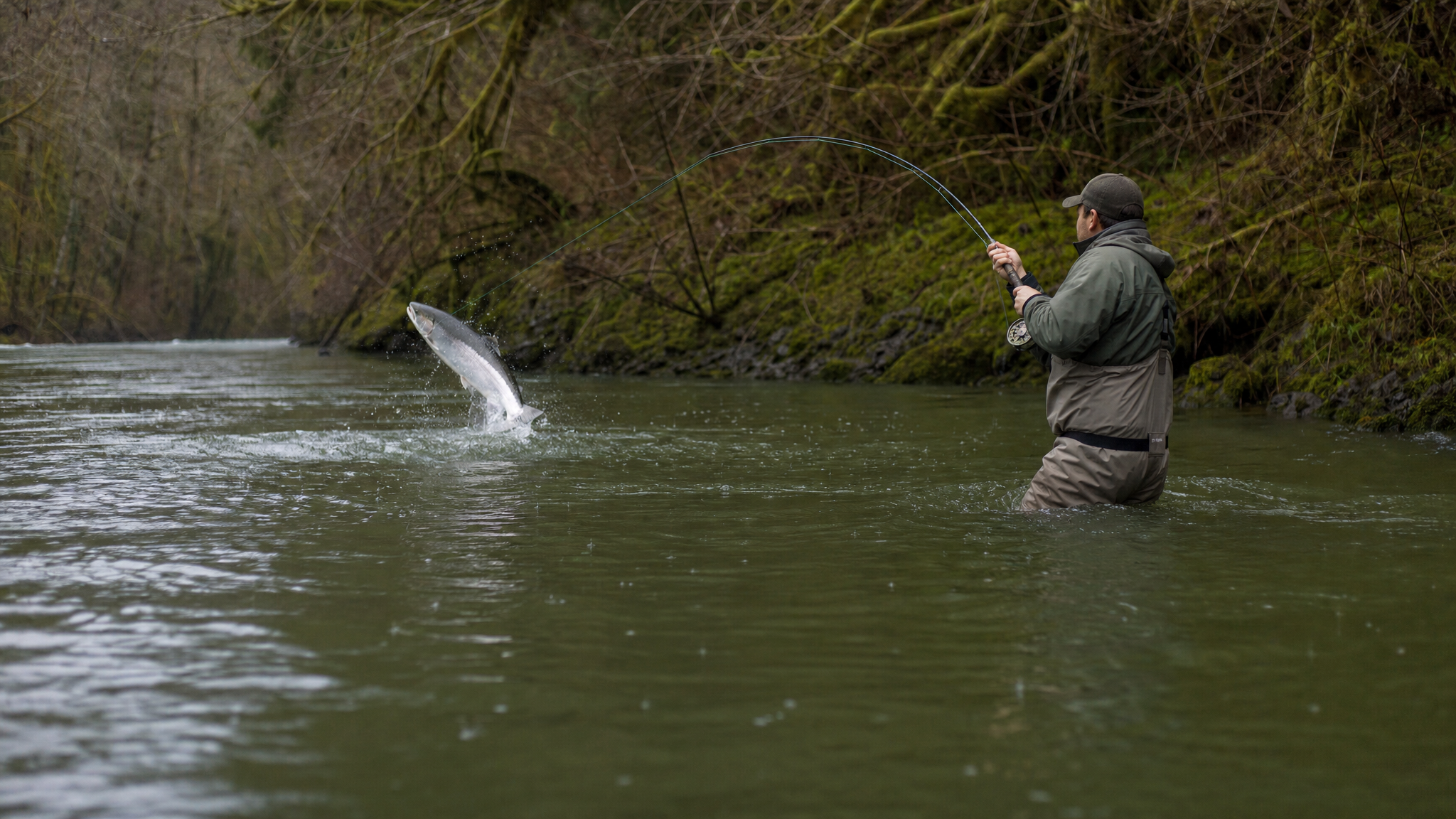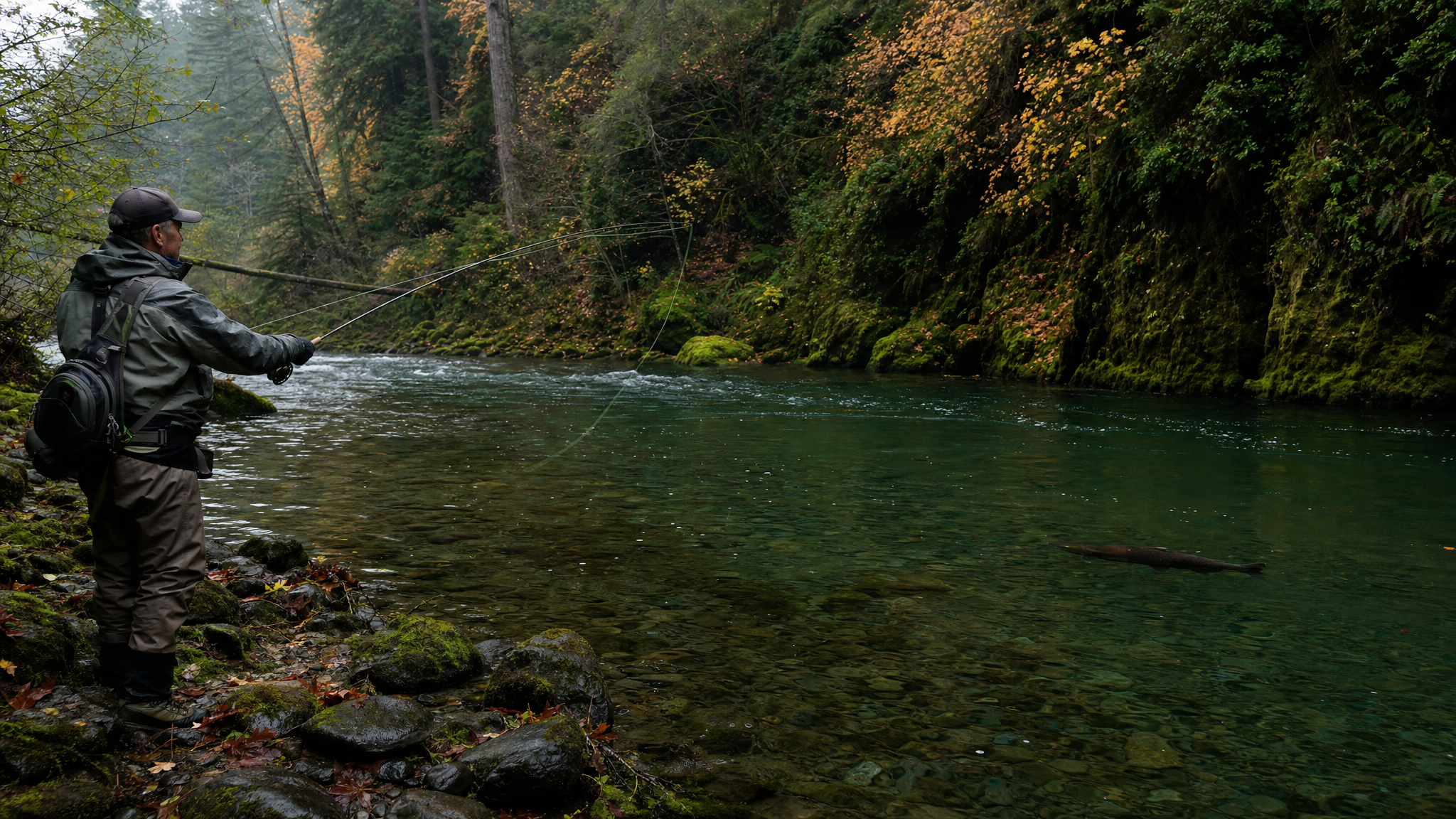
When most Oregon anglers think of fall Chinook salmon, they reach for a road atlas and head to the Rogue or the Umpqua. But tucked away in Curry County, 29 miles north of Brookings and 7 miles south of Port Orford, the Elk River quietly hosts one of the most productive and least-pressured wild king salmon runs on the entire Oregon Coast. If you're willing to leave the interstate and drive a winding county road through old-growth Douglas fir, the Elk will reward you with tight lines and memories that last a season.
When to Fish the Elk River
The Elk River's fall Chinook run peaks from late October through December, with November typically the strongest month for bank anglers. Fish enter the system on the first big rains of fall — usually mid-October — and move steadily upstream toward holding pools and eventual spawning grounds. By early November, solid numbers of bright, chrome-sided kings in the 20- to 40-pound range are stacked in the lower eight miles of fishable water below the Elk River Hatchery barrier falls.
ODFW hatchery records show the Elk River returns between 1,500 and 4,000 adult Chinook most seasons, with wild fish making up a meaningful portion of the run. Check the ODFW weekly fish counts at the Gold Beach district office online before making the drive — when numbers spike after a rain pulse, the bite is usually on.
Access Points and Parking
Elk River Road follows the river from US-101 upstream. Key bank access points include:
- Tidewater Hole (River Mile 1–2): Wide gravel bars, good for spinners and bait. Park at the ODFW access lot off Elk River Road near the mouth. Expect tidal influence in this stretch — fish on the incoming for best results.
- Paradise Point (River Mile 3–4): Classic deep tailout pool with overhead canopy. Walk-in only via a short trail. This hole produces fish even when water is slightly off-color.
- Copper Salmon Wilderness Boundary (River Mile 5–7): Drift fishing and plunking water. The river narrows here and runs cold and clear through basalt ledges. Hatchery fish stage below the wilderness boundary before the final push.
- Hatchery Plunge Pool (River Mile 8): Where stacked fish congregate waiting for water levels. The hatchery staff can give you a live report on how many fish are sitting in the lower pools.
Best Baits and Lures for Elk River Chinook
The Elk fishes best with a few proven presentations:
Drift Fishing with Eggs
Fresh cured roe is the gold standard on the Elk. Cure your eggs with Fire Cure or BorX O Fire in flame orange or pink. Use a size 2 or 4 egg hook with a short 18- to 24-inch fluorocarbon leader off a three-way swivel. Use just enough weight to tick bottom without dragging — typically 1 to 2 ounces of pencil lead in the main stem, lighter near the hatchery where current slows.
Spinners
Blue Fox Vibrax in size 5 and 6, chartreuse/silver or hot orange, produce consistent strikes in the lower tidewater reach when the tide is pushing. Cast slightly upstream and allow the blade to sweep through holding water at a steady pace. Big Chinook often follow a spinner for 20 to 30 feet before committing.
Kwikfish and Flatfish
Wrap a K14 or K15 Kwikfish in cured sardine or herring and back-troll it through deep tailouts. The Elk's clear water means natural colors — metallic green, chrome blue, and fluorescent red — all draw strikes. Hold the boat or anchor upstream of target pools and let the plug do the work.
Sand Shrimp
When water is high and green after a rain, sand shrimp on a size 1 or 2 bait hook under a drift bobber can be devastatingly effective. Elk River Chinook key on scent in off-color conditions, and fresh-caught sand shrimp from the South Coast beaches are hard to beat.
Regulations — Read Before You Go
The Elk River has specific regulations that differ from adjacent coastal streams. For the 2026 season, the river below Elk River Falls is open for Chinook salmon with a combined daily bag of two adult salmon, hatchery fish only — wild Chinook must be released unharmed. The hatchery boundary is clearly marked. Use the ODFW Oregon Sport Fishing Regulations booklet or the MyODFW app for current rules, as regulations can change season to season based on run strength.
A valid Oregon fishing license with a combined angling tag is required. If you plan to keep a salmon, you'll punch your tag on the spot. Barbless hooks are required in some sections — tie accordingly before you leave the truck.
What to Pack for a November Elk River Trip
- Chest waders and wading boots with felt or rubber-cleated soles (the basalt ledges are slick)
- Rain jacket and waterproof layering — November on the South Coast averages 7 to 10 inches of rain
- A heavy-action 9- to 10-foot drift rod or medium-heavy spinning rod rated for 15- to 25-pound mono
- PowerPro braid mainline (40 lb) with an 18- to 24-inch fluorocarbon leader
- A cooler with ice for your catch — the nearest grocery is Port Orford, 7 miles north
- Needle-nose pliers and a de-hooking device for safe wild fish release
Where to Stay
Port Orford is the closest town, a small but welcoming community with motels, short-term rentals, and a couple of good diners. Humbug Mountain State Park, 6 miles south of Port Orford on US-101, offers year-round tent and RV camping right on the coast — wake up to the sound of surf and drive five minutes to the river. Elk River Fish Camp (a privately operated facility near the hatchery) occasionally has spots available for self-contained rigs. Call ahead.
The Elk River Experience
What makes the Elk River special isn't just the fish — it's the setting. This is old Oregon, the way the coast used to be before the crowds found it. You'll share the water with great blue herons, river otters, and the occasional black bear working the spawning gravel. The old-growth Sitka spruce and Port Orford cedar that line the upper river are some of the largest you'll see on the entire Oregon Coast.
If you're a Chinook angler who's fished the Rogue at the Gold Beach boat hole shoulder-to-shoulder on a Saturday in October, the Elk River feels like a secret. Some mornings, you'll have a producing pool entirely to yourself. That alone is worth the drive down Elk River Road.
Pack the rain gear, cure your eggs the night before, and make the trip south. The Elk River fall Chinook run is one of Oregon's finest — and finest kept — coastal salmon fisheries.