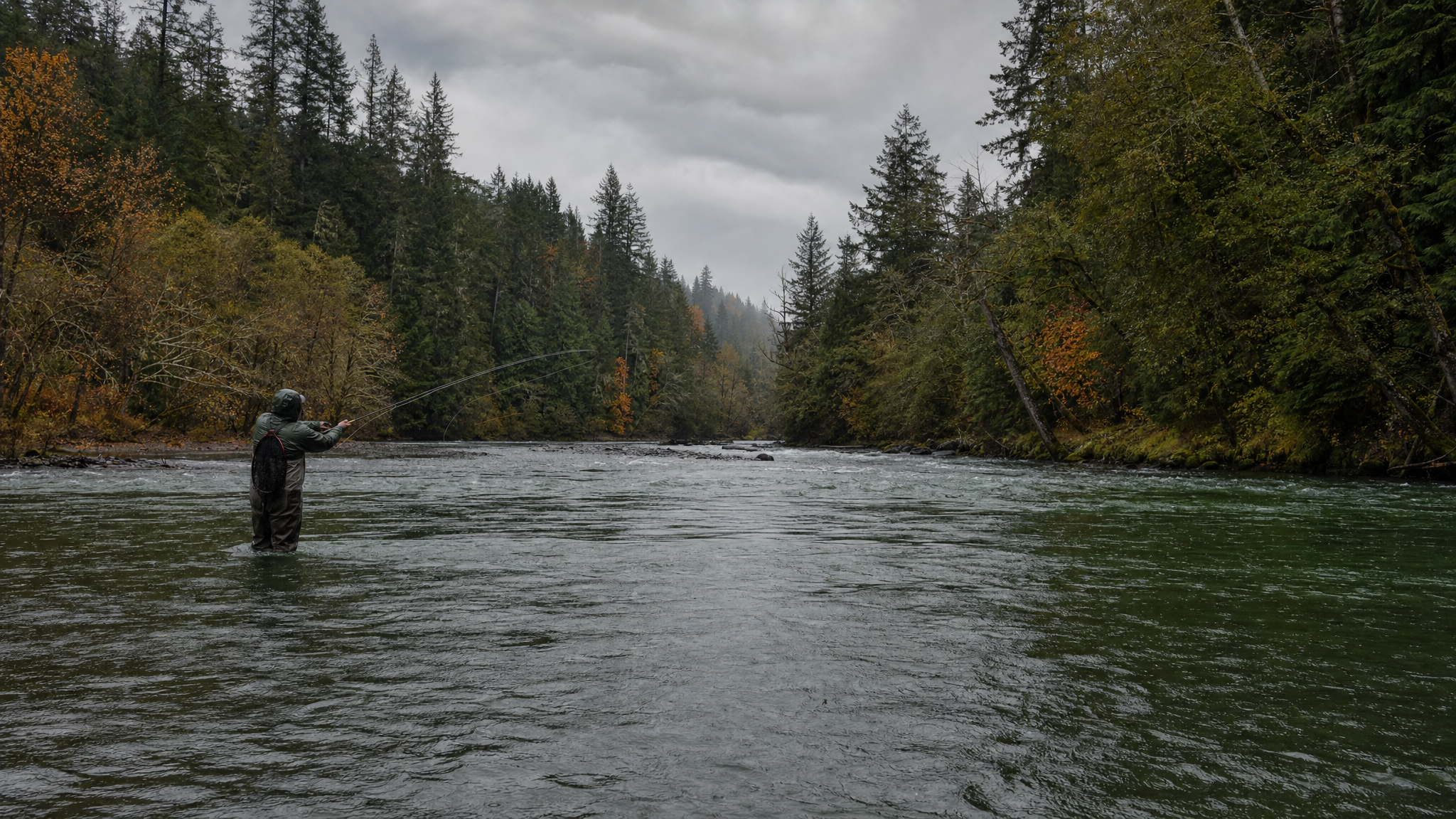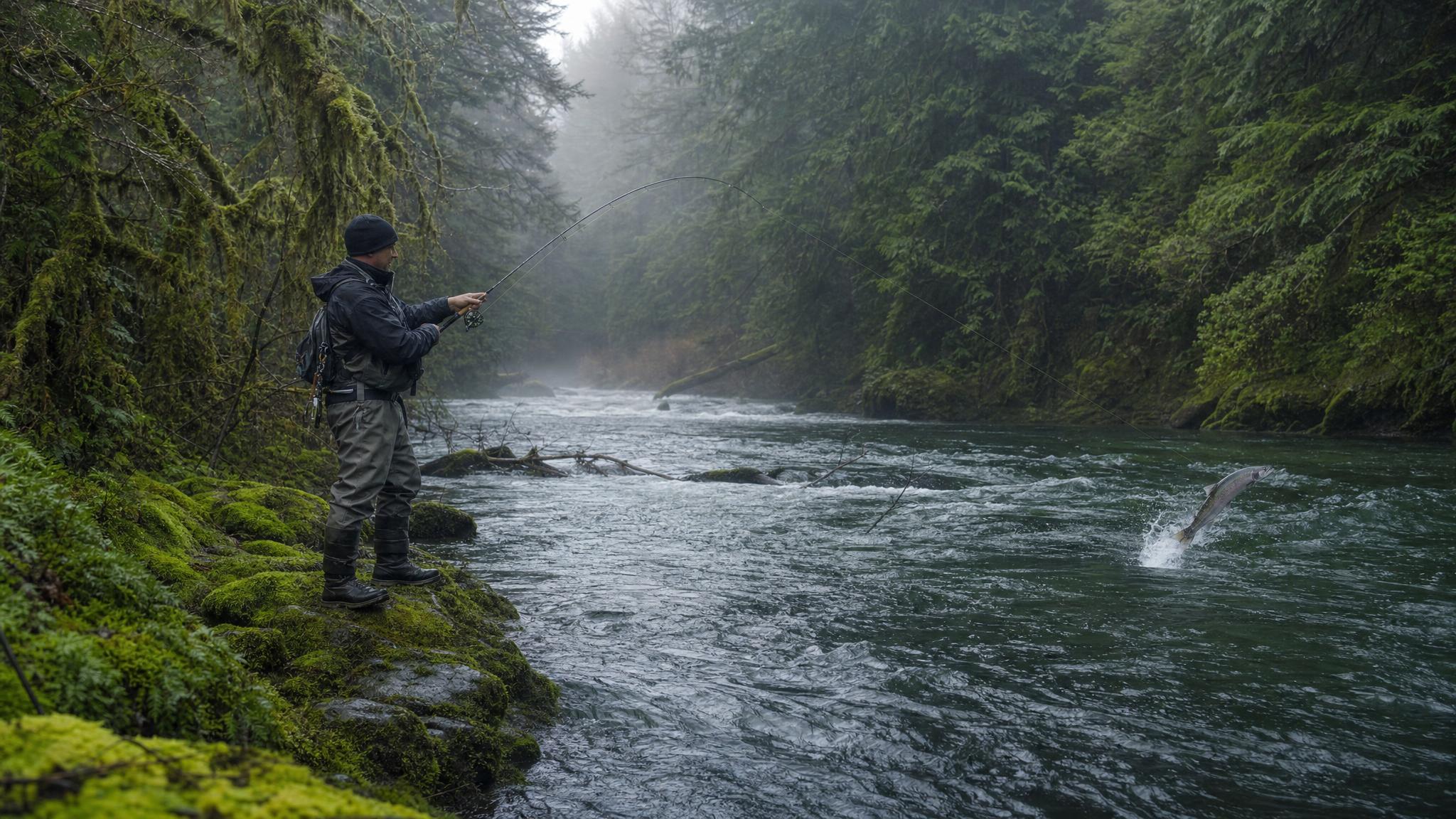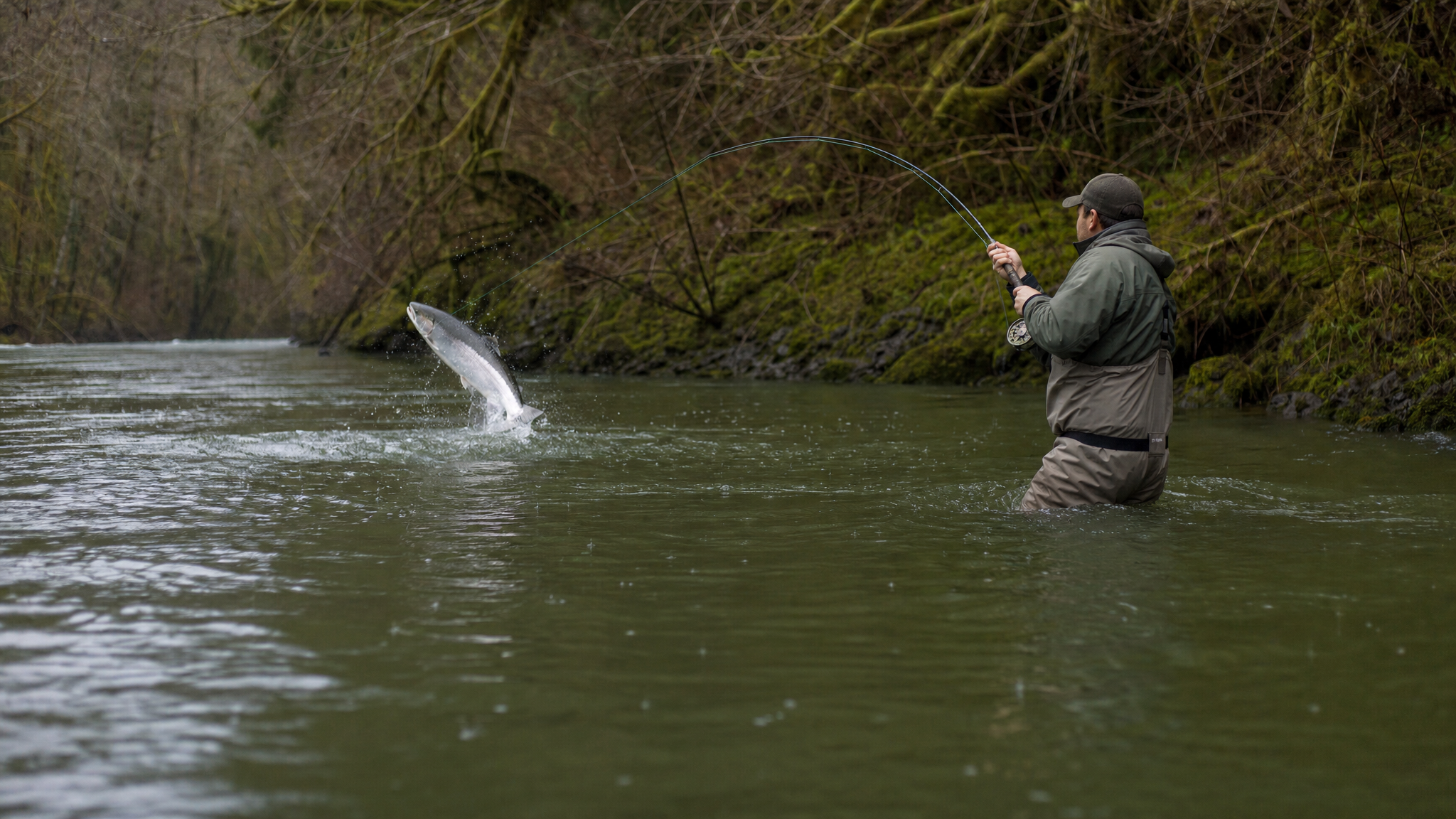
When Tillamook County anglers talk about steelhead rivers, the conversation usually starts with the Trask or Wilson — bigger names, more access, more crowded. The Nestucca River, running 56 miles from its headwaters near Nestucca Junction to its bay mouth at Pacific City, earns far less attention. That's a mistake, particularly in November, when the river's wild hatchery-and-native steelhead run peaks and the crowds stay home.
The Nestucca's November Steelhead Run
The Nestucca is one of the few Oregon coastal rivers that receives both a hatchery winter steelhead run and a wild native component. ODFW stocks hatchery fish at Cloverdale and several upriver sites, but the river also supports a self-sustaining native population that returns primarily between November and February. The first significant push of chrome steelhead typically arrives with the November rains when river flows climb above 500 cfs at the Beaver gauge — the trigger that moves fish off the bar and into the river proper.
Peak November fishing on the Nestucca tends to run from the third week of the month through early December, though individual fish are present throughout. Water clarity is a critical factor: the Nestucca can blow out fast after a heavy coastal rain. Watch the USGS gauge at Beaver (Station 14303500) and plan to fish on the drop — not at peak — when the river clears to 2–4 feet of visibility.
Best Holes and Access Points
Beaver (Town) to Cloverdale
This middle section of the Nestucca is the most productive and accessible stretch. Highway 22 parallels much of the river, with numerous pull-outs providing legal bank access. The Nestucca Special Regulations Area — which runs from the Blaine bridge to tidewater — allows only adipose-clipped hatchery steelhead to be retained below Cloverdale, so know where you are on the river before you bonk a fish.
Key holes in this section include the Cloverdale Hole (just below the ODFW hatchery facility), the Beaver Drift, and a series of long green pools where the river bends near Cloverdale Road. These bends create ideal holding water: fast riffle at the head, deep green mid-pool, and a soft tailout where fish rest.
Elk Creek Confluence
The area around the Elk Creek mouth is a traditional holding spot. Fresh fish staging before moving upriver will stack here when flows are right. Access is tight but doable from the county road. Fish the seam where Elk Creek enters the Nestucca — the temperature differential often concentrates fish on the cooler side of the merge.
Tidewater and Bay Mouth (Pacific City)
Tidewater fishing from the Pacific City area and the bay mouth at the Nestucca Bay estuary can be excellent for early-arriving fish before they move into the river. Boat anglers pulling plugs or running bait through the estuary channels intercept fresh chrome fish. Sand Dunes or the Three Capes area boat launch gives good estuary access.
Tackle and Techniques
Float and Jig
For bank anglers, a float-and-jig setup is the most versatile presentation on the Nestucca. Run a 3/8 to 1/2 oz steelhead jig under a slip float at a depth 1–1.5 feet above the river bottom. Colors that produce in the Nestucca's tannin-tinted November water: chartreuse and white, cerise and black, and pink and purple marabou patterns. Fish the jig through the tailout first, then work upriver through the main pool body.
Corky and Yarn Under a Float
The classic coastal Oregon steelhead setup — a corky (small foam egg imitation) and a wisp of fluorescent yarn on a size 2 or 4 hook — still produces consistently in the Nestucca. Use Fire Bead corkies in pink or orange. Add a dab of Pro-Cure Super Gel (shrimp or herring scent) and drift it on 10–12 lb fluorocarbon leader. This rig mimics drifting salmon eggs and is irresistible to both hatchery and wild fish.
Side-Drifting from a Drift Boat
Anglers who can float the Nestucca by drift boat or raft have a significant advantage. Side-drifting bait — eggs, shrimp, or sand shrimp — through the mid-river channels covers water that bank anglers can't reach. A popular float runs from the Hebo Road bridge to Cloverdale, covering roughly 8 miles of productive water. Shuttle logistics require a second vehicle at the takeout.
Pulling Plugs
In higher water, pulling plugs from a drift boat can be deadly. Mag Lip 3.5 or 4.0 plugs in UV Flame or Frog patterns work well in the Nestucca's green-tinted winter water. Run the plugs 20–40 feet behind the boat while holding against the current in the head of a pool.
Regulations Summary
- Season: Open year-round for steelhead in most sections; check ODFW regulations for Nestucca-specific closures
- Hatchery retention: Legal statewide for adipose-clipped (hatchery) steelhead; wild fish must be released
- Special regulations: Below Blaine bridge to tidewater: adipose-clipped steelhead only; closed to salmon from March 1 through end of October in some years — check current regs
- Bag limit: 2 adult hatchery steelhead per day
- License: Oregon fishing license + Combined Angling Tag (includes steelhead)
Local Resources
Stop at Nestucca Sporting Goods in Cloverdale or Tillamook Bay Outfitters in Tillamook for current river conditions, local fly patterns, and bait recommendations. River levels and flows update in near-real-time at waterdata.usgs.gov — bookmark the Beaver gauge before your trip. Local fishing reports also post regularly on the Oregon Fishing Facebook group and on ODFW's weekly recreation report page.
The Nestucca won't have the name recognition of the Trask or Wilson, but on a November morning when the river drops into shape after a week of rain and you're the only angler on a mile of productive water, that anonymity feels like the whole point.