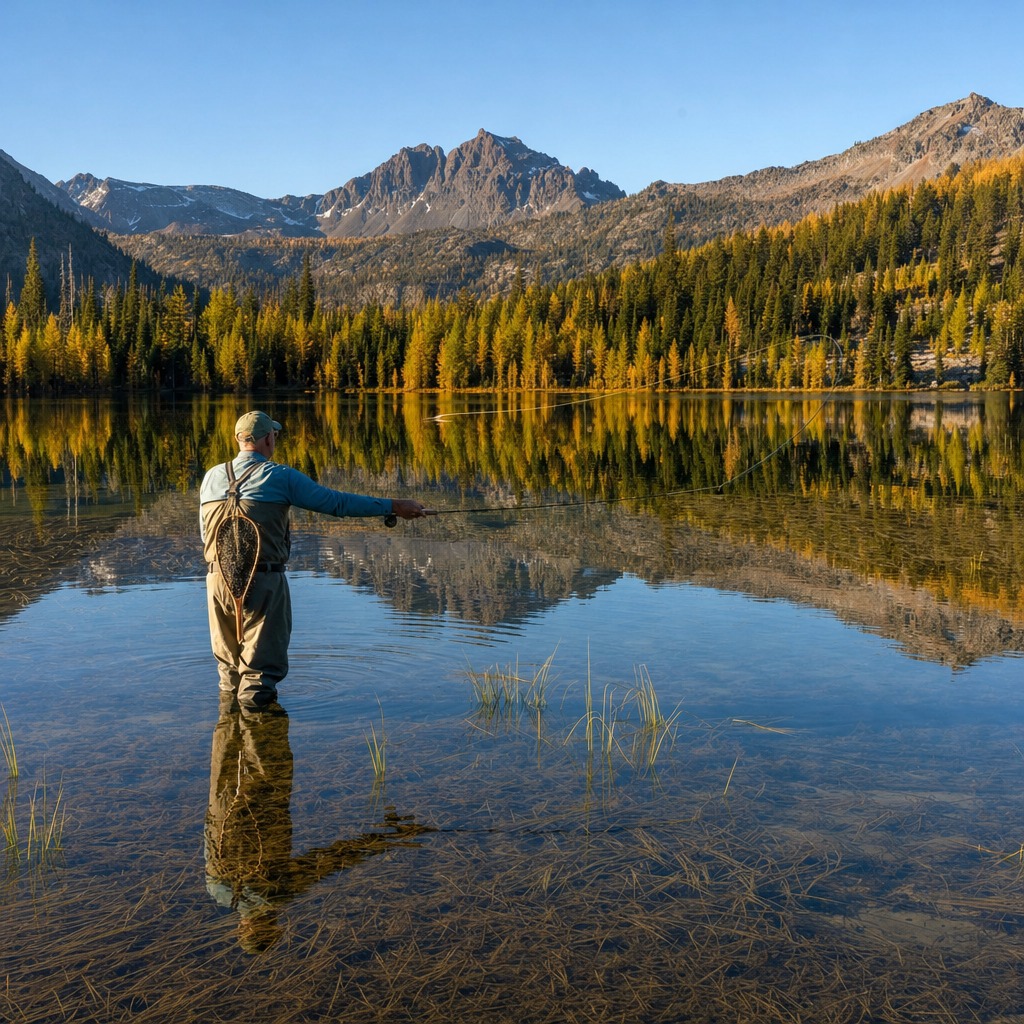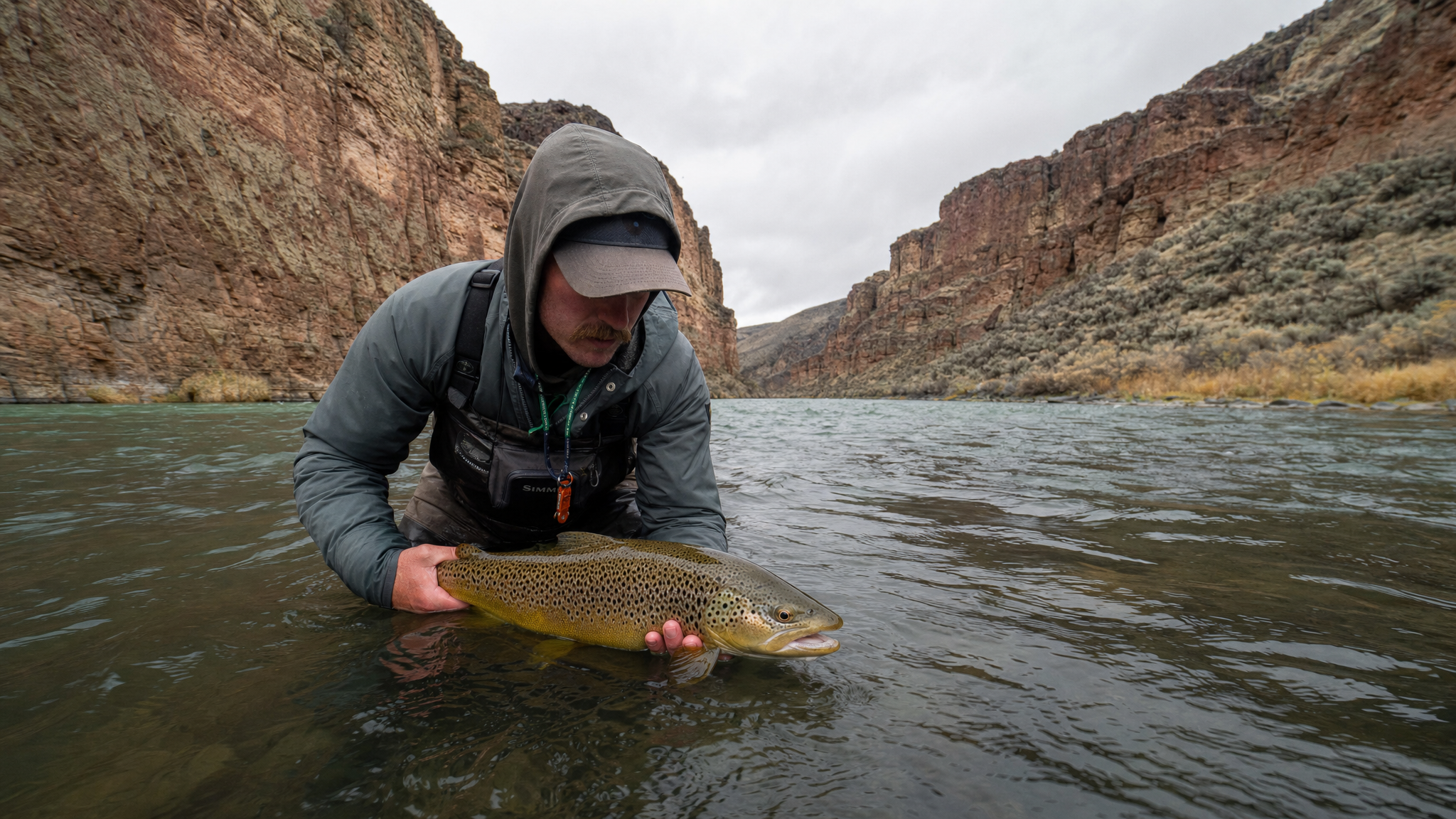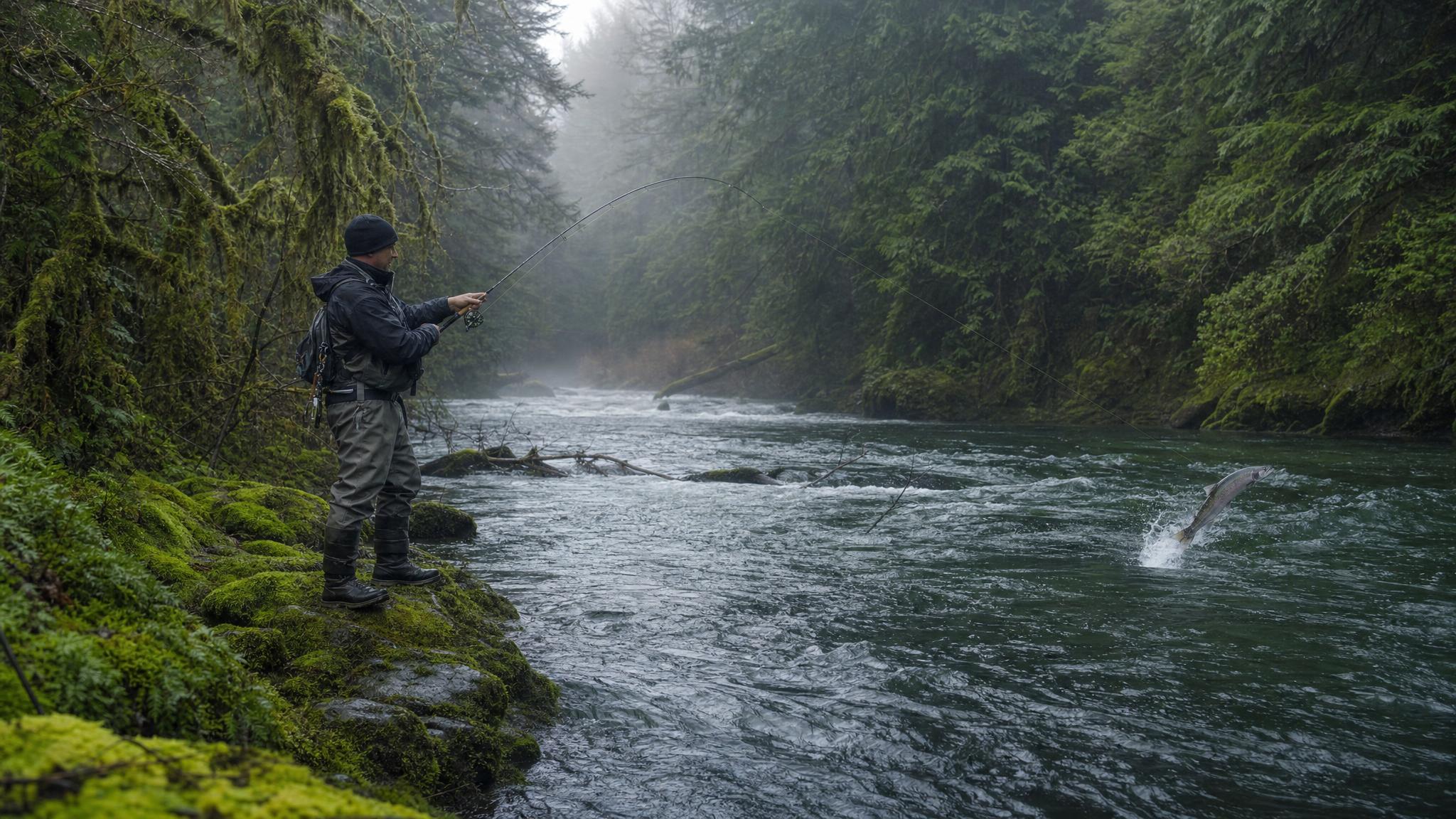
November on Oregon's south coast is a steelheader's quiet secret. While the crowds chase the Rogue and Umpqua, the Coquille River and Sixes River come alive with fresh wild fish — and most days you'll have a prime run to yourself. If you're willing to make the drive to Coos County and Curry County, November delivers some of the best bank steelheading of the entire season.
Why the South Coast in November?
Oregon's south coast rivers fish earlier than their northern counterparts. The Coquille and Sixes receive a mix of half-pounders and mature adults that begin staging in late October, peaking through November with the first good rains. Unlike the Rogue — which can turn off-color for weeks after a big storm — these smaller systems blow out and clear quickly, often fishable within 48 hours of heavy rain.
Water temperatures in the 45–52°F range trigger aggressive takes. Fish are chrome-bright and full of fight fresh from the Pacific.
The Coquille River
The North Fork Coquille above Myrtle Point offers the most consistent bank access. Pull-offs along Norway Road and Remote Road give you long drifts of pocket water and tailouts where steelhead stack up. The south fork below Powers is worth exploring early season when flows are moderate.
Productive Coquille Spots
- Myrtle Point to Coquille — Main stem access with gravel bars and deep outside bends; best after first fall freshets
- Norway Hole — A classic deep tailout on the North Fork that holds fish through mid-winter
- Remote Road Runs — Narrow canyon water; fewer anglers, bigger rewards if you hike in
The Coquille sees a mix of hatchery and wild fish. Check current ODFW regulations — retention rules can change by section and year.
The Sixes River
The Sixes River, entering the Pacific near Cape Blanco State Park, is a short, intimate stream — but don't underestimate it. The upper reach above Sixes offers excellent bank access through private timber company lands that are generally open to foot traffic. Always check gate signs and respect closures.
Best Sixes River Access Points
- Above the confluence with Rock Creek — Riffles and boulders create natural holding lies; fish stack here when the main stem is too high
- Lower Sixes near Cape Blanco Road — Tidal influence brings fresh fish in on incoming tides; great for hardware casters
- Edson Creek confluence — A known resting spot for fish transitioning from tidal water to freshwater
Tackle and Techniques
South coast steelhead in November respond well to drift fishing with cured roe. These aren't pressured fish — they'll eat. Rig a size 2 or 4 Gamakatsu hook with a golf-ball-sized cluster under a 3/4 oz pencil lead, drifted through the heart of any tailout. Let it tick the bottom.
For hardware fans, Blue Fox Vibrax #4 in chrome or orange is a proven November producer on these rivers. Cast quartering upstream, count it down to just above the bottom, and retrieve slowly. Hit the inside seam on the downstream edge of every visible rock.
Go-To Lures and Baits
- Fresh or frozen cured roe (Pautzke or home-cured with borax)
- Corkie/yarn combos in cerise, orange, or chartreuse
- Blue Fox Vibrax #4 and #5 — chrome, orange, and gold
- Macks Lure Wedding Rings tipped with shrimp or worm
- Twitching jigs under a float: 1/4 oz, pink or purple marabou
Timing Your Trip
Watch the USGS stream gauge for the Coquille at Myrtle Point and the Sixes at Sixes. You want flows dropping after a rain event, with visibility improving to at least 18–24 inches. That post-rain clearing window — typically day 2 or 3 after a storm — is prime time.
High tides push fresh fish into the lower river. On the Sixes especially, plan to fish the last two hours of incoming tide and the first two hours of outgoing. Carry ODFW's tide tables or use Tides Near Me on your phone.
Regulations and Licensing
Both the Coquille and Sixes are open for steelhead under Oregon's standard coastal regulations. You'll need a valid Oregon fishing license and a Combined Angling Tag. Wild steelhead retention rules vary — always verify on the ODFW My Shellfish and Fishing app before you fish.
Getting There
The Coquille drains through Coos County. From Roseburg, take US-42 west through Camas Valley and into Coquille — about 75 miles. The Sixes is further south; from Coquille, take US-101 south to Sixes River Road near Langlois. Budget 3+ hours from the Willamette Valley. Bring rain gear, a cooler with ice, and patience — these are roadless-feel rivers even when you're never more than a mile from pavement.
If you haven't fished Oregon's south coast steelhead rivers, November is your entry point. The crowds are elsewhere, the fish are chrome, and the rainforest canyon scenery will have you booking the same week next year.