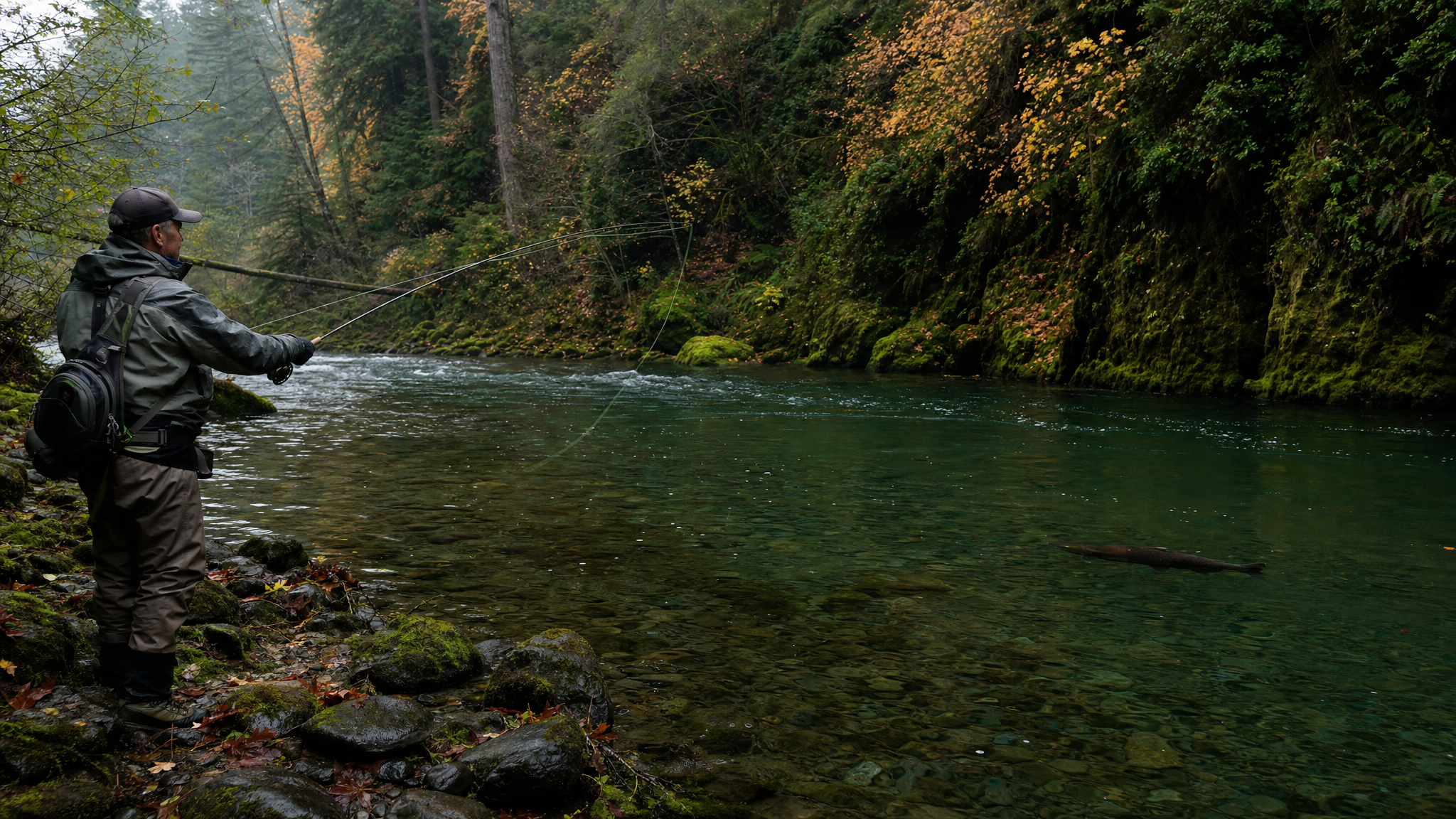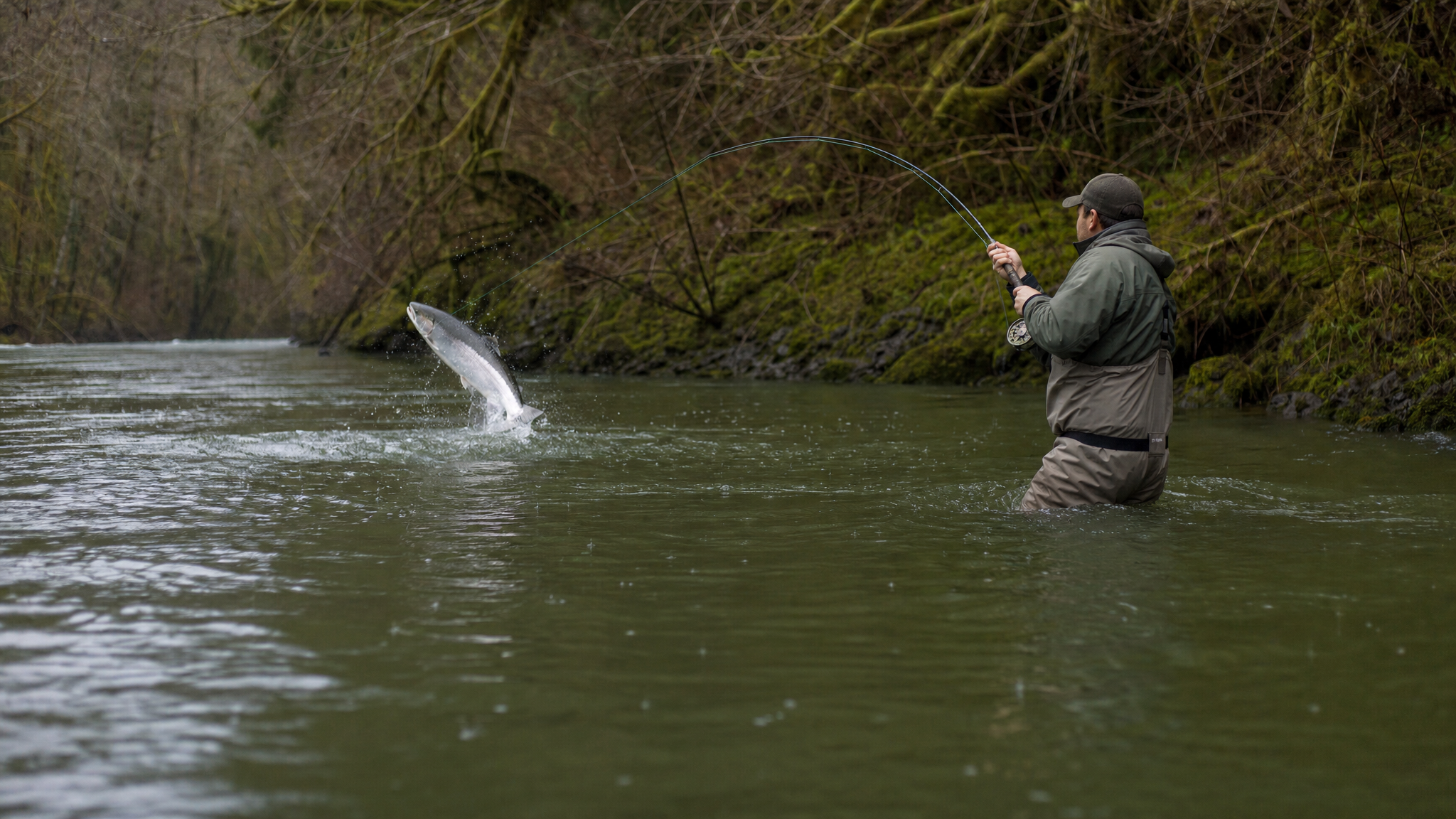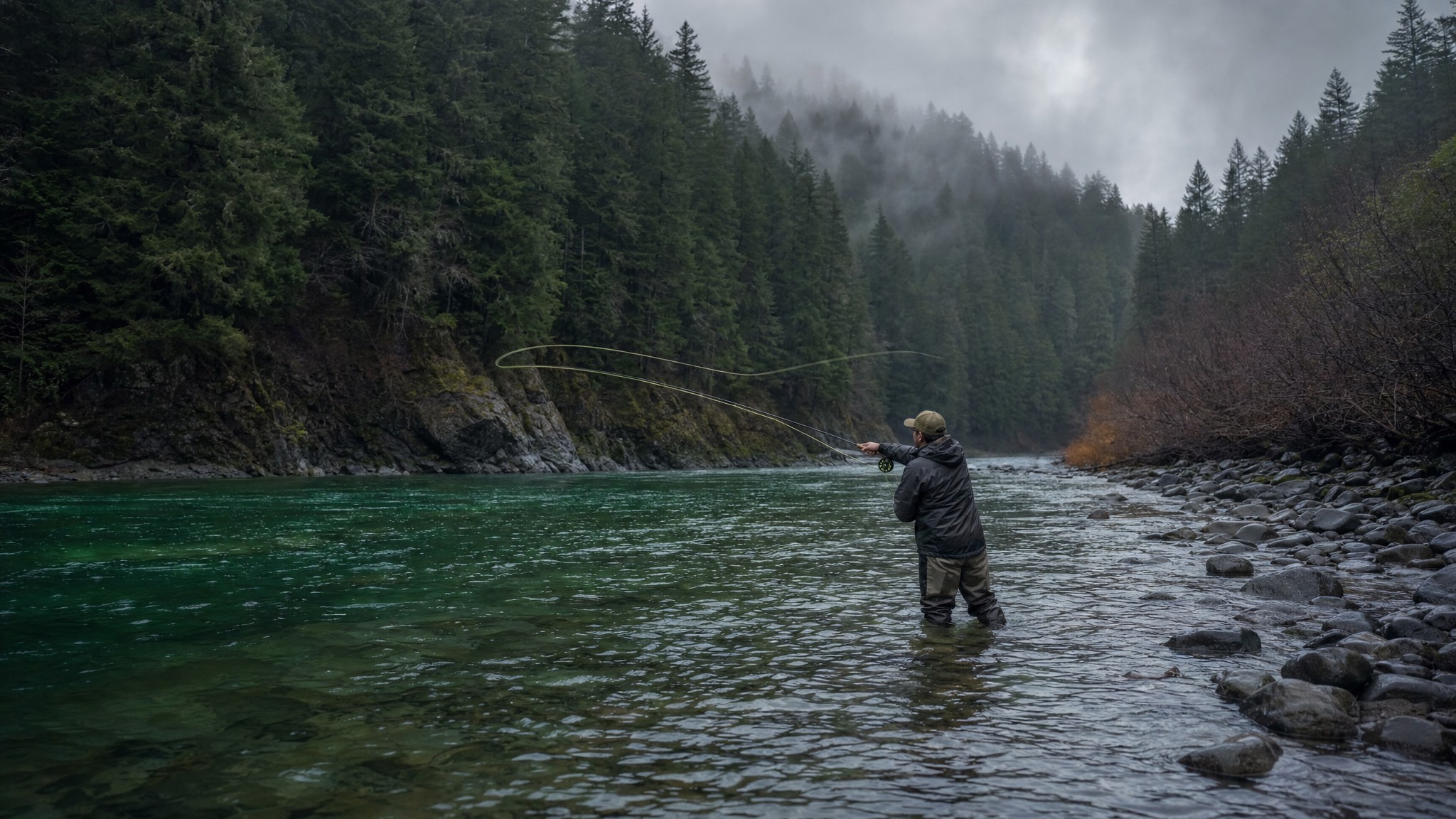
The Sandy River doesn't get the same magazine ink as the Deschutes or the Rogue, but for Portlanders who want wild winter steelhead without a four-hour drive, it's hard to beat. The Sandy flows out of Mount Hood's glaciated flanks and drops fast through Clackamas County before joining the Columbia near Troutdale — and every November, a fresh pulse of wild hatchery-mix steelhead push upstream from saltwater, staging in the deep pools and tailouts that experienced anglers have been fishing for generations.
November Timing: When the Winter Run Arrives
Oregon's winter steelhead season on the Sandy typically opens in late November for hatchery fish, though wild fish must be released. November is the transition month — flows are rising with the first serious fall rains, water temperatures are dropping into the ideal 42–50°F range, and both hatchery and wild fish are stacking in the lower river sections below Marmot Road Bridge. By Thanksgiving weekend, the lower Sandy from Revenue Bridge downstream to the confluence sees its first serious push of winter fish.
Check ODFW's weekly fishing report and the USGS Sandy River gauge at Marmot (Station 14137000) before you go. Optimal flow for bank fishing is roughly 500–1,500 cfs. Above 2,500 cfs the river blows out and bank access becomes dangerous.
Top Bank Access Spots
Oxbow Regional Park
Multnomah County's Oxbow Park gives you miles of river access along the lower Sandy for a small day-use fee. The deep bend pools here hold fish throughout the winter run. Fish the tailout of the large pool below the main parking area early morning before foot traffic picks up. Hatchery fish often stage here before pushing upstream.
Revenue Bridge (Highway 26 Corridor)
The pullouts along Highway 26 near Revenue Bridge are well-known and can be crowded on weekends, but for good reason. The gravel bars below the bridge provide excellent drift fishing water. Walk downstream past the first bend and you'll often find pods of fish holding in the 4–6 foot slot runs that form along the far bank boulders.
Dodge Park
Sandy's city-run Dodge Park sits mid-river and offers easy bank access to some of the Sandy's most productive winter steelhead water. The riffle-to-pool transition just downstream of the boat ramp is a consistent producer throughout November and December. Arrive early — this spot gets busy.
Gear and Presentation for Sandy River Steelhead
The Sandy is a relatively compact river compared to the Columbia or the lower Rogue, which makes it well-suited for a 9- to 10-foot medium-heavy drift rod in the 10–15 lb test range, or a 7-weight switch rod if you prefer swinging flies. Here's what works:
- Drift fishing: Corky-and-yarn rigs in orange, red, or pink — size 2 to 2/0 Gamakatsu hooks — drifted under a pencil lead on 12 lb Maxima Ultragreen mainline. Keep your drift slow and natural along the bottom.
- Sand shrimp: Fresh sand shrimp from the coast (available at most Portland-area tackle shops) are a November staple. Fish them under a float or on a drift rig in the deeper tailouts.
- Spinners: Blue Fox Vibrax and Mepps spinners in size 4–5, copper or chartreuse blades, work well when fish are actively moving through shallower runs.
- Swinging flies: If you're a fly angler, November on the Sandy calls for articulated streamers or classic winter speys — intruder-style patterns in black/purple or orange/gold — fished on a sink-tip line in the 300–400 grain range.
Regulations — Know Before You Go
Sandy River steelhead regulations change frequently and vary by section, so always check the current Oregon Sport Fishing Regulations before your trip. As of recent seasons, wild steelhead must be released on most Sandy River sections. Hatchery fish (clipped adipose fin) may be retained during the open winter season. Consult ODFW regulations for current bag limits, gear restrictions, and any emergency closures — the Sandy is subject to in-season adjustments based on run counts.
A valid Oregon Angling License plus a Combined Angling Tag is required. Pick them up at any Portland-area Fred Meyer, Bi-Mart, or online at MyODFW.com.
Reading Water on the Sandy
Winter steelhead are not aggressive feeders — they're fish in transition, moving from salt to fresh, running on stored energy and instinct. They tend to hold in predictable spots: the soft water on the inside of bends, the deep seam where fast water meets slow, and the tailout of pools as fish stage before moving upstream. Look for structure — submerged boulders, root wads, and bedrock ledges that give fish a resting spot out of the current. Early morning and the last hour of light are prime times. On overcast November days, fish often bite all day.
What to Pack
- Layered wool or synthetic base layers — November mornings on the Sandy are cold and wet
- Chest waders and felt or studded boots for the slick basalt cobbles
- Wading staff (the Sandy's current is deceptively powerful at higher flows)
- Headlamp — first light bites start before sunrise
- Catch-and-release tools: hemostats, rubberized net, and a Revival Revival Revival Revival knowledge of how to properly revive a cold-water fish
Final Thoughts
The Sandy River is one of those rare Oregon fisheries that rewards persistence and local knowledge without demanding a long drive or a charter bill. November's winter steelhead run is just getting started, the crowds thin out mid-week, and there's something genuinely satisfying about catching a bright chrome steelhead in the shadow of Mount Hood with the smell of cold rain and Douglas fir in the air. Gear up, check the gauge, and get out there.