Most hunters treat range trips as an afterthought — grab the rifle, throw some ammo in a bag, and head to the range. But the shooters who come home with consistent data, tighter groups, and confirmed zeros run a methodical approach backed by a well-organized range bag. Whether you're zeroing a deer rifle before Oregon's archery opener or running PRS stages in Bend, the right kit makes every session more productive.
The Bag Itself
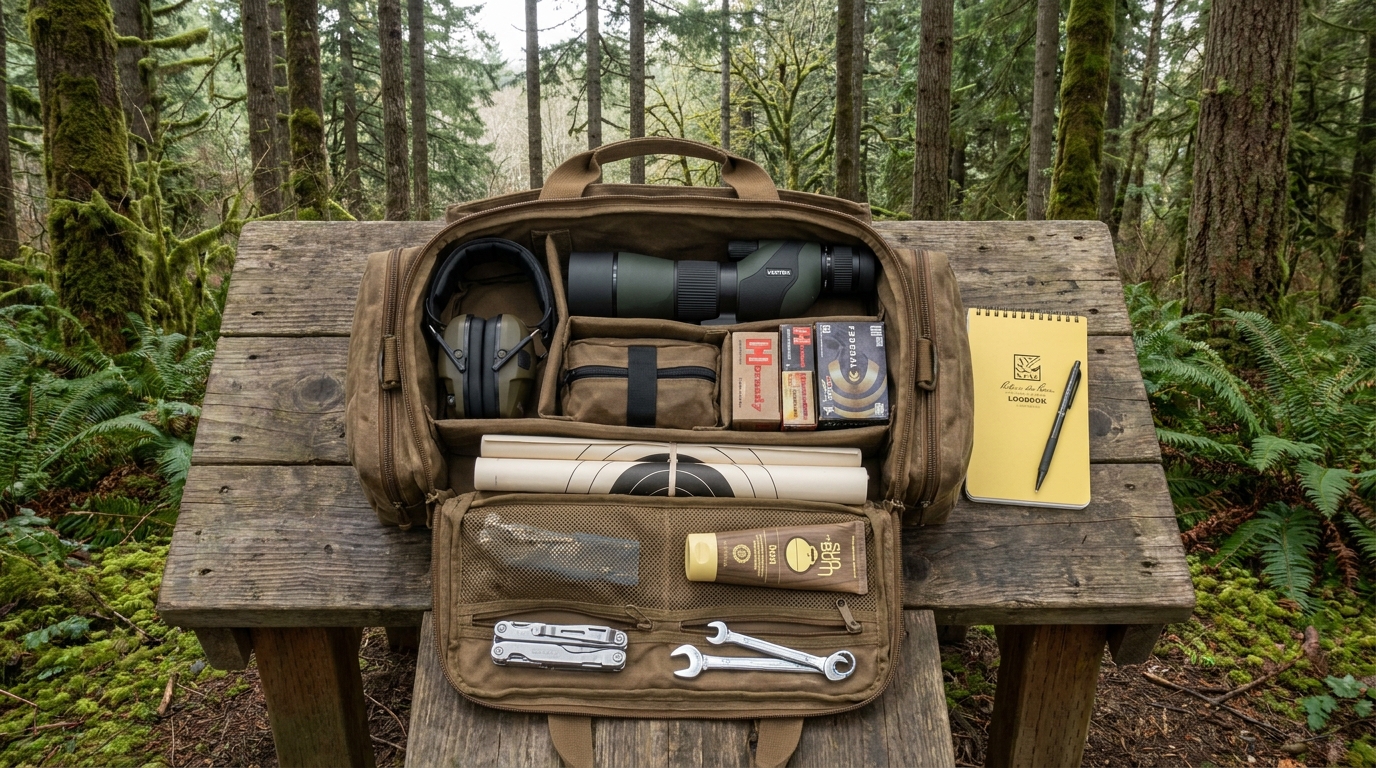
Start with a bag that can actually hold what you need. The Savior Equipment and 5.11 Range Master series are popular in the Pacific Northwest, and for good reason — they're built for rain, they have compartmented interiors, and they hold up to being thrown in a truck bed. Look for a bag with a padded divider system, an exterior hard-shell pocket for optics and electronics, and MOLLE webbing for add-ons. Your range bag is a tool, not a fashion accessory — buy once, buy right.
Safety and Ear/Eye Protection
This sounds obvious, but the quality of your protection matters more than most shooters admit.
- Electronic hearing protection: The Walker Razor Slim or Howard Leight Impact Sport are budget-friendly essentials. At the professional end, the Peltor SportTac or Sordin Supreme Pro cut the sharp report while amplifying range commands and conversation. For serious hunters: run the electronic muffs at the range, but pack foam plugs as backup. In the Pacific Northwest rain, electronics fail at the worst times.
- Foam plugs: A box of Howard Leight disposables. Keep them in an exterior pocket. When a neighbor at the bench breaks out a .300 Weatherby, you'll be glad they're accessible.
- Shooting glasses: Oakley SI Ballistic M-Frame or ESS Crossbow for impact protection. Carry multiple lens tints — amber for overcast Pacific Northwest mornings, clear for indoor ranges, and gray for bright summer days at elevation.
Ammunition and Feeding Equipment
- Ammo in clearly labeled containers: Mark your loads — especially if you're testing multiple handloads. A Sharpie and a roll of tape is all it takes. Mixing up loads destroys your data.
- Stripper clips or loading tools: For semi-autos, an UpLULA loader saves your thumbs on high-volume sessions. For bolt guns, a short-stroke loading rod for pushing stuck cases is worth the space.
- Chamber flag: Always carry a chamber flag or empty chamber indicator. Make it habit to flag the chamber between strings.
Accuracy and Zeroing Tools
Spotting Scope and Tripod
A compact spotting scope is mandatory for any range session beyond 100 yards. The Vortex Razor HD 11-33x50 or Athlon Ares 20-60x85 both handle Oregon's overcast light well. Pair with a lightweight carbon or aluminum tripod — the Slik Able 300 DX is a solid budget pick. Call your shots, see your impacts, and avoid constant downrange walks that slow your session and irritate your neighbors.
Bore Sight or Laser Zeroing Tool
Bringing a new scope or rifle? A bore-sight laser saves time and ammo getting on paper at 25 yards before walking back to 100. The SiteLite Mag Glo or Wheeler bore sight tools work across most calibers and require no batteries to remove from the rifle.
Ballistic Calculator
If you're shooting past 300 yards — and in eastern Oregon and the Cascades you likely will be — have your ballistic data ready. Applied Ballistics Mobile or Hornady 4DOF loaded on your phone, paired with your measured velocity from a chronograph, gives you confirmed drop data. Don't trust published numbers from a different barrel length than yours.
Chronograph
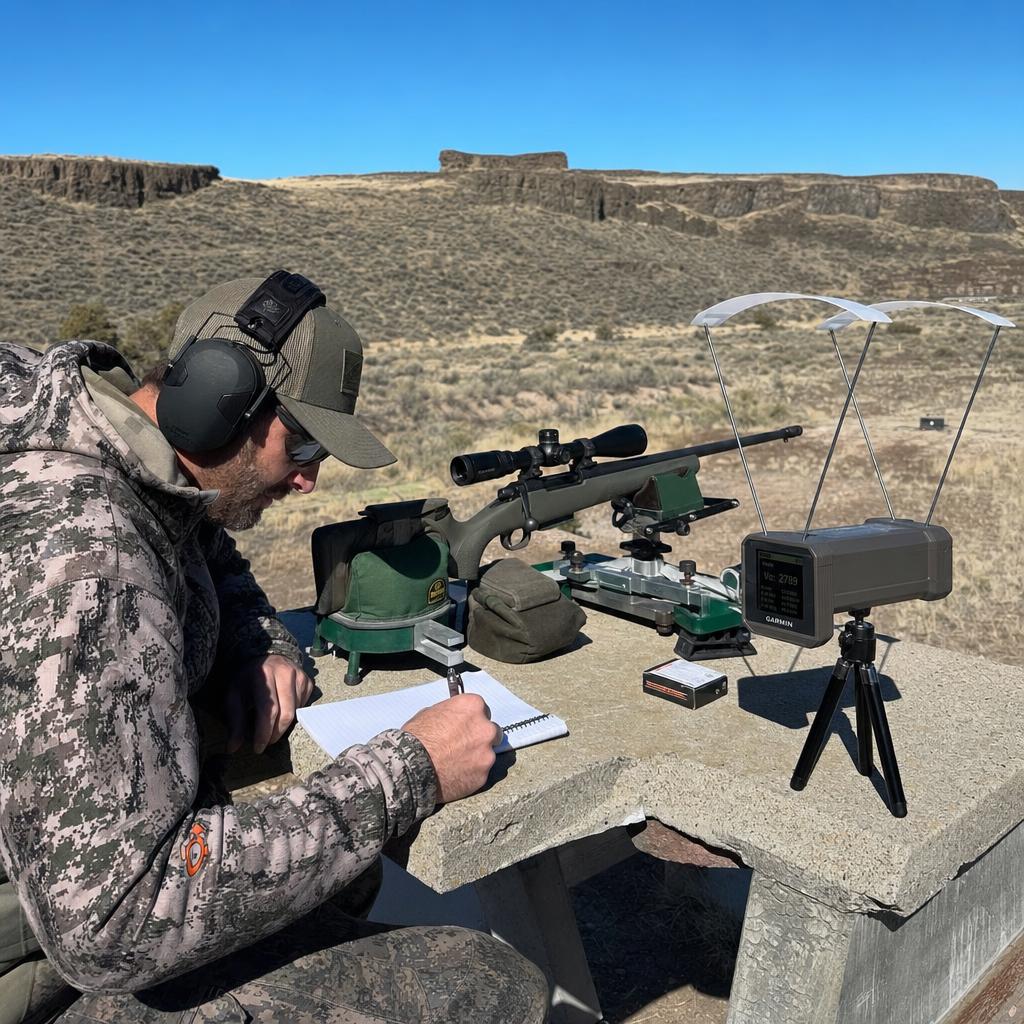
The Magnetospeed sling-on chronograph is the most convenient option for solo shooters — it attaches to the barrel and reads through the muzzle blast without a downrange setup. The LabRadar Doppler unit is the gold standard for handloaders who want comprehensive data. Whatever you choose, bring fresh batteries and check them before leaving home. Arriving at a remote forest range with a dead chronograph is a Pacific Northwest rite of passage that happens once.
Rest and Positional Shooting Aids
- Front rest or sandbag: A quality front rest — Caldwell Rock, Sinclair, or a simple leather bag — is essential for zeroing work. Consistency of position matters more than any other variable when chasing sub-MOA groups.
- Rear bag: A rear bag under the stock butt completes the supported position. The Protektor or Edgewood leather bags are expensive but last decades.
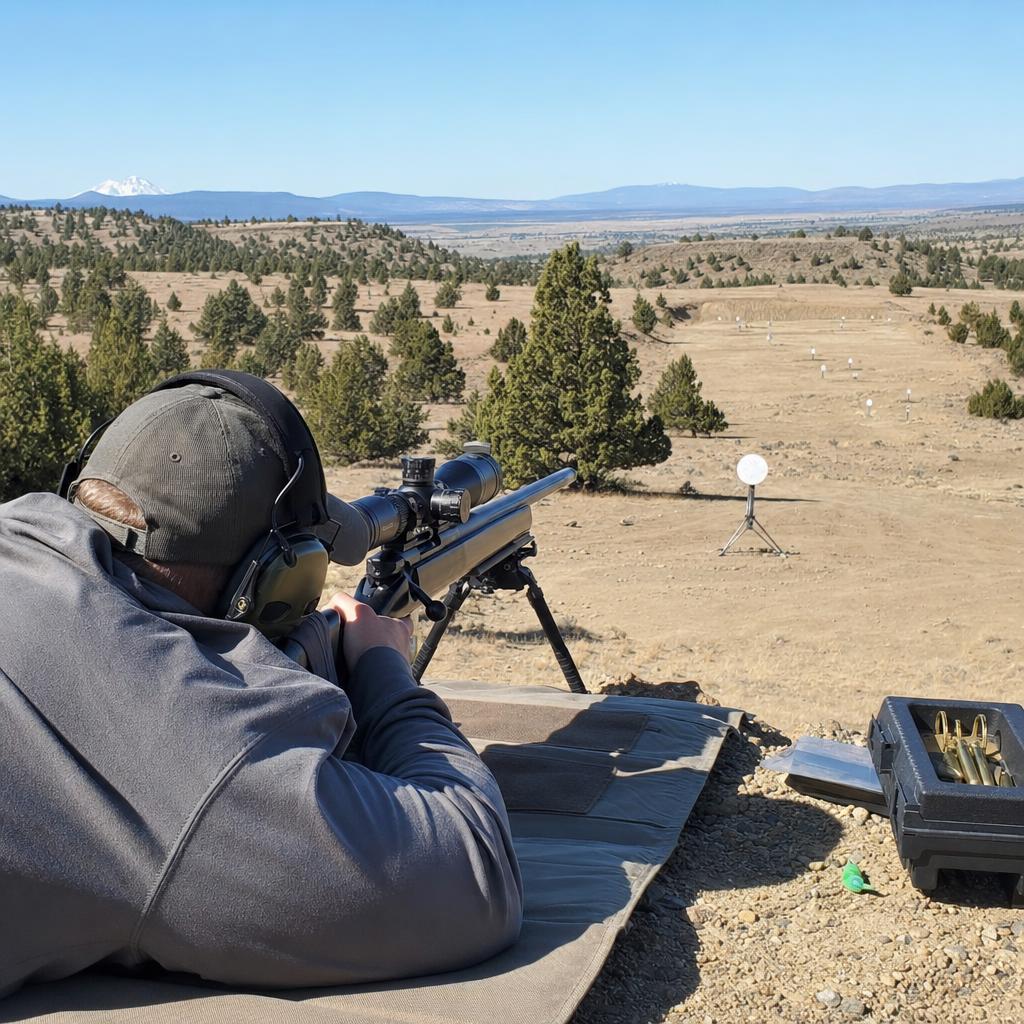
- Bipod and shooting mat: For prone positional practice, bring your hunting bipod and a closed-cell foam shooting mat. In the Pacific Northwest, ground moisture makes a bare mat miserable in minutes.
Data and Record-Keeping
A dedicated range notebook or printed log sheets live in every serious shooter's bag. Record date, temperature, elevation, wind conditions, ammunition lot number, rifle and optic settings, and group measurements. This data is irreplaceable when you're fine-tuning a load or troubleshooting a problem. Riflelogg and Strelok apps also allow digital logging — but paper doesn't lose battery at 5,000 feet.
Field Cleaning Kit
- Bore snake (caliber-appropriate) for quick between-session swipes
- CLP or Slip 2000 EWL for action lubrication
- Bronze brush and patches for cleaning the muzzle crown
- Optic cloth and anti-fog wipes for scope lenses
In the Pacific Northwest, barrel cleaning between extended sessions in damp conditions reduces copper fouling buildup that quietly erodes accuracy. A bore snake takes 30 seconds and keeps your barrel honest.
The Oregon-Specific Extras
A few items that belong in any Pacific Northwest shooter's bag:
- Rainfly or tarp: Many Oregon outdoor ranges have covered benches, but not all. A small tarp or umbrella keeps your gear and ammo dry during sudden summer showers in the Cascades.
- Bug repellent: Some of Oregon's public shooting areas are in timber country. Evening sessions in late summer mean mosquitoes. DEET-free Sawyer Picaridin works well and won't damage optic coatings or rubber stocks.
- Sunscreen: High desert shooting areas like those near Bend, La Pine, and Brothers get brutal UV in August. Don't skip it.
The Bottom Line
A well-organized range bag turns a casual trip to the range into a productive training and data-collection session. Before Oregon's archery opener, before deer rifle season, before any competition — pull out the bag, run through your checklist, and make sure everything is fresh, charged, and ready. The groups you shoot at the range are the groups you'll remember when it counts in the field.