Sporting clays is the closest thing to hunting that doesn't require a tag. Targets fly as quartering doves, sprinting rabbits, incoming ducks, and high crossing pheasants — each station a different puzzle with a ticking clock. In Oregon, where upland hunting and waterfowl seasons overlap from October through January, sporting clays has earned a legitimate following among both serious competitors and bird hunters looking to sharpen their wingshooting before opening day. Here's how to get started at the state's best courses.
What Is Sporting Clays?
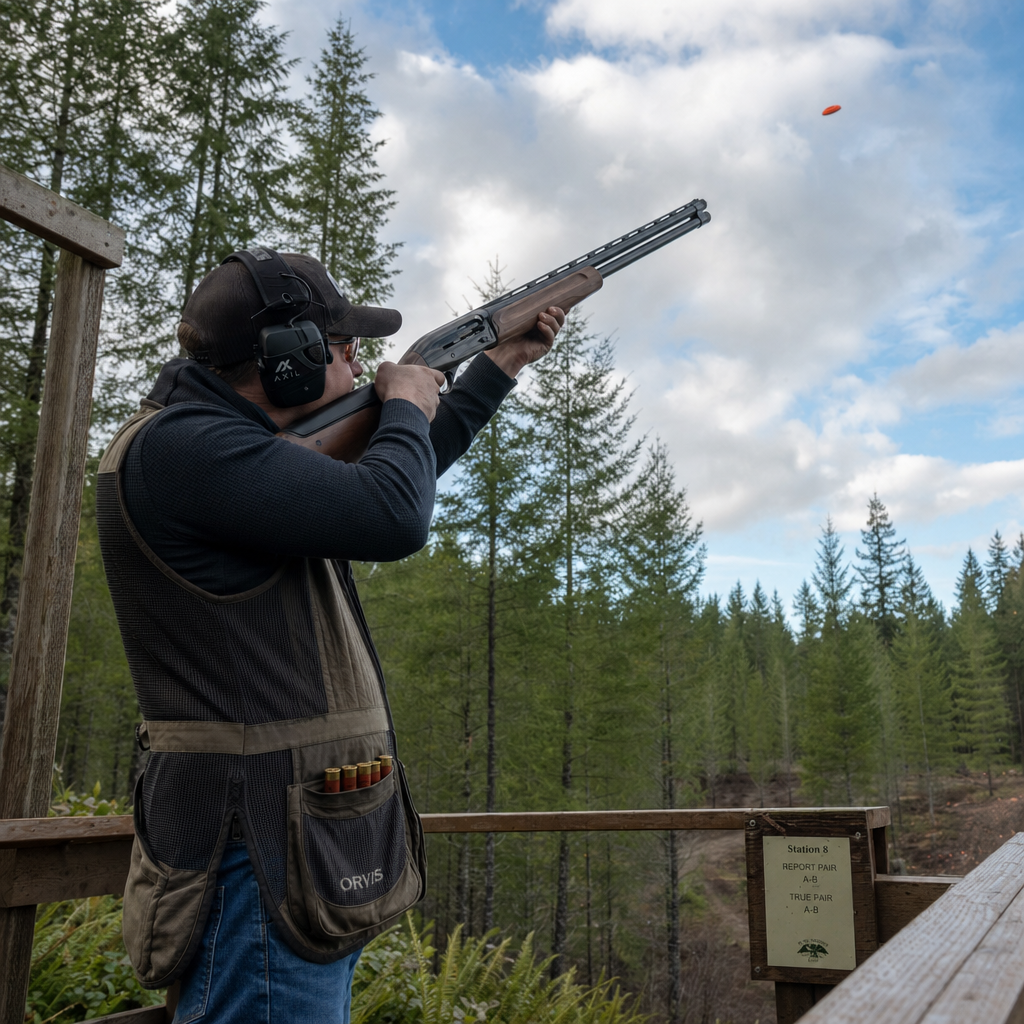
Sporting clays is sometimes called "golf with a shotgun," and the comparison is apt. A typical course features 10 to 15 stations scattered across varied terrain — through timber, over water, across open fields. At each station, shooters engage two clay targets presented simultaneously (report pairs) or in sequence (true pairs), all thrown from traps set to simulate specific game bird scenarios. Unlike trap or skeet, where targets follow predictable paths, sporting clays targets change distance, angle, elevation, and speed at every station.
A standard round is 50 or 100 targets. NSCA (National Sporting Clays Association) rules govern competitive shooting, but recreational shooting is always relaxed and beginner-friendly — just call pull, mount the gun, and swing through.
Oregon's Top Sporting Clays Venues
Albany Rifle and Pistol Club — Albany, OR
One of the most established clay target venues in the Willamette Valley. ARPC runs a full sporting clays course plus trap and skeet fields, making it an excellent all-day destination. The course features covered stations for the inevitable drizzle. Located just off I-5, it's accessible from Eugene, Salem, and Portland in under an hour.
Sunridge Guns — Medford, OR
Southern Oregon's go-to shooting destination. Sunridge offers a manicured sporting clays course with professional instruction and range officers who will gladly walk first-timers through the course and explain each presentation. The shop also carries a solid selection of sporting clays shells and accessories.
Skamania Lodge Shooting Sports — Stevenson, WA (Columbia Gorge)
Just across the Columbia River from Hood River, this resort course offers some of the most dramatic wingshooting terrain in the Pacific Northwest — elevated stations overlooking the Gorge with targets crossing through timber and over open sky. Rentals available; no shotgun required to show up and shoot.
Bend Shooting Range — Bend, OR
The Central Oregon hub for clay target sports. BSR maintains a full five-stand facility (five-stand is sporting clays' compact cousin, shot from a single platform with five trap machines) ideal for quick practice sessions before a waterfowl or pheasant opener. The eastern Oregon wind adds a real-world element that will improve your crossing-bird game faster than calm-air shooting.
Getting Started: What You Need
The Shotgun
Any working 12-gauge will get you on the course. Over-under (O/U) shotguns are the standard for sporting clays — Browning Citori, Beretta A400, and CZ Redhead are common mid-range picks — but a pump or semi-auto is perfectly welcome for recreational shooting. If you're unsure whether sporting clays is your sport, most Oregon courses rent guns for $15–$25 per round.
Choke Selection
For station distances from 15 to 50+ yards, Improved Cylinder (IC) for close targets and Modified for mid-range crosses is a reliable starting combination. Many experienced shooters run Skeet #1 / IC or IC / Modified for a full round. Avoid Full choke — it makes close, fast targets at distance nearly impossible and is hard on target-load pellets at close range.
Ammunition
Standard 12-gauge 1 oz or 1-1/8 oz target loads in #7.5 or #8 shot are the sporting clays staple. Estate, Winchester AA, Federal Top Gun, and Fiocchi all produce excellent target shells in the $10–$14 per box (25 rounds) range. Buy in flats of 10 boxes — Oregon shooting ranges sell by the flat and the per-shell price drops meaningfully. Lead shot is standard at most Oregon courses; check specific range rules before bringing steel or bismuth.
Eye and Ear Protection
Non-negotiable. Yellow-lens shooting glasses improve target visibility against gray Oregon skies. Electronic earmuffs are preferred over foam plugs — you'll want to hear the trap arm and hear your squad's calls between shots.
The Shooting Fundamentals
Sporting clays rewards a different technique than rifle shooting. The key shift: keep your eye on the target, not the barrel. Your subconscious visual system is better at computing lead and angle than your analytical brain — trust it.
- Mount last: Pre-mounting the gun (European style) works for trap; sporting clays benefits from a low-gun or ready-mount position so you develop consistent mounts under pressure
- Pick a break point: Before calling pull, identify where you want to break the target — not where it comes from. Work backward to determine your hold point (where to place the muzzle at pull)
- Swing through, don't stop: Stopping the swing is the most common miss. Follow through past the target and the gun will be where it needs to be
- Call your misses: Watch where your pattern goes — behind, in front, high, low. Adjust on the second barrel or next target
Five-Stand: The Quick-Fix Practice Tool
If a full sporting clays course sounds like too much time on a busy Tuesday, five-stand is your answer. Five stations, five trap machines, multiple target presentations called from a referee, 25 targets total, and you're done in 20 minutes. Many Oregon gun clubs run five-stand independently of their full sporting clays course, often without a reservation. The Bend Shooting Range and several Willamette Valley clubs keep five-stand accessible daily.
Why Bird Hunters Should Shoot Clays
The math is simple: a pheasant season in the Willamette Valley gives you maybe 40 chances at flushing birds over a full season. A single sporting clays round gives you 50 target presentations in an afternoon. Sporting clays is the most efficient way to accumulate wingshooting repetitions outside of live-bird opportunities.
Specific applications for Oregon hunters:
- Waterfowl prep: Practice station reports that simulate incoming and overhead ducks. Work the crossing presentations for the high, fast mallards you'll see at Sauvie Island
- Upland prep: Rabbit targets rolling on the ground are perfect for chukar and quail that flush low and run. Midi targets simulate quail-speed birds
- Dove training: The "springing teal" presentation — a target that goes nearly straight up — is a dead ringer for the mourning doves that jump vertically from wheat fields in eastern Oregon in September
Competitive Sporting Clays in Oregon
Oregon has an active NSCA chapter with registered shoots held from spring through fall. The Oregon State Sporting Clays Championship typically runs in late summer at Albany Rifle and Pistol Club, drawing 200+ shooters from across the Northwest. NSCA classification runs from Rookie through AAA, so first-year shooters compete against their peers — no sandbagging concerns.
Entry fees run $60–$120 for a 100-target registered event, including all targets. Squad with experienced shooters and you'll learn more in one registered shoot than in a dozen solo practice rounds.
Getting On the Course
Call ahead or check the club's website — most Oregon sporting clays venues require a reservation on weekends. Weekday walk-on shooting is usually available. Bring your hunting license or a valid photo ID; many clubs are on state-permitted ranges and require sign-in. Show up 15 minutes early to get a safety briefing if you're new, and tell the range officer — they'll pair you with a helpful squad and make sure you understand the course layout before you head to station one.