Tucked into the high desert of Jefferson County between Madras and Culver, Haystack Reservoir is one of Central Oregon's most underrated fall fisheries. While anglers crowd the upper Deschutes or Prineville Reservoir, Haystack quietly produces quality rainbow trout from September through the November drawdown — often with just a handful of other fishermen on the water. If you're looking for a productive October road trip that doesn't require a wilderness permit or a long float, Haystack deserves serious attention.
The Fishery: What Haystack Has to Offer
Haystack is a shallow, irrigation-fed reservoir covering roughly 240 acres at full pool. ODFW stocks it regularly with catchable rainbow trout, and the resident population of holdover fish can grow to impressive sizes — 14 to 20 inches isn't uncommon by fall, and genuinely large fish in the 22-inch-plus class show up every season. The reservoir's shallow profile and heavy aquatic weed growth make it a tremendous food factory; trout that survive a season or two in Haystack grow fat on midges, Callibaetis mayflies, damselflies, and the occasional scud or leech.
Fall is arguably the best time to fish Haystack. Water temperatures drop into the productive 50s°F range, fish that may have sulked through a warm summer become aggressive, and the aquatic insect activity — particularly Callibaetis mayfly hatches and midge activity — is excellent right through the end of October.
October Tactics: Shore vs. Float Tube
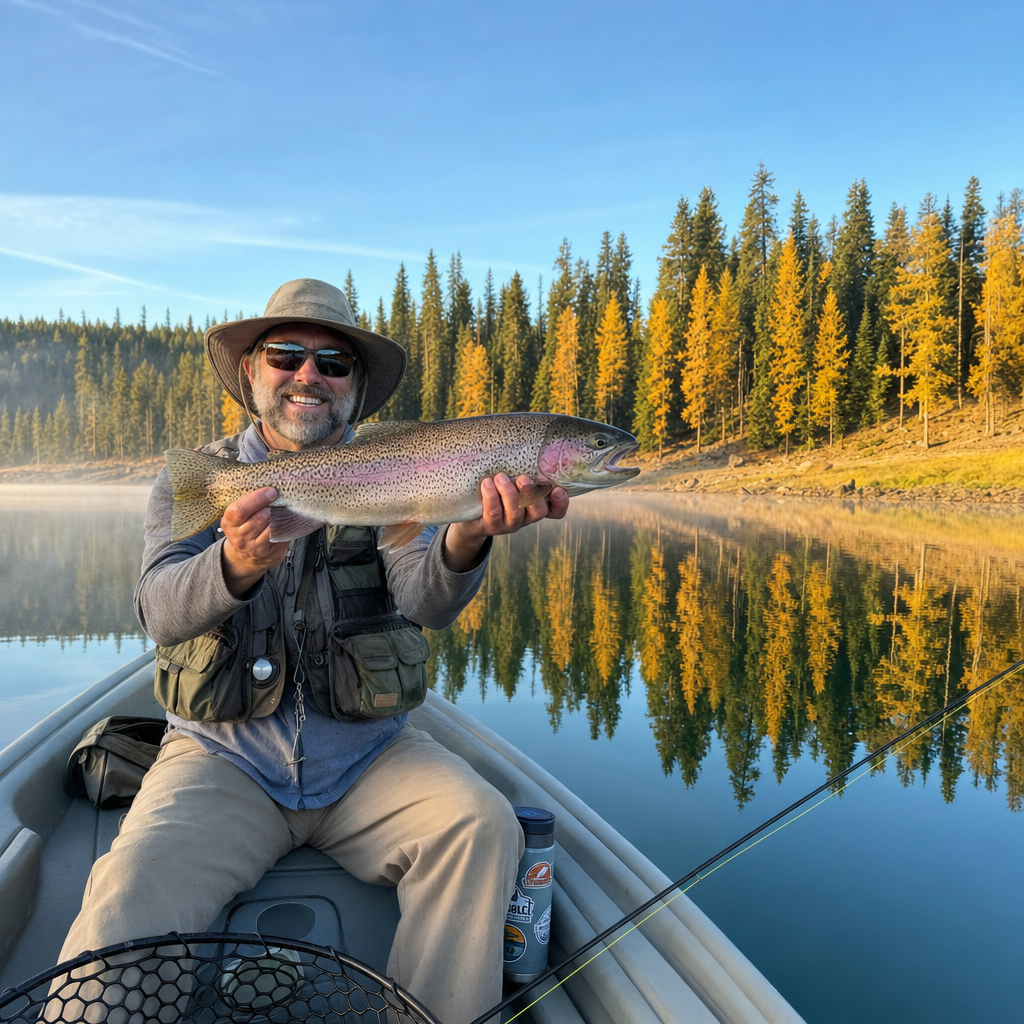
Haystack is a manageable fishery for shore anglers, but float tube and pontoon boat anglers have a significant advantage. The weed beds that hold fish often extend away from fishable bank areas, and the ability to position over or adjacent to submerged vegetation makes a real difference. A float tube or small craft also lets you move with the fish — trout in shallow stillwaters relocate based on wind, light, and temperature, and mobility pays off.
Float Tube and Pontoon Boat Approach
- Focus on the edges of submerged weed beds in 4 to 8 feet of water
- Fish the downwind shoreline — wind pushes food and fish to the lee bank
- Work slowly along weed edges rather than over open bottom
- Best times: early morning and the last two hours before sunset
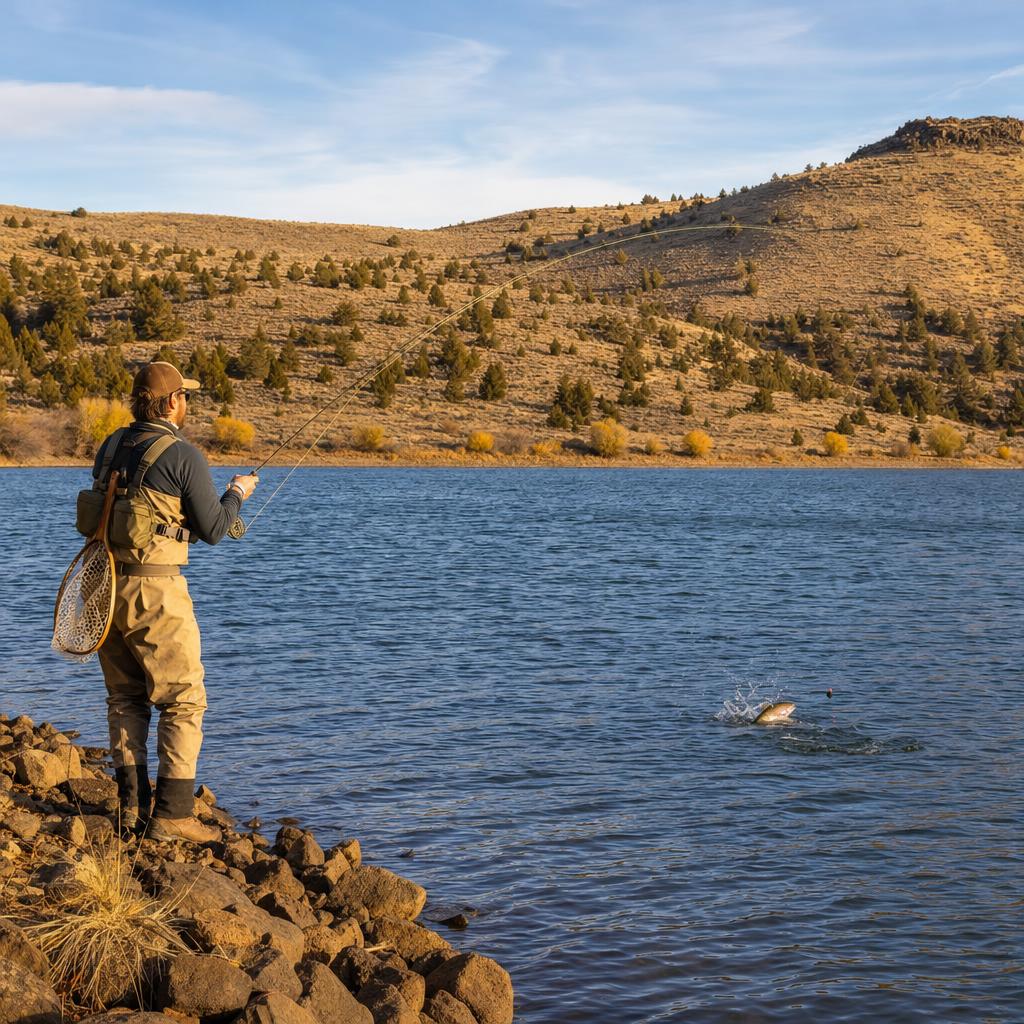
Shore Fishing
- The boat ramp area and north shoreline offer the most accessible bank fishing
- Use a long leader (12 to 15 feet) under a strike indicator to reach fish holding 4 to 6 feet deep
- Kastmaster spoons in gold or silver produce well for spin anglers working the open water areas
- PowerBait and worms under a bobber remain effective for planted fish near the ramp
Flies That Work in October
If you're a fly angler, Haystack's October menu is consistent and well-defined. The Callibaetis hatch is the signature event — these speckle-winged mayflies emerge on calm, overcast October mornings and trigger pods of rising trout. Carry both nymph and dry fly patterns.
Top Fly Patterns for Haystack in October
- Callibaetis Nymph (size 14–16): The workhorse — fish it slowly under a strike indicator over weed edges
- Callibaetis Sparkle Dun or Comparadun (size 14–16): During the hatch, rising fish will take these readily on a drag-free drift
- Woolly Bugger in olive or black (size 8–10): Slow-strip retrieves along weed edges produce aggressive takes from larger holdovers
- Chironomid/Midge Pupa in black, red, or olive (size 16–18): Fish deep under an indicator — deadly during flat, cold mornings when there's no hatch
- Damselfly Nymph in olive (size 10–12): Strip slowly through mid-water column — late September into early October still sees damsel activity
- Scud in olive or gray (size 12–14): Fish near the bottom in weed pockets — trout pick these off consistently
Gear for Haystack Still Water
A 5-weight fly rod is the versatile choice — light enough for size 16 midge fishing but sufficient backbone to handle a 20-inch rainbow. A full-intermediate sinking line or a clear intermediate running line with a floating tip (a "hover line") is ideal for fishing nymphs at depth without the indicator-only approach. For spin anglers, a light action 6- to 7-foot rod with 4 to 6-pound fluorocarbon gives the best sensitivity for detecting subtle takes in cold water.
Waders are helpful — the bank gets soft and marshy in places — but they're not mandatory if you're using a float tube. Five-millimeter neoprene waders are comfortable for October mornings that can drop into the 30s before the sun clears the canyon rim.
Regulations and Access
Haystack Reservoir falls under Oregon statewide general trout regulations unless ODFW has issued specific amendments — always check the current Oregon Sport Fishing Regulations booklet before your trip. A valid Oregon fishing license with Combined Angling Tag is required. The reservoir is managed by the Bureau of Reclamation and the reservoir level can fluctuate significantly by late fall as irrigation draws down — call the ODFW Prineville office (541-447-5111) for current conditions and access updates before making the drive.
Access is straightforward: from US-97 south of Madras, turn onto Jericho Lane (follow signs for Haystack Reservoir / Haystack Recreation Area). The day-use and boat ramp area is well-maintained with parking, vault toilets, and a paved launch. A small fee may apply for day use — a Northwest Forest Pass does not cover this site.
Nearby Options: Don't Overlook Prineville Reservoir
If you're making the drive from the Bend or Portland area, consider combining a Haystack session with a morning at Prineville Reservoir, roughly 30 miles southeast. Prineville holds quality bass, crappie, and walleye in addition to stocked trout, and the two fisheries provide a well-rounded day trip for an angler willing to cover ground. The Crooked River below Bowman Dam also offers fly fishing for wild redband trout within a short drive of Haystack — an excellent way to fill the afternoon with moving water action.
The Bottom Line
Haystack Reservoir doesn't show up on most anglers' radar, and that's the best reason to fish it. In October, when the crowds thin and the trout get serious, this Central Oregon high-desert reservoir produces some of the most satisfying stillwater fly fishing in the region. Drive out on a calm, overcast October morning, set up your float tube in the weed-edge zone, and watch for the subtle dimples of rising Callibaetis feeders. That's what stillwater trout fishing is supposed to be.