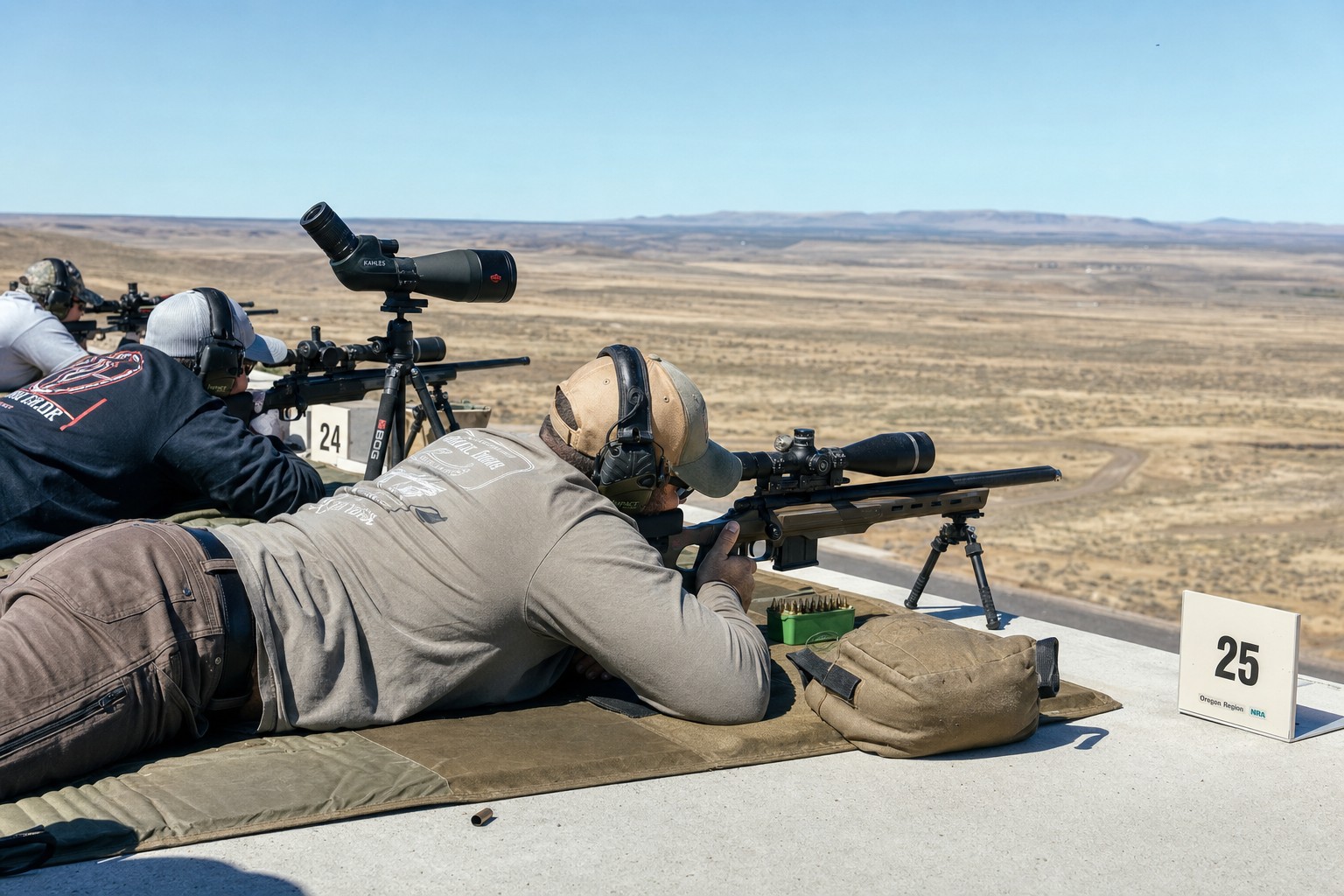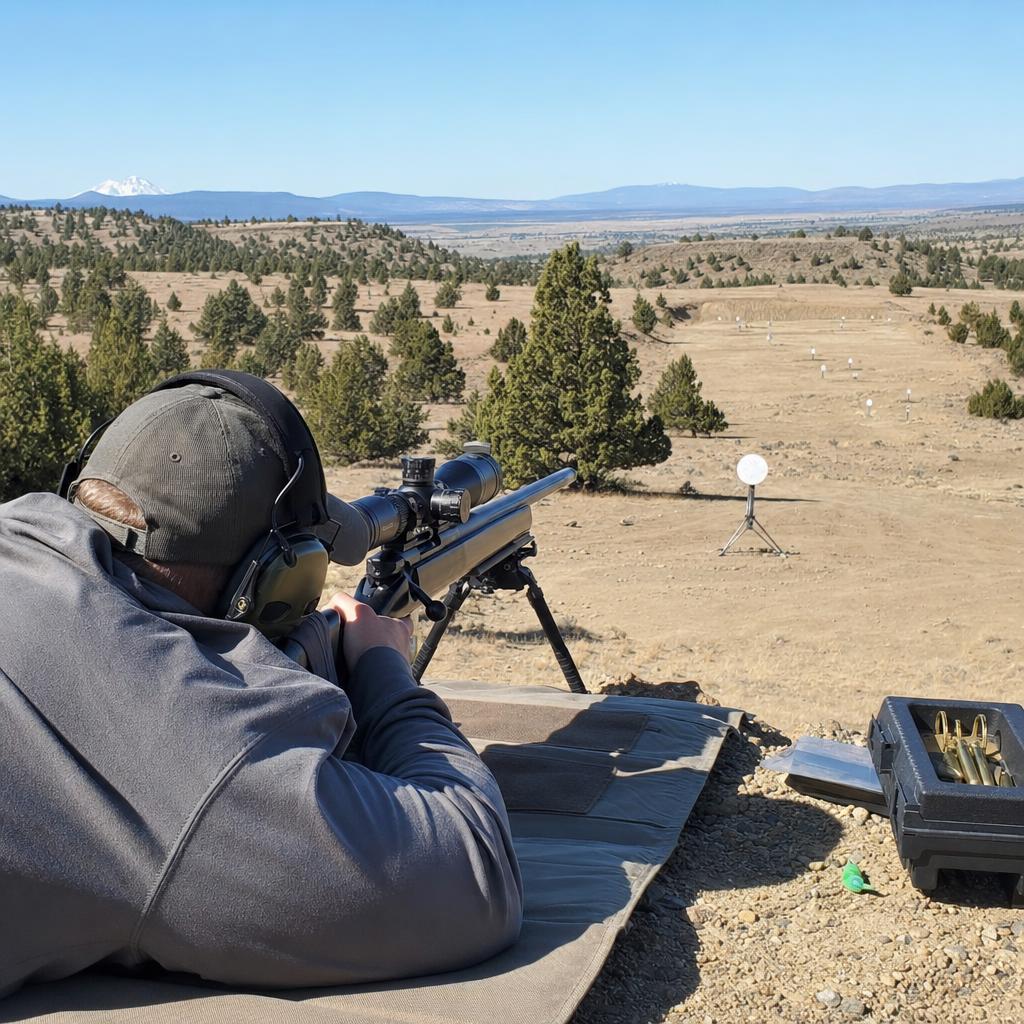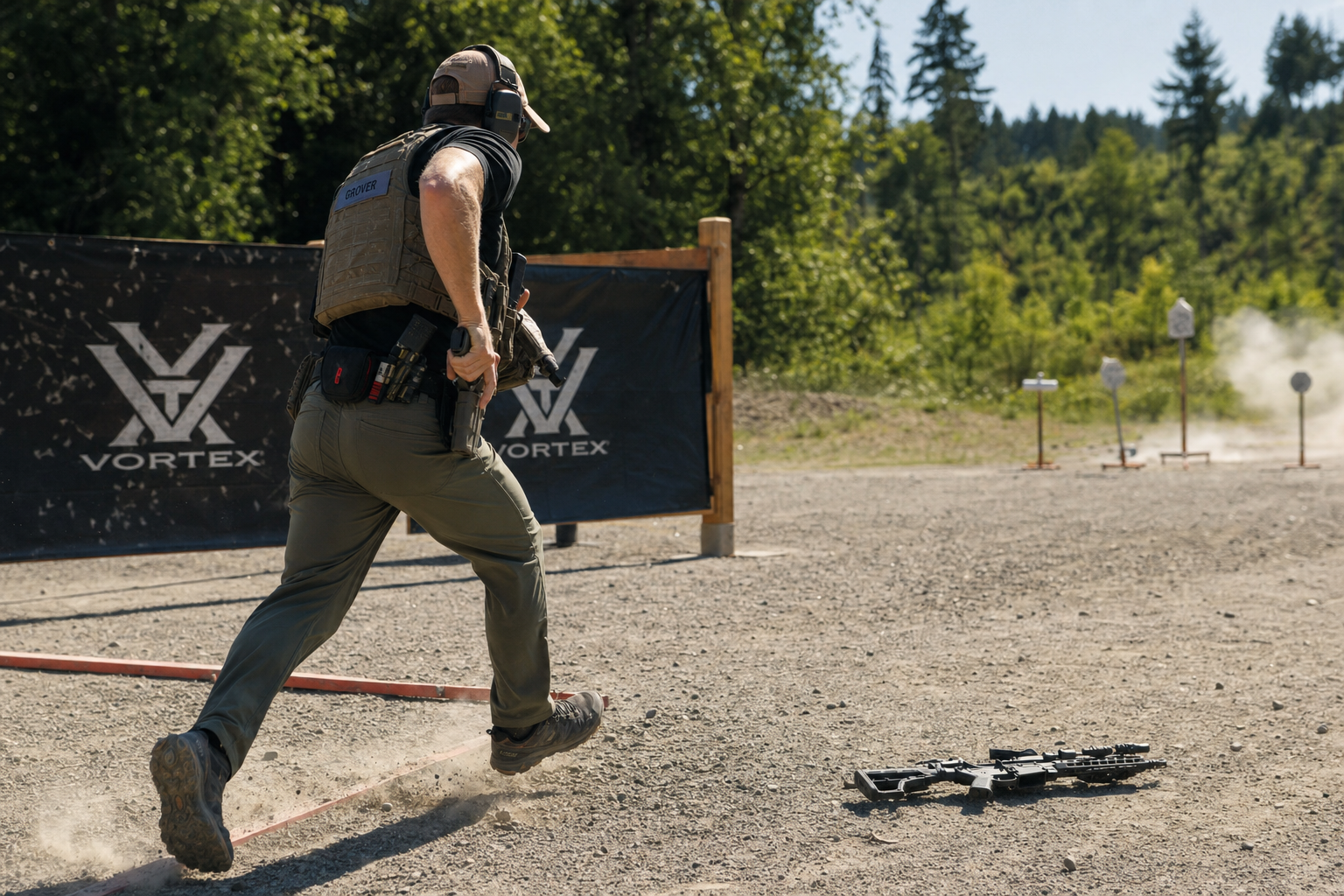
If you own a rifle, a pistol, and a shotgun — and you shoot reasonably well with all three — you already have the basic toolkit for one of the most exciting competitive shooting sports in the country. Three-gun competition, often called 3-gun or multigun, puts all three firearms to work in dynamic, timed stages that reward speed, accuracy, and smooth transitions. It's the action-shooting equivalent of a triathlon, and Oregon has a thriving 3-gun community with regular monthly matches and a mix of indoor and outdoor ranges running the game year-round.
This guide is for the hunter or shooter who's heard about 3-gun, wants to understand what the sport actually involves, and is ready to show up to a match and compete without feeling completely lost.
What Happens at a 3-Gun Match
A 3-gun match consists of multiple stages — typically 5 to 10 at a club match, more at major competitions. Each stage is a unique scenario with a mix of targets at varying distances: steel poppers and plates, paper USPSA targets, and clay birds (either thrown or mounted). Your goal is to engage all required targets in the most efficient order possible, transitioning between firearms as the stage demands, and finishing with the lowest total time (with time penalties added for misses and procedural errors).
A stage might require you to start at a shooting box, engage three rifle targets at 100 yards, transition to your pistol for close steel, then draw your shotgun from a barrel to hit clay targets before crossing a fault line to finish with pistol on movers. No two stages are alike, and the problem-solving element — planning your "stage plan" — is half the game.
The Three Guns: What You Need
The Rifle
The AR-15 platform dominates 3-gun rifle, and for good reason. The Eugene Stoner-designed rifle is fast, soft-shooting, accurate, and has a nearly unlimited aftermarket. A basic mil-spec AR-15 in 5.56 NATO with a decent red dot or 1-6x LPVO scope is everything you need to compete in the Tactical/Practical divisions where most beginners start.
- Division Legal (Tactical): Stock or standard-profile barrel, iron sights or basic optic. Many competitors run a BCM, Daniel Defense, or similar mid-tier AR right out of the box.
- Optic: A 1-4x or 1-6x LPVO (Low Power Variable Optic) on a 30mm QD mount handles both the 200-yard steel and close-quarters transitions. Vortex Strike Eagle, Primary Arms 1-6x, or Sig Sauer Tango6T are popular mid-budget choices.
- Mag capacity: Load 30-round magazines. Most stages use 20–30 rounds of rifle ammo. Bring 10+ loaded mags to a match.
The Pistol
The Glock 34 and Glock 17 are the dominant pistols in 3-gun, though any full-size or compact polymer pistol in 9mm works fine for the Tactical division. A holster is required — an OWB Kydex paddle or duty holster worn at the hip is standard. Don't show up with a shoulder holster or appendix carry — range officers will redirect you.
- Recommended: Glock 17/34, S&W M&P 9 Pro, CZ Shadow 2, or any quality competition-capable 9mm with 17+ round capacity.
- Holster: A solid OWB Kydex holster from Safariland, Blade-Tech, or Competition Shooting USA. Level 1 retention is fine for most clubs; check your specific club rules.
- Ammo: Budget 100–150 rounds of 9mm per match. 115-grain FMJ from Blazer Brass, Federal, or Winchester is standard practice-ammo budget fare.
The Shotgun
The shotgun is often the most gear-intensive firearm in 3-gun. Semi-auto shotguns dominate because the sport demands fast follow-up shots on clays and the ability to load on the move. A pump will work in beginner divisions but puts you at a real speed disadvantage.
- Recommended entry-level: Mossberg 930 JM Pro, Remington Versa Max, or Stoeger M3000. These run reliably on standard 1-dram reduced-recoil loads and won't break the bank.
- Shell carriers: You'll need to carry extra shells on your body and reload fast. An ammunition carrier belt with side-saddle extensions on the shotgun receiver is the standard setup.
- Loads: #7.5 or #8 birdshot for clay targets, 00 buckshot for steel and paper at closer distances. Slug requirements vary by stage — bring 20 slugs to every match just in case.
Oregon Clubs Running 3-Gun Matches
Oregon has a healthy 3-gun scene concentrated in the Willamette Valley and Columbia River corridor, with active clubs in the Portland metro area, the Tri-Cities border region, and scattered clubs in southern Oregon.
- Willamette Valley 3-Gun (WVMG): One of the most active clubs in western Oregon, running monthly matches at a covered outdoor range in the Valley. Beginner-friendly stages with experienced shooters who will walk newcomers through procedures.
- Oregon Firearms Federation Practical Shooting League: Operates matches at Tri-County Gun Club and other valley ranges. Sanctioned matches with USPSA-style scoring.
- Cascade Practical Shooters: Central Oregon club running 3-gun and multigun stages with a strong hunter-shooter crossover membership.
- Practical Shooting Oregon: Check the USPSA club directory at uspsa.org/find-a-club for the most current club listings and match schedules in your area.
Divisions: Where to Start
3-gun divisions are modeled on equipment classes, from fully stock firearms to heavily modified race guns. As a new competitor, start in one of these:
- Tactical/Practical Division: Iron sights or simple optics, standard-capacity magazines, minimal modifications. This is the right division for most hunters stepping into competition for the first time.
- Heavy Metal: A unique and fun division requiring a .308 or larger rifle, .45 ACP pistol, and pump or semi-auto 12-gauge. Heavy Metal has a passionate following and is more accessible than it sounds for shooters who already own .308 hunting rifles.
- Open Division: Where the race guns live. Optic-equipped shotguns, extended magazines, compensators. Skip this until you've shot at least a season in a base division.
Your First Match: What to Expect
Show up early. Most clubs have a new-shooter walk-through or walk the stages with your squad before the match starts. Tell the range officer you're a first-time competitor — every RO in the sport has heard it before and will make sure you understand the rules and stage requirements before you step into the box.
Bring more ammo than you think you need. A typical club match uses roughly 100 rounds of rifle, 100 rounds of pistol, and 50 rounds of shotgun, plus a handful of slugs. Budget $60–90 in ammo for a match day when buying at current retail.
Don't worry about your score. Your first match is purely a learning experience. Watch how experienced competitors plan their stages, manage their transitions, and handle reloads. The tactical problem-solving you develop in 3-gun translates directly into better field shooting for hunting.
Why 3-Gun Makes You a Better Hunter
Every serious 3-gun competitor shoots more rounds in a single match day than most hunters fire in an entire year. That volume, combined with the pressure of the timer and the need to make accurate hits quickly under stress, builds a kind of competent familiarity with your firearms that no amount of static range time replicates. Oregon hunters who have gotten into 3-gun consistently report improved confidence on moving game, faster follow-up shot decisions, and a general composure at the moment of truth that comes from having performed under pressure hundreds of times before the season opens.
Find your local club, dust off the AR, and get in the game. It's the most fun you can have at the range — and your hunting performance will show it.