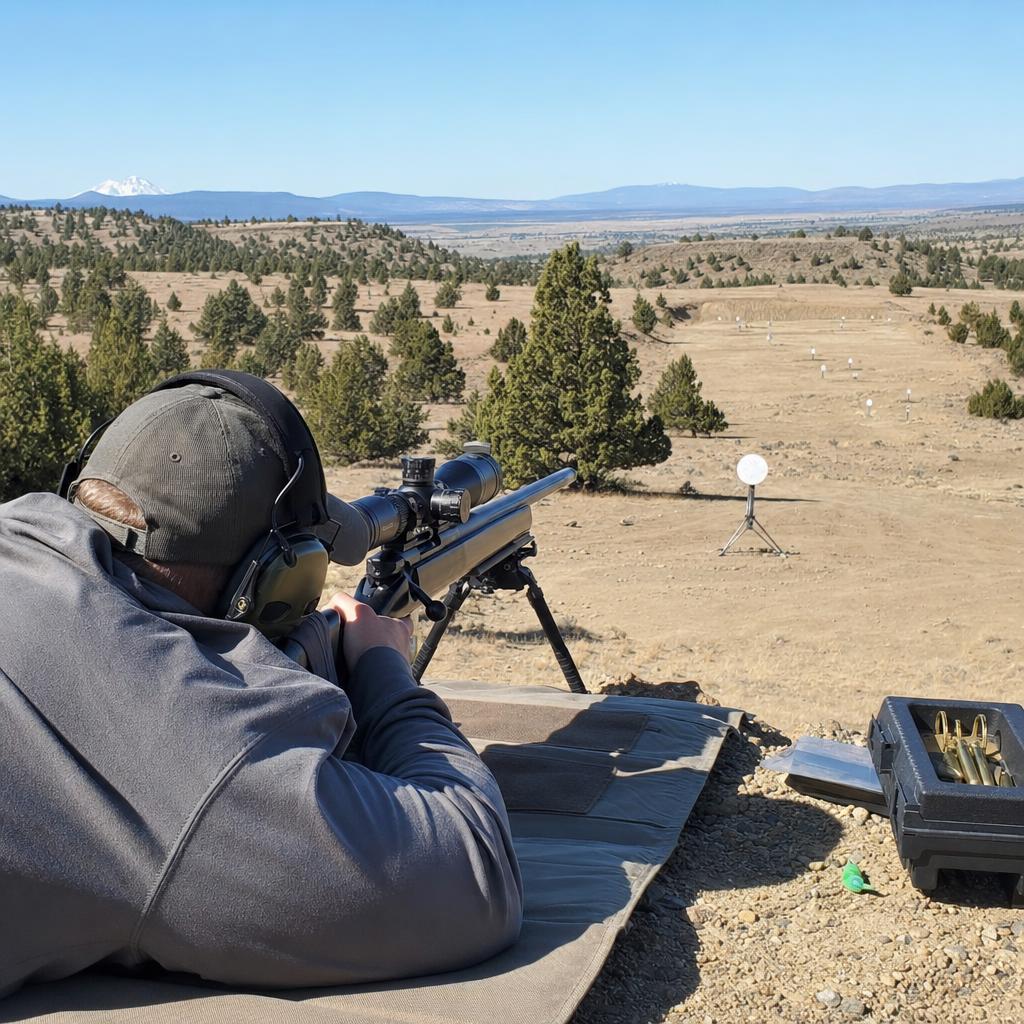
Every fall, Oregon hunters haul their rifles into the backcountry trusting factory ammunition ballistic tables or reloading manual velocity figures. Those numbers were generated in a pressure lab, not from your barrel. Without a chronograph, you're guessing—and in Oregon's mountain country, where shots at mule deer on the Brothers Unit or elk in the Wallowas can stretch past 300 yards, guessing costs tags.
A chronograph is the single most important diagnostic tool a serious hunter can own. Here's why it matters, how to use it correctly, and what the data actually tells you.
Why Factory and Book Velocities Lie to You
Ammunition manufacturers test velocity from SAAMI-standard pressure barrels—typically 24 inches long, cut-rifled, and test-fired under controlled conditions. Your hunting rifle has a different barrel length, chamber dimensions, and throat geometry. The difference can be dramatic.
A 180-grain Federal Gold Medal loaded to 2,960 fps per the box may clock 2,840 fps from your 22-inch Tikka T3. That 120 fps gap shifts your 300-yard zero by over two inches. At 400 yards on a mule deer buck in Harney County, you're hitting the brisket instead of the boiler room—or missing entirely.
Reloaders face the same problem. Published data comes from test barrels. Your chamber's headspace, your specific lot of powder, your primers, your brass—all affect actual velocity. A 6.5 Creedmoor load that shows 2,750 fps in Hornady's manual might run 2,680 fps or 2,810 fps in your rifle. You won't know until you measure.
Choosing a Chronograph
The market has evolved. You no longer need to set up skyscreen rods downrange and hope for even lighting. Modern options include:
- Labradar Doppler: Sits beside you at the bench, uses Doppler radar, requires no downrange equipment. Tracks velocity through the bullet's entire flight path. Premium price (~$600) but the most accurate and user-friendly option for hunters who reload seriously.
- MagnetoSpeed Barrel-Mounted: Bayonet clamps to your barrel, senses bullet passage through magnetic fields. Extremely accurate, weather-independent, no lighting issues. Changes barrel harmonics slightly but is invaluable at remote ranges or in field conditions.
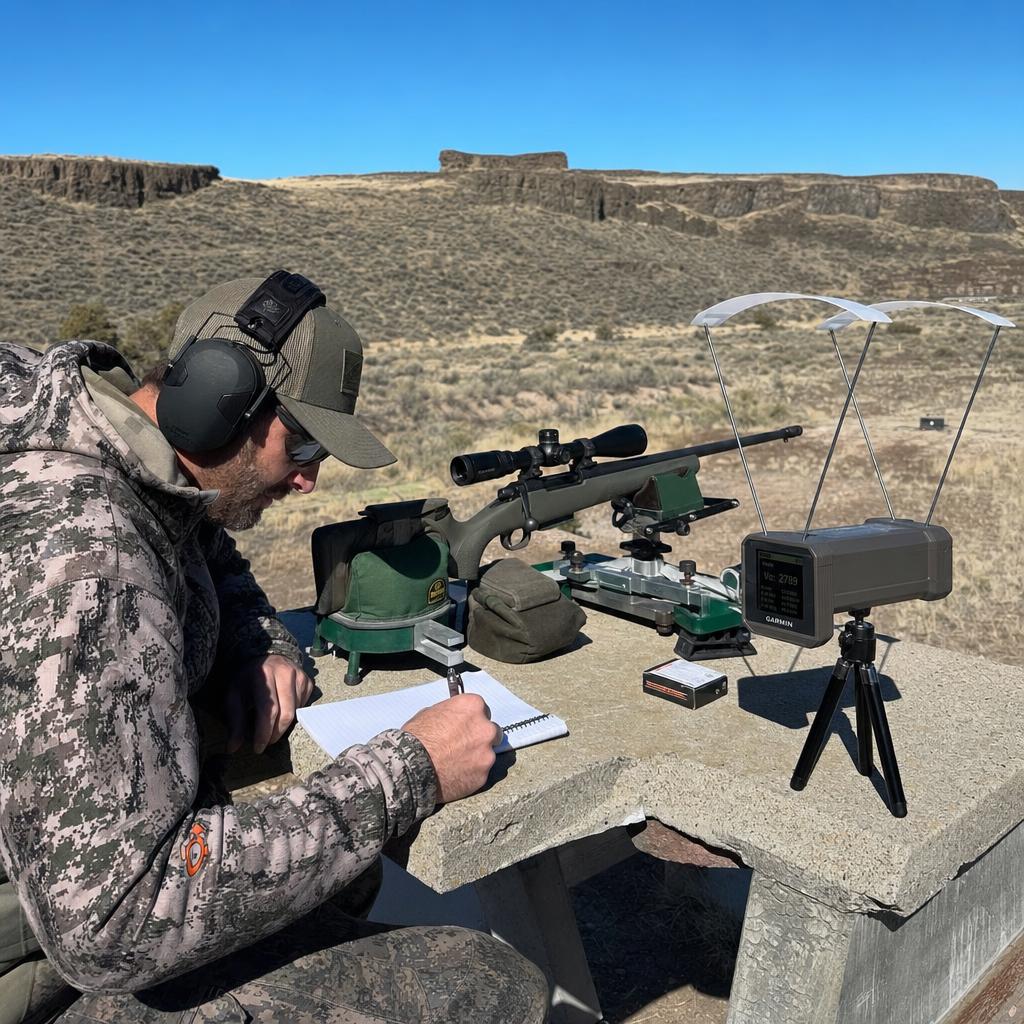
- Caldwell G2 and Garmin Xero C1: Muzzle-mounted screen systems. The Garmin unit at ~$330 is capable and wireless, connecting to a phone app. Good for hunters who want simplicity without the Labradar investment.
- Traditional Skyscreen Chronographs (CED, Shooting Chrony): Inexpensive ($80–$150), require diffusers on cloudy Oregon days. Fine for range use when you can control lighting. Don't try them at Rimrock in a crosswind without weighted diffusers.
What to Measure and What It Means
A single shot velocity reading is nearly useless. You need a string of at least 10 rounds to extract meaningful data. The three numbers that matter:
Average Velocity (AVG)
Your mean velocity across the string. Plug this into a ballistic calculator—Applied Ballistics, Hornady 4DOF, Kestrel, or free options like Hornady's app—to generate a true firing solution. This replaces the factory chart and is calibrated to your specific rifle-ammunition combination.
Extreme Spread (ES)
The difference between your fastest and slowest shot. For hunting loads, ES under 40 fps is acceptable. ES under 20 fps is excellent. A 180-grain load with ES of 95 fps means your bullet will impact at noticeably different points on the same target under the same conditions. For reloaders, high ES often indicates powder charge or primer issues that can be dialed in with a workup.
Standard Deviation (SD)
Statistical measure of consistency. SD under 15 fps is good for hunting. Under 10 fps is exceptional. A low SD tells you the load is behaving predictably shot to shot—critical when you're counting on repeatable impacts from a cold bore at the shot of the season.
Building a Dope Card for Oregon's Terrain
Once you have accurate velocity data, build a DOPE (Data on Previous Engagement) card for your specific load. Run it through a ballistic app with your real numbers: measured velocity, bullet BC (use G7 for hunting bullets), elevation above sea level at your hunting area, and typical temperature.
A few Oregon-specific considerations:
- Elevation matters: The high desert units—Biggs, Silvies, Beulah, Warner—sit at 4,000 to 5,500 feet. Air is thinner; bullets drift less and drop less than sea-level tables predict. Input your actual hunting elevation.
- Temperature swings: Oregon's eastern units swing 40°F between dawn and midday. Powder temperature sensitivity (especially temperature-sensitive powders like Varget vs. stable options like Hodgdon Extreme series) affects velocity. Chronograph your load at multiple temperatures if you reload.
- Cold bore vs. warm bore: Most hunting shots come from a cold barrel. Record your first-shot cold-bore velocity separately. Some loads run 30–50 fps slower on the first cold shot. Know this number and account for it.
The Field Verification Shot
After gathering chronograph data and building your firing solution, verify at distance before season. If your hunting unit averages shots at 250–350 yards, confirm zero at 300 yards with your calculated dope. Don't rely on ballistic math alone—verify it on paper or steel at realistic distances on Oregon terrain.
The Prineville area has excellent long-range ranges. The Albany Rifle and Pistol Club offers 500-yard shooting, and several USDA forest roads in the Ochoco and Malheur National Forests provide legal long-range practice opportunities on steel targets.
Chronographing for Reloaders: The Load Development Advantage
If you handload—and Oregon hunters should, given current factory ammo prices—a chronograph transforms your reloading bench. Run a ladder test from minimum to maximum charge, recording velocity and ES at each step. Watch for velocity plateaus (where adding powder yields diminishing returns) and node shots where groups tighten and ES drops. Combine velocity data with target groups to find the load your rifle genuinely prefers rather than the maximum listed in the manual.
For elk hunters running .300 Win Mag, 7mm Rem Mag, or 6.5 PRC, this process often yields a load that's 50–100 fps slower than max but dramatically more consistent—and in the mountains, consistent beats fast every time.
Bottom Line
Oregon's big-game hunting demands precision. Whether you're stalking blacktail in the Coast Range fog or glassing mule deer bucks in Harney County's alkali flats, your bullet needs to land exactly where your crosshairs say it will. A chronograph—used consistently and combined with a quality ballistic calculator—gives you that certainty. Stop trusting the box. Measure your rifle, build your data, and go afield with actual numbers.