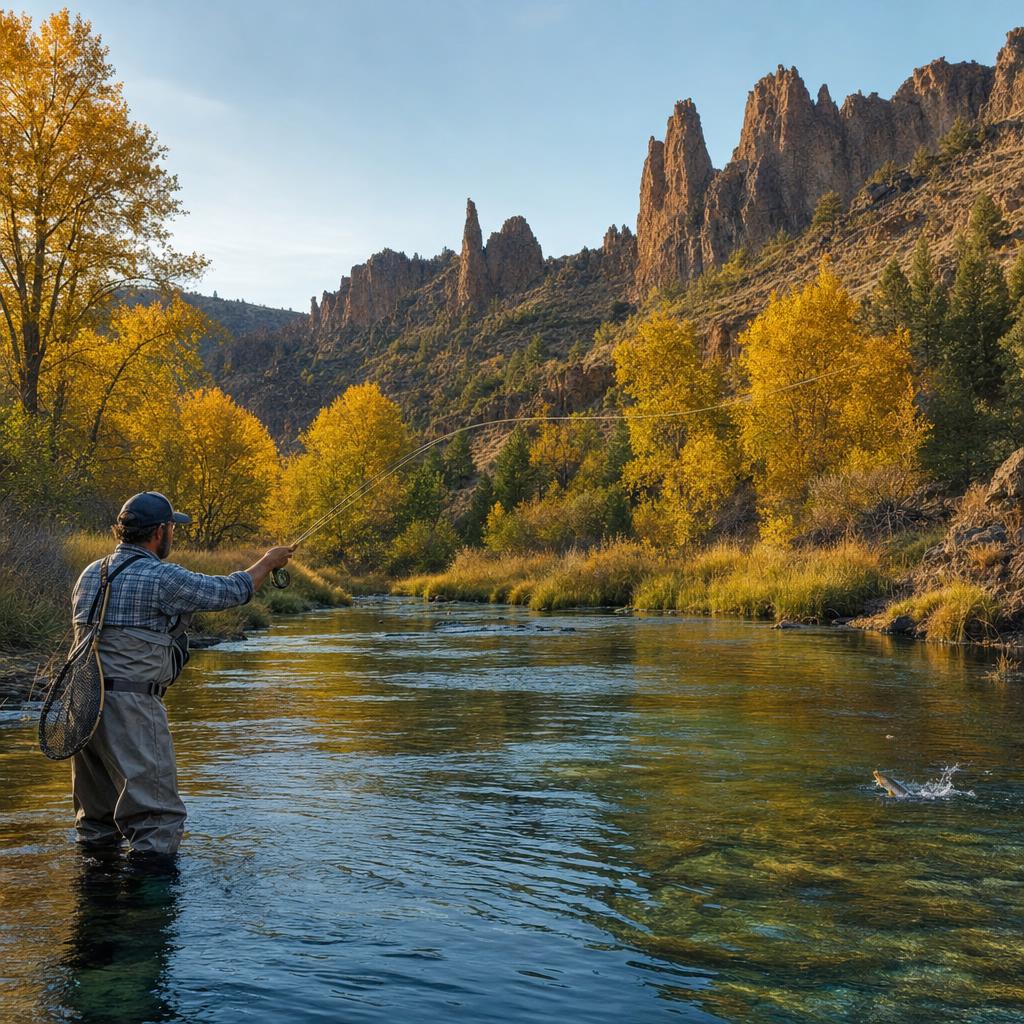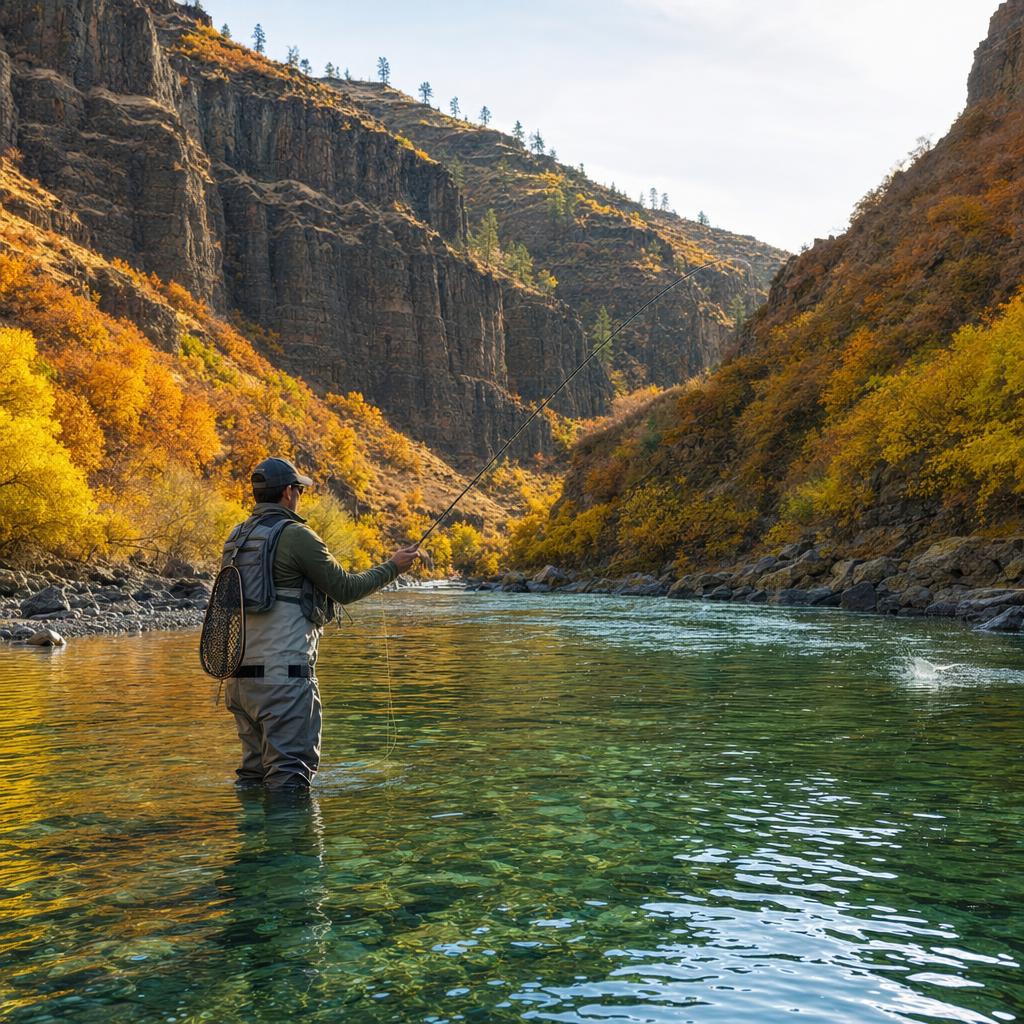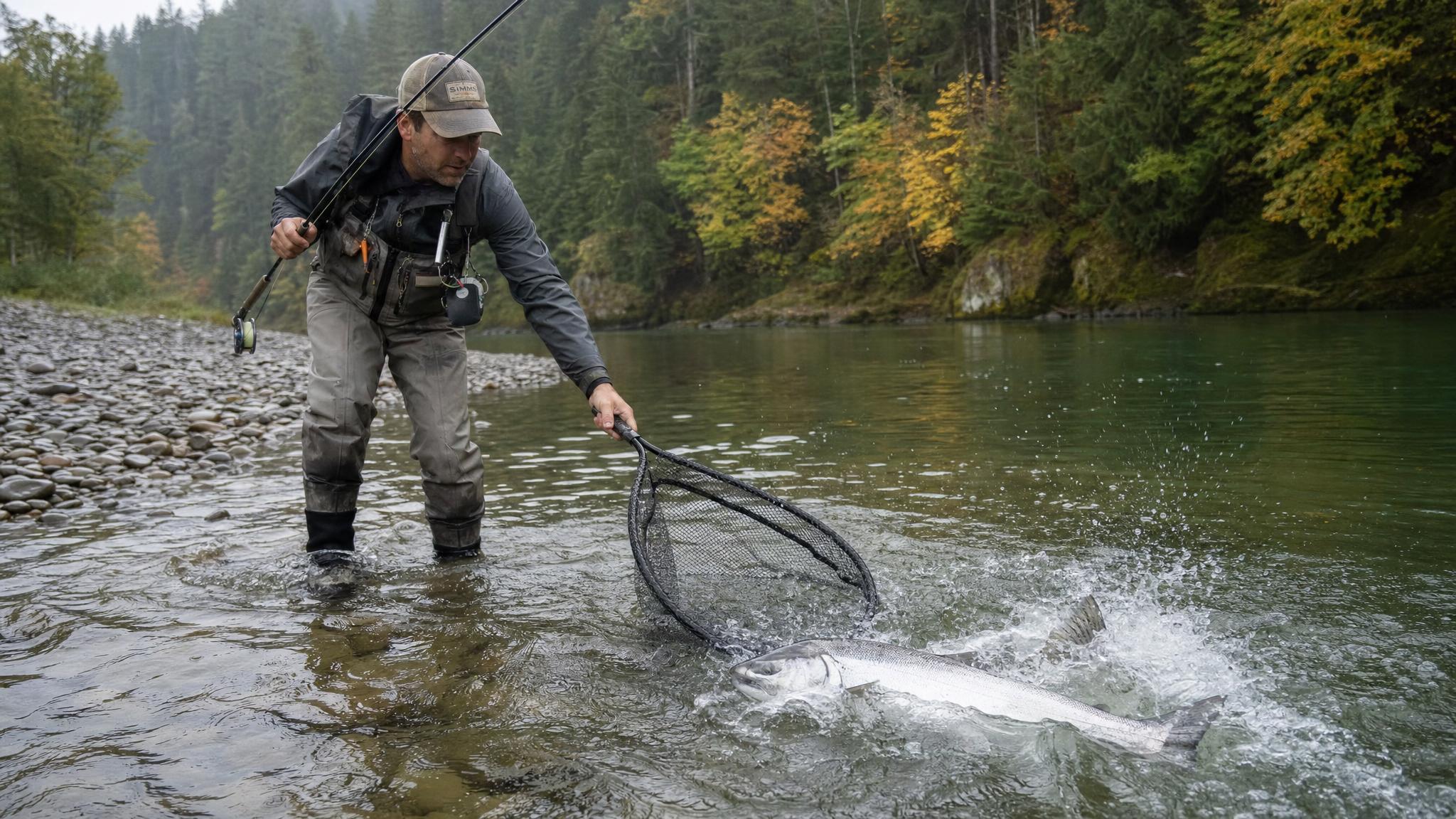
The Alsea River flows 54 miles from the Coast Range foothills west through Benton and Lincoln counties before emptying into Alsea Bay at Waldport. It's a small river by Oregon standards — which is exactly what makes it fishable for bank anglers who'd rather be elbow-deep in a drift than fighting a crowd on the Rogue or the Siletz. Every September and October, wild Chinook salmon stack in the Alsea's lower reaches before pushing upstream to spawn, and the fish are worth every mile of the Highway 34 corridor drive.
Alsea River Chinook Run Timing
The Alsea runs a fall Chinook return that typically begins in mid-August with early fish in the tidewater zone and builds through September as ocean-fresh kings move in. Peak fishing at the upper bank access points — from Tidewater to Alsea Falls — generally falls between late September and mid-October, which aligns with the first sustained autumn rains that raise and color the river enough to pull fish out of the lower pools. When the river drops back to 2-4 feet of visibility after a rain pulse, that's the window. Fish hard.
Key Access Points on the Alsea
- Tidewater: The town of Tidewater marks the uppermost tidal influence. Bank access off Highway 34 near the bridge; fish the deep slots on incoming tide for salmon holding in the current seam
- Five Rivers confluence: The Five Rivers arm doubles the drainage — when both forks are running, fish stack in the confluence pool. Walk in from the Five Rivers Road turnoff
- Lobster Creek Bridge: Good gravel bar access upstream of the bridge; drift fishing and plunking both work in the long pool above the riffle
- Alsea Falls Recreation Area: The upper boundary of salmon habitat; late-run fish push all the way up in high water — don't overlook it after a November rain event
Bank Fishing Tactics for Alsea Chinook
The Alsea is narrow enough that bank anglers aren't at a disadvantage to drift boaters — in fact, on the tighter canyon stretches from Tidewater upriver, bank fishing is often more precise than boating. Three tactics dominate the Alsea Chinook fishery.
Side-Drifting from Gravel Bars
Side-drifting is the Alsea's signature technique. Standing on a gravel bar, cast 45 degrees upstream and let your weight tick along the bottom as the current swings your roe or sand shrimp through the holding water. The take is often a subtle load-up followed by a head shake — set hard and immediately apply side pressure to work the fish away from structure. An 8.5- to 9-foot medium-heavy spinning rod with 30-pound braid and a 15- to 20-pound fluorocarbon leader handles the job.
Plunking
In the slower tidewater pools, plunking with a heavy pyramid sinker and Spin-N-Glo or roe cluster is a proven rest-and-wait approach. Set your rod in a forked stick, keep a loose drag, and stay close. Plunking works best when fish are stacked in a single pool between tide cycles and not actively moving. Use 4-6 ounces of weight to hold bottom in tidal current.
Back-Bouncing Roe
In medium-depth runs with gravel bottom, back-bouncing a 1- to 1.5-inch roe cluster on a 2/0 to 4/0 Gamakatsu Octopus hook through the strike zone is deadly when fish are moving through rather than holding. Let the current work the bait down and back, pausing at intervals. The Alsea's Chinook are aggressive when fresh-run — don't hesitate to cover water and find the active fish rather than waiting in a single spot.
Bait and Lure Selection
- Cured roe: The standard. Cure with Pautzke Brine or Pro-Cure in natural or chartreuse for off-color water
- Sand shrimp: Excellent combined with roe on a two-hook rig; stays on better in current than shrimp alone
- Spin-N-Glo (sizes 6-10): Red, orange, and chartreuse in stained water; natural and pearlescent in clear conditions
- Kwikfish K14-K16: Wrap with cured sardine fillet and plug-cut it for scent; excellent for fish holding in slower pool tailouts
- Spinners (Blue Fox Vibrax #5-6): Good for covering water when fish are aggressive and on the move
Oregon Regulations on the Alsea
The Alsea River fall Chinook season typically runs through December 31st with a bag limit of 2 adult Chinook per day, retention of hatchery fish only (check your regulations — fin clip status matters on the Alsea). Wild Chinook must be released. The river above Alsea Falls is closed to salmon fishing year-round. Steelhead regulations apply simultaneously — the Alsea also gets a strong winter steelhead return, so carry your complete license with a Combined Angling Tag.
What to Expect for Fish Size
Alsea Chinook average 15-25 pounds for hatchery fish, with occasional 30-plus-pound kings in the early run. The river's tight nature means you'll be fighting fish in current and around wood — heavy leaders and a drag set at 20-25 percent of line breaking strength keep you connected. Don't horse fish in the Alsea's rocky pools; use the current to tire them and work them into the shallows for a quick, clean landing.
Nearby Services and Logistics
Waldport at the river mouth has bait shops, fuel, and basic supplies. Alsea village (20 miles east on Highway 34) has limited services. The Siuslaw National Forest campgrounds at Blackberry and Canal Creek provide primitive camping within a short drive of the prime bank access points — book early for October weekends because the fall run draws anglers from the Willamette Valley in force. The Highway 34 corridor is winding and slow; allow 90 minutes from Corvallis to the upper river.
The Alsea doesn't get the name recognition of the Wilson or the Nestucca, and that's precisely its appeal. Fewer anglers, a scenic canyon setting, and a legitimate Chinook return that peaks just as the Coast Range maples are turning gold — it's one of the most underrated bank fisheries on the Oregon Coast. Hit it right after the first October rain raises the river, and you'll understand why the locals keep it to themselves.