Long-range precision shooting has exploded in popularity across the Pacific Northwest, and Oregon's established club infrastructure means you don't have to drive to Nevada to shoot steel at 1,000 yards. F-Class and benchrest competitions offer a structured, welcoming entry point into precision rifle sports — and the skills you build translate directly into better performance as a big-game hunter on Oregon's steep mountain terrain. This guide covers what these disciplines are, where to shoot them in Oregon, and what you'll need to get started.
What Is F-Class Shooting?
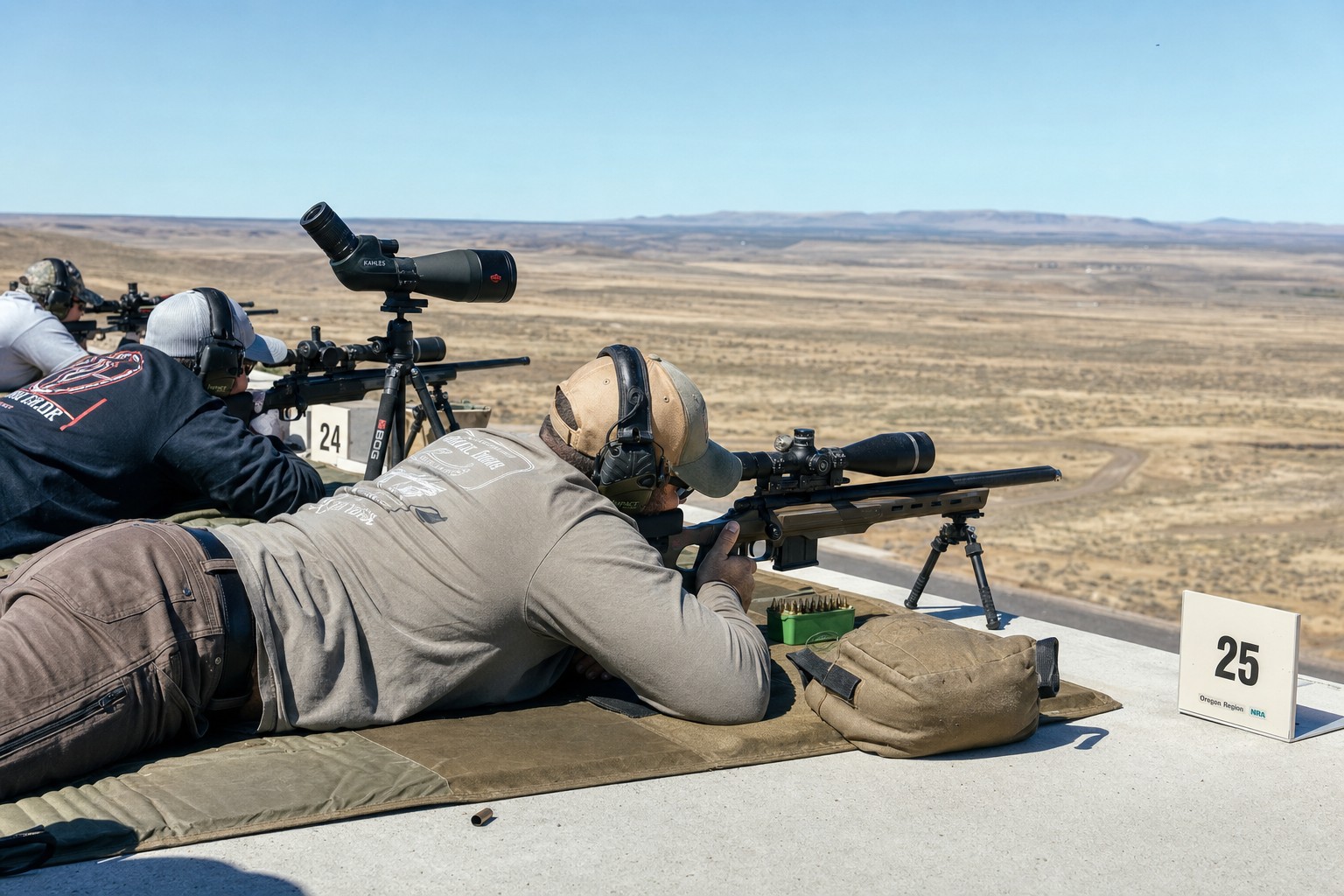
F-Class is a prone, supported rifle discipline shot at distances from 300 to 1,000 yards against paper targets scored in rings (X-ring scoring). Developed by Canadian shooter George Farquharson in the 1990s, it was designed to give older and physically limited shooters a competitive option against traditional prone sling shooters. The "F" stands for Farquharson.
There are two main divisions:
- F/TR (F-Class Target Rifle): Restricted to .223 Remington or .308 Winchester only. Rifles must weigh under 18.15 lbs including bipod. A front bipod and rear sandbag are the only rests allowed. This is the most popular division for new competitors — the .308 Winchester with quality 175 gr match bullets is the classic entry setup.
- F/Open: Any caliber, any legal rest. Rifles can weigh up to 22 lbs. Shooters typically run 6mm–7mm calibers on custom actions with high-end optics. This is the open-checkbook division, but it produces spectacular groups at 1,000 yards.
What Is Benchrest?
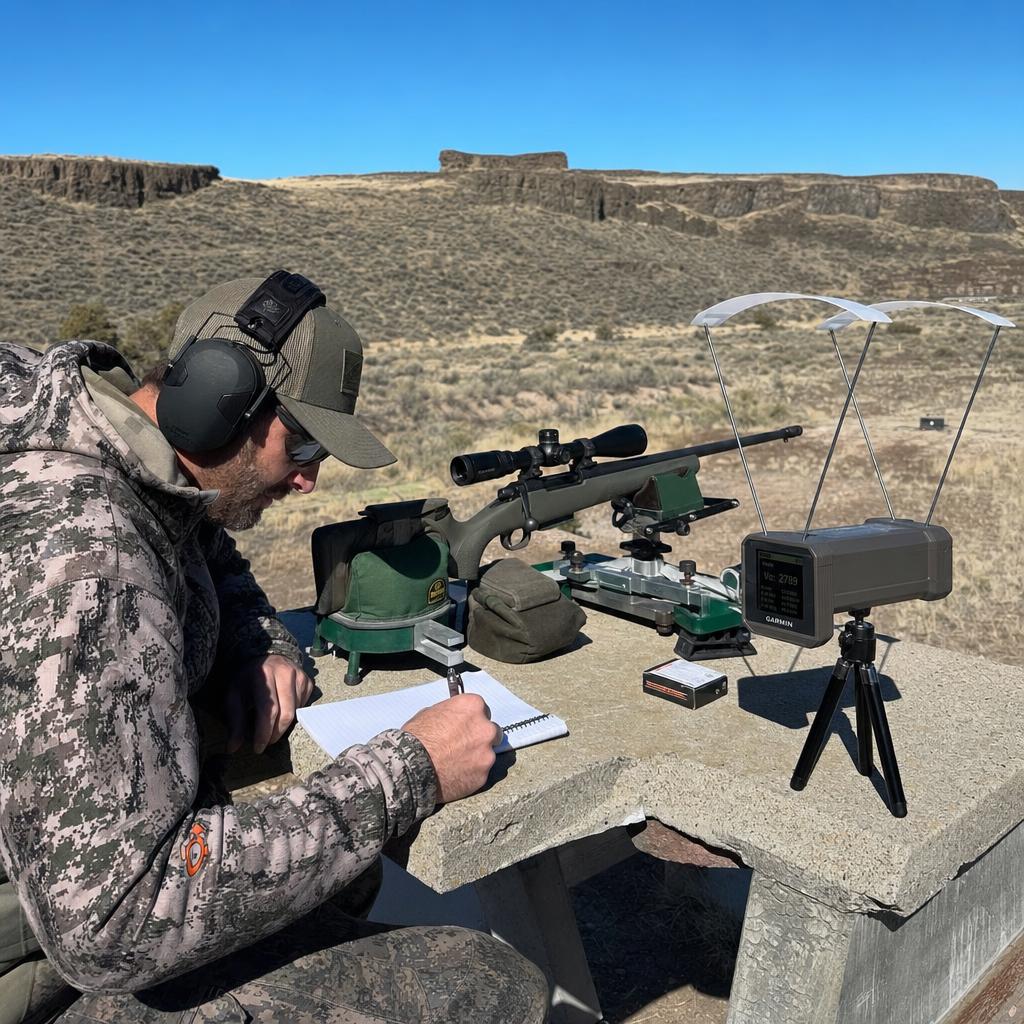
Benchrest is a separate discipline focused entirely on the smallest possible groups at set distances — typically 100, 200, and 300 yards for short-range benchrest, and 600 yards for long-range benchrest. Competitors shoot from a bench with front and rear mechanical rests. The equipment tends toward highly customized, single-shot rifles built specifically for the discipline. Benchrest is where the art of accuracy reaches its apex — competitive groups at 100 yards routinely measure under 0.2 MOA.
Oregon Ranges and Clubs
Tri-County Gun Club — Sherwood, Oregon
One of the state's most active clubs, Tri-County hosts F-Class matches on their 600-yard range west of Portland. Their long-range program runs monthly from April through October, with both F/TR and F/Open divisions. New shooter orientation is offered several times per season — call ahead or check their website for match schedules.
Central Oregon Shooting Sports Association — Bend Area
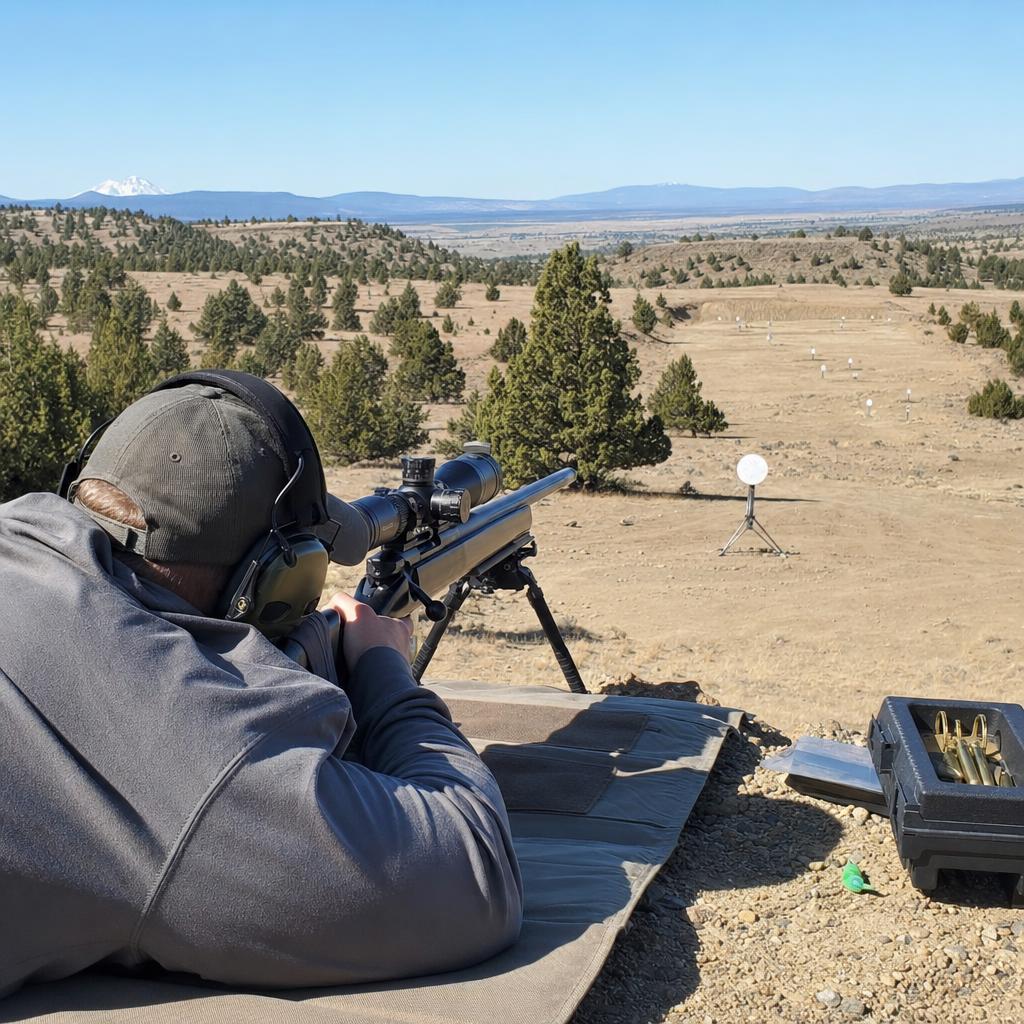
COSSA operates one of the premier outdoor ranges in the state on the eastern slope of the Cascades. Their high-desert facility offers 200, 300, 600, and 1,000-yard capability with consistent wind conditions perfect for learning to read mirage and variable Eastern Oregon thermals. F-Class and PRS-style matches run through the fall season.
Hermiston Shooting Club — Hermiston, Oregon
Located in Umatilla County near the Columbia River, the Hermiston club hosts informal long-range steel matches and has hosted regional F-Class events. The flat, open terrain generates challenging wind conditions that will sharpen any long-range shooter's wind-reading abilities quickly.
Southern Oregon — Medford Rifle and Pistol Club
The Medford club supports long-range shooting with regular matches at 300–600 yards in the Rogue Valley. A good option for shooters in Southern Oregon looking to enter precision rifle competition without the drive to the Willamette Valley.
Cartridges and Rifles for F/TR
If you're starting in F/TR — the smart move for most new competitors — the .308 Winchester is the practical choice. Here's a solid entry setup:
- Rifle: Savage 12 F/TR, Tikka T3x TAC A1, or a Remington 700 in a precision chassis. A factory-accurate heavy-barrel .308 will be competitive until your skills outpace the equipment.
- Optic: A first focal plane scope with 1/4 MOA or 0.1 mil turrets is essential. March, Nightforce NX8, or Vortex Razor HD Gen III are all proven. You need reliable, repeatable elevation adjustments across 1,000 yards of data.
- Ammo or Handloads: Federal Gold Medal Match 175 gr SMK is the benchmark factory load. Handloaders running Lapua brass, CCI BR-2 primers, Varget or H4895 powder, and Sierra 175 gr or Berger 185 gr Juggernaut bullets will shoot into the Xs consistently once the load is developed.
- Bipod and Rear Bag: Atlas BT10 or BT65 bipod up front, a quality rear bag like a Armageddon Gear Game Changer or Wiebad Fortune Cookie in back.
Reading Wind: The Core Skill
Everything in F-Class beyond 300 yards comes down to wind reading. A 10 mph full-value crosswind moves a .308 175 gr bullet about 10 inches at 600 yards and nearly 40 inches at 1,000 yards. Learning to read mirage through your spotting scope, observe flag behavior, and interpolate holds across changing conditions is a skill built over seasons — not afternoons.
Invest in a quality spotting scope (Vortex Razor HD, Nightforce, or Swarovski) and a sturdy tripod. Watch the mirage direction and speed, observe flags at the target line and midrange, and call your shots. Keep a data book. Review it after every match. The shooters who improve fastest are the ones who document and analyze religiously.
Getting Started: Your First Match
- Contact the host club at least a week before your first match — most clubs require pre-registration
- Show up early; new shooter orientation is typically offered before the line goes hot
- Bring at least 60 rounds of quality match ammo, plus a spotting scope if you have one
- A shooting mat, sunscreen, and water are essentials for Oregon's open-air ranges in September
- Expect to be outshot your first season — that's how everyone starts
Why It Makes You a Better Hunter
The discipline of F-Class forces you to understand wind drift, atmospheric conditions, andcome back to a consistent position shot after shot. Hunters who invest a season in competitive long-range shooting return to the field with a calibrated understanding of their rifle's true capability — and a healthy respect for ethical shot selection. Knowing that a 10 mph quartering wind moves your bullet 6 inches at 400 yards isn't theory anymore. It's data you've felt at the trigger.
Oregon's long-range shooting community is active, generous with new shooters, and growing. Show up to a match, introduce yourself, and you'll find experienced competitors happy to share wind calls, load data, and hard-won wisdom. The community, more than the gear, is what makes the discipline worth pursuing.