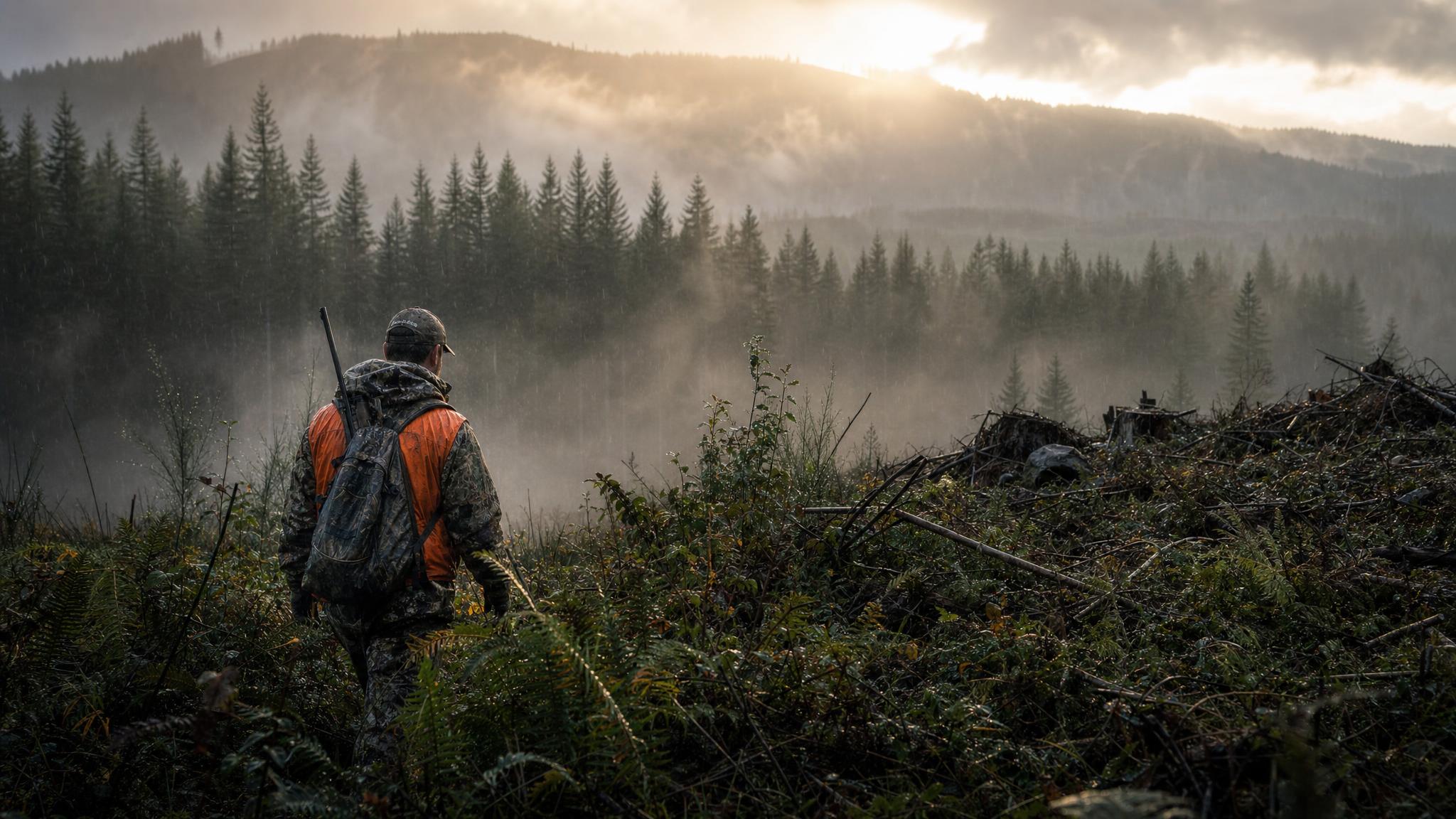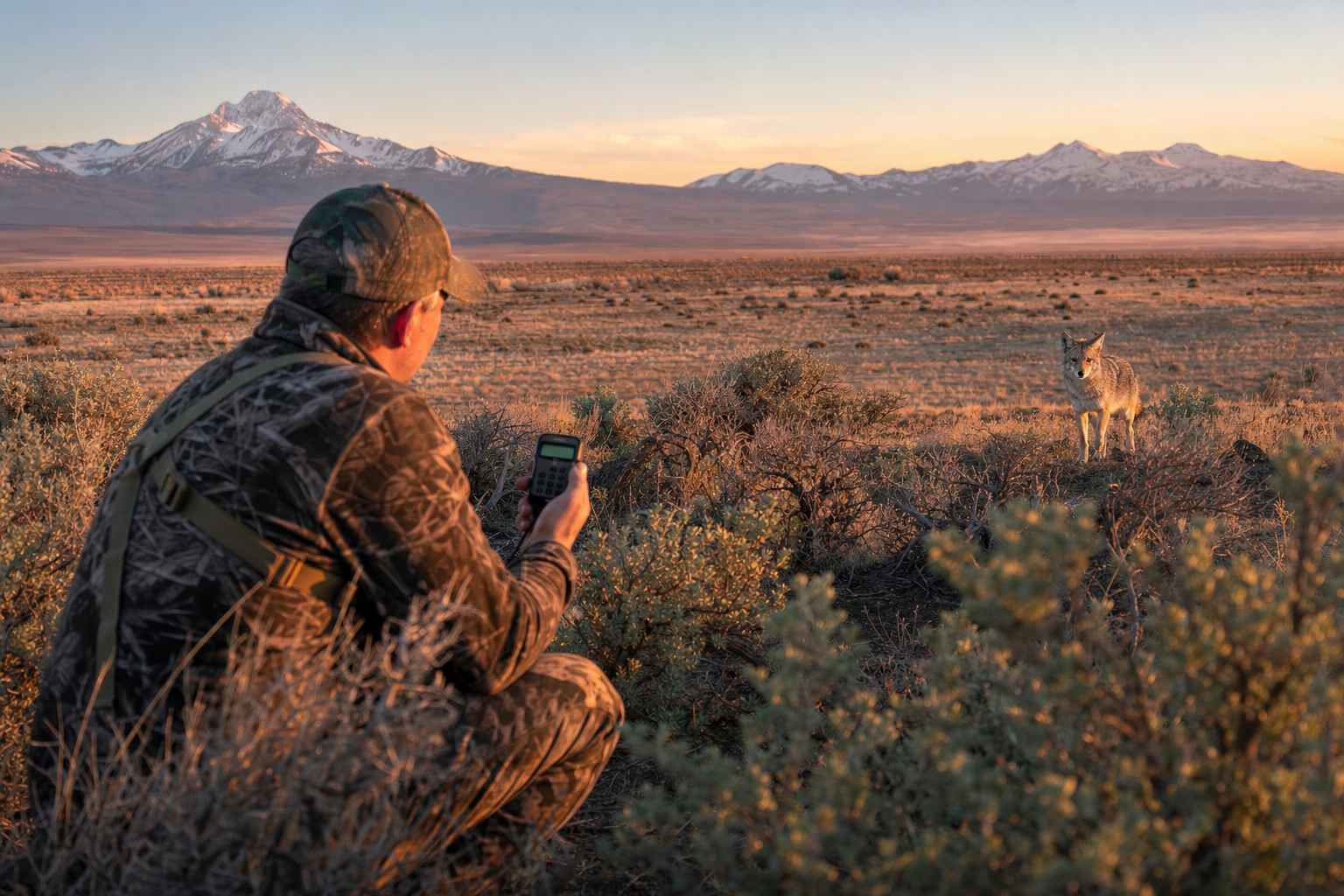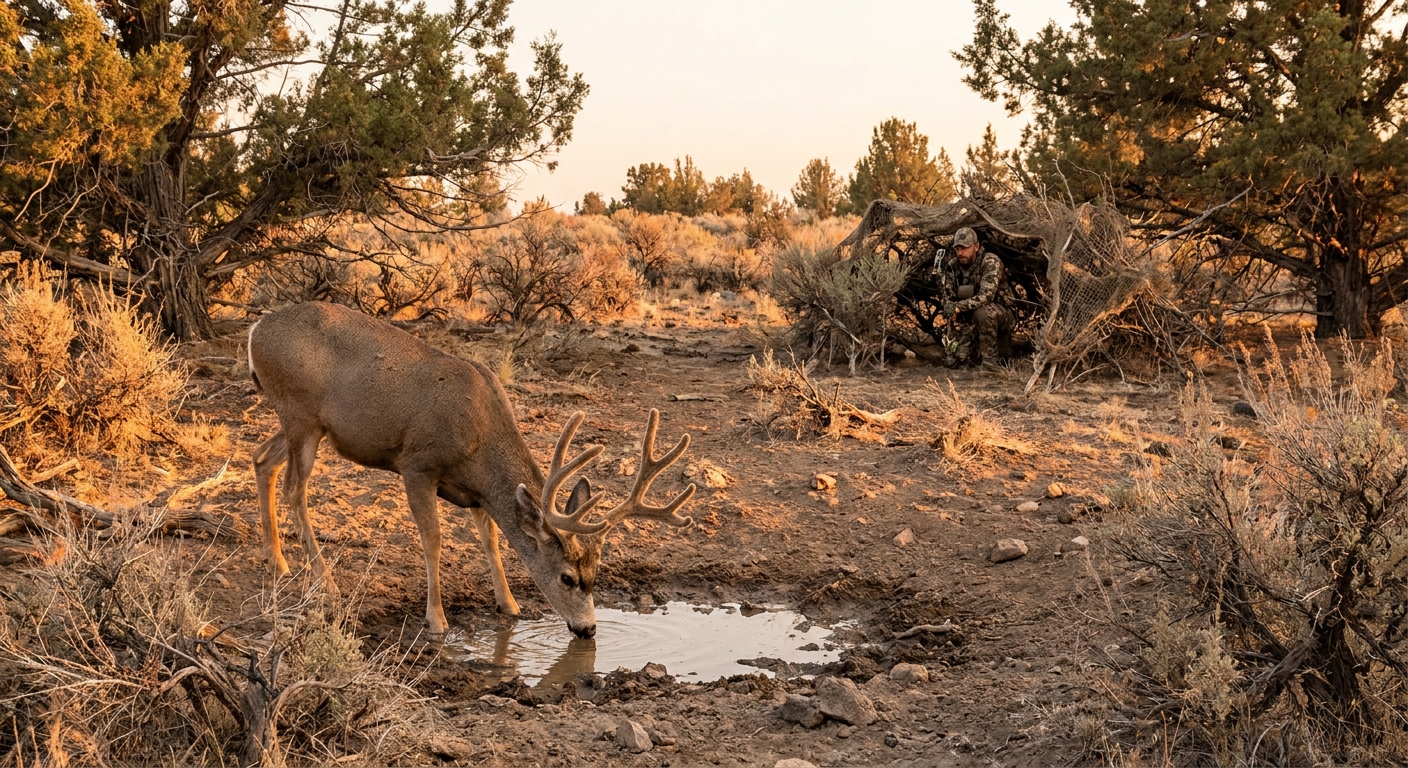
Eastern Oregon’s archery deer season opens August 1st. That means you’re hunting in conditions that most deer hunters never experience — triple-digit heat, baked ground, rattlesnakes at the water’s edge, and bucks that are still in velvet and operating on a completely different schedule than the rutting deer of October. It’s a different game. And the hunters who figure it out consistently fill tags while everyone else is waiting for October weather that never quite arrives.
The key is water. In August’s desert heat, mule deer need to drink at least once a day, and often twice. When you find the water they’re using and set up correctly, you remove most of the variables that make archery hunting hard. You know they’re coming. You just need to be there, invisible, and within range when they do.
Finding the Right Water Sources
Not all water is equal in eastern Oregon. Mule deer prioritize certain sources over others, and understanding why makes your scouting faster and more productive.
Natural Seeps and Springs
A cold, consistent seep hidden in a north-facing draw is deer gold in August. The water is clean, the soil stays soft, and deer are comfortable approaching because the surrounding brush offers cover. Find these on topo maps by looking for green drainages in otherwise brown terrain — they’re often shown as intermittent streams on Forest Service maps. Verify them with satellite imagery during summer when the contrast between green and brown is sharpest. When you find one that’s holding water, look for tracks. A seep that’s been pounded into black mud is a seep worth hunting.
Stock Tanks and Developed Water
BLM range improvements — round metal or concrete stock tanks fed by solar pumps or gravity from uphill catchments — are scattered across eastern Oregon and are legal to hunt over on public land. These are often on topographic maps and easily verified with the BLM’s on-site water database or simply by glassing during pre-season scouting trips. A functioning stock tank in an otherwise dry unit is a deer magnet. The downside is that ranchers and other hunters may be checking the same sources, so scout multiple tanks and identify your backup options.
Creek Crossings
Even where a creek is flowing, deer often have a preferred crossing point — a shallow gravel riffle where footing is solid, or a low bank where they can step in and drink without climbing. These crossings concentrate sign and are often within shooting range of a natural ground blind location. Walk creek corridors on foot and look for worn paths leading to the water’s edge. Heavily used crossings will have tracks, hair on brush, and rubs on willows that tell you deer are moving through regularly.
Scouting and Camera Strategy
Pull your cellular cameras off velvet mineral licks and move them to water sources by late July. At water, deer aren’t just visiting — they’re committed. You’ll see every animal using that source, how often, and at what times of day.
Key timing patterns to watch for on camera:
- Evening visits (4–70 PM) — Most common, especially in thick juniper terrain. Bucks often arrive within 30 minutes of last light in August.
- Early morning visits — Less common but more predictable. Bucks may drink at first light after a night of feeding before bedding for the day.
- Midday — Only during extreme heat spikes or when the water source is in heavy shade. Don’t count on this, but it happens.
Set cameras at multiple angles and check them remotely if possible. Walking into your hunting area repeatedly before the season compresses deer and alters movement patterns. Less intrusion before opening day means better encounters during the season.
Stand and Ground Blind Setup
Water hole hunting requires getting close — often within 20 to 30 yards. This means your setup needs to be thoughtful and invisible from multiple approach angles.
Wind Above Everything
Desert thermals are brutally consistent: they rise during the day and fall at night. In afternoon setups, your scent will be carried upward — which is manageable if you’re elevated or positioned downhill of the approach. For evening sits, position yourself so prevailing winds carry your scent away from the direction deer are most likely approaching. Use a squeeze bottle of powder before and during your sit to verify wind direction constantly.
Ground Blinds
A fabric pop-up blind brushed in with local juniper and sage is hard to beat at water holes. Set the blind at least a week before you plan to hunt — deer notice new objects and need time to acclimate. Orient the blind with shooting windows that cover the water’s edge and the most likely approach trail. Black inside the blind makes you invisible even at close range. Wear full black head-to-toe inside the blind even in heat; it’s uncomfortable but worth it.
Elevated Options
In juniper country with larger trees, a hang-on stand or saddle setup 15 to 20 feet up a tree 25 to 35 yards from the water’s edge is ideal. You’re above the deer’s sight line, your scent disperses better, and you have a top-down shot angle that closes lungs fast. Cut shooting lanes in advance, but do it early enough that the cut branches dry and don’t alert deer with fresh-cut scent on opening morning.
The Shot and August-Specific Considerations
Velvet bucks at water holes in August are not rutting deer. They’re calm, deliberate, and often approach slowly, pausing frequently to scan for danger. Give them time. Let the buck step fully to the water, lower his head, and start drinking before you draw. A deer with its head down at the water’s edge presents a perfect double-lung opportunity and is committed enough that the draw movement is unlikely to spook him.
A few things to handle that are unique to August hunting:
- Heat and meat care — August temps can destroy a carcass in hours. Have your cooler packed with ice in the truck, a bone-out pack system ready, and a plan to get quarters out fast. You may need to retrieve meat in the dark to keep it cool enough.
- Velvet care — Velvet is beautiful but fragile. If you shoot a velvet buck, handle antlers gently and get the head to a cool place quickly to preserve the velvet for mounting. A taxidermist can preserve it if you act fast.
- Rattlesnakes — They’re also at the water in August. Watch where you step and where you set gear. This is not a hypothetical.
- Hydration — You will sweat through your camo sitting in a ground blind in 95°F heat. Bring more water than you think you need.
Putting It Together
The hunters who consistently punch August deer tags in Oregon’s high desert aren’t doing anything magical. They’re putting in pre-season scouting miles, finding the water sources deer are using, setting up with care and time, and executing clean shots. The formula is simple. The execution, especially in August heat with sweat dripping and a mature buck inside 25 yards, is harder than it sounds. But that’s why you’re out there.