The Heppner Unit doesn't show up in the elk hunting magazines. You won't find it on lists of Oregon's top trophy units, and the draw odds for the limited rifle tags reflect moderate demand rather than cult-following pressure. That relative obscurity is exactly what makes it worth hunting with a bow. The unit covers a significant chunk of Morrow and Umatilla counties in northeast Oregon, spanning timbered ridges and creek drainages in the Blue Mountains that hold elk from summer through the rut. If you drew an archery tag for the Heppner Unit — or if you're hunting on a general archery tag — here's how to approach the August opener.
Understanding the Heppner Unit
The Heppner Unit is primarily defined by the drainages flowing north out of the Blue Mountains toward the Columbia Plateau — Willow Creek, Rhea Creek, and their tributaries make up much of the accessible country. The timbered high country in the southern portion of the unit, where it borders the Umatilla National Forest, holds the bulk of the summer elk population. As elevation increases, so does the density of ponderosa pine, larch, and fir — and the elk that use those forests for shade, forage, and cover during the August heat.
Public land access is good through the Umatilla National Forest and scattered BLM parcels, though private land checkerboards some of the mid-elevation terrain. OnX or a current BLM surface management atlas is non-negotiable for navigating the ownership puzzle.
Summer Glassing and Pre-Season Scouting
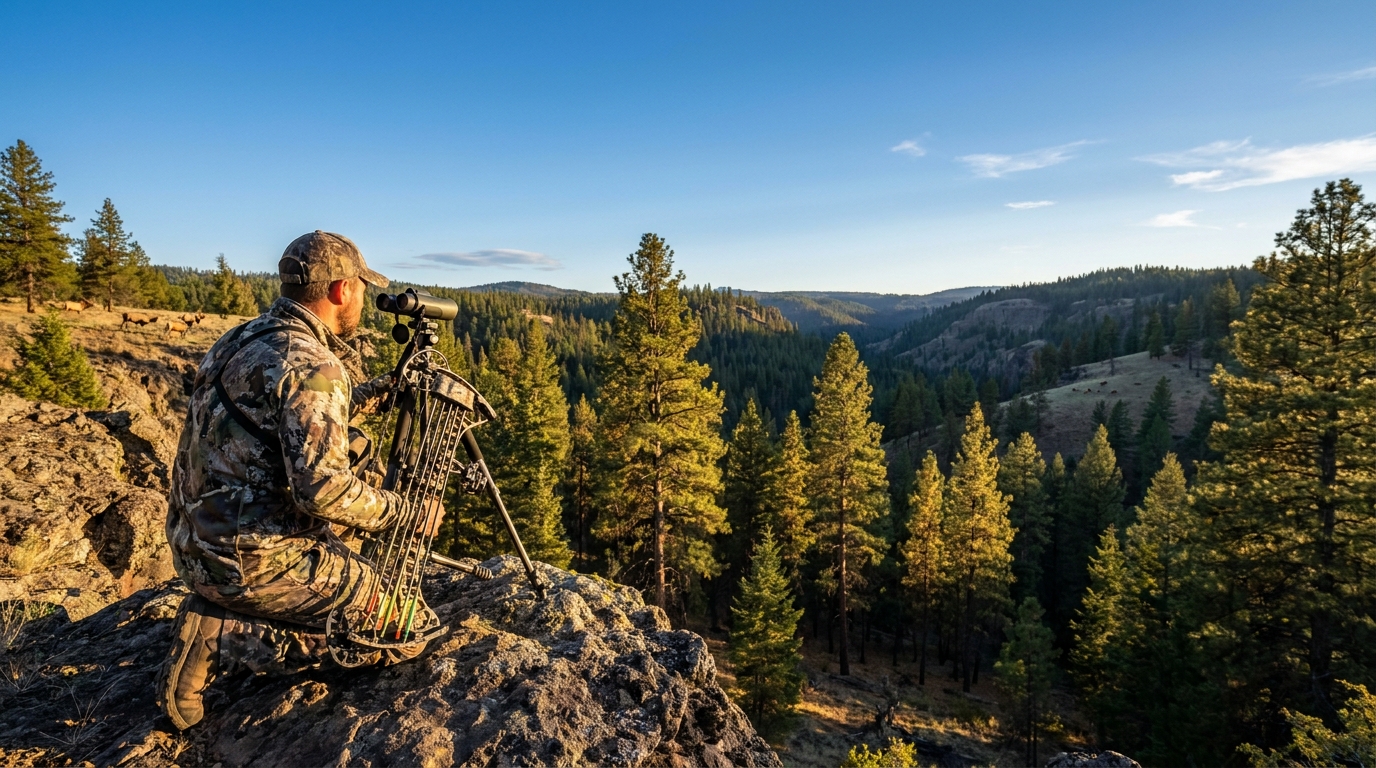
July and early August are the time to be in the field, not sitting at home. Elk in the Heppner country spend their summers in predictable patterns: feeding in open parks and burn edges in the morning and evening, retreating to shaded timber and north-facing benches during the heat of the day. You're looking for concentrations of cows with calves, satellite bulls, and — most importantly — the bigger bulls that will be hanging together in bachelor groups through mid-August.
Where to Glass
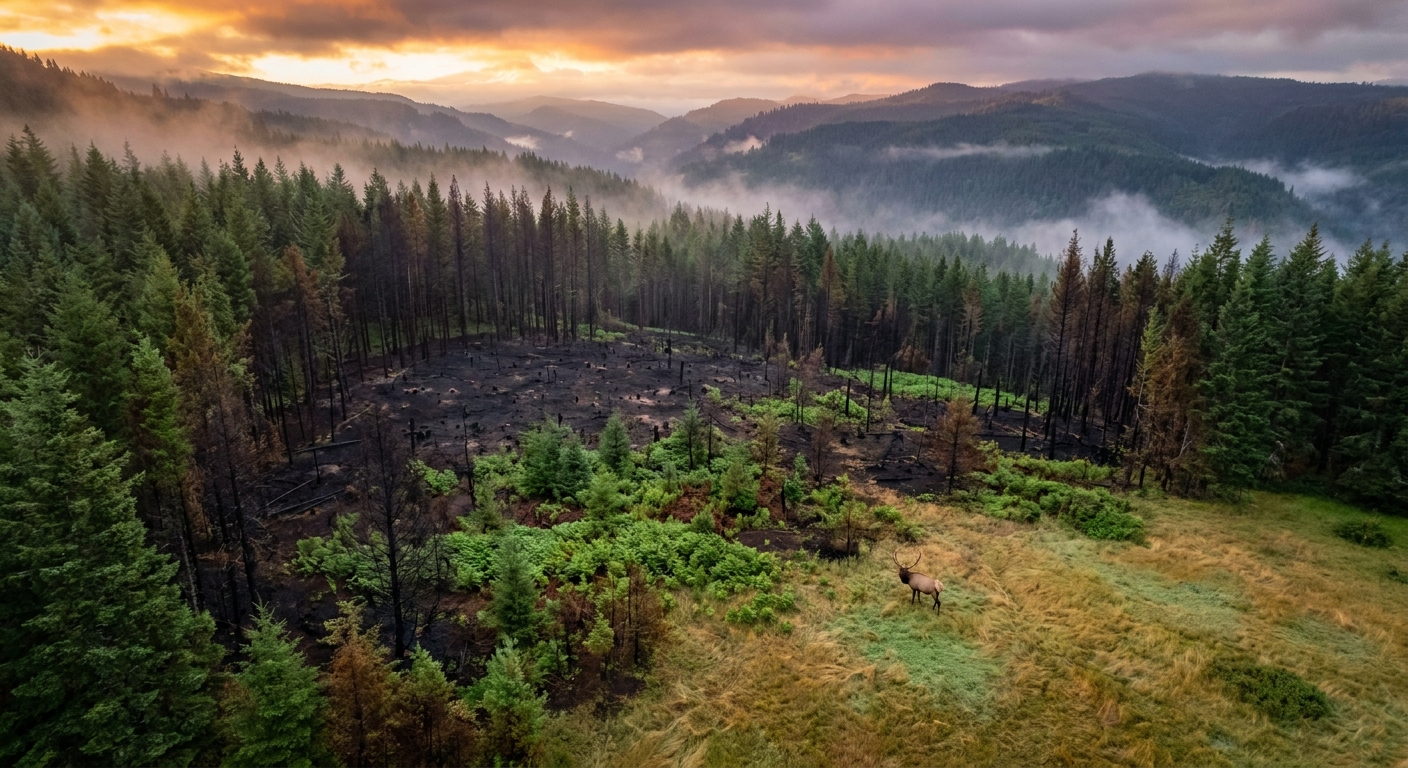
- Burned timber edges: The Blue Mountains have seen significant fire activity in recent decades, and the resulting patchwork of burned snags and regenerating brush creates prime elk habitat. Glass into the edges of these areas at dawn and dusk.
- Water sources: In a dry August, water is the key variable. Identify every spring, seep, and stock tank on your maps. Elk will be hitting them in the evening and early morning.
- North-facing benches: During the hottest part of August, elk bed on north-facing slopes where shade persists longest. Set up a glassing position opposite these benches and watch for movement in the first and last hour of light.
August Elk Behavior in the Heppner Country
August archery elk hunting is fundamentally different from September rut hunting. Bulls are not bugling. Cows are not assembling into harems. The elk are in summer mode — grouped loosely, feeding heavily to build fat reserves, and relatively relaxed. This is spot-and-stalk elk hunting, not calling country.
The advantage is that bachelor bulls are often predictable. If you find a good bull in late July, he's likely to stay in the same drainage through the opener. The disadvantage is that you've got to get close — within 30–40 yards — without triggering their nose. Thermals in the Blue Mountains are generally predictable: uphill until midmorning, then reversing downhill in the afternoon. Hunt accordingly.
Calling Strategies for Early Season
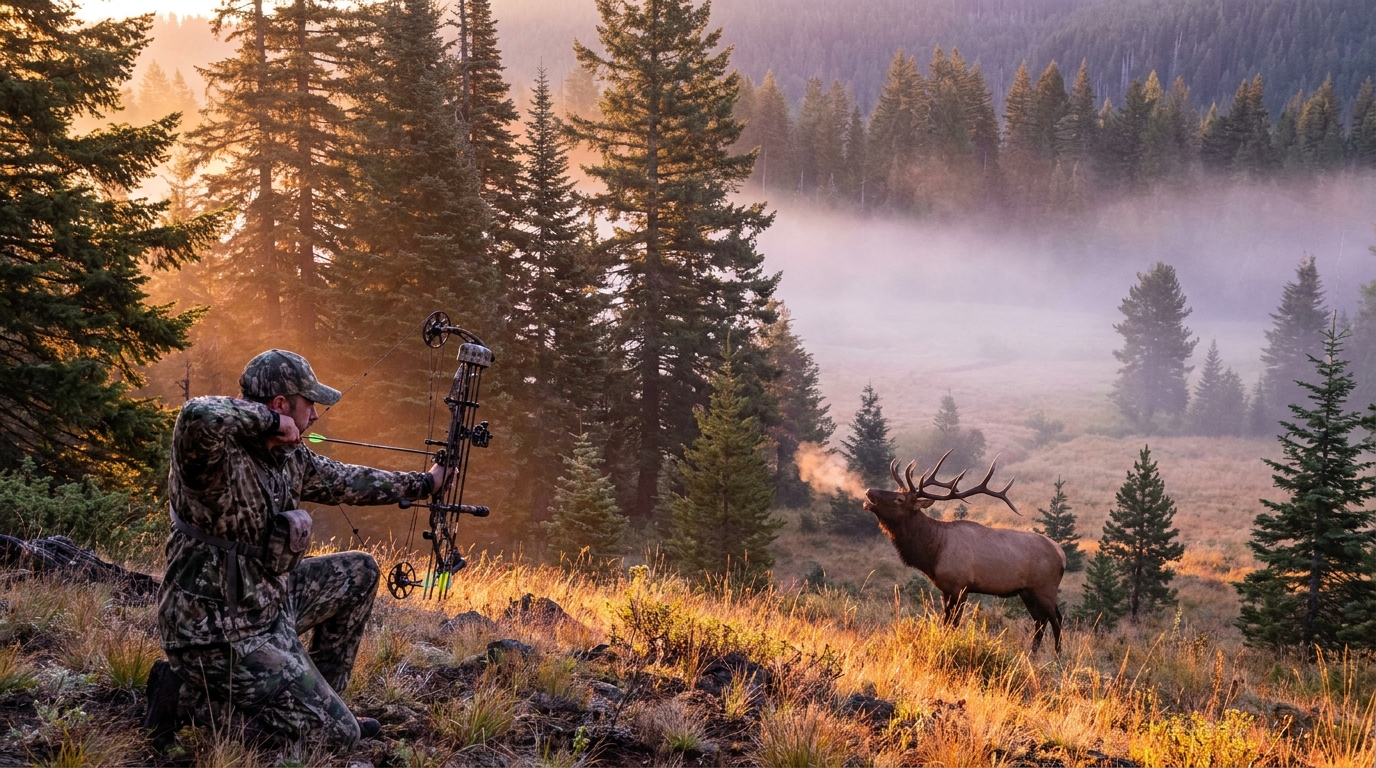
Don't abandon your calls entirely in August. While full-blown bugling is rarely productive, subtle cow calls and soft mews can be effective for calming elk that have sensed something is off, or for slowing a bull that's feeding away from you. An Estrus Bleat or a soft cow mew on a diaphragm call gives you a tool to work with when you're inside 80 yards and need the animal to stop or turn.
Avoid aggressive calling. A mature bull in August has no reason to respond to a challenge — he's not competing for cows yet. Overcalling can push elk out of the area entirely.
Shot Opportunities and Stand vs. Stalk
In the open parks and burned country of the Heppner Unit, water hole setups can be extremely productive. If you've identified a spring or seep with fresh sign, hang a lightweight saddle or set a ground blind 20–30 yards downwind of the source. Evening setups near water are the most reliable way to guarantee a shot opportunity on a specific bull if you've done your homework.
For spot-and-stalk work, the broken terrain of Rhea Creek and the higher drainages gives you relief to work into range without skylining yourself. Move slowly, glass constantly, and use the terrain. A stalk that takes three hours to cover 400 yards is a successful stalk if it ends with your arrow behind the shoulder.
Camp and Logistics
The upper Umatilla National Forest provides dispersed camping throughout the unit. Heppner itself is a small ranching community with fuel and limited supplies — load up in Pendleton or Hermiston if you're coming from the west. Cell service is spotty to nonexistent in the high country, so download offline maps and file a trip plan before you go.
Pack for heat. August in the Blue Mountains can push 90°F in the afternoons, and meat care is critical. Bring enough game bags, a meat thermometer, and either a cooler large enough to handle a quartered elk or a plan to get meat to a cooler within several hours of the kill. A boned-out bull elk at elevation is a significant pack-out — know your route before you squeeze the trigger.
Final Thoughts
The Heppner Unit won't hand you a 360-inch bull on a silver platter. But it offers what a lot of Oregon's more famous elk units have lost: room to hunt, public land that isn't being hammered, and enough elk to make consistent sightings a realistic expectation. Do your summer scouting, identify your bull before the opener, and execute a clean stalk. That formula works in the Blues every year.