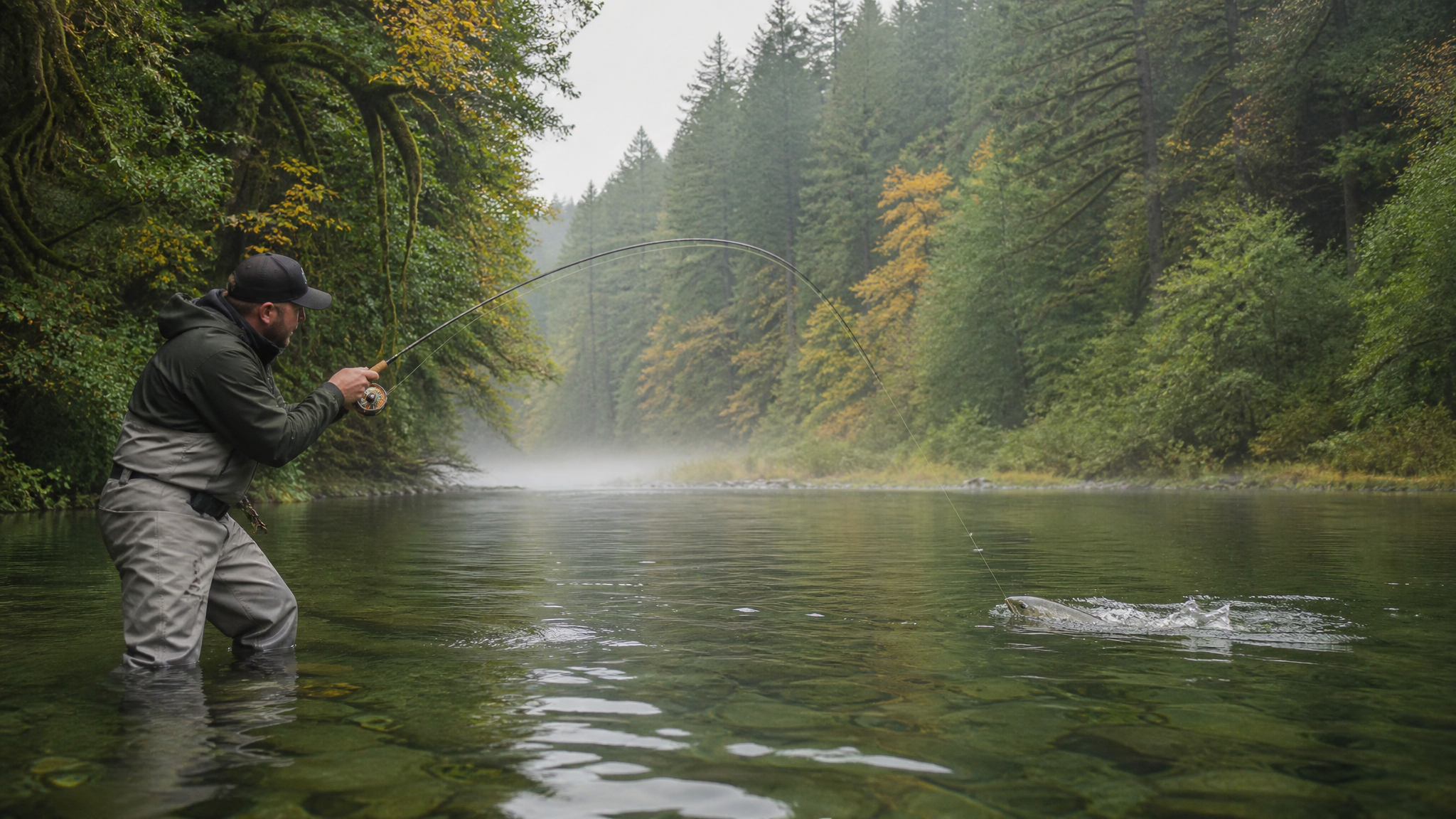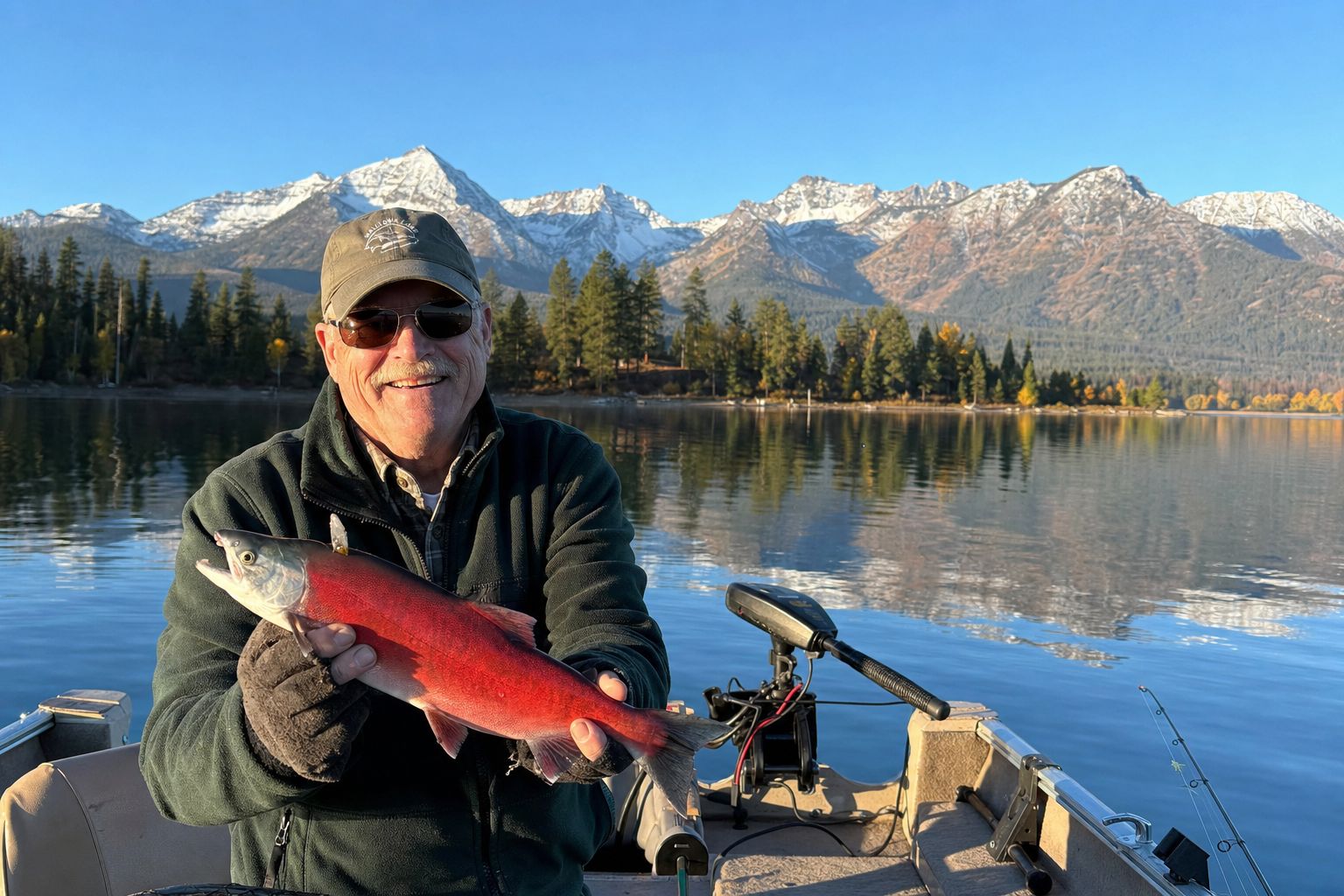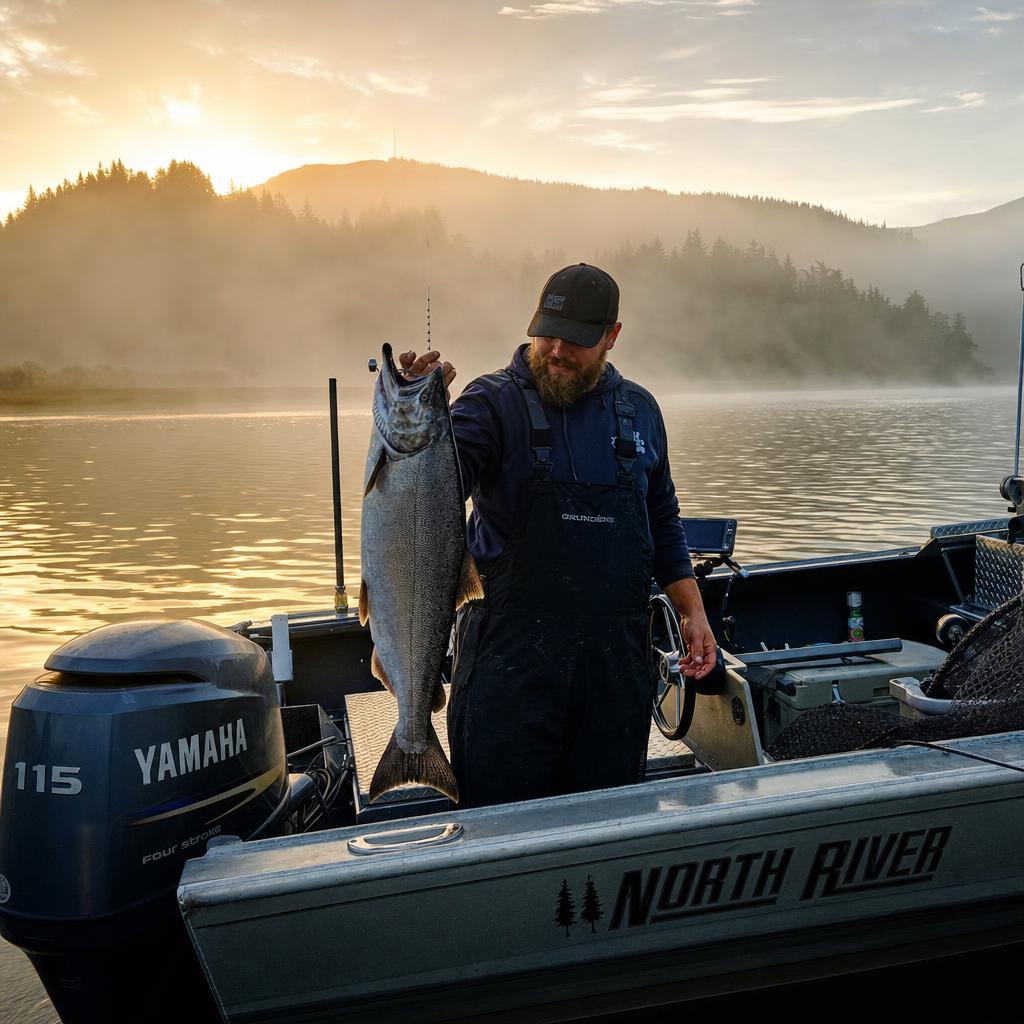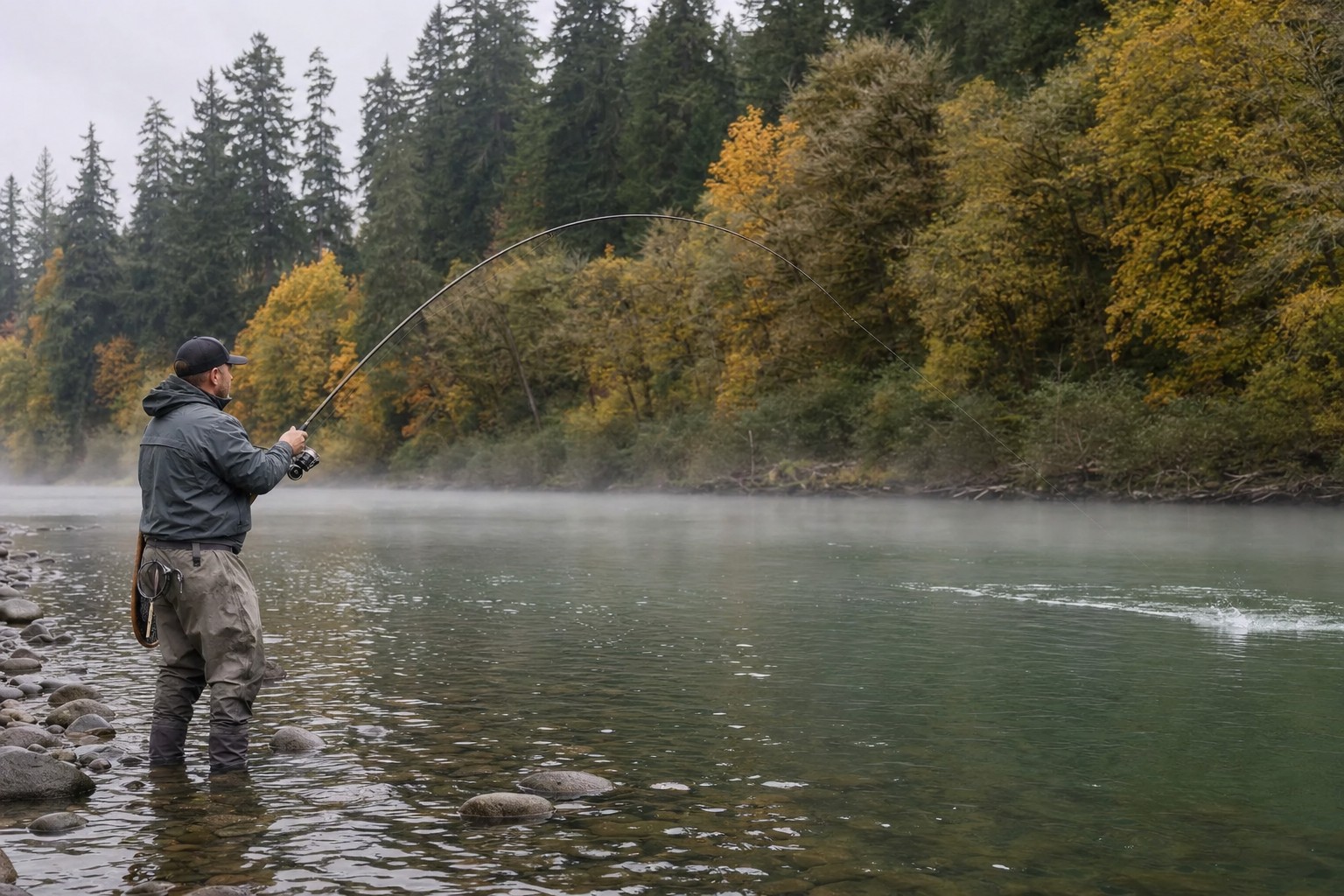
If you live in the Portland metro and want to chase fall Chinook salmon without driving three hours to the coast, the Clackamas River is your answer. This Willamette River tributary runs through Clackamas County southeast of Portland, delivering a strong September and October run of wild and hatchery fall Chinook that are accessible from dozens of public bank access points between the mouth at Clackamette Park and the Estacada area upstream.
The Clackamas isn't a secret — it's one of the most fished salmon rivers in the state — but it's large enough, and the run strong enough, that bank anglers who know the right spots and techniques put salmon on the bank every fall. Here's what you need to know before you head down to the river.
The Clackamas Fall Chinook Run: Timing and Numbers
Clackamas fall Chinook typically start showing in the lower river in late August, with the peak of the run hitting between mid-September and mid-October depending on water temperature and flow. Salmon direct their migration based on river temperature — when the Willamette drops below 65°F, fish push strongly into the Clackamas mouth and work their way upstream.
ODFW surveys and passage counts at North Fork Dam provide real-time run data. In strong years, the Clackamas sees 15,000–25,000 fall Chinook or more. The hatchery component — fish destined for the Clackamas Fish Hatchery above Estacada — provides the legal harvest opportunity, while wild fish must be released. Check the ODFW weekly recreation report for current passage counts and retention rules before every trip.
Top Bank Fishing Spots
Clackamette Park (Oregon City)
At the confluence of the Clackamas and Willamette rivers, Clackamette Park is ground zero for early-season fish. Kings stacking at the mouth before moving upstream are visible and catchable from the park's gravel bars. Expect company — this is the most popular bank spot on the river — but also expect fish. The wide gravel bar on the downstream side allows long casts into the deep holding water near the confluence.
Riverside Park (Milwaukie)
A short distance upriver from the mouth, Riverside Park offers paved parking and access to productive runs and tailouts. Good water for back-bouncing and plunking in the deep channel on the far side of the river.
Milo McIver State Park (Estacada)
Milo McIver State Park sits mid-river and provides excellent access to classic holding water — deep slow runs below fast riffles. Hatchery fish are the target here, and the park's boat ramp area has accessible bank spots on both sides of the river. A day-use fee applies.
Barton Park (Sandy)
Barton Park, managed by Metro Regional Parks, gives anglers access to a long stretch of Clackamas River bank with both gravel bar and riparian edge fishing opportunities. The water here is classic mid-river holding structure — inside seams, tailouts, and the downstream edges of boulders are prime.
Proven Bank Fishing Techniques
Plunking
Plunking is the most forgiving and most popular technique for Clackamas bank anglers. Rig a 4–6 oz flat-bottomed sinker (Slinky or pyramid) above a swivel, attach a 24–36 inch leader, and run a size 4/0–6/0 hook baited with cured roe, sand shrimp, or a combination of both. Cast to the far seam or into the deepest holding slot, set the rod in a holder, and wait. Clackamas plunkers run multiple rods (check regs for legal rod count) and cover different water depths simultaneously.
Back-Bouncing
Back-bouncing puts your bait in the strike zone more precisely than a static plunk. Use a 2–4 oz pencil lead or Slinky, keep tension on the line, and let the current walk the bait slowly downriver through the run. When a fish picks up the roe, free-spool briefly before setting hard. This technique shines in deep tailouts and below visible submerged structure.
Drift Fishing
Drift fishing with a float or in a free-line presentation works well in faster runs and riffles where plunking rigs snag bottom. Use a 3/4 oz to 1.5 oz drift bobber above the hook and cast quartering upstream, mending line to maintain a natural drift through the run. Cured roe and shrimp are top baits; scent strips can enhance both.
Bait and Tackle Recommendations
- Rod: 9–10.5 ft medium-heavy salmon rod rated for 1–4 oz with a sensitive tip
- Reel: Level-wind baitcaster or large spinning reel with a smooth drag
- Mainline: 30–40 lb braid with a 20–25 lb monofilament or fluorocarbon leader
- Hooks: Size 4/0–6/0 Gamakatsu octopus style, single point only (check regulations)
- Bait: Cured Chinook or coho roe (fire-cured or borax-cured), sand shrimp, or combo rigs
- Scent: Pro-Cure Salmon Egg or Tuna oil applied to baits and leaders
Regulations and Hatchery Fish ID
On the Clackamas, only adipose fin-clipped (hatchery) fall Chinook may be retained. All wild fish — identified by an intact adipose fin — must be released immediately and unharmed. Check for the adipose fin before keeping any fish. ODFW regulations set the season dates, retention limits, and legal gear rules — these change year to year, so always verify before heading out at myodfw.com.
A valid Oregon fishing license and Combined Angling Tag (salmon/steelhead tag) are required. Non-residents must purchase Oregon licenses even if crossing from Washington state.
Best Times to Fish
Early morning — the first two hours after legal shooting light — consistently produces the most bites on the Clackamas. Fish move through runs most actively in lower light. Overcast days extend the bite window. Midday fishing in clear water and bright sun slows significantly. Evening bites can be productive, especially in September when temperatures are still warm and fish are more active after the heat of the day passes.
Watch the flow data. Rising water following rain events pulls fish upstream rapidly. The 24–48 hours after a rain push, when the river starts to drop and clarity improves, is often the single best bank fishing window of the fall. Check USGS real-time streamflow gauges for the Clackamas at Estacada before every trip.
Final Tips
The Clackamas is a busy river, especially on weekends near the peak of the run. Arrive early — by first light — to secure the best bank spots. Weekday mornings see significantly less competition. Bring waders if you plan to work gravel bars, a sharp fillet knife for quick cleaning, and a cooler with ice for your fish. Most productive bank spots are within 30 minutes of Portland, making the Clackamas one of the best urban salmon fisheries in the Pacific Northwest.