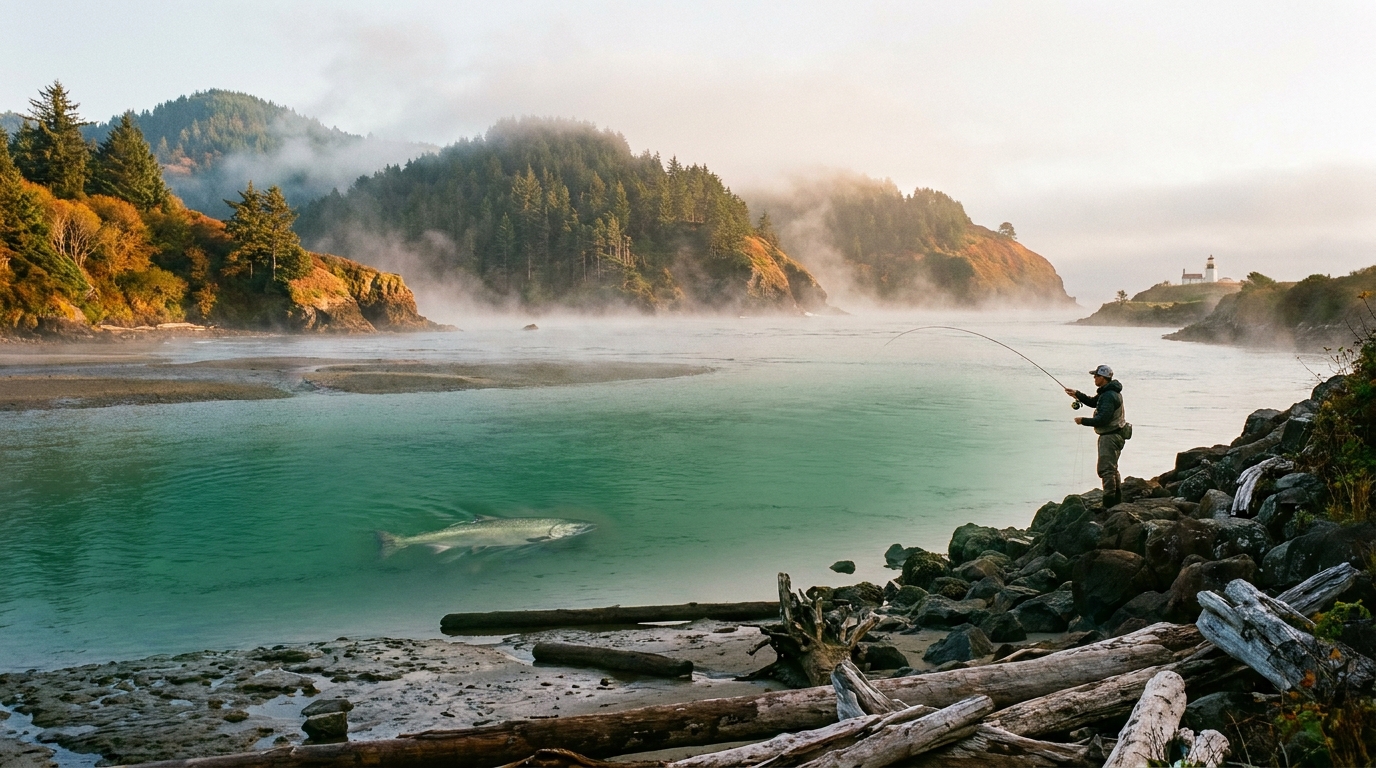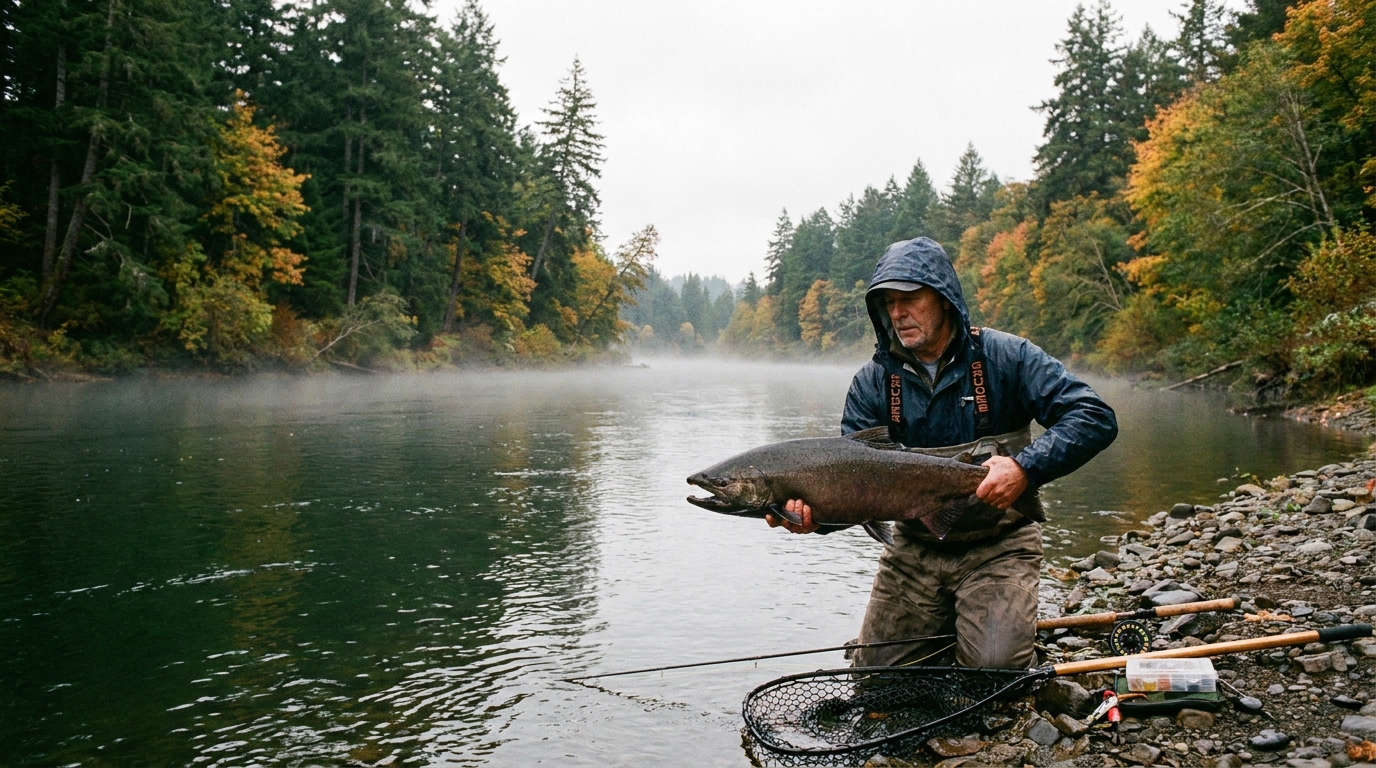
When most Oregon salmon anglers hear "South Coast Chinook," they think Rogue or Chetco. The Coquille River rarely makes the short list — which is exactly why the anglers who know it keep showing up, year after year, with heavy fish on a stringer and grins they won't explain.
The Coquille drains nearly 900 square miles of Coos County before emptying into Coos Bay near the city of Coquille. It's a legitimate fall Chinook river with tidal influence stretching well inland, good bank access on both the South Fork and mainstem, and fish that arrive in numbers consistent enough to plan a trip around. This guide breaks down what you need to know to catch them.
When the Fish Arrive
The North Fork and mainstem Coquille typically sees the first fresh fall Chinook enter the system by mid-September, with peak numbers pushing upriver from late September through October. The South Fork, which holds better low-water clarity for visual fishing, often produces its best fishing in October and into early November when rain events pull fish up from the estuary.
Watch the ODFW gauges and the USGS streamflow data for Myrtle Point. Fish move best on a rising tide with 2–4 inches of fresh water coloring the river — not blown out, not gin clear. That sweet spot of 3–4 feet on the gauge at Myrtle Point after a light rain is prime bank fishing time.
South Fork: The Bank Angler's Best Friend
The South Fork Coquille Road parallels the river for miles above Myrtle Point, putting serious bank access within reach of any angler with a two-wheel-drive rig. Several key holes stand out:
- Dement Creek confluence: Classic holding water where a feeder creek drops the temperature slightly. Fish stack here on warmer fall days. Drift roe under a float on the downstream seam.
- The bridge hole at Bridge: The bridge crossing near the community of Bridge offers both upstream and downstream bank access. Fish the tail-out at low light; hit the deep green head at mid-day when fish go shy.
- Powers area pools: Above Powers, the river narrows and deepens. Chinook hold tight to the current break on the far bank. Back-bouncing eggs or Kwikfish in the 10–14 size range produces fish here when the river drops to clarity.
North Fork Access
The North Fork Coquille, running east from Myrtle Point toward the Coast Range, offers a different character — slower, darker water with more woody debris and undercut banks. This water holds fish that have been in the system longer and can be tougher to catch, but it also produces some of the biggest Chinook of the season.
Access the North Fork off Highway 42S. There's limited turnout parking, so early mornings beat the weekend crowds. Work the inside seams of bends where current slows and fish can rest without fighting current. A pink or red Spin-N-Glo drifted just off the bottom produces strikes when eggs feel stale.
Mainstem Bank Spots
The mainstem between Coquille city and the tidal zone near Coos Bay offers flatter, wider water. Bank access is best along Lampa Lane and Fishtrap Road on the east bank. Tidal influence here means morning high tides concentrate fish; time your fishing to the two hours surrounding high slack for best results. Anchovies and sardine baits in a herring helmet rig work well in this saltier water.
Gear That Works
For the Coquille's relatively intimate pools, medium-heavy gear in the 10–12 foot range handles most situations. A quality level-wind reel spooled with 30-pound monofilament or 50-pound braid with a 20-pound fluorocarbon leader covers the full range of conditions. Recommended terminal setups:
- Float and eggs: 3/4-ounce to 1-ounce float, 18–24 inch fluorocarbon leader, size 2–4 Gamakatsu hook, single or cluster salmon eggs cured in Pautzke BorX O Fire.
- Back-bouncing: 2–4 ounce pencil lead on a dropper, 24 inch leader, same hook and bait.
- Kwikfish or Flatfish: M2 or K14 size, wrapped with sardine-packed in salt. Fish these on a flatline or three-way rig with enough weight to hold in the current.
- Spinners: Blue Fox Vibrax or Mack's Lure Pro-Troll in chartreuse, orange, or chrome for clear water on bright days.
Regulations You Need to Know
Before you go, pull the current ODFW fishing regulations for Zone 5 Coastal Rivers — South Coast section. The Coquille's specific rules can vary by section (tidal vs. above tidal), species retention, and hatchery-only retention requirements. Check for any emergency orders that may have been posted in the days before your trip, especially in low-return years. Adipose fin-clipped fish are hatchery Chinook; unclipped fish must be released unless regulations specifically allow wild retention.
The Bottom Line
The Coquille doesn't have the name recognition of the Rogue or the Instagram following of the Deschutes. That's a feature, not a bug. Bank access is good, the fish are real, and on a solid October morning with the river in shape, you'll have holes to yourself that most Oregon salmon anglers have never heard of. Do your gauge homework, show up with fresh bait, and let the Coquille surprise you.