Harney County sits in the high desert of southeastern Oregon, more than 400 miles from Portland and a world away from the pressured duck blinds of the Willamette Valley. But drive southeast through Burns and keep going until the sage gives way to cattail marsh and open water, and you'll find Malheur National Wildlife Refuge — 187,000 acres of wetlands, meadows, and uplands that funnel Pacific Flyway ducks and geese through every fall in numbers most Oregon hunters never see.
Hunting Malheur is a more complex logistical exercise than showing up at a WMA blind, but for hunters willing to do their homework, it delivers an experience that's genuinely hard to replicate anywhere else in the state.
Understanding the Refuge Setup
Malheur NWR is a federal refuge managed primarily for migratory bird conservation. Hunting is permitted in designated areas only, and those areas open and close on a seasonal schedule that doesn't always match Oregon's regular waterfowl season. Before planning any hunt, download the refuge's current hunting map and regulations from the USFWS website — the huntable units, access points, and species rules are updated annually.
The refuge's hunting areas are concentrated around the margins of Malheur Lake, Harney Lake, Double-O Unit, and the P Ranch area near Frenchglen. Each zone has its own rules regarding motors, blind construction, and legal shooting hours. Study the map before you go. Cell service in Harney County is minimal — you need this information before you leave the highway.
What to Expect: Species and Timing
Malheur is primarily a migrant staging and resting area, which means hunting success is tide-driven by bird movement rather than resident populations. The best hunting windows typically occur:
- Early season (late September – October): Teal, wigeon, pintail, and shoveler are the primary targets. Birds are still moving south and the numbers on the refuge can be impressive if timing aligns with a cold front pushing birds off the Canadian prairies.
- Mid-season (November): Mallards and Canada geese dominate. The Double-O Unit and the meadow margins hold birds well when Malheur Lake's water levels are favorable.
- Late season: Hunting pressure drops and the birds that remain are educated. Skilled callers with realistic decoy spreads can still find success, but it takes effort.
Sandhill cranes stage at Malheur in enormous numbers during the fall migration. Oregon has a crane season with limited tags — if you've drawn a crane tag, Harney County in October is where you want to be.
Access and Scouting
The refuge headquarters is located 32 miles south of Burns on Highway 205. Stop there first — staff can tell you current water conditions, recent bird activity, and which areas are most productive. The headquarters also posts updated bird counts, which are invaluable for timing your trip.
Scouting from the road is productive at Malheur in a way that's rare on pressured public land elsewhere. The Central Patrol Road and the southern loop toward Frenchglen offer miles of slow driving through the heart of the refuge. Bring your spotting scope. Identify where birds are feeding and resting, then plan your setup accordingly — ducks at Malheur work the edges between open water, emergent vegetation, and flooded meadow just like they do everywhere else.
Blind Setup and Decoys
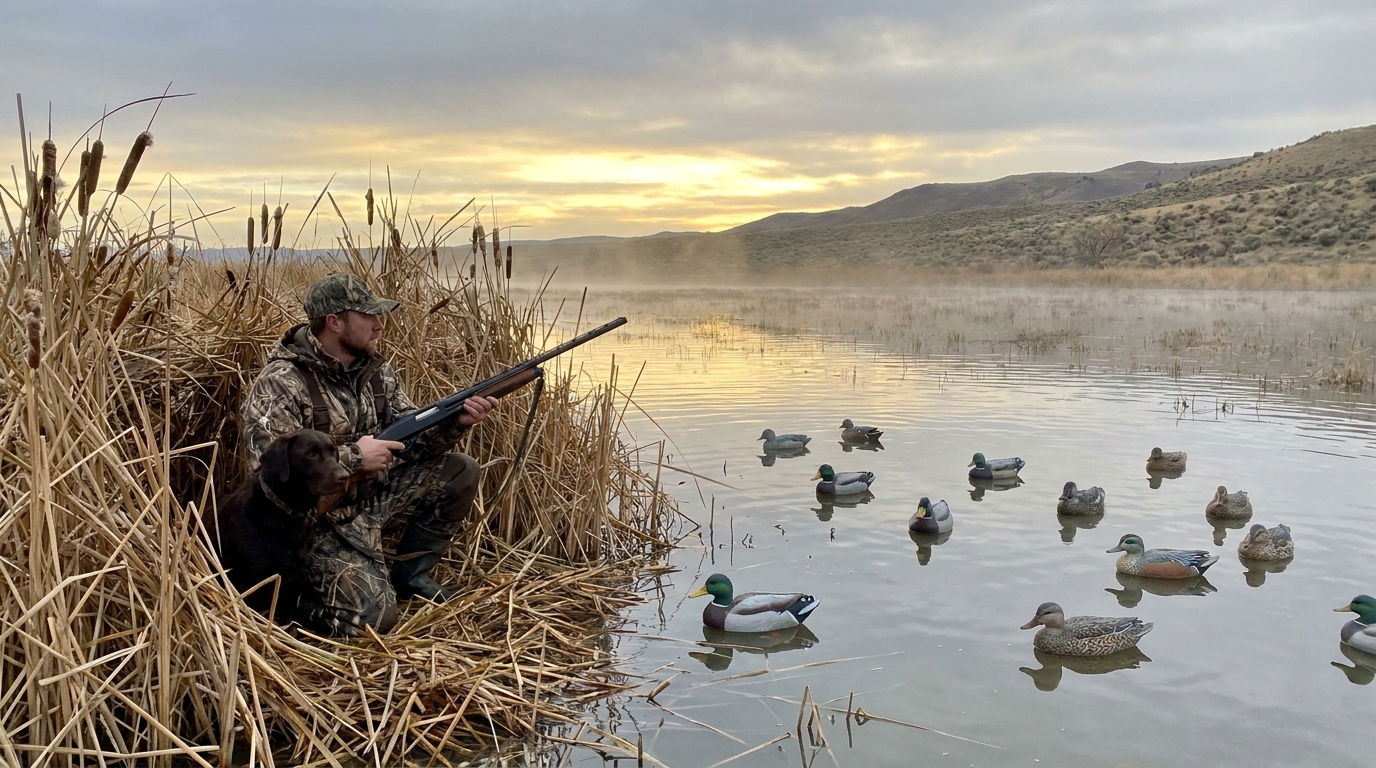
Natural blind construction is permitted in designated hunting areas using materials found on-site. Cut tules and cattails make excellent natural blinds, but scout your setup spot the evening before — birds move overnight and what looked like a productive corner at dusk can be empty at shooting light.
Decoy spreads at Malheur work best when they're realistic. The birds staging here have often already been hunted once or twice in Canada or the northern plains. Spread 2–3 dozen mallard blocks with a motion element — a jerk rig or spinning wing decoy — in calm conditions. On windy days, drop the spinning wing and let the natural movement of your decoys do the work. In the morning, face your spread into the wind so landing birds cup over your blind.
Calling
High-ball the birds you see at distance, then back off the call as they commit. Malheur birds in November are not the naive early migrants of September. A feeding chuckle and some soft quacks will bring a committed bird in better than an aggressive greeting call hammered at 60 yards. Pintails and wigeon need species-specific calls — a mallard call won't pull wigeon reliably.
Logistics: Making the Drive Worth It
Harney County is remote. Burns is your last major supply point — gas up, buy your bait (steel shot is mandatory on the refuge, all federal lands), and stock provisions there. Frenchglen offers limited lodging and a historic hotel that fills up fast during bird season. The refuge itself has a campground near Page Springs that makes a good base camp for multi-day hunts.
Bring the right steel shot: T shot and BBB for geese and long passing shots, 3 or 4 for decoying ducks in moderate-to-close ranges. Non-toxic loads are non-negotiable on federal refuges — a warden working Malheur won't have much sympathy for the guy who showed up with lead shells by accident.
The Bottom Line
Malheur NWR rewards preparation. Study the refuge map, monitor ODFW and USFWS reports, time your hunt with bird movement, and you'll find waterfowl hunting in Oregon that feels like hunting used to feel — wide open country, big skies, and birds moving in numbers that remind you why the Pacific Flyway earned its reputation. Harney County is a long drive from anywhere. It's worth every mile.