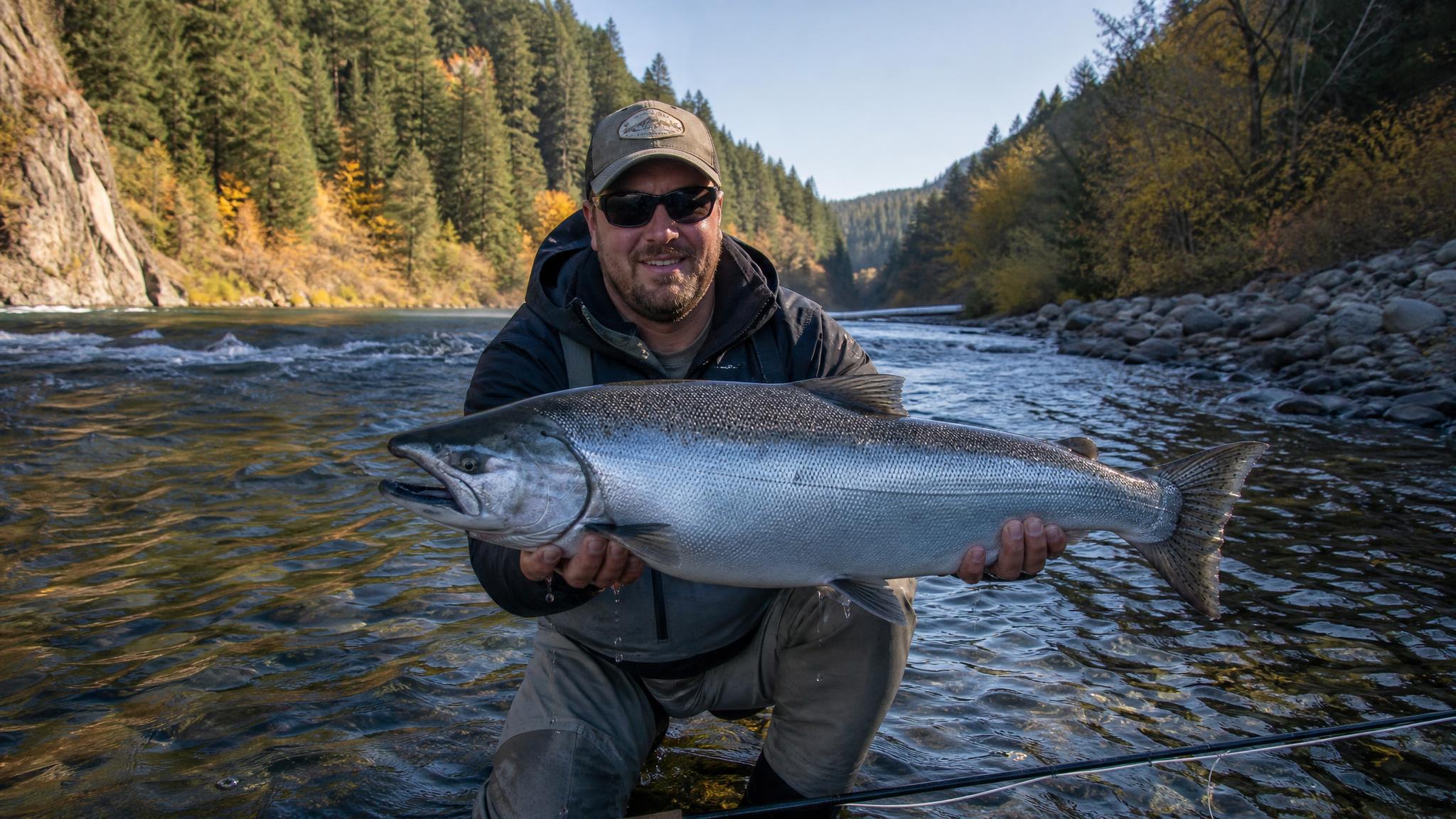
Tucked into Curry County on Oregon's wild south coast, the Elk River is one of those streams that rewards anglers willing to do the homework. It's not a famous name like the Rogue or the Umpqua, but among those who know it, the Elk River is revered — a short, powerful coastal river with an exceptional run of wild fall Chinook salmon and a reputation for producing big fish in tight, challenging water. September is when it starts, and October is when it peaks.
The Elk River: Oregon's Wild South Coast Gem
The Elk River drains a compact watershed in the Siskiyou National Forest, entering the Pacific Ocean near Port Orford. It's a small river by most measures — only about 36 miles long — but what it lacks in size it makes up for in quality. The fish are wild, the canyon is stunning, and the hatchery influence that dominates so many Oregon coastal rivers is minimal here. That means you're hunting native Chinook in clean, cold water.
The lower river, from the mouth up to about the Elk River Fish Hatchery near Butler Bar, is where most salmon fishing happens. The hatchery run supplements the wild fish, and the confluence of hatchery and wild Chinook makes September and October some of the most productive weeks on the calendar. Above the hatchery, the river enters steeper canyon country, and salmon fishing gives way to steelhead and cutthroat trout water.
Timing the Run
Elk River fall Chinook begin showing in the lower river as early as late August, but the bulk of the run typically moves in September and peaks through mid-October. Like all coastal rivers, timing is driven by rainfall events — the first significant fall rain raises river levels and triggers salmon to push upriver from the ocean. In a drought year, fish may stack at the mouth waiting for flow. In a wet September, the run can push through quickly.
Check ODFW's weekly fish counts and coastal river reports before you make the drive. The Elk is a remote destination — Port Orford is 4.5 hours from Portland and 2.5 hours from Medford — so confirming the run is in before you go is essential planning.
Best Water Conditions
- Ideal flow: 300–800 cfs. At this level, fish are moving and holding in predictable spots.
- Too low: Below 150 cfs in September, fish stack at the mouth and won't push upriver. Watch for coastal fog drip to help flows even in dry conditions.
- Too high: After a major rain event, flows over 2,000 cfs make fishing difficult. Wait 2–3 days for it to drop into shape.
Where to Fish
Tidewater and the Mouth
The lowest section of the Elk River, including the tidal zone near the bridge on Elk River Road, holds fish waiting for a push. When the river is low and clear, salmon will stack in deep holes in tidewater — visible from the bank if you wear polarized glasses and move quietly. Bank access is good along Elk River Road, and there are pull-outs where anglers can work the deeper bends.
Butler Bar Area
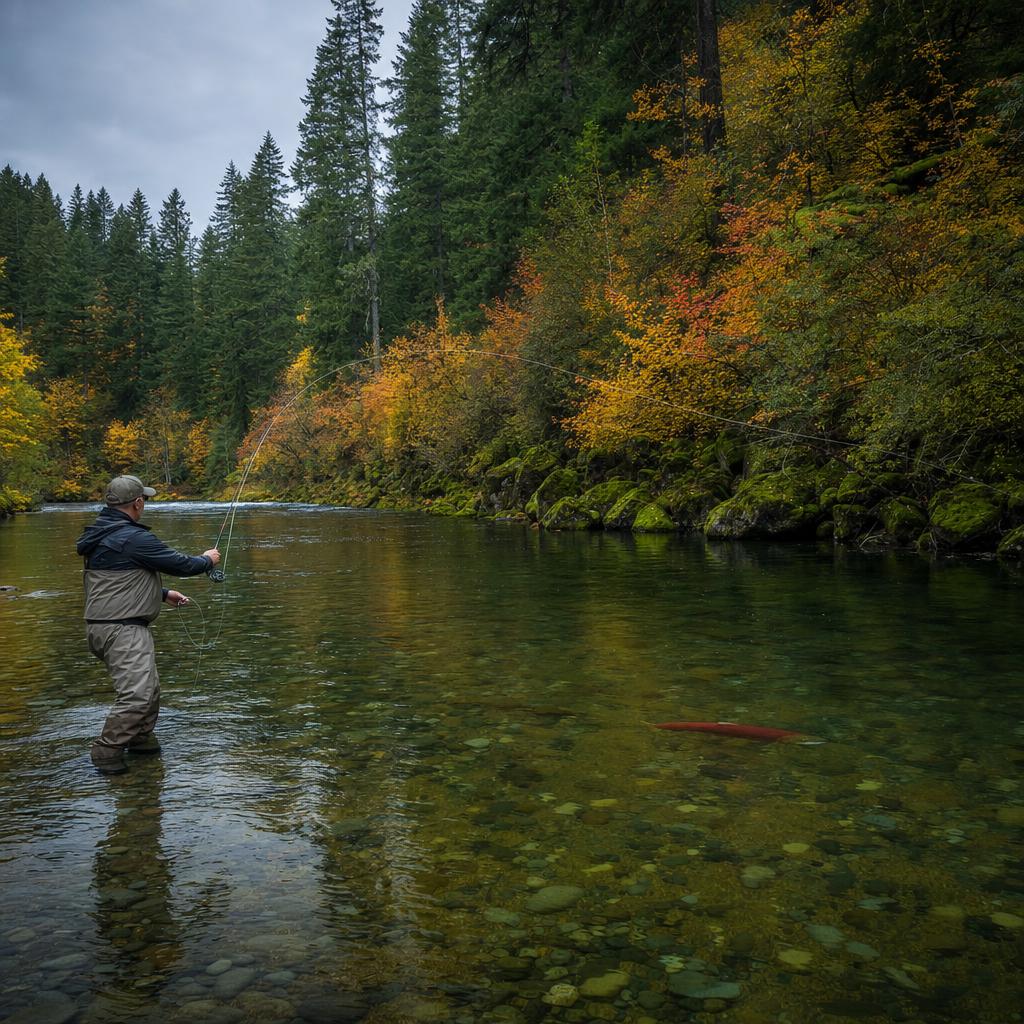
The Butler Bar Recreation Area, managed by the BLM, provides public access to a classic stretch of holding water. The gravel bars and deep pools in this section are textbook Chinook habitat — fast, shallow tailouts above deep green holes where fish rest on their journey upriver. This is the heart of the bank fishing opportunity on the Elk.
Above the Hatchery
The stretch immediately above and below the Elk River Hatchery concentrates fish during peak run timing. Regulations may restrict some hatchery-adjacent water; verify current ODFW emergency rules before fishing this area, as wild Chinook retention restrictions sometimes apply on certain sections.
Effective Techniques
Drift Fishing
The classic method for Oregon coastal Chinook. Rig a pencil lead on a dropper below a swivel, then fish a 24–36" leader to a size 2/0–4/0 hook with a cured roe cluster. Cast upstream, mend your line, and let the rig bounce along the bottom through the holding water. When a fish stops your drift or your rod loads up, set firmly. Chinook on the Elk don't waste time — they either take it or they don't.
Bobber and Jig
An increasingly popular technique on small coastal rivers. Fish a 3/8–1/2 oz jig under a large float, adjusted so the jig ticks the bottom through holding water. Pink, white, and chartreuse jigs all produce. The visual element of float fishing makes it easier to detect subtle takes and keep newcomers engaged with the presentation.
Spinners and Spoons
When fish are actively moving and the water has a bit of color, hardware can be deadly. Blue Fox spinners in size 5–6, or Pixee spoons in orange and gold, will draw reaction strikes from Chinook that won't touch bait. Work the seams and current edges where moving fish pause to rest.
Regulations and Wild Fish Rules
The Elk River has specific regulations that change from year to year depending on wild fish returns. In many years, retention of wild Chinook is allowed during the fall season, but this can change based on escapement numbers. Always check the current ODFW Sport Fishing Regulations for the South Coast Zone before you go. Clipped adipose fin = hatchery fish, legal to retain. Intact adipose fin = wild fish; release carefully unless regulations specifically allow retention.
The Drive and What to Bring
Port Orford and the Elk River corridor have limited services. Gold Beach to the south has more options for lodging, fuel, and groceries. Plan ahead:
- Stock up on bait (fresh cured roe or shrimp) before you leave a larger town
- Bring extra gear — the nearest tackle shop may be 30+ miles away
- Waders and wading boots for rocky bank and shallow wade fishing
- A valid Oregon fishing license with Columbia River Endorsement is NOT needed here — but a valid sport license and salmon tag are required
- Polarized sunglasses for spotting fish in clear water
The Elk River fall Chinook run is one of Oregon's south coast treasures. The fish are wild, the canyon is remote, and the crowds that plague more famous rivers are largely absent. If you're willing to make the drive, the Elk will reward you.