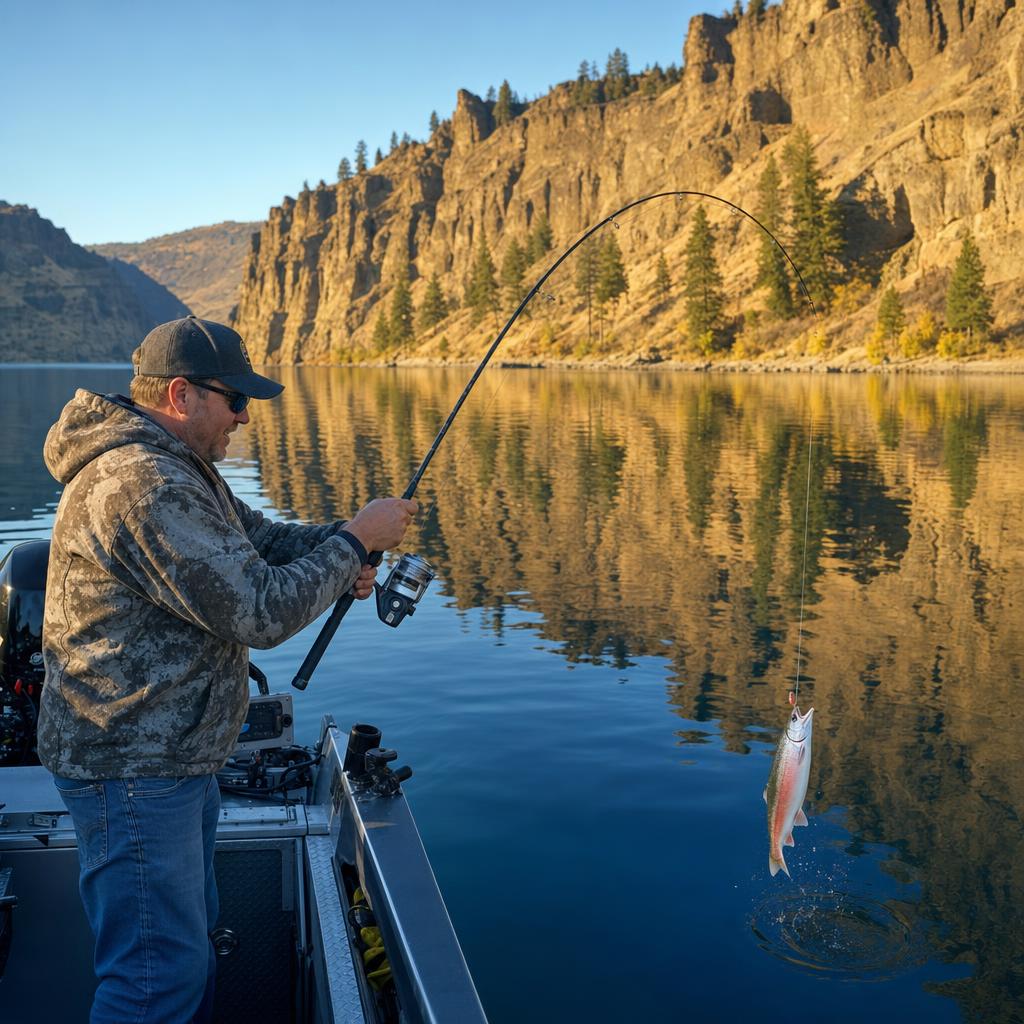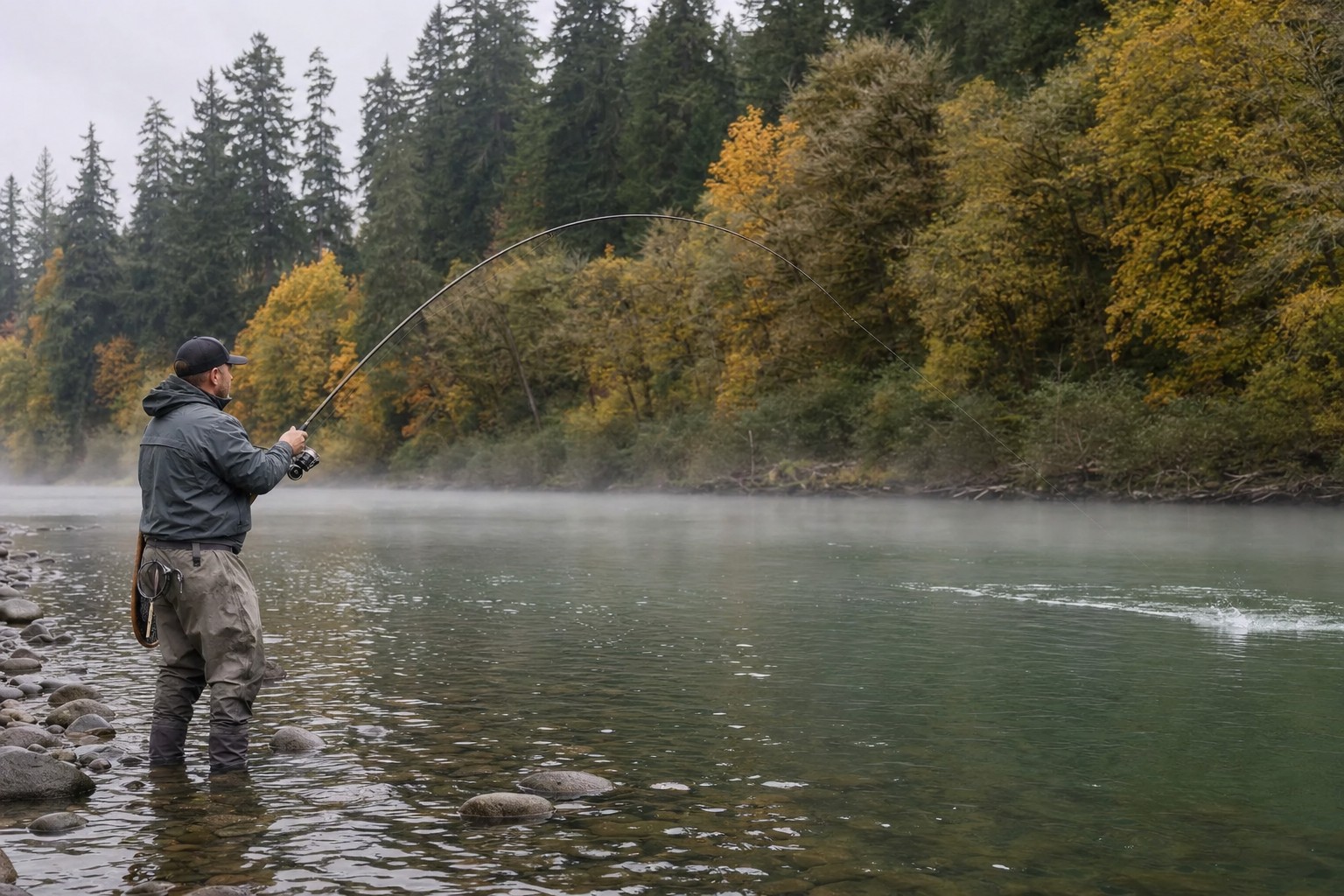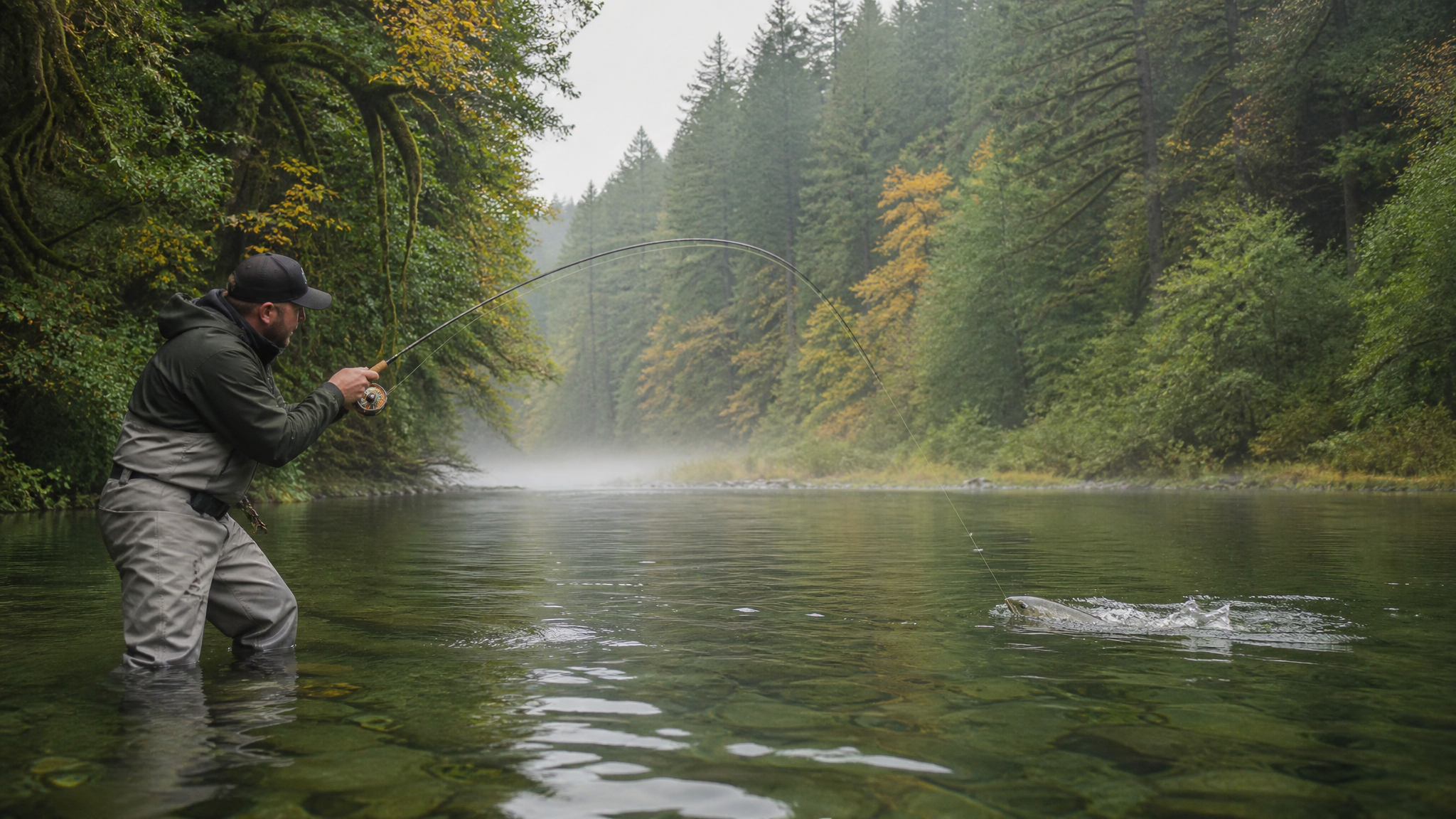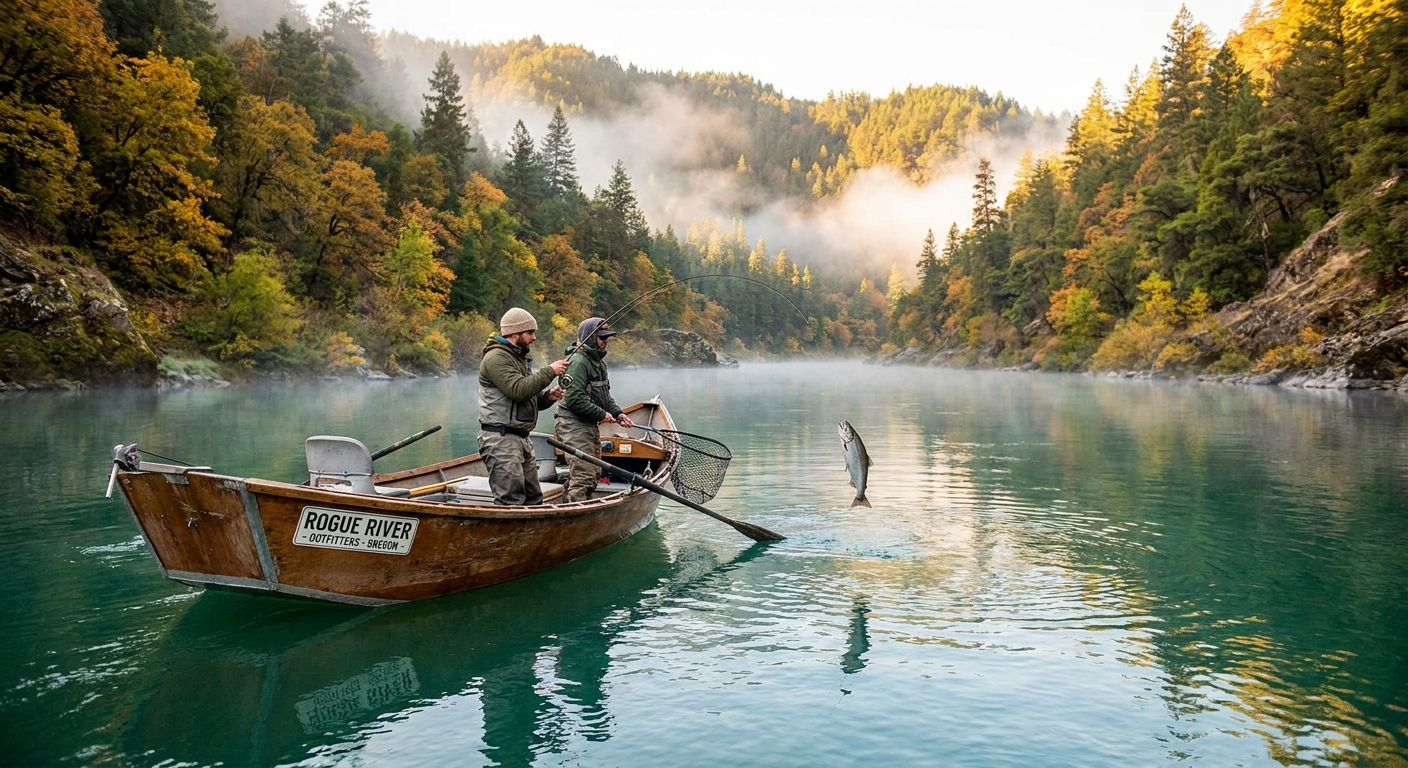
The Rogue River fall Chinook run is one of the defining events of the Oregon fishing calendar. From late August through November, king salmon push up from the Pacific, staging in the Rogue's tidewater at Gold Beach before working their way inland past Agness, Lobster Creek, Grave Creek, and eventually up to the Medford-area tribs where they spawned. For drift anglers who invest the time to learn the river, few experiences in freshwater fishing compare.
Run Timing and Best Windows
The Rogue's fall Chinook run is not a single event—it's a rolling series of pulses that begin with the earliest tidewater fish in August and peak in most years between mid-September and mid-October above Grants Pass. Fish in the Agness and Lobster Creek corridor typically show in numbers by early September. The stretch from Hellgate Canyon through Galice and Grave Creek tends to fish best from late September into October. Watch Oregon Department of Fish and Wildlife's weekly fish count data at Grants Pass Dam—when counts spike, get on the water within 24 hours.
Drift Fishing the Rogue: Key Access Points
The Rogue is a float-friendly river for most of its fishable length, and drift anglers have multiple launch options depending on where they want to target fish:
- Grants Pass to Hog Creek (9 miles): Classic lower Grants Pass reach. Good bank access at Valley of the Rogue State Park. The river runs relatively slow and braided here—concentrate on seam edges and tailouts.
- Robertson Bridge to Galice (12 miles): One of the most productive float sections. The river picks up gradient, creating defined slots and boulder gardens where salmon rest. Watch the Hellgate Canyon—fish hold tight to the canyon walls.
- Galice to Grave Creek (8 miles): Fast water with excellent holding lies. Less pressure than the Grants Pass reaches. Take out at Grave Creek—the next 35 miles is Wild and Scenic wilderness, requiring a multi-day permit.
- Lobster Creek to Agness (float or jet boat): Tidewater influence fades here. Fish are fresh and aggressive. Access via ORE-33 from Gold Beach.
Rigging for Rogue Fall Chinook
Most successful Rogue drift anglers run a standard back-bouncing or side-drifting rig. Here's a proven setup:
- Rod: 8'6" to 9'6" medium-heavy drift rod, fast tip
- Reel: Level-wind or spinning reel with 300 yards of 30–40 lb braid backing
- Main line: 20–25 lb monofilament or fluorocarbon main
- Leader: 15–20 lb fluorocarbon, 18–30 inches
- Weight: 1–3 oz pencil lead or slinky depending on current speed
- Terminal: Size 2/0–4/0 Gamakatsu Octopus hook with a cured egg cluster or shrimp and yarn combo
For back-bouncing, work the rod tip up and downstream as the rig touches bottom, feeling for the distinctive stop-and-thump of a salmon bite. On the Rogue's faster slots, a light bounce is better than dragging—keep the lead moving.
Bait and Lure Options
Cured salmon eggs are the gold standard on the Rogue, and local bait shops in Grants Pass and Medford often carry river-specific cures. Tuna-brine cures work well in clear water; borax-and-salt cures in off-color conditions after rain. Bring several colors—orange and chartreuse are producers, but don't overlook natural roe color on bright days.
Beyond eggs, consider these proven alternatives:
- Kwikfish and Flatfish: K14–K16 plugs wrapped with sardine fillet. Incredibly effective when fish are tight to structure and holding in slow water. Run them upstream from an anchor and let them work.
- Spinners: Blue Fox size 5–6 or Mepps Syclops in silver or orange. Fish them across and downstream through tailouts at dawn and dusk.
- Sand shrimp: Outstanding producer, especially in fall when shrimp are at their most available. Thread on a size 2/0 hook and rig above an egg loop for added scent.
Reading the Rogue
Fall Chinook are not randomly distributed. On the Rogue, they hold in predictable locations: the inside seam of a bend where slower water meets faster current, behind large boulders in canyon stretches, at the head and tailout of pools, and in the transition zone where shallow riffles drop into deeper green water. In clear-water conditions, you can spot fish from a hillside with polarized glasses—look for dark shapes hovering just off the bottom.
Current speed matters enormously. Fish that are actively moving don't bite as well as fish that are resting. On the Rogue, the best fishing usually happens in the first two hours after sunrise before boat pressure moves fish, and again in late afternoon when light angles drop. Midday can be slow except in overcast conditions.
Regulations You Need to Know
The Rogue River salmon season is heavily regulated and changes annually. Check ODFW's current regulations before every trip. Key things to verify: open dates by river section, wild vs. hatchery retention rules (most sections require you to release unclipped wild fish), daily bag limits, and any emergency closures. The Wild and Scenic reach below Grave Creek has specific permit and regulation requirements for floaters. Buy your salmon tag before you launch—wardens are active on this river.
Final Word
The Rogue River fall Chinook fishery is a bucket-list experience for serious Oregon anglers. It rewards preparation—study the ODFW weekly reports, learn the access points before you need them, and don't wait for the peak of the run to hit the water. The best fishing often comes in the leading edge of each pulse, before the crowds arrive and the fish have seen every rig on the river. Get your gear prepped now and be ready to move when the counts climb.