Every September, the mood on Oregon's mid-coast rivers shifts. The low summer flows that kept salmon offshore begin to break with the first fall rains, and the coho come in behind them — bright, aggressive, and willing to bite. The Siletz, the Yaquina, and the Salmon River are three of the best mid-coast options, each with its own personality and access opportunities. If you've been watching the forecast and waiting for that first significant rain event, here's how to make the most of it.
When Do Mid-Coast Coho Arrive?
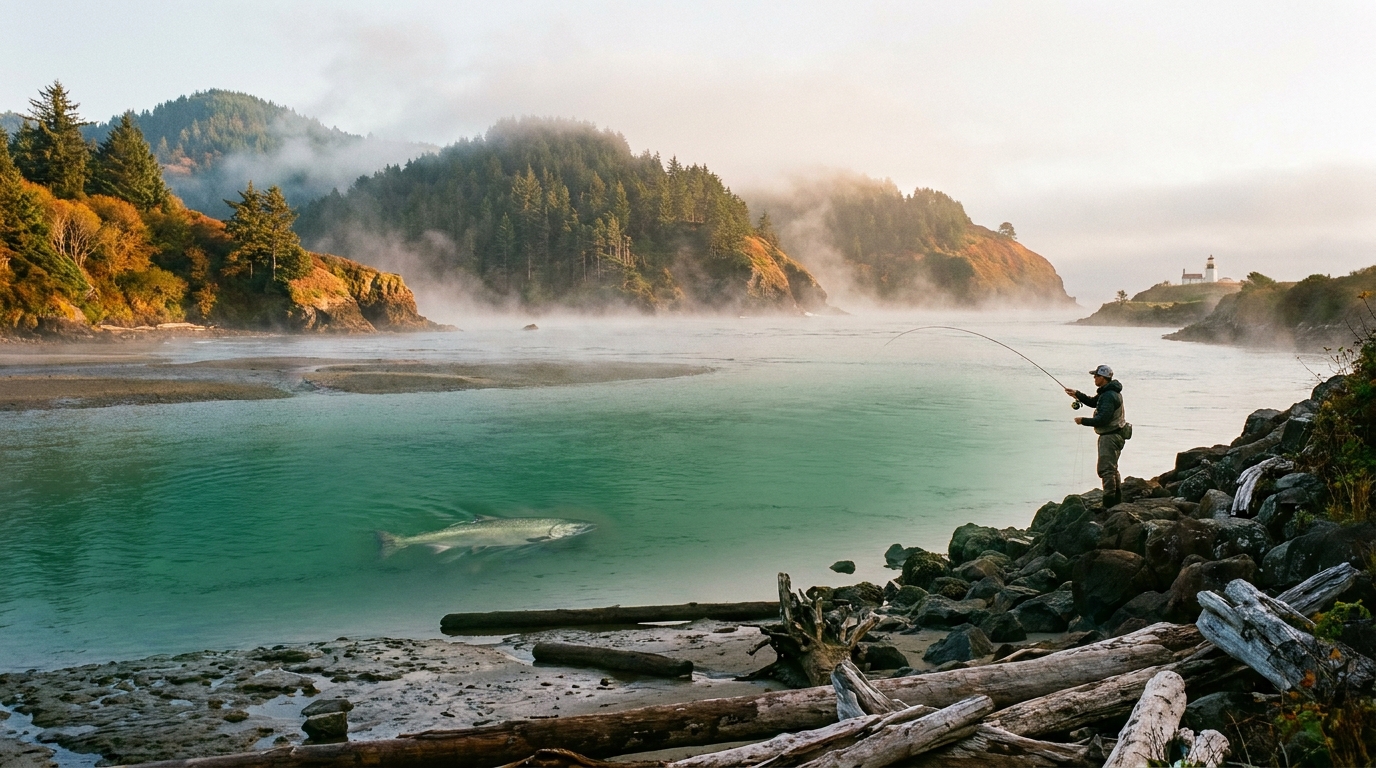
Timing depends heavily on rainfall and flow. In most years, the first fresh coho enter Oregon's mid-coast estuaries between late September and mid-October. The fish stack in tidewater waiting for sufficient freshwater flow to push upriver. A rain event that puts two or more inches on the watershed is typically enough to move fish. In drought years, the run can compress and peak quickly. In wet years, fresh fish keep moving through November.
ODFW fish counts and the Salmon Trout Enhancement Program (STEP) provide weekly updates during the run. Watch the Siletz at Siletz gauge (USGS station) and the Yaquina at Toledo — both will tell you when flow is spiking and fish are moving.
The Siletz River: The Mid-Coast Workhorse
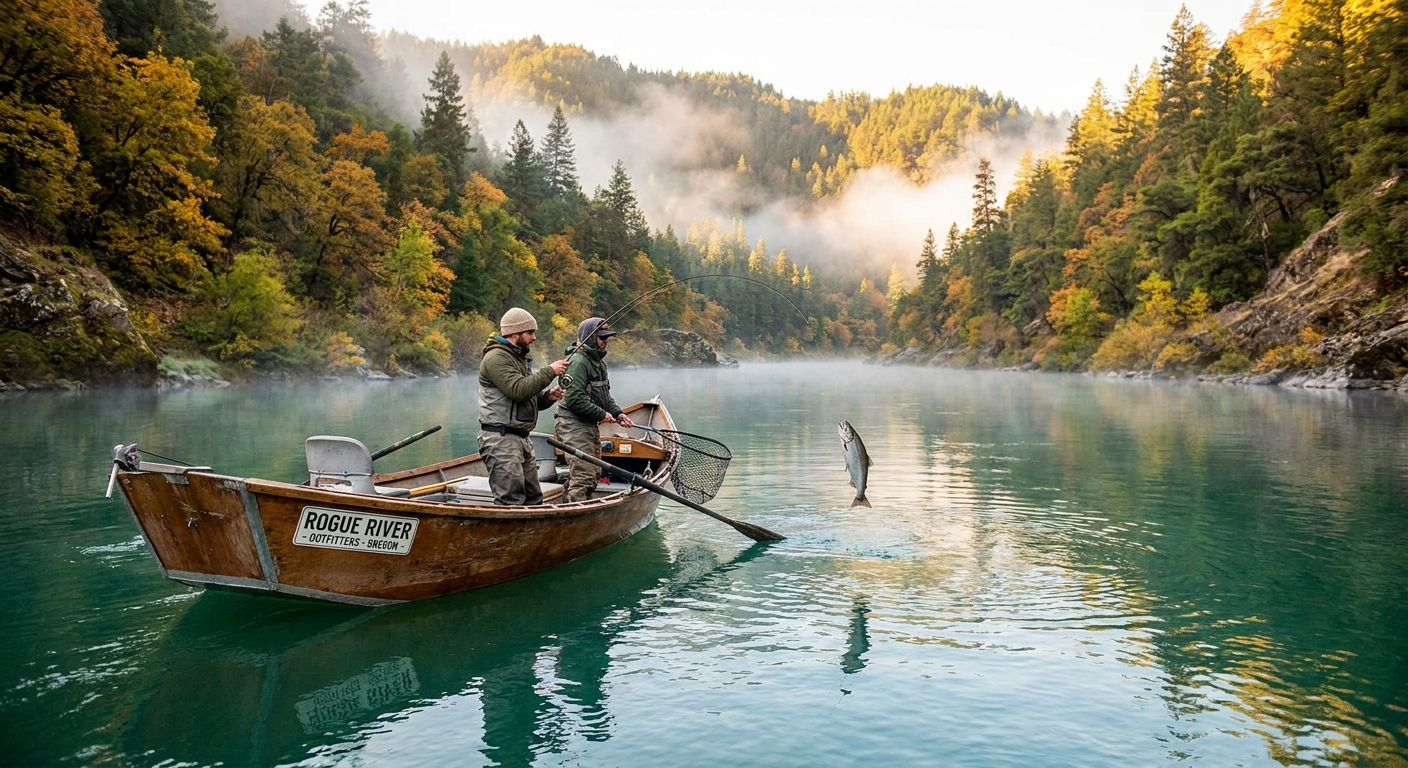
The Siletz is the biggest mid-coast producer and offers bank access from tidewater at Siletz Bay all the way up to the falls at Moonshine Park. The lower river from the hatchery confluence down to Morgan Hole and the flats above Kernville are the most consistent bank spots. Drift boats and sleds handle the Siletz well from Strome Park down to the Bay once flows are fishable.
Siletz Tactics
- Drift fishing: Corky-and-yarn combos in cerise, hot pink, or flame orange fished under a float through seam water are the go-to. Size 2 or 4 hook, 10–12 lb fluorocarbon leader.
- Spinners: Blue Fox Vibrax in size 4 or 5, hammered brass or chartreuse blade, are deadly for fresh fish in higher water.
- Back-bouncing: From a drift boat, back-bouncing roe on the bottom through long pools accounts for a lot of Siletz coho, especially in the deeper middle river stretches.
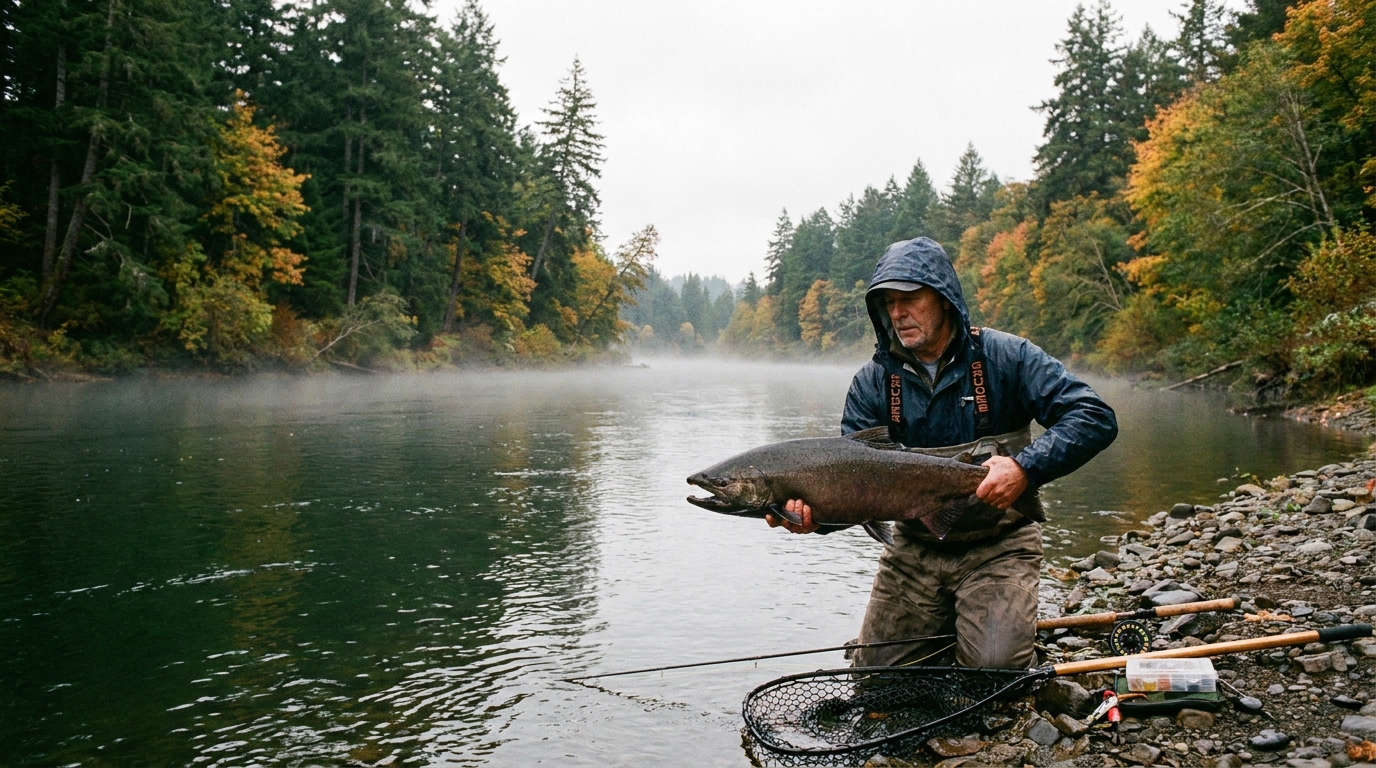
Hatchery coho on the Siletz are plentiful, especially early in the run near the hatchery confluence. Look for the clipped adipose — hatchery fish are your retention fish on most Oregon coastal streams.
The Yaquina River: Toledo to Elk City
The Yaquina doesn't get the attention the Siletz does, but the stretch from Toledo upriver to Elk City produces solid coho fishing every fall. The river is smaller and tighter, which means less boat pressure and more bank-accessible water. The upper Yaquina above Elk City sees good wild coho but check current regulations — retention rules vary by zone and year.
Yaquina Access Points
- Toledo boat ramp: Lower river launch, good float to upper tidewater flats.
- Elk City Road: Bank access along several stretches of middle river. Park at pullouts and walk to pools.
- Upper Yaquina: Accessible via gravel roads off OR-20. The river braids and shallows here — wade fishing with a single-hand rod and spinners is ideal.
The Yaquina responds fast to rain events. Fish push through quickly on rising water, so be there during or just after the first significant rain rather than waiting for the river to drop back to normal.
Salmon River: Small Water, Wild Fish
The Salmon River is the most intimate of the three, a coastal gem that flows through Tillamook State Forest before emptying at Otis near Lincoln City. It's almost entirely a wild coho river — and one of the most productive wild coho streams on the coast. Check regulations carefully; wild coho retention is often restricted or prohibited, making this a catch-and-release fishery most years.
That said, the Salmon River is worth fishing for the experience alone. Wild Oregon coho in a small, clear river are a completely different fish than a hatchery coho in the lower Siletz. They're spookier, stronger for their size, and they don't forgive sloppy presentations.
Salmon River Tactics
- Light line: 6–8 lb fluorocarbon, small hooks (size 6–8), and subtle presentations.
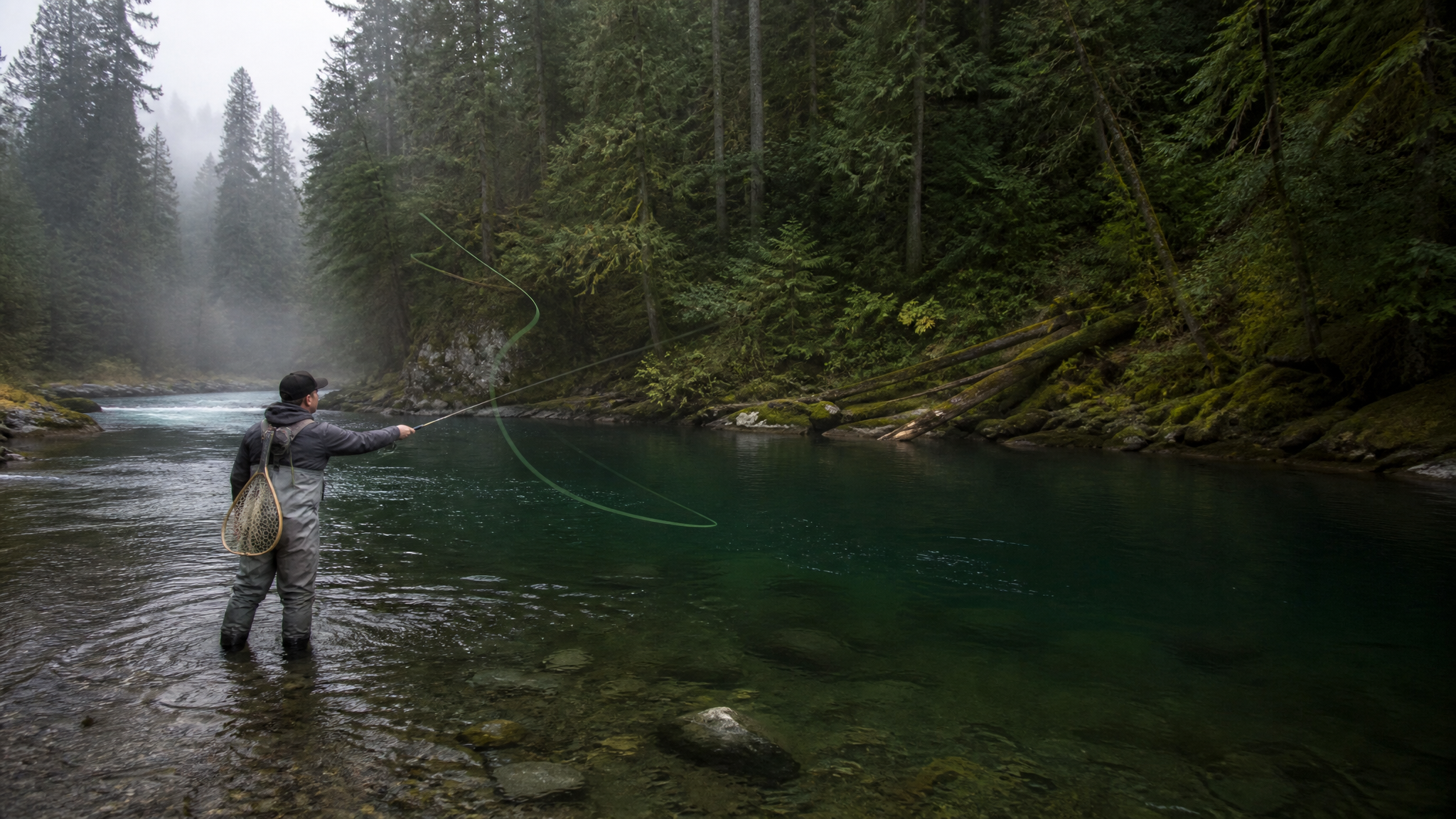
- Fly fishing: A sink-tip line and a small Egg Sucking Leech or Coho Blue in size 6 is deadly for Salmon River fish.
- Wade carefully: The river is heavily canopied and easily spooked. Slow down, stay low, read the water before you step in.
Gear and Logistics
For most mid-coast coho fishing, a 9–9.5 foot medium-action spinning rod with a quality 3000-series reel spooled with 20 lb braid and a fluorocarbon leader covers most situations. A valid Oregon fishing license and Combined Angling Tag are required. Check the ODFW Sport Fishing Regulations for the current year's season dates, bag limits, and hatchery/wild fish rules before you go — they change annually.
Waders and wading boots are essential for bank anglers on all three rivers. Pack rain gear regardless of the forecast — this is the Oregon coast in the fall.
Final Thoughts
Oregon's mid-coast coho fishery is one of those things that sneaks up on you if you're not paying attention. One week you're fishing for summer steelhead on low, clear water, and the next week the river's up, the fish are in, and the season has changed completely. Watch the rain gauge, watch the flows, and be ready to move fast when the first big storm hits. The window between fresh fish in the river and dark, spawned-out coho is short — don't miss it.