There's a reason chukar hunters have a reputation for being slightly unhinged. Ask anyone who's chased these red-legged devils through the canyon country of eastern Oregon and they'll give you the same crooked grin — part misery, part obsession. Chukar hunting is the pursuit that rewards stubbornness, punishes weak knees, and produces the kind of sunburned, leg-blown days you'll be talking about for years. And nowhere in Oregon does it get wilder, steeper, or more spectacular than Hells Canyon.
The Chukar Country: Hells Canyon and the Snake River Breaks
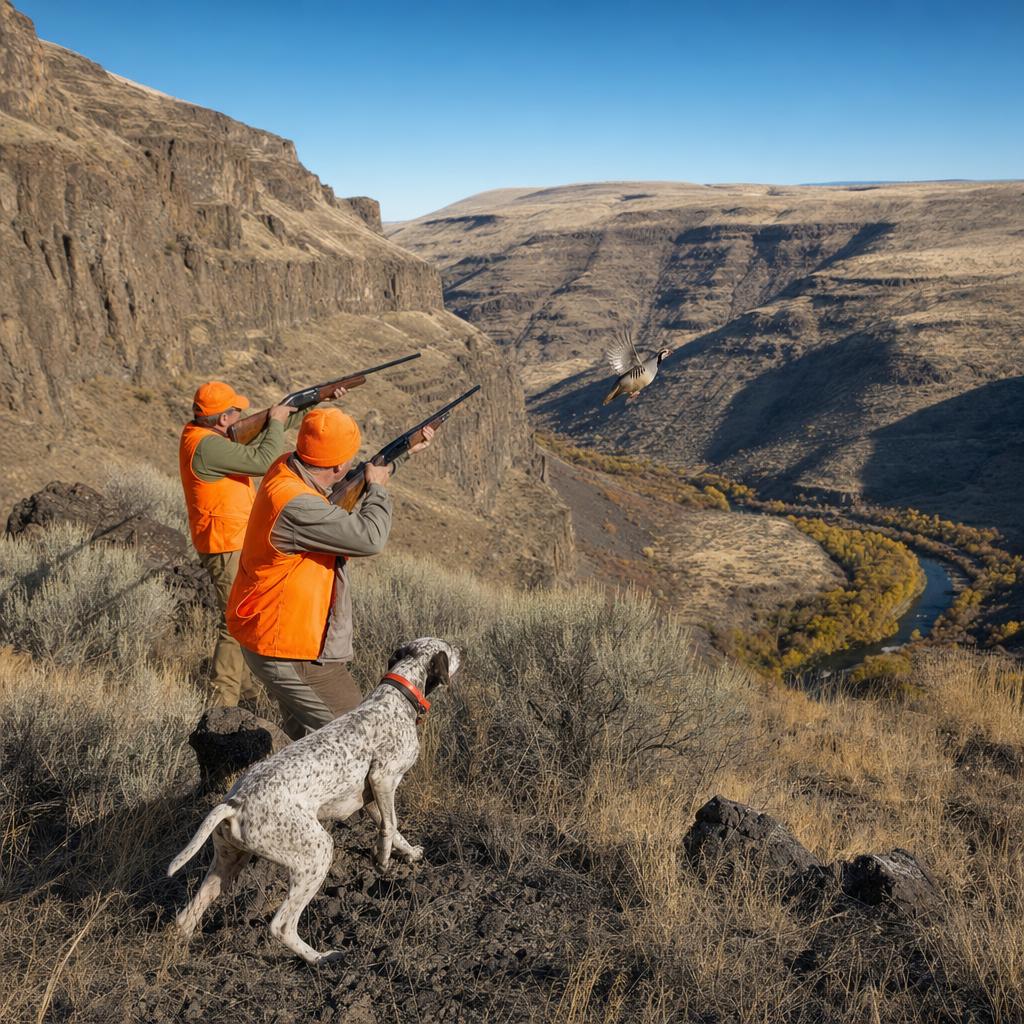
Hells Canyon — North America's deepest river gorge — cuts the Oregon-Idaho border along the Snake River, dropping nearly 8,000 feet from the He Devil peak to the river below. The terrain is defined by layer after layer of basalt rimrock, steep talus slopes, and south-facing hillsides draped in cheatgrass, bluebunch wheatgrass, and scattered serviceberry. In other words: perfect chukar habitat.
In Oregon, the prime chukar country runs from the Imnaha River drainage in Wallowa County south through the Hells Canyon National Recreation Area and into the Owyhee Uplands of Malheur County. The best hunting pressure-to-bird ratio exists in the mid-canyon country between Dug Bar and Farewell Bend — long stretches of public land managed by the BLM and USFS that most hunters never bother to access because getting there requires actual effort.
October: When the Season Hits Its Stride
Oregon's chukar season typically opens in late October (check current ODFW regulations), and October birds are still in large coveys from the summer hatch. Early-season hunting means finding the birds, which have spread out across the hillsides following food sources. By late October, the first cold snaps start pushing chukars to lower elevations and tighter cover, making them more predictable and more concentrated near water sources.
The ideal hunting day starts cold and clear. Chukars move early in the morning, feeding on grass seeds and insects along the contours of the canyon walls. By mid-morning, as temperatures rise, they retreat uphill to the rimrock, where they'll sit tight in the shade. Plan to hunt hard the first two hours of light, take a break during midday, then work back down in the late afternoon as birds move again.
Canyon Country Tactics
Hunt High, Hunt Into the Wind
The classic mistake is hunting too low. Chukars in Hells Canyon live on steep, rocky, south-facing slopes — often at elevations that leave flat-country hunters gasping. Start at the top of a ridge or canyon rim and work downhill when you can. Not only does this put birds in front of you rather than above you, it's dramatically easier on your body. Chukar always run uphill when flushed; if you're already high, you may get a second chance. If you start low, you'll spend the day watching birds disappear over the ridge above you.
Dogs Are Essential
A pointing dog — Hungarian vizsla, German shorthair, or Brittany — is the single biggest force multiplier in chukar hunting. The birds hold reasonably well for a pointing dog in the early season, and a good nose will locate coveys that a dogless hunter would simply walk past. Running dogs hard on canyon slopes burns them out fast; carry plenty of water for both dog and hunter, and plan no more than 4–5 miles of canyon country per dog per day in October heat.
Listen for Them
Chukars are vocal. The characteristic "chuck-chuck-chukar" call carries a long distance in canyon country, especially in the early morning. Stand quiet at a high point, listen for 5–10 minutes before picking your route for the day. Once you've located a covey by ear, you can approach strategically with the wind and terrain in your favor rather than stumbling in blind.
Access: Getting Into Hells Canyon Chukar Country
Serious access requires planning. Key starting points:
- Dug Bar Road (Wallowa County): A long, rough gravel road from Imnaha drops to the Snake River at Dug Bar. Spectacular public land hunting on both sides of the canyon. High-clearance vehicle required; the road is often impassable after October snowfall.
- Hells Canyon Dam Road (Baker County): Paved access to the canyon south of the NRA boundary. Less dramatic terrain but more accessible and still holds good bird numbers.
- Birch Creek / Weatherby area (Malheur County): Lower canyon country south of Farewell Bend with extensive BLM land. Less scenery than the northern canyon but typically less pressure.
Download the BLM surface ownership maps for Wallowa and Baker counties before you go. Cell service is essentially nonexistent in the canyon — bring printed maps or a GPS unit loaded with offline topo data. Let someone know your route and expected return time.
Shotgun and Load Selection
The classic debate in chukar hunting circles comes down to weight. You want enough gun to cleanly kill a bird that might flush at 30–40 yards on broken, wind-swept terrain — but you have to carry every ounce of it up and down canyon walls for six hours. Most veterans land on a 12 or 20 gauge in the lightest configuration they can find: an over/under or semi-auto in the 6.0–6.5 lb range.
For loads, #6 or #7.5 shot in 2¾-inch shells handles most Hells Canyon shots cleanly. Open chokes (IC or Modified) work well for the mixed-range shots typical of canyon hunting. If you're shooting a semi-auto, reliability in dusty, rocky conditions matters — clean your gun before every trip.
Physical Preparation
Hells Canyon chukar hunting is genuinely demanding. A typical day covers 5–8 miles with 1,500–3,000 feet of elevation change on loose talus and steep grass slopes. Start preparing your legs and lungs 6–8 weeks before the season with weighted pack hikes on steep terrain. Ankle support is critical — wear a quality upland boot with solid ankle construction and a Vibram outsole. Pack ibuprofen. Chukar hunters either get in shape for it or they stop going.
Where to Stay
Enterprise and Joseph in Wallowa County are the best base camps for northern canyon hunting. Baker City serves the middle canyon. Motels in these towns fill up during hunting season — book ahead. Several BLM campgrounds along the Snake River provide dispersed camping options for those who want to wake up in the canyon itself.
Chukar hunting in Hells Canyon isn't for everyone. It requires fitness, preparation, and a tolerance for country that actively tries to hurt you. But when a covey of 40 birds thunders off a basalt rim into the blue October sky and your dog locks into a point on the follow-up singles, you'll understand exactly why people keep coming back.