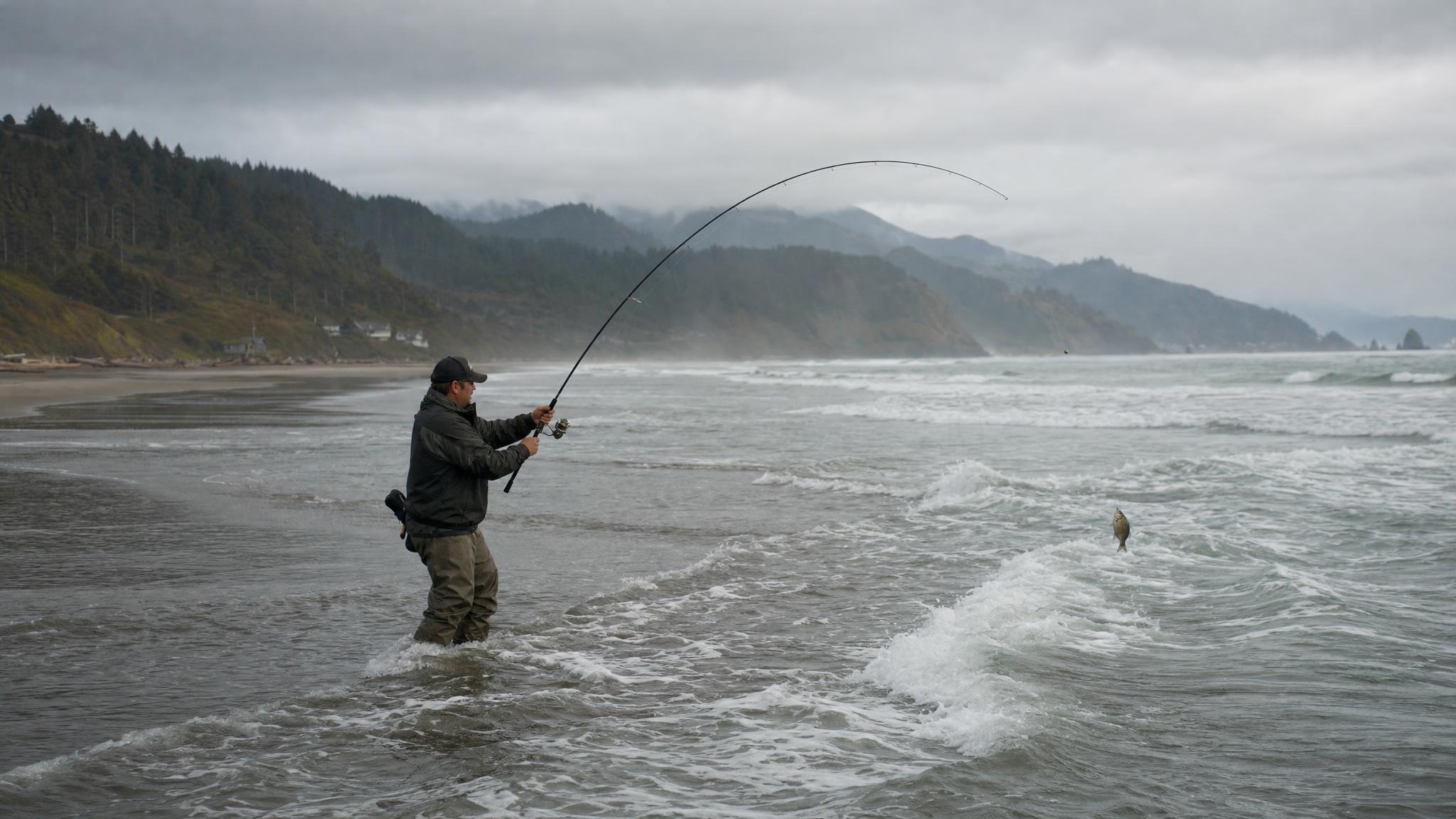
October is prime time for redtail surf perch on Oregon's central coast. As summer crowds thin out and the surf kicks up, these underrated saltwater fighters stack up along the beach from Lincoln City south to Florence — and you don't need a boat, a guide, or anything fancier than a medium spinning rod and a handful of sand crabs to have a serious day on the water.
Why October Is Prime Perch Season
Redtail surf perch (Amphistichus rhodoterus) are year-round residents of Oregon's nearshore surf zone, but they feed most aggressively in fall. As water temperatures drop from summer highs into the low 50s, perch push tighter to the beach and cruise the wash zones hunting sand crabs, beach hoppers, and marine worms. October swells also churn up the sand, dislodging the invertebrates perch key on — which means rougher surf is often better surf for perch fishing.
The central Oregon coast from Lincoln City's D River State Recreation Area south through Waldport, Yachats, and out to the broad beaches near Florence consistently produces some of the best surf perch action in the state. These are all publicly accessible beaches with free or low-cost parking — ideal for a quick weekday session or a weekend road trip.
Reading the Beach: Where to Stand
Not all surf is equal. Perch hold in specific zones within the wave action, and learning to read the beach is 80% of the battle.
- Troughs and cuts: Look for darker-colored water running parallel to the shore. These depressions concentrate food and provide perch relief from wave energy. Cast to the far edge of the trough where sand meets structure.
- Beach cuts and rips: Anywhere the beach angles or dips toward the water funnels sand crabs and bait toward an exit point. Perch stack here waiting for an easy meal.
- Sand bars: The inside edge of a sandbar — between the bar and the beach — is a perch highway. Wade out to knee-deep and cast parallel to the bar.
- Feeder creeks: Small freshwater drains and creek mouths that cross the beach funnel nutrients into the surf. D River at Lincoln City, Big Creek near Rockaway Beach, and the outflows near Yachats are worth exploring at low-to-mid tide.
Time your trips around an incoming tide. Perch move in with the tide, hunting the fresh sand and exposed invertebrates. The last two hours of the incoming and first hour of high water are consistently the most productive windows.
Gear and Rigging for Oregon Surf Perch
You don't need specialized surf tackle for perch, but a few setup choices make a real difference.
Rod and Reel
A 9- to 11-foot medium-light to medium spinning rod with a fast tip and strong backbone handles casting weight and landing fish in the wash. Pair it with a 3000- to 4000-series reel spooled with 20–30 lb braid as your main line. Braid's no-stretch gives you excellent sensitivity and bite detection even when waves are crashing around you.
Terminal Tackle
The standard Oregon surf perch rig is a simple two-hook dropper loop setup:
- 1–3 oz pyramid sinker (adjusts to surf strength — heavier for rougher days)
- 18" fluorocarbon leader, 15–20 lb test
- Two dropper loops spaced 8" apart, each with a size 4–6 octopus or baitholder hook
Tip: Add a small chartreuse or pink float bead above each hook. The color flash gets perch's attention in murky post-storm surf.
Bait Options
- Sand crabs (mole crabs): The number one bait. Dig them from the swash zone where waves wash back — they're easy to find in clusters. Thread the hook through the back of the shell. Use fresh, live crabs whenever possible.
- Pile worms and bloodworms: Excellent fallback when sand crabs are scarce. Available at most coastal bait shops in Lincoln City, Newport, and Florence.
- Clam necks: Cut razor clam or butter clam necks are durable in rough surf and hold on the hook well. Worth carrying as a backup.
- Shrimp: Whole or pieces of fresh shrimp work, especially in calmer surf conditions.
Central Coast Hotspots Worth Hitting
Lincoln City — D River SRA and Roads End
The D River access at the south end of Lincoln City has a large free parking area and a short walk to the beach. Roads End State Recreation Site at the north end offers a more protected cove with structure from rocky outcrops — a good bet on big-swell days when the open beaches get too rough. Both spots produce consistent redtail throughout October.
Seal Rock State Recreation Site
Just south of Waldport, Seal Rock's rocky reef and adjacent sandy beach create a textbook perch zone. The reef provides structure and holds crabs; the sandy flats between rock formations are where perch cruise. Best fished at mid to high incoming tide.
South Beach State Park (Newport Area)
The broad sandy beach just south of the Yaquina Bay south jetty stretches for miles and offers classic surf perch habitat. The jetty area itself holds fish, but casting near the jetty's outer rocks on an incoming tide is worth the extra hike.
Stonefield Beach (Yachats Area)
A quieter, less-trafficked access point with good sandy bottom and reliable tide action. Park at the small pullout on US-101 and walk down. The beach here has multiple troughs that show clearly at low tide — mark them and return for high water.
Regulations and Limits
Oregon has a combined bag limit of 15 surfperch per day (any species or combination). There is no minimum size. No fishing license is required for surf fishing from an ocean beach — Oregon's "free fishing on the ocean beach" rule applies to all saltwater fishing from the sandy beachface below the high tide line. However, if you're fishing from a jetty, pier, or any non-beach structure, you need a valid Oregon fishing license.
Always check the current ODFW regulations before you go — rules occasionally change, and some beaches within state parks have specific access restrictions.
A Word on October Conditions
October on the Oregon coast means weather. Come prepared for rain, wind, and fast-changing conditions. A pair of chest waders is standard — you'll want to wade into the wash to reach the best troughs. Layer up underneath, bring a waterproof outer layer, and wear cleated or studded wading boots for grip on slick wet sand and cobble. Check the NOAA surf forecast before you go; anything over 12-foot surf makes fishing difficult and wade fishing potentially dangerous. The sweet spot is 6–10 foot surf with moderate period — enough churn to fire up the perch without getting hammered by the wash.
There's something genuinely rewarding about pulling redtails from a churning Oregon beach in October. No crowds, low overhead, and a fish that fights like a much bigger animal — it's one of the coast's best-kept fishing secrets.