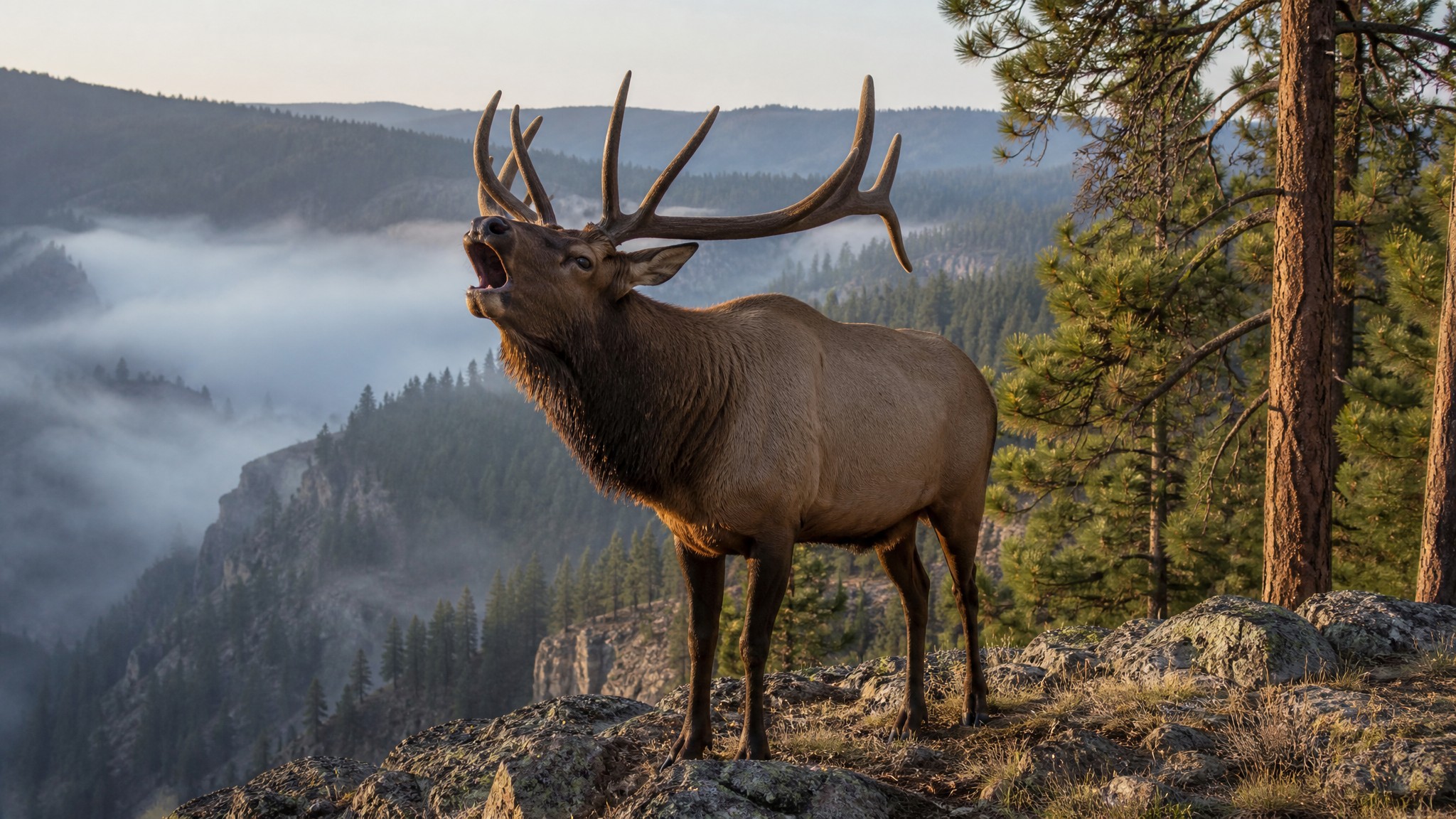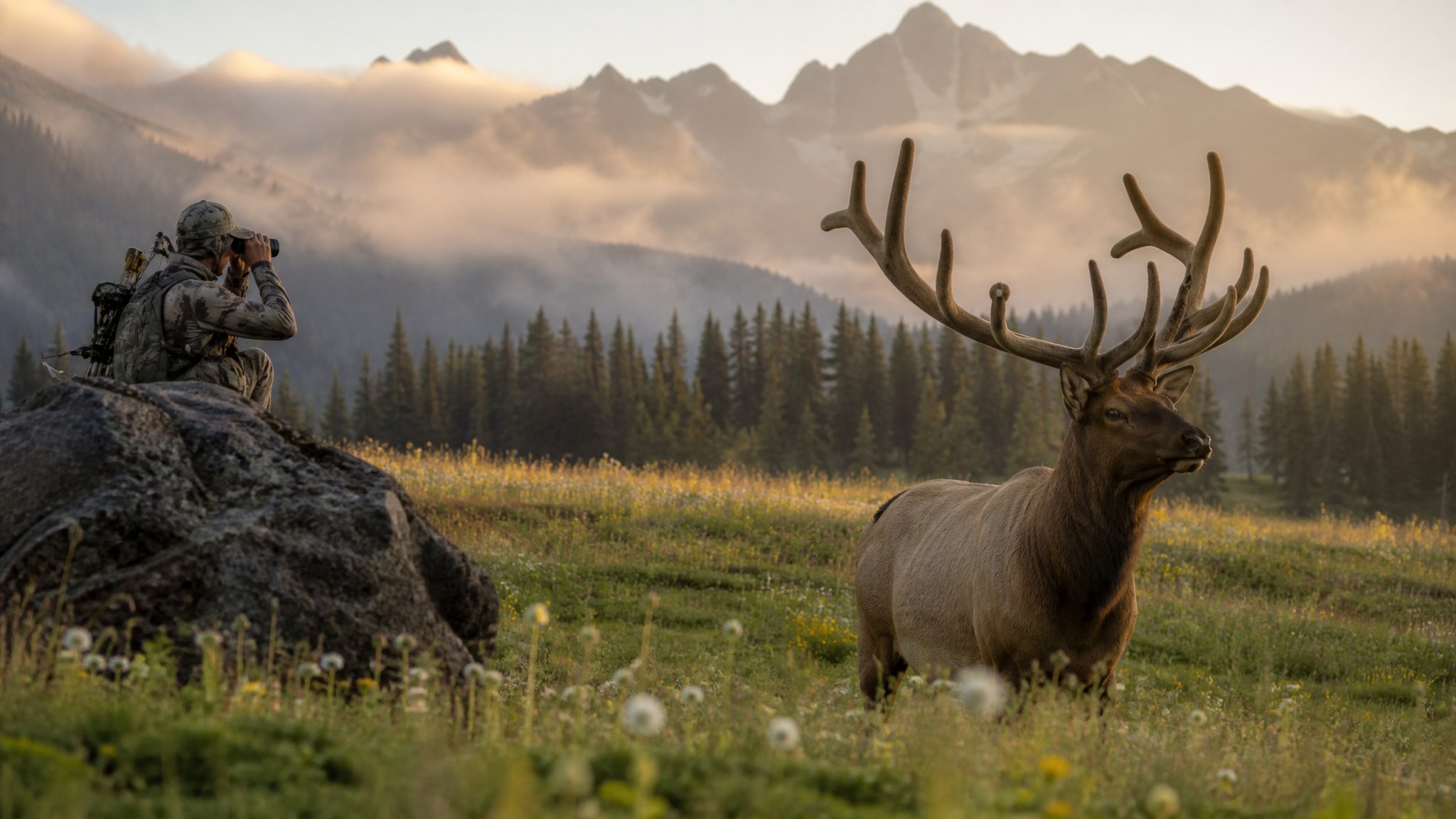
Ask most Oregon hunters where to find whitetail deer, and they'll point you toward the Wenaha-Tucannon or the Hells Canyon breaks. Fewer think about the Sled Springs Unit in far northeastern Wallowa County — and that's exactly why it's worth hunting. This overlooked corner of Oregon's Umatilla National Forest holds a healthy population of Rocky Mountain whitetails, sees modest hunting pressure, and opens to archery deer in late August, giving bowhunters a rare window at bucks still in velvet or freshly polished out.
Where Is the Sled Springs Unit?
The Sled Springs Unit sits in the far northeast corner of Oregon, bordered by the Washington state line to the north, the Grande Ronde River to the south, and private agricultural land to the east around the town of Troy. ODFW draws the unit boundaries through a mix of Umatilla National Forest timber country — primarily ponderosa pine, Douglas fir, and mixed larch — and open grass benches overlooking the Grande Ronde River canyon. It's remote by any standard. The nearest sizable town is Enterprise, roughly 50 miles to the south.
Access into the national forest portion of the unit is primarily via Forest Road 62 (the Zumwalt Road extension) and several spur roads that penetrate north from Troy. Cell service is nonexistent once you leave the pavement. Paper maps and a downloaded OnX chip are not optional here — they're mandatory.
Why Whitetails?
This is mule deer country by reputation, but the creek drainages that cut through the Sled Springs Unit — particularly Bear Creek, Chesnimnus Creek, and the numerous seasonal streams feeding the Grande Ronde — create the riparian corridors that whitetails prefer. Unlike the open-bench mule deer that summer at elevation and work down in fall, whitetails in this unit live and die in the timber and brushy creek bottoms. They're homebodies. Find the right drainage with feed, water, and thermal cover and you'll find the same bucks working it year after year.
The unit also sees pressure from elk hunters who push through in September and October, but whitetails largely ignore that pressure, tucking into dense pockets of cover and going semi-nocturnal rather than relocating the way mule deer do. This makes them a good target for bowhunters willing to commit to a specific location rather than roaming the landscape.
Reading the Habitat
Creek Bottoms
The dense willow, alder, and wild rose thickets along Bear Creek and its tributaries are core whitetail habitat. Bucks bed in the thickets during the day and push out to adjacent grass benches and clear-cut edges to feed at dawn and dusk. Set up on a transition zone between the thicket and a feeding area and you'll see deer. Locate a fresh rub line running parallel to the creek and you've found a buck's core area.
Old Clear-Cuts
The Umatilla National Forest includes timber harvest areas in various stages of regrowth. Cuts from the 1990s and early 2000s have grown into productive whitetail habitat — thick young fir and pine with brushy understory providing both browse and bedding cover. These areas are worth glassing from the road on opening morning before committing to a walk-in set.
Grass Benches Above the River
Where the forest breaks and grass benches drop toward the Grande Ronde, whitetails use the bench edges as evening feeding areas, particularly where rye grass, elk sedge, and forbs grow in the transition zone. Bucks that bed deep in the timber all day will slip to these edges 30 to 60 minutes before full dark. Study topo maps to find where bench terrain pinches near timber — those natural funnels are treestand or saddle-blind locations worth hanging a camera on all summer.
Archery Season Timing in Sled Springs
Oregon's general archery deer season opens in late August, and this timing is gold for whitetail hunters willing to endure late-summer heat. In the first two weeks of the season, bucks are often still in bachelor groups and relatively predictable, frequenting the same morning and evening patterns they've been running all summer. Velvet is typically shed by the last week of August, and the brief window of early September before hunting pressure builds is genuinely special.
By mid-September, elk archery pressure increases dramatically in adjacent units, and while whitetails don't spook the same way mule deer do, the increased human intrusion changes their daily patterns. Hunt early in the season for the highest success probability.
Tactics for Sled Springs Whitetails
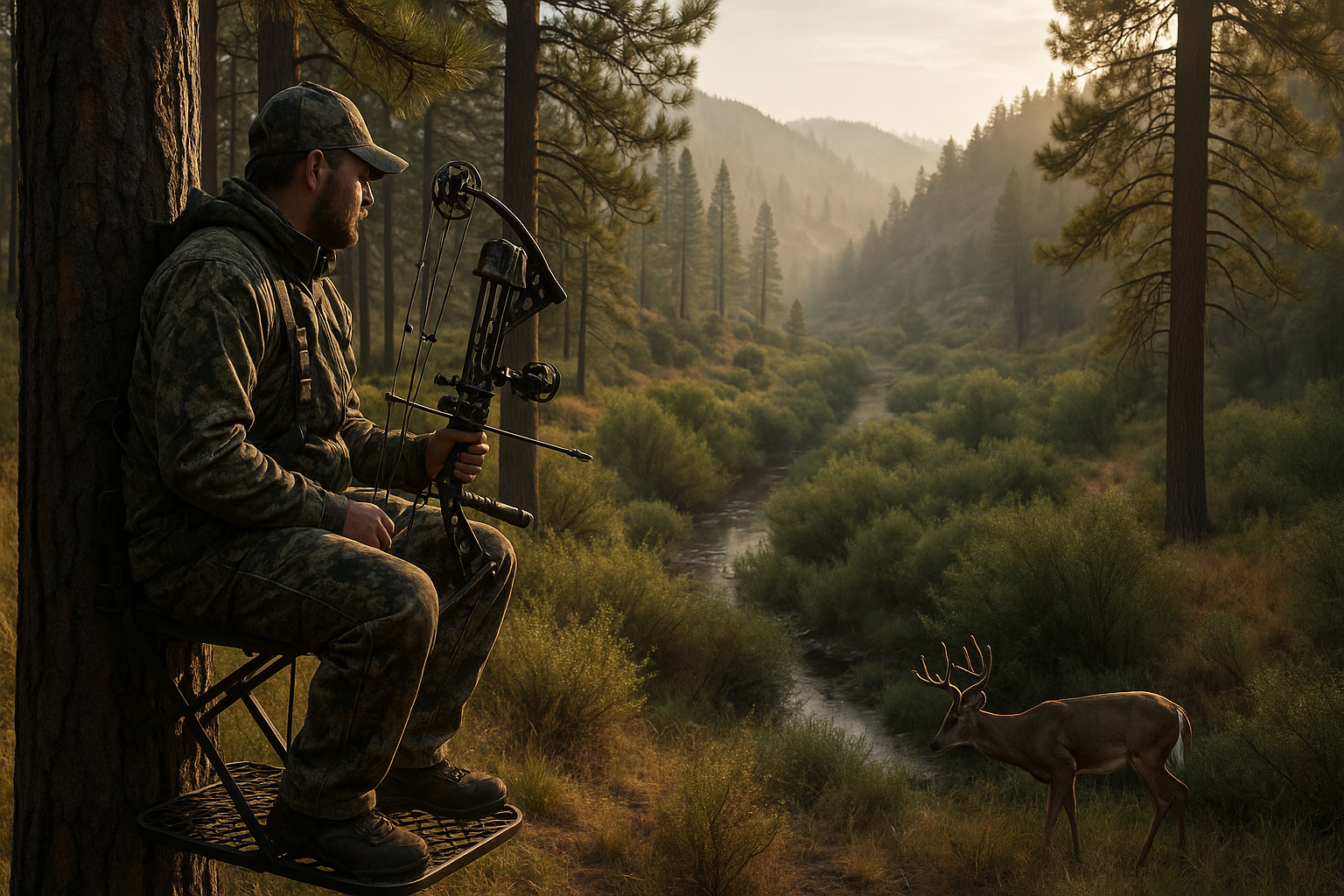
- Treestands on creek crossings: Whitetails follow the same trails day after day. A hang-on stand 20 feet up a ponderosa pine overlooking a creek crossing used by deer is as reliable a setup as bowhunting gets. Place it in mid-August so the area settles before the opener.
- Ground blinds in clear-cut edges: If treestands aren't viable, a ground blind brushed into the timber edge adjacent to a productive clear-cut can be invisible within 48 hours. Set it early and let deer grow accustomed to the structure before opening day.
- Scent control is non-negotiable: Timber-country whitetails live or die by their nose. Wind matters more than any other factor. Plan your approach to every set with prevailing thermals in mind — in the creek drainages, morning thermals pull downhill, evenings push uphill.
- Trail cameras on water sources: Late August can be dry in northeastern Oregon. Any developed spring or stock tank in the unit will have deer hitting it during daylight hours. Run cameras for two weeks pre-season to identify which bucks are in your area.
Gear and Logistics
Pack for backcountry conditions even on day hunts in the Sled Springs Unit. Water sources can be limited and distances from the truck to your set can be significant. A quality day pack with 3 liters of water, a first aid kit, blaze orange (required for archery deer in Oregon — minimum 200 square inches on head and chest), and a good headlamp is baseline.
There is primitive camping available on Forest Service roads in the unit. No developed campgrounds exist in the hunting core — bring a truck camp or a backpacking tent. The nearest services are in Enterprise: fuel, groceries, and a cell signal that will feel like civilization after a few days in the canyon country.
The Sled Springs Unit won't make headlines in the hunting magazines anytime soon. That's the whole point. Do your pre-season homework with OnX and a set of Zeiss binoculars in late July, hang your stands in August, and be on your feet before first light on opening day. The whitetails will be there.