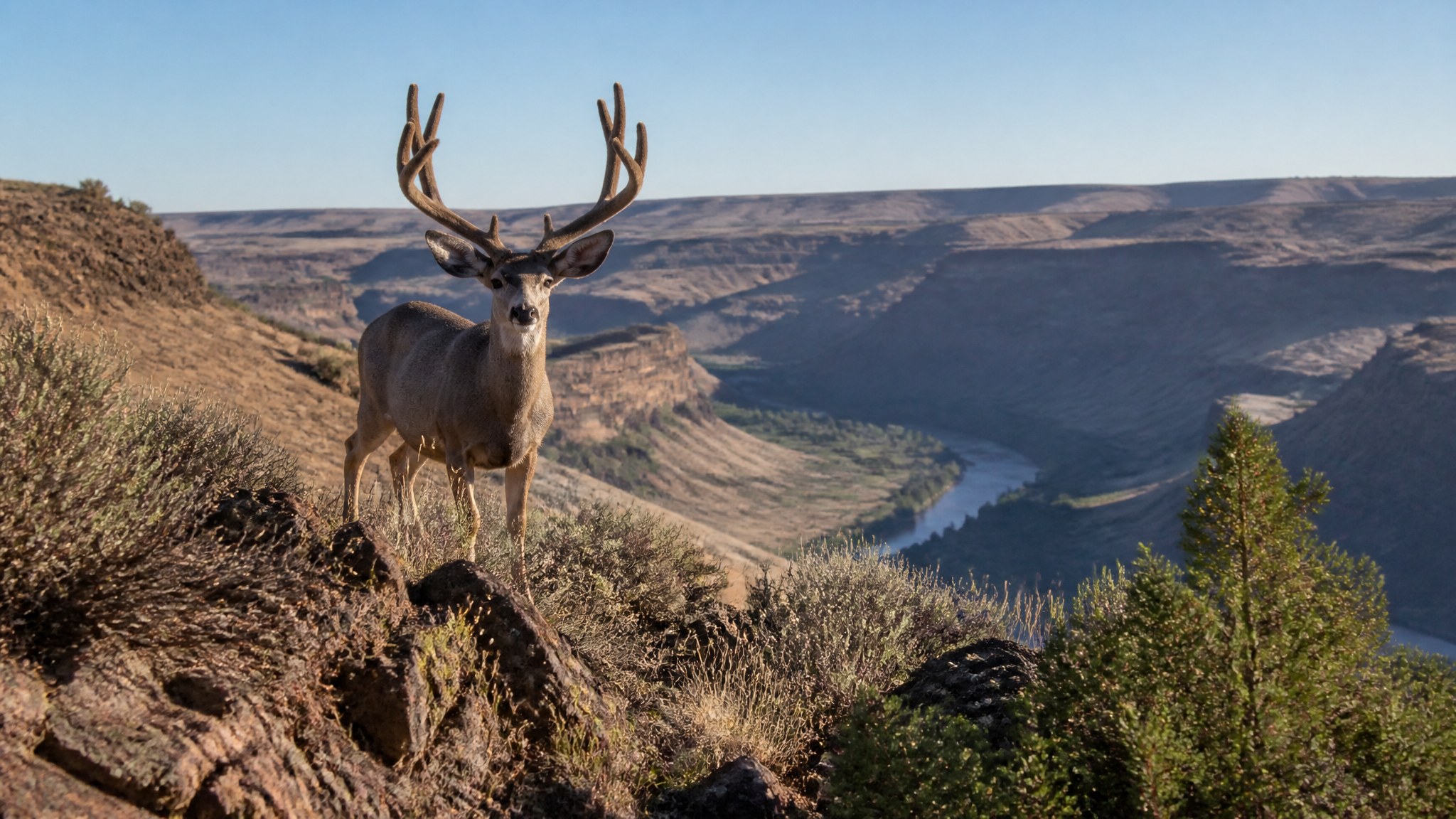
Eastern Oregon in August is a cruel place to be a big game animal. Temperatures in the high desert routinely hit 90°F by 10:00 AM, thermal thermals boil off basalt rimrock by noon, and the vegetation that sustained elk and mule deer through June is cured brown and largely worthless by mid-July. In this kind of heat, animals compress their movement into tight windows — first and last light, and whatever time it takes to reach water and leave again. For the archery hunter, that predictability is a gift.
Water hunting isn't complicated, but it rewards the hunters who put in the map work before they ever set a boot on the ground. Here's how to find productive water sources on Oregon public land and set up for a shot.
Finding Water on the Map
Start with onX Hunt or CalTopo and overlay USGS topographic data with satellite imagery. You're looking for a specific combination of features:
- Blue lines and blue dots: Any permanent or intermittent water feature marked on the topo. Intermittent streams that still hold water in August are gold — they receive less human pressure than named perennial creeks.
- Green anomalies in brown terrain: On satellite view in late summer, water-fed vegetation stands out as an isolated green patch in an otherwise golden landscape. Zoom in on anything that looks unusually green.
- Springs marked on BLM and USFS layers: Many springs are specifically labeled in BLM and Forest Service data layers inside onX. In areas like the Hart Mountain National Antelope Refuge, Steens Mountain, and the Ochoco high country, developed spring boxes are scattered across the landscape — often with concrete catchment tanks that hold water all summer.
- Stock tanks and reservoirs: Livestock operations on or adjacent to public land often maintain stock tanks and small impoundments that hold water well into August. Game knows where these are. So should you.
Scouting Before the Season
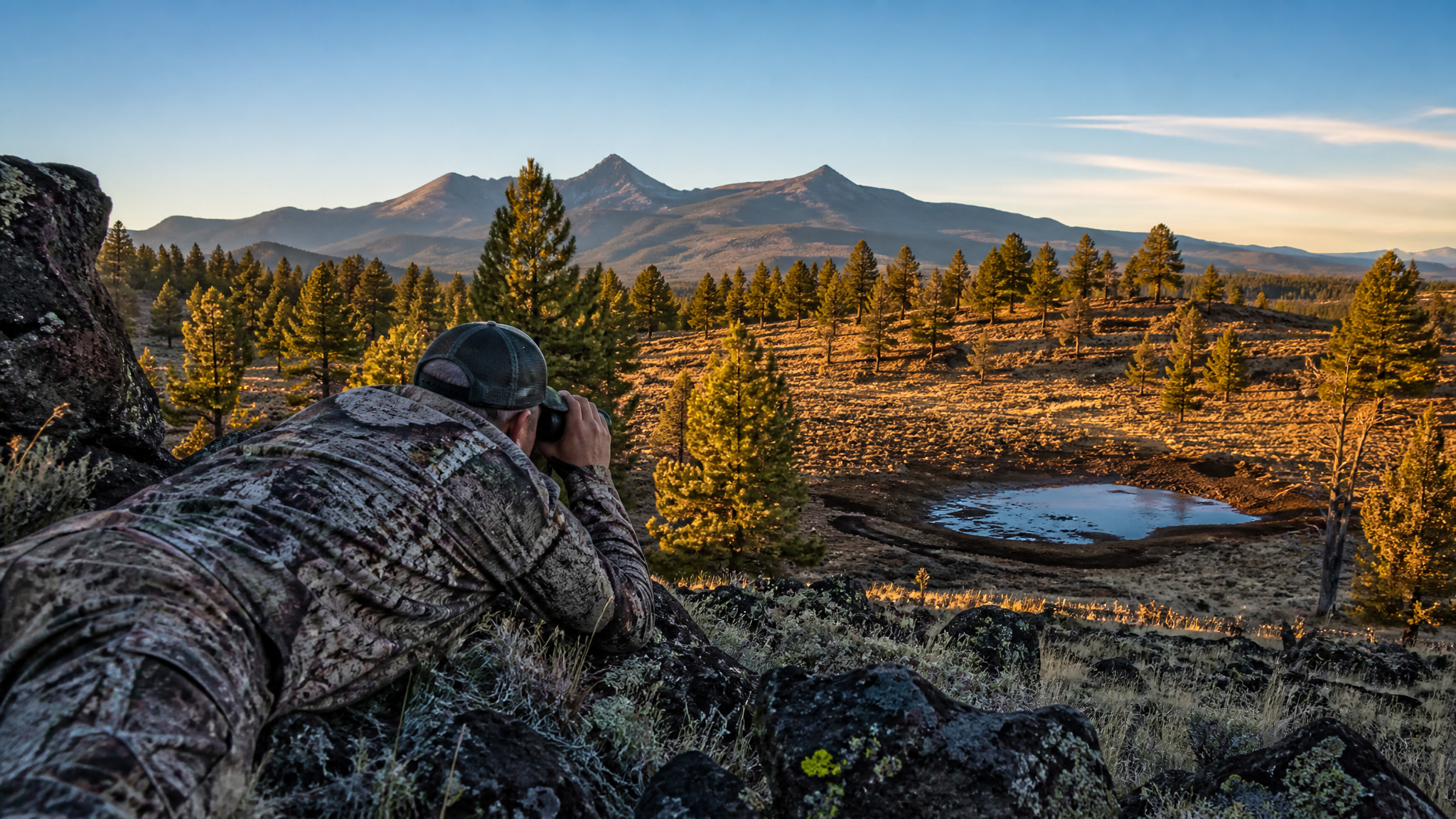
Map work gets you a candidate list. Your boots confirm it. Before the Oregon archery deer and elk seasons open in late August, drive your top candidates and glass them at first and last light from a distance. You're looking for fresh tracks in the muddy margins, disturbed vegetation, fresh droppings, and most importantly — actual animals using the water. A single evening glassing session on the right ridge above a desert spring can tell you more than a week of blindly covering country.
Elk wallows deserve special attention. A wallow is a muddy depression — often fed by a seep or spring — where bulls roll to coat themselves in mud and urine during the pre-rut and rut period. Active wallows have a distinctive smell, freshly churned mud margins, and often broken brush and rubs on surrounding trees. In the Ochoco Units, the Heppner Unit, and along the Blue Mountain drainages, elk wallows begin to get active in late August, right as archery season opens. Find a wallow with fresh sign and you're likely within a mile of a bull.
Setting Up Your Ambush
Water sources demand a different setup than travel corridor hunting. A few principles:
Wind Is Non-Negotiable
In the desert heat, thermals rise during the day and fall at night. By mid-afternoon, thermals at a waterhole are generally rising — but by last light, they're reversing and dropping into drainages. You need to be positioned so that neither the rising nor the falling thermal carries your scent to the water or to any approach trail animals use. This almost always means setting up off to the side of the water rather than directly downwind of it.
Distance and Shot Angle
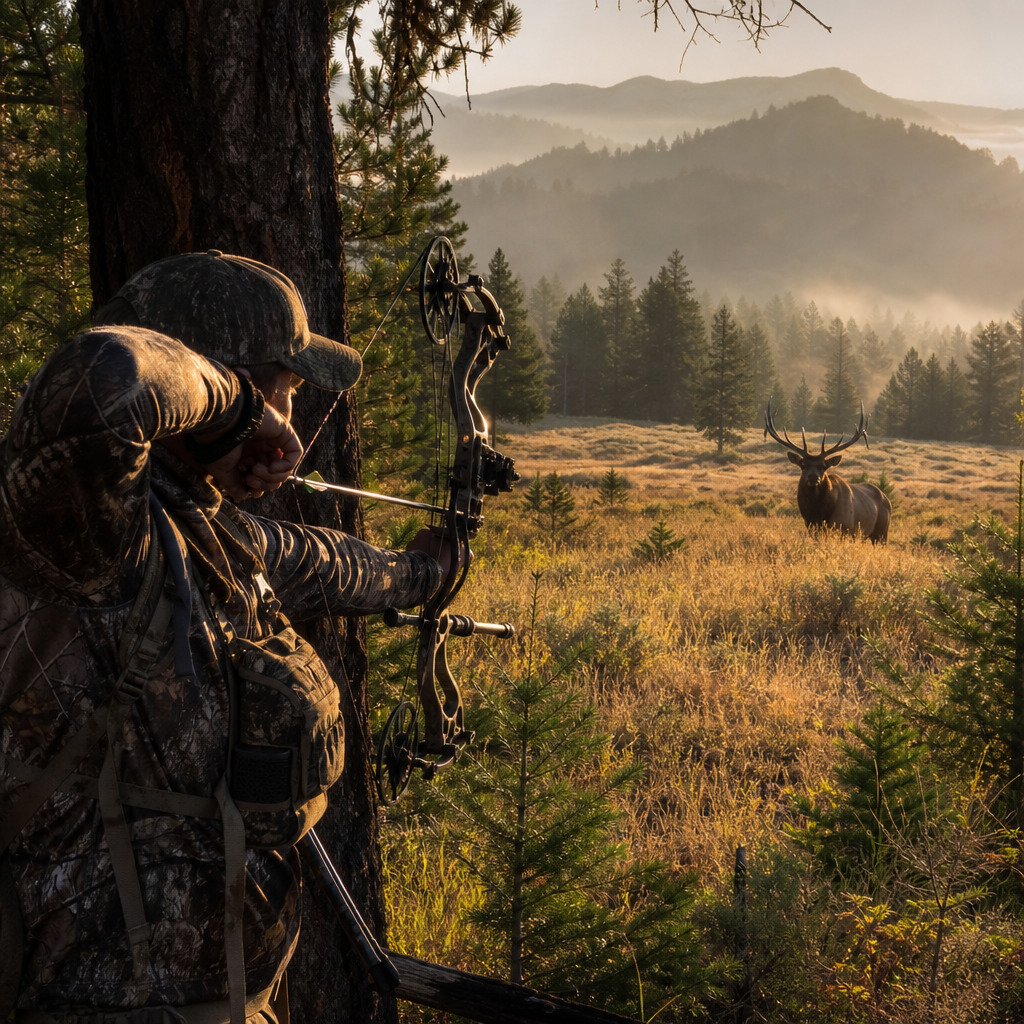
Animals approaching water are alert. They typically circle, test the wind, and hang up at the edge of cover before committing to the open. Set your stand or blind at least 20–35 yards from the water's edge, positioned to intercept animals at the last point of cover before they step into the open — not at the water itself. This gives you a broader window of opportunity and less chance of being spotted while drawing.
Ground Blinds vs. Treestands
In Oregon's high desert, suitable trees for a hang-on stand are often scarce near water sources. A ground blind brushed into the surrounding vegetation is often the more practical choice. Set it up at least a week before your hunt when possible — animals need time to accept new structure as part of their environment.
Camera Confirmation
A cellular trail camera deployed over a productive water source in the week before season is one of the highest-value scouting tools you can use in late summer. Not only does it confirm what species and how many animals are using the water, but it also establishes the exact timing of visits — critical information for deciding when to be in your setup. Most serious water hunters in eastern Oregon run cameras on water from early August through the opener, pulling cards or checking cell images remotely to fine-tune their strategy without burning the location with excess human scent.
Final Thoughts
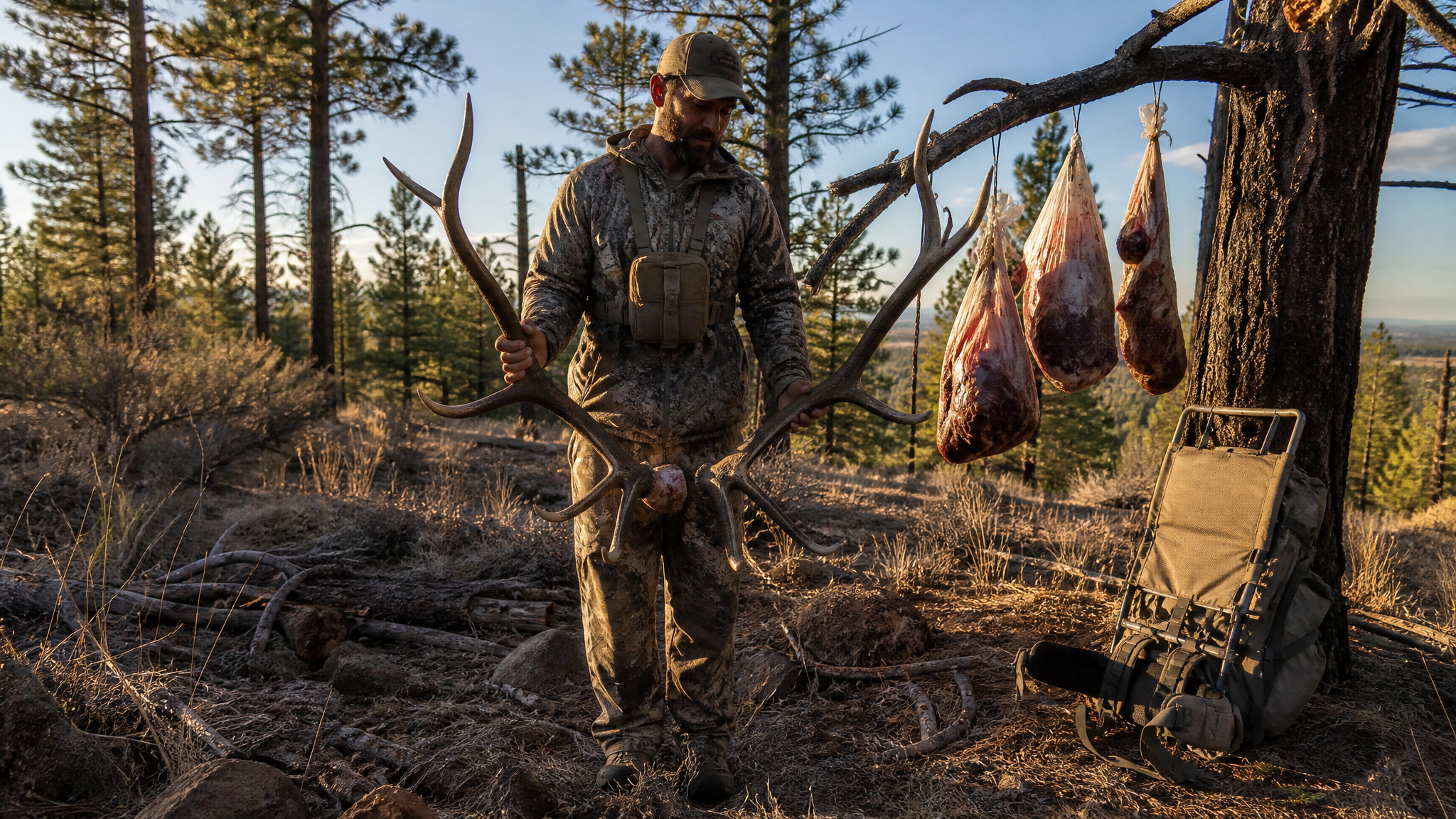
Water hunting in Oregon isn't a fallback strategy — in August and early September, it's often the most effective strategy on public land. The heat that makes deer and elk miserable makes them predictable, and predictable animals are killable animals. Do the map work, confirm with boots and cameras, and set up smart. When you tag out on the first morning of archery season while other hunters are still covering miles of empty country, you'll understand why the hunters who know where the water is rarely go home empty-handed.