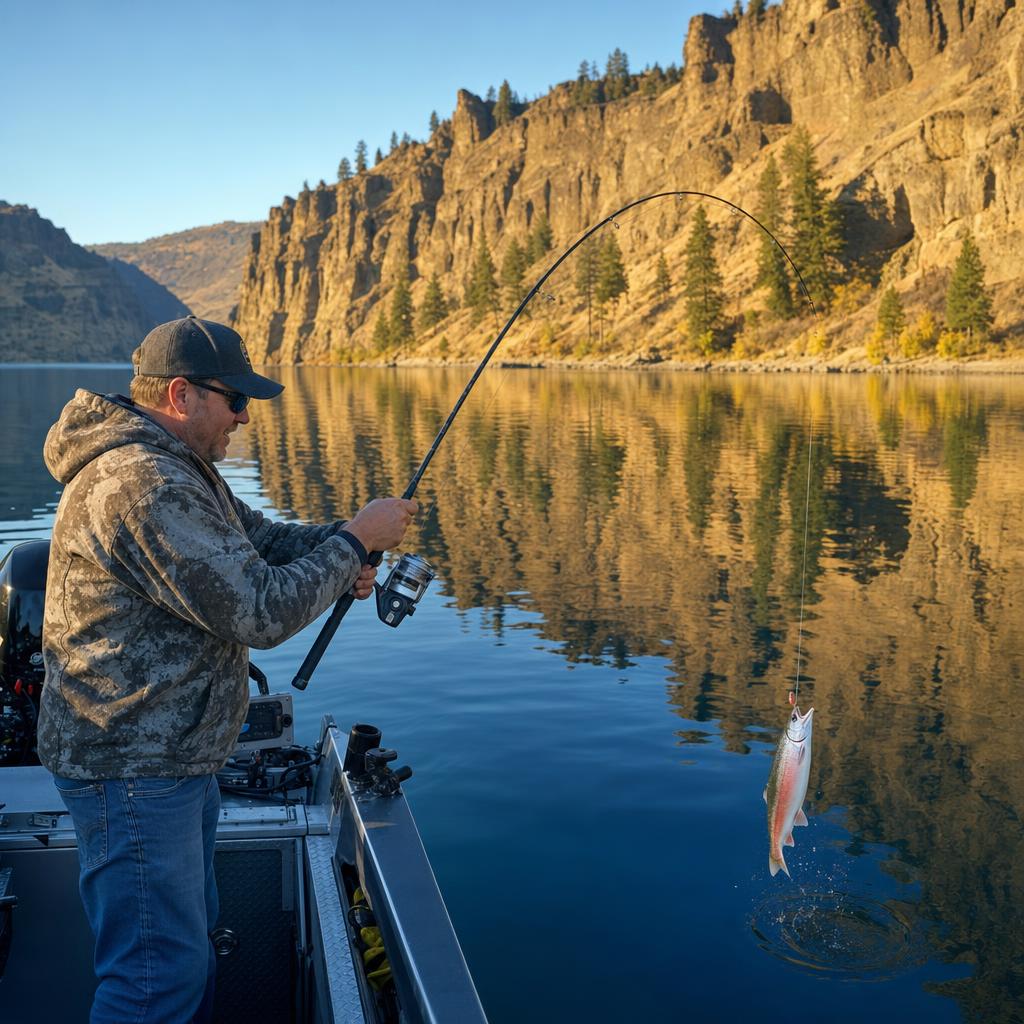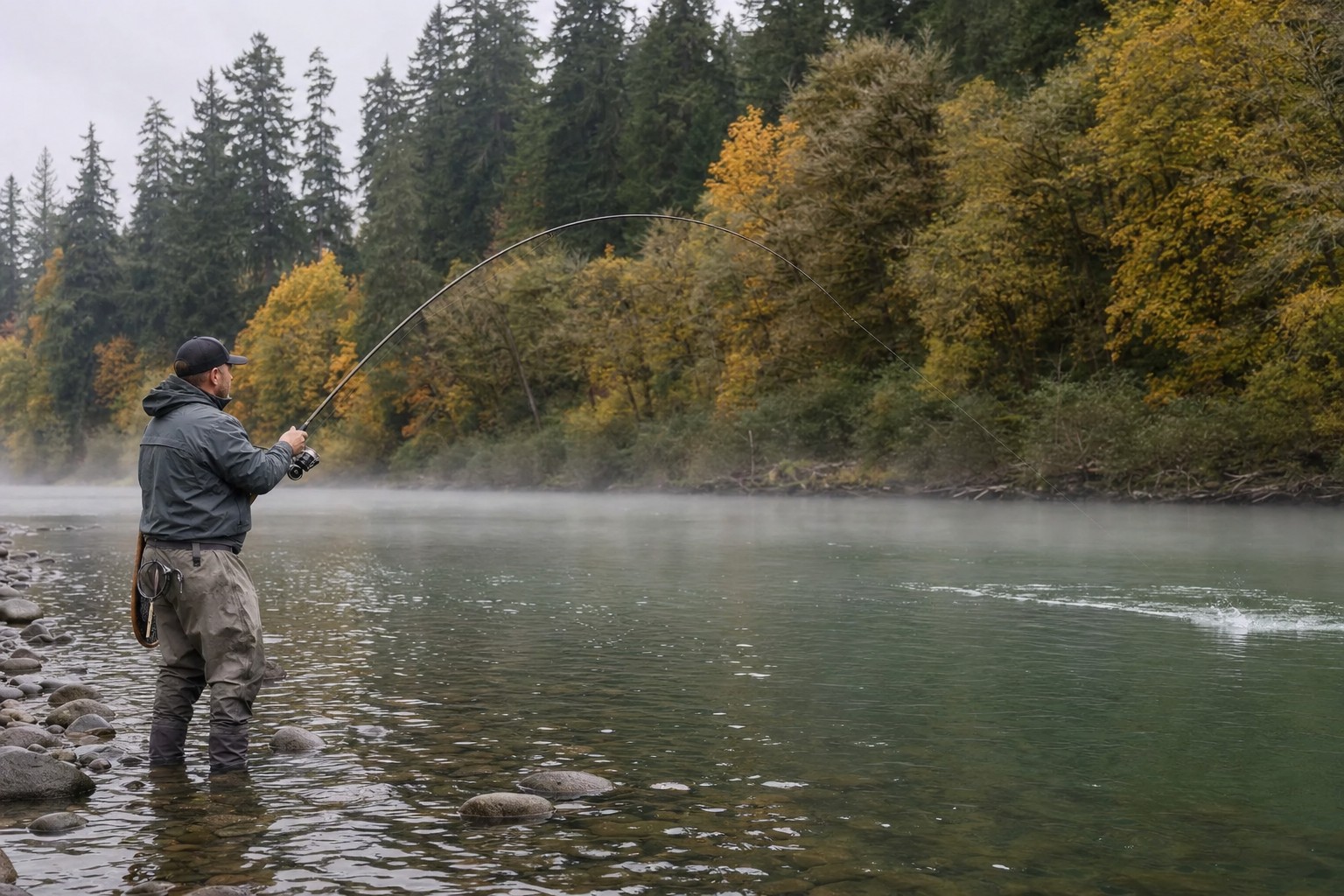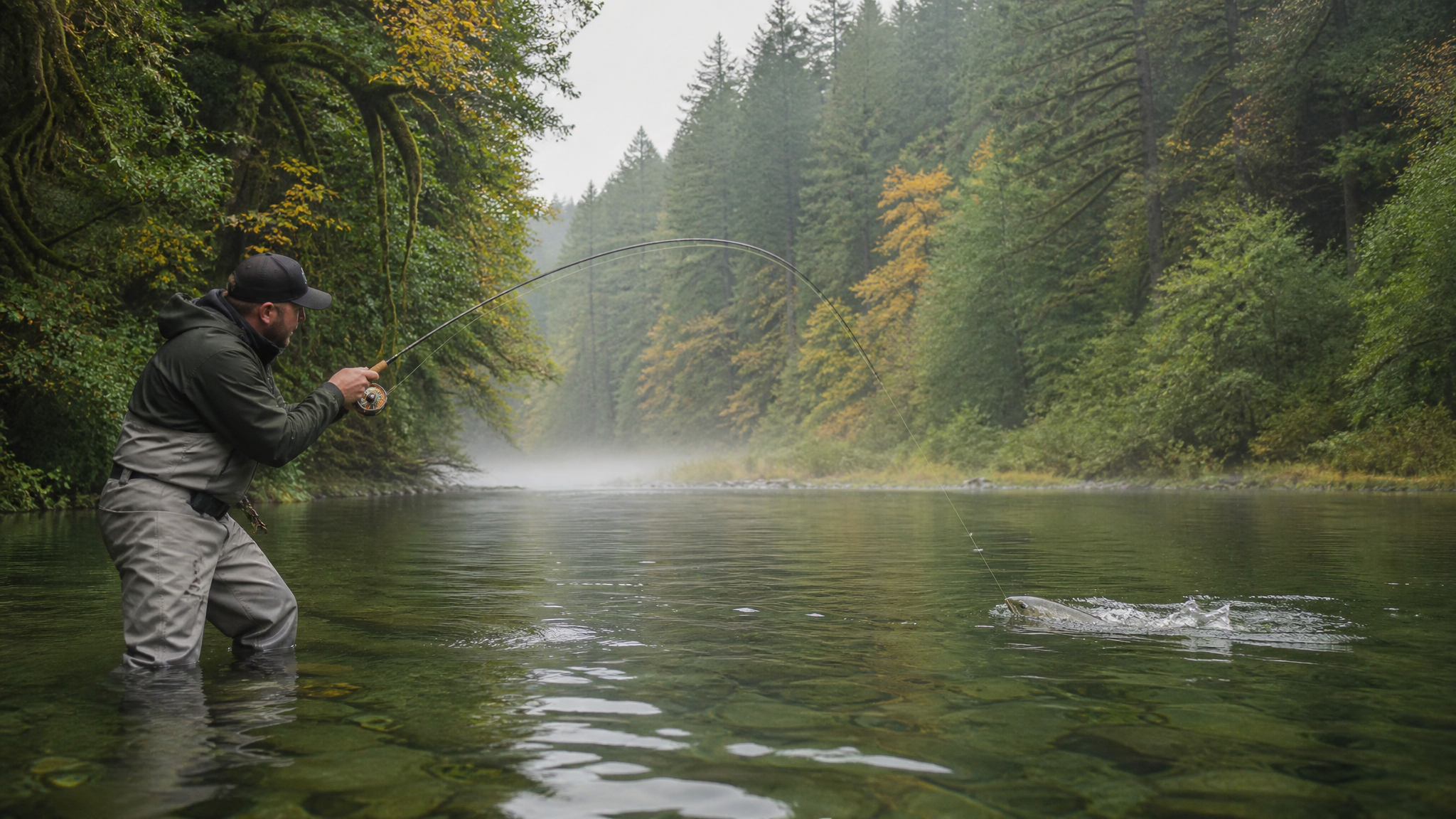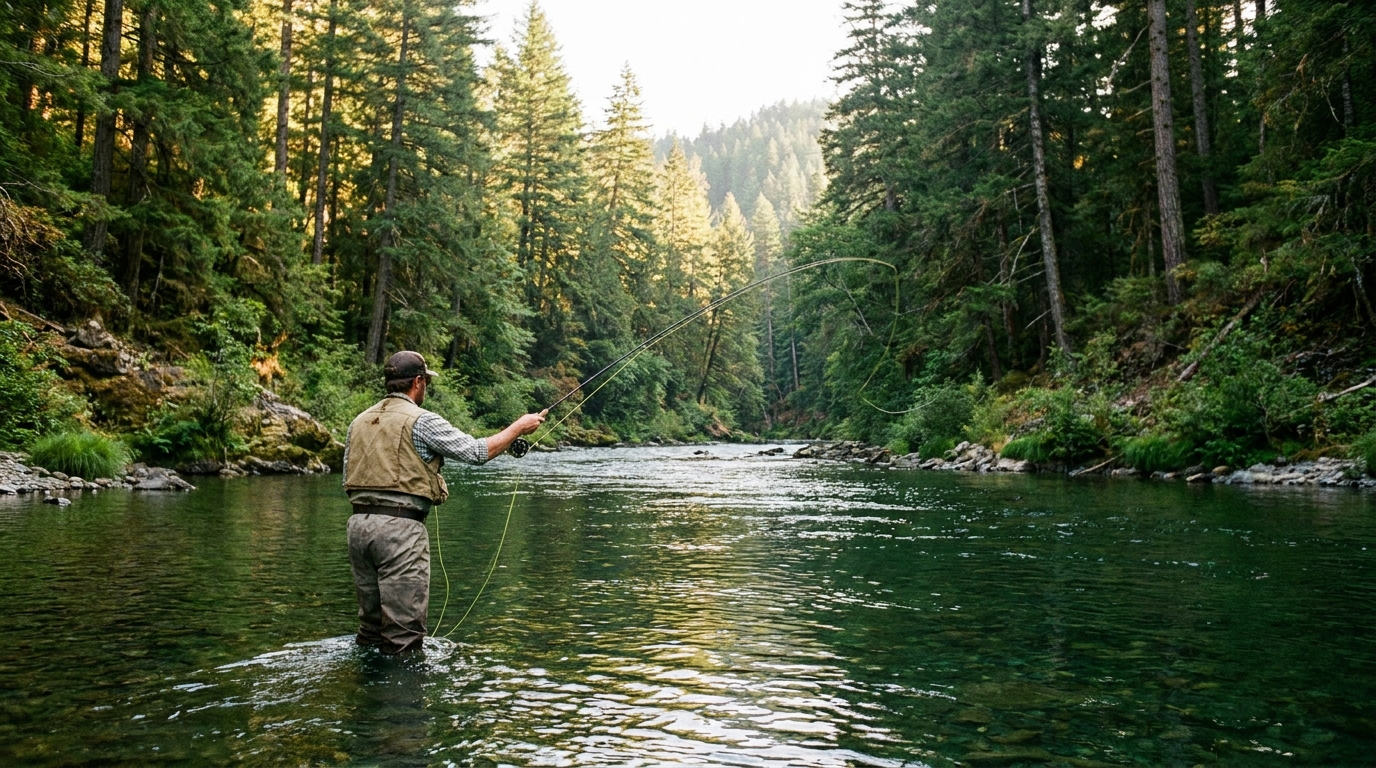
If you want easy access and stocked fish, the Illinois River is not your river. But if you want to chase wild summer steelhead through one of the most dramatic canyons in the Pacific Northwest — fish that have seen almost no pressure, in water so clear you can watch them reject your fly — then pack your boots and earn it. The Illinois is one of the few rivers left in Oregon where summer steelhead exist almost entirely on their own terms.
Where and When to Fish
The Illinois River drains the Klamath Mountains in southwestern Oregon, flowing roughly 55 miles from the Siskiyou Crest to its confluence with the Rogue near Agness. The best summer steelhead water runs through the Wild and Scenic section — from Briggs Creek downstream through the canyon to Oak Flat. This is Class IV–V whitewater country, and there are no easy roads in. Most serious anglers hike the Illinois River Trail (trailhead at Briggs Creek on Forest Road 4103) and wade-fish the pools and runs they reach on foot.
Summer steelhead — known locally as half-pounders and larger adults — begin entering the system in June and peak through July and August. Water temperatures and flows are critical. Check USGS gauge data (site #14377100 at Kerby) before committing to a trip. Ideal flows are 300–600 cfs with water temps below 65°F. In a dry July, temps can push higher midday — plan to fish early and late.
Access Points and the Hike In
The primary access for wade anglers is via the Illinois River Trail from the Briggs Creek Trailhead off US-199 south of Selma. The first five miles of trail through the gorge are the most productive and the most demanding — rocky, exposed, and often brushy. Wear boots you can wade in, carry more water than you think you need, and expect to scramble.
- Briggs Creek Trailhead: Mile 0 — immediate access to good holding water below the confluence
- Panther Creek area: Mile 2.5 — deep green pools and bedrock runs, often excellent in early morning
- Indigo Creek confluence: Mile 4 — benchmark water; multiple holding lies on both sides
- Silver Creek flats: Mile 7 — flatter water, good for evening swinging
Float fishing by experienced kayakers and rafters from Oak Flat put-in down to Agness is another option, but the Class IV–V rapids require advanced skills and a permitted guide during peak season.
Tackle and Techniques
The Illinois fishes best on the swing. A 12–13 foot switch rod or two-handed Spey rod in 6–7 weight is ideal for covering the wide bedrock pools. The river's clarity demands finesse — lighter tippet (8–10 lb fluorocarbon), smaller flies, and slow, natural presentations on the inside swing.
Fly Selection
- Summer patterns: Purple Peril, Green Butt Skunk, Muddler Minnow (waked), low-water Adams
- Intruder and articulated flies: Effective when fish are stacked in deeper slots — swing slow and low
- Dry-line swinging: When water temps are below 60°F and fish are active, surface presentations can be electric
- Nymphing: In midsummer heat, fish drop into deeper water — dead-drift stonefly nymphs and Prince Nymphs through the tailouts
For conventional gear, small spinners (Mepps #2–3 in gold or silver), drift rigs with cured roe, and 1/4 oz jigs under a float all produce. Keep terminal tackle minimal — the fish here are spooky and the water is gin-clear.
Regulations You Must Know
The Illinois River falls under Klamath Zone regulations. Summer steelhead are currently open to retention of adipose-clipped (hatchery) fish only — wild fish must be released unharmed. Check ODFW's current Klamath Zone regulations for closure sections and any emergency orders, as these can change during low-water years. A valid Oregon Combined Angling License with the Columbia River Salmon/Steelhead tag is required.
Camping and Logistics
Briggs Creek Campground (USFS) offers primitive sites near the trailhead — first-come, first-served, no fee. Cave Junction is the nearest supply town; fuel up and top off your cooler before heading in. There is no cell service in the canyon. File a trip plan with someone reliable.
Rattlesnakes are present on the rocky slopes — watch your step off-trail. Black bears frequent the river corridor. The trail itself has minimal shade in the gorge section, and July temperatures on the sun-exposed talus slopes can exceed 100°F by noon. Start early, bring electrolytes, and respect the wilderness.
The Illinois in July: Is It Worth It?
In a word: yes. There are Oregon rivers where summer steelhead come easier. But there's a reason serious fly fishers return to the Illinois year after year — the combination of wild, native fish, extraordinary canyon scenery, and the near-total absence of other anglers creates an experience that's increasingly rare in this part of the world. A wild half-pounder cartwheeling across a jade-green pool 20 feet in front of you in a canyon you hiked three miles to reach is a different animal than a planted fish stacked below a boat ramp. If that distinction matters to you, the Illinois River is calling.