Oregon's archery elk season opens in late August, and if you're hunting Eastern Oregon — the Silvies Unit, the Murderers Creek country, the Ochoco, or anywhere east of the Cascades — you're doing it in summer heat. Temperatures that make September rifle hunters comfortable will spoil an elk quarter in hours if you're not prepared. Every year, hunters lose meat to heat and poor field care decisions made in the excitement of a kill. Here's how to not be one of them.
The Clock Starts at the Shot
The moment your arrow connects, your meat care clock starts. Bacterial growth accelerates rapidly above 40°F — and at 80°F ambient temperature, spoilage can begin in the deep muscle tissue within 4–6 hours if the heat isn't removed. Your job from the minute that elk goes down is to get the body cavity open and the hide off as fast as safely possible.
Before you leave camp each morning, commit to a plan: know exactly where you're hunting relative to a road or trailhead, know how many miles and how much elevation you'll need to cover to pack out, and have your meat care kit staged in your pack.
Essential Meat Care Kit
- Latex or nitrile gloves — multiple pairs
- Quality fixed-blade skinning knife plus a spare
- Bone saw or pack saw (Outdoor Edge or Gerber fold-out)
- 4–6 large game bags (Caribou Gear or FreezeR paper bags rated for elk-size quarters)
- Paracord — 50+ feet for hanging quarters
- Citric acid spray bottle (mix 1 tbsp citric acid per quart water) — kills surface bacteria
- Headlamp with extra batteries — you may be working in the dark
- Tarp — to lay quarters on if the ground is dirty
Field Dressing and Quartering
If the elk is in a location where you can get a vehicle within reasonable distance, you have options. If you're in the backcountry and packing out on your back, your approach is quartering in the field.
Get the Hide Off
The hide is an insulating layer that traps core body heat. In cool fall conditions, it offers some protection from insects. In August, it is your enemy. Get it off as fast as possible — ideally within 30–60 minutes of the kill. The meat underneath will begin venting heat into the cooler air immediately.
Quarter Before It Cools Completely
Counterintuitive, but true: it's easier to quarter a warm elk than a cold stiff one, and in summer heat you want those quarters separated and bagged while the body mass is still manageable. Use the gutless method — no need to open the body cavity if you're quartering in the field. Roll the elk onto its side, skin the uphill half, remove the two quarters (front shoulder off with the blade, hindquarter at the ball joint), backstraps, and neck meat, bag everything, then flip the animal and repeat.
Bag and Hang
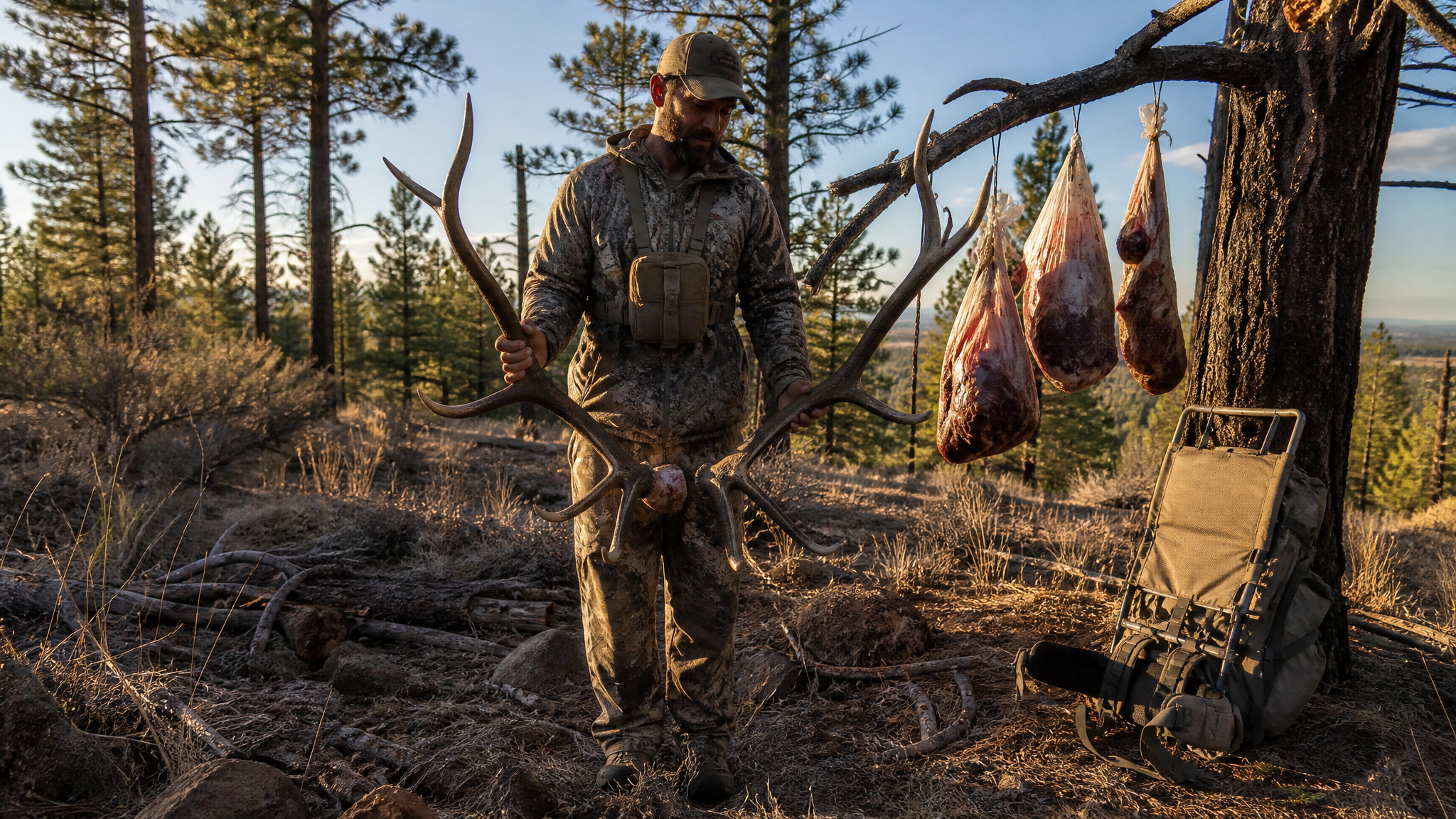
Each quarter goes into its own game bag — sealed, breathable mesh that keeps dirt and flies off while still allowing airflow and heat dissipation. Do not use plastic bags; they trap moisture and accelerate spoilage. Hang quarters in the shade with maximum airflow — ideally 6–8 feet off the ground to keep them away from ground heat and predators.
Spray the exposed meat surfaces with citric acid solution before bagging. It drops surface pH, inhibits bacterial growth, and adds no detectable flavor to the finished meat.
The Temperature Target
Your goal is to get the internal muscle temperature below 50°F within 8 hours of the kill, and below 40°F within 24 hours. In August in Eastern Oregon, hanging quarters overnight will help significantly — night temperatures in the high desert can drop to the 40s–50s even in late August. Check the forecast before your hunt. If overnight lows aren't forecast to drop below 55°F, plan for an early morning pack-out and get the meat to ice as fast as possible.
The Pack-Out Strategy
An elk quarter can weigh 80–130 pounds bone-in. Plan your pack-out loads before the shot — not after. A solo hunter should expect 3–4 trips with a heavy frame pack. Two hunters can cut that to 2 trips each. Prioritize the tenderloins and backstraps on the first trip out if you're in doubt about meat safety — these are the most valuable cuts and they're the first to spoil because they're dense and deep.
- Pack out in the cool of morning (before 8 AM) or evening (after 6 PM)
- A 3,000-cubic-inch pack will handle one large quarter or two smaller ones
- Use a meat shelf or game bags strapped to the outside of your frame pack
- Bring plenty of water — you'll sweat hard and dehydration causes mistakes
At the Vehicle
Have a cooler staged at the trailhead. A 100-quart cooler with 40 lbs of ice will hold four elk quarters adequately for the drive home. Layer quarters over a bed of ice and add more ice in the gaps — don't let quarters touch each other without airflow. If you're more than a few hours from home, stop at a locker plant or butcher shop and get the meat into a cooler immediately. Most towns in Eastern Oregon near elk country have a meat locker option.
When in Doubt, Smell Test
Properly cared-for elk has almost no smell — a faint gamey scent at most. If a quarter smells sour, has slimy texture, or shows green/gray discoloration, don't second-guess yourself. Foodborne illness from spoiled meat is serious. When in doubt, throw it out. No meal is worth a week of misery or a hospital visit.
August elk hunting is as demanding as it gets — physically, logistically, and emotionally. But the hunters who consistently bring home clean, delicious meat aren't lucky. They plan for meat care before the hunt, execute fast after the shot, and they never assume the conditions will be forgiving. Plan like it's going to be 90°F. You might be right.