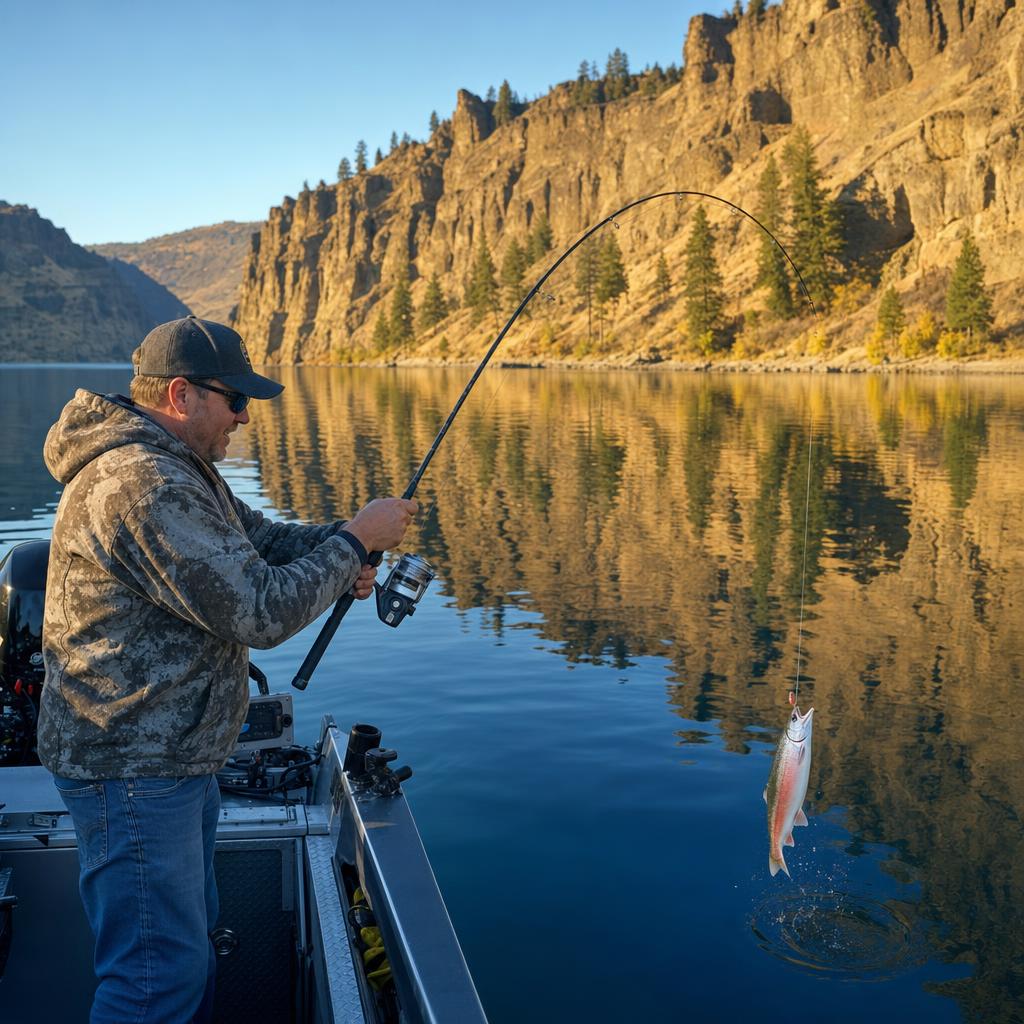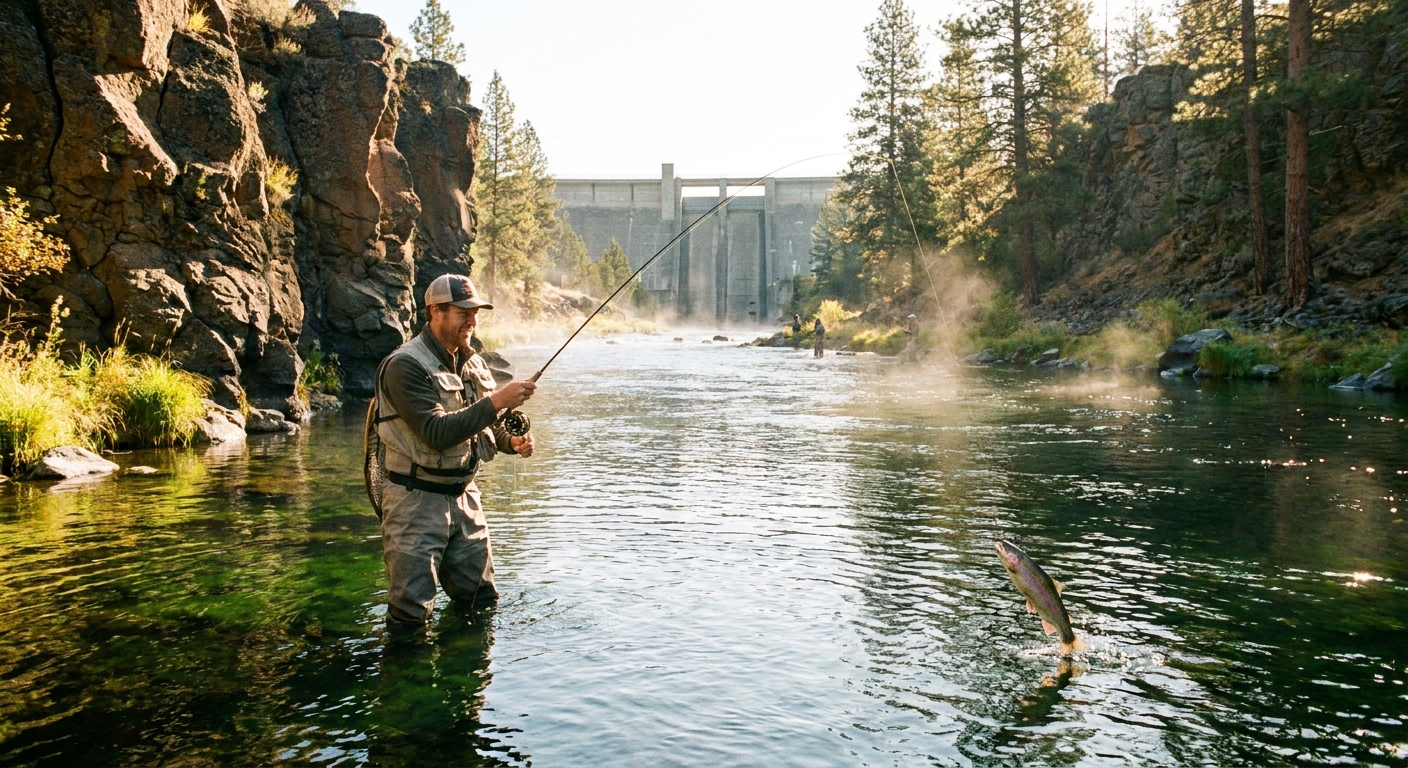
If you've driven Highway 26 toward Warm Springs and glanced down into the river canyon without stopping, you've made a mistake. Lake Simtustus — the reservoir created by Pelton Dam on the lower Deschutes — is one of the genuinely overlooked summer fisheries in Central Oregon, sitting in a deep basalt canyon with a combination of cold tailwater influence and warmer reservoir conditions that produces a surprisingly diverse fishery. Most anglers blow past it chasing Wickiup kokanee or Crane Prairie rainbows. That's fine. More room for the rest of us.
What You're After
The two primary targets at Simtustus are rainbow trout and smallmouth bass. The upper end of the reservoir near the Pelton Dam gets consistent cold-water influence from the dam outflows, and that section holds rainbow trout — including some fish in the 16 to 20-inch class — throughout the summer. As you move down-reservoir toward the Round Butte end, water temps climb and smallmouth bass become the dominant species. In July and August, those smallmouth stack up on rocky points and submerged structure and will pound crankbaits, tubes, and drop-shot rigs with zero hesitation.
You can also pick up an occasional bull trout in the upper reaches — the reservation boundary rules apply here, so read your license regulations carefully and handle any bull trout with care.
Access and Regulations
This is where Simtustus gets complicated. The reservoir sits within the Confederated Tribes of Warm Springs Reservation, and you need both an Oregon fishing license and a Warm Springs Tribal recreation permit to fish here. Tribal permits are available at sporting goods stores in Warm Springs and Madras, and online through the tribal recreation office. Day permits are reasonably priced and entirely worth it. Do not attempt to fish here on an Oregon license alone — tribal wardens are active and the fines are real.
Simtustus Road (off Hwy 26) provides access to the main boat ramp on the west side. There's also bank access at a few pullouts along the road, but a boat, kayak, or pontoon dramatically opens up your options. The canyon walls are steep — you're not going to find a lot of walkable shoreline.
Trout Tactics: Upper Reservoir
The most productive approach for rainbows near the dam is trolling. In July, the productive zone is typically 15 to 25 feet down, where the cooler water settles. Standard Deschutes-style trolling gear works well:
- Needlefish or Worden's Flatfish in silver, orange, or frog patterns
- Flasher rigs 24 to 30 inches ahead of a wedding ring and worm
- Apex in 3.5-inch metallic colors
- Trolling speed: 1.5 to 2.2 mph — slower in warm conditions
If you're anchoring and bait fishing, Power Bait in yellow or chartreuse fished off the bottom works well in the transition zone where the creek channels drop away. Early morning, before the canyon walls block the sun, is the most productive window. By 10 a.m. in July, surface temps can hit 65°F or above in the lower sections, and the bite shifts deeper or drops off entirely until evening.
Smallmouth Bass: Rocky Points and Drop-Offs
The smallmouth at Simtustus are not particularly pressured, and it shows in their attitude. These fish eat. The mid-reservoir section between the two dam structures has a textbook smallmouth bottom — basalt rubble, hard transitions, and submerged points that hold fish predictably.
For midsummer, fish the shaded walls early, then transition to rocky points as the sun hits mid-canyon. Productive presentations:
- Drop-shot with a 4-inch Roboworm or Berkley Powerbait in Aaron's Magic or green pumpkin — 12 to 18-inch leader, 1/4 oz weight
- Tube jigs in brown, green pumpkin, or crawfish colors dragged slowly on a 3/16 oz head along basalt rubble bottom
- Topwater (Whopper Plopper or Zara Spook) on shaded walls before 8 a.m. — some of the most exciting summer bass fishing in Central Oregon
- Ned rig on a 1/10 oz TRD head — hard to beat when fish are finicky post-frontal
The average smallmouth runs 12 to 15 inches, but fish in the 17 to 19-inch class show up regularly, especially on the deeper structure. A 3-pound Simtustus smallmouth on light spinning gear in a canyon that most anglers have never visited is as good as it gets in Central Oregon summer fishing.
Gear and Conditions
The Deschutes Canyon generates its own wind patterns. By midday in July, the up-canyon breeze can make paddling or maneuvering a kayak genuinely difficult. Plan to be on the water before 7 a.m. and off by 1 p.m., or wait for an evening window after 5 p.m. Bring more water than you think you need — the black basalt walls radiate heat by afternoon and the exposed canyon is not forgiving.
Sunscreen, polarized glasses, and a hat are non-negotiable. Polarized lenses also help you spot fish holding along the canyon walls in clear water — Simtustus has excellent visibility in summer, and sight-fishing smallmouth to visible fish in 4 to 8 feet of water is absolutely possible on calm mornings.
The Bottom Line
Simtustus won't show up on any "top 10 Oregon lakes" list. That's the whole point. The tribal permit adds a small logistical step, the access road demands attention, and the canyon heat in July keeps casual anglers away. What you're left with is a quality fishery — real rainbow trout in cold water, aggressive smallmouth on scenic basalt structure, and a canyon setting that doesn't feel anything like the crowded reservoir experience most Oregon anglers are used to. If you've never given it a serious day, this summer is the time.