Every bowhunter in Oregon knows what a bugling bull sounds like. That screaming, brass-throated challenge is the stuff of September dreams — and it's also why most archery elk hunters struggle through the first two weeks of season without so much as a sniff. Oregon's general archery elk season opens in late August, and for the first couple weeks, bulls aren't bugling. They're not chasing. They're not responding to calls. They're doing exactly what they've been doing all summer: eating, resting, and growing antlers. Your September tactics won't work yet. You need a different approach.
Understanding the Late-August Bull
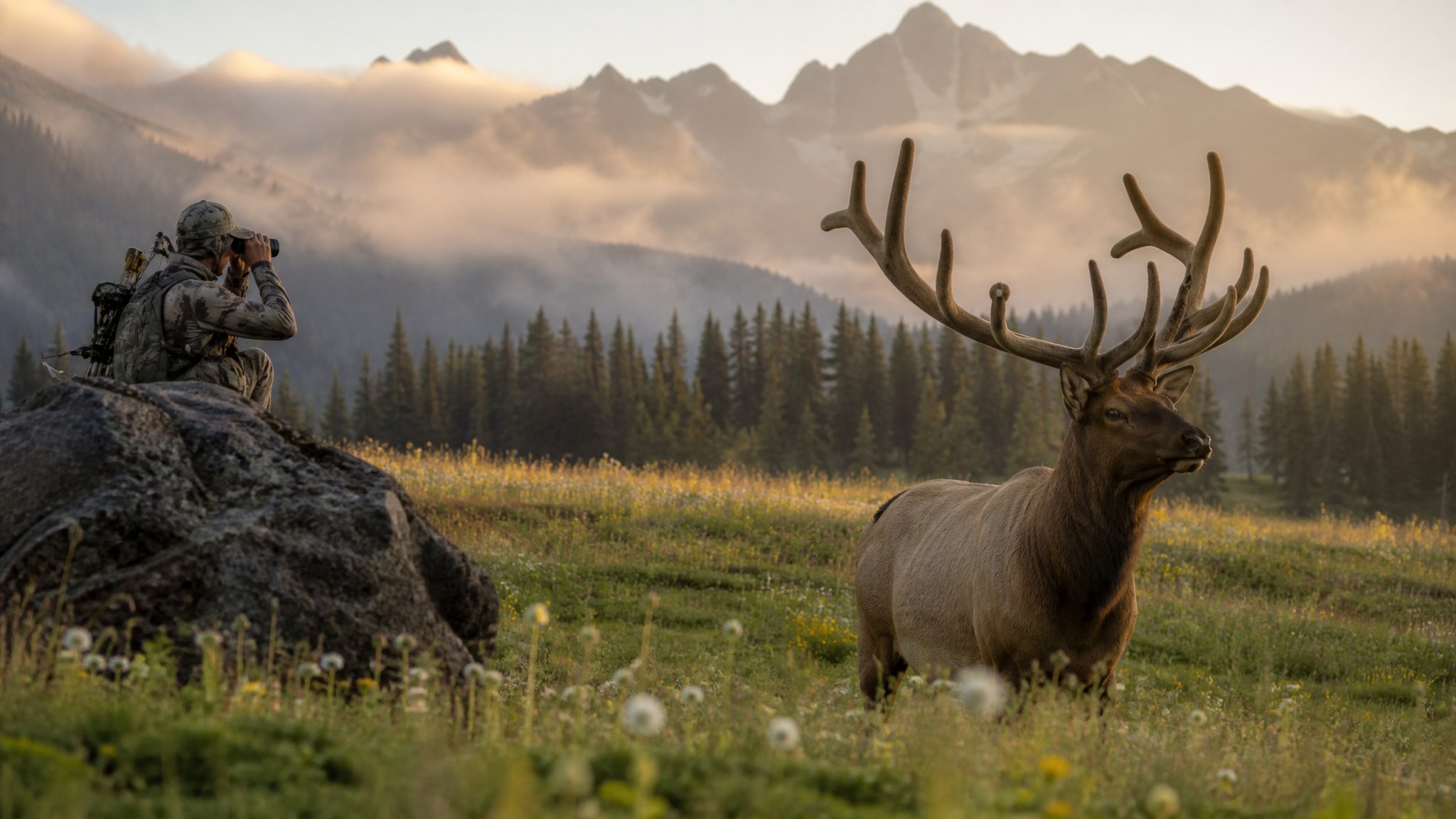
By late August, bulls have been in summer mode for months. Antlers are fully formed but velvet is still on — soft, blood-filled, and sensitive. Bulls in velvet are deliberate and cautious. They avoid contact with brush and obstacles that could damage their rack. They're not fighting. They're not sparring. They're packing on calories.
This behavioral reality is your biggest clue. Pre-rut bulls are creatures of habit. They travel the same routes to the same feed areas and water sources day after day. If you find the pattern, you can intercept them. The challenge is that late-summer patterns often look nothing like September patterns. The food sources are different, the thermals are stronger, and the bulls haven't compressed into the kind of tight rutting country where calling tactics shine.
Where to Glass in Late August
Open country. That's the short answer. In late August, elk — especially bulls — frequently feed in open clearcuts, burns, subalpine meadows, and high ridges in the early morning and evening hours. They're visible. They want to be in the coolest, highest-elevation food sources available, especially as temperatures stay warm.
In Oregon's Cascades, look for south-facing burns from the last five to ten years. These areas grow up in fireweed, elk sedge, and early-succession forbs that bulls pound in late summer. Find a good glassing vantage above a burn and be there at first light. The same bulls that were in that burn on Tuesday will be back Thursday.
In Eastern Oregon's Blue Mountains, high-elevation meadows at 5,500 to 7,000 feet near water hold pre-rut bulls through August. The Wallowas, Elkhorns, and Strawberry Mountains all have this structure. Use OnX or CalTopo to identify drainages with meadow complexes near water, and plan your glassing accordingly.
The Velvet Shed Window
One of the most important transitions of the pre-rut period is velvet shed, which typically happens in Oregon between August 20 and September 5 depending on the year and the individual bull. Once a bull sheds velvet, his behavior begins shifting almost immediately. Testosterone levels start climbing. He becomes more aggressive and territorial. He'll begin sparring with other bulls, and he'll start responding to the sounds of other elk — including calls — in a way he simply wouldn't do a week earlier.
If you can hunt the week immediately after velvet shed, you're in a transitional sweet spot. Bulls are fired up enough to respond to cow calls and light raking, but they haven't entered the full rut chaos where every other hunter's calling and every bugling bull is competing with yours. This is arguably the best time to kill a mature bull on a call.
Glassing vs. Bump-and-Grind Hunting
Pre-rut elk hunting rewards patience. Resist the urge to cover miles and miles through timber hoping to bump into elk. In late August, that approach bumps elk out of the country and teaches them that predators are moving through. Instead, pick a ridge with a wide view, bring a quality tripod and 15x binoculars or a spotting scope, and work the country methodically at dawn and dusk.
Once you locate a bachelor group or a solo bull, spend time watching the pattern. Where do they come from? Where do they go when the sun hits? Where do they bed? A bull you've watched for two mornings is dramatically easier to kill than one you stumble onto.
When you're ready to move on a bull, play the thermals like your life depends on it. Late-August thermals are strong and predictable: down the slope in the cool morning hours, up as the day heats. Move on elk in early morning while thermals are still dropping. Never let your scent go downhill toward a feed area or a bedding basin.
Calling Strategy for Pre-Rut Bulls
Keep calling to a minimum and keep it soft. Pre-rut bulls are not looking to fight. Aggressive bugling and loud cow calls can actually spook them at this stage. Your best tools before the rut are:
- Soft cow chirps and mews: Reassuring, social sounds that say "elk are here, everything is fine"
- Light antler raking: Once velvet is shed, a short raking sequence can trigger a bull's curiosity without threatening him
- Estrus cow calls: Save these until late September — they mean nothing to a pre-rut bull
- Silence: Often the best call of all — get close, get into position, and let the bull come to you
Shot Opportunities
Pre-rut bulls in velvet are creatures of routine. If you've done the homework — glassed the pattern, identified the travel corridor, confirmed the wind — you can execute a static ambush. Hang a saddle or set a lightweight ground blind on the trail between the bedding area and the feed area. Be there before first light. Be still. Let the pattern work for you.
The advantage of hunting elk before the rut is that the woods are quiet. No other hunters are calling. No bugling pressure is spooking bulls into unpredictable behavior. The elk you glassed Tuesday are the elk you'll see Thursday. That predictability is priceless — and it's why some of Oregon's most consistently successful bowhunters target the first two weeks of season on purpose.