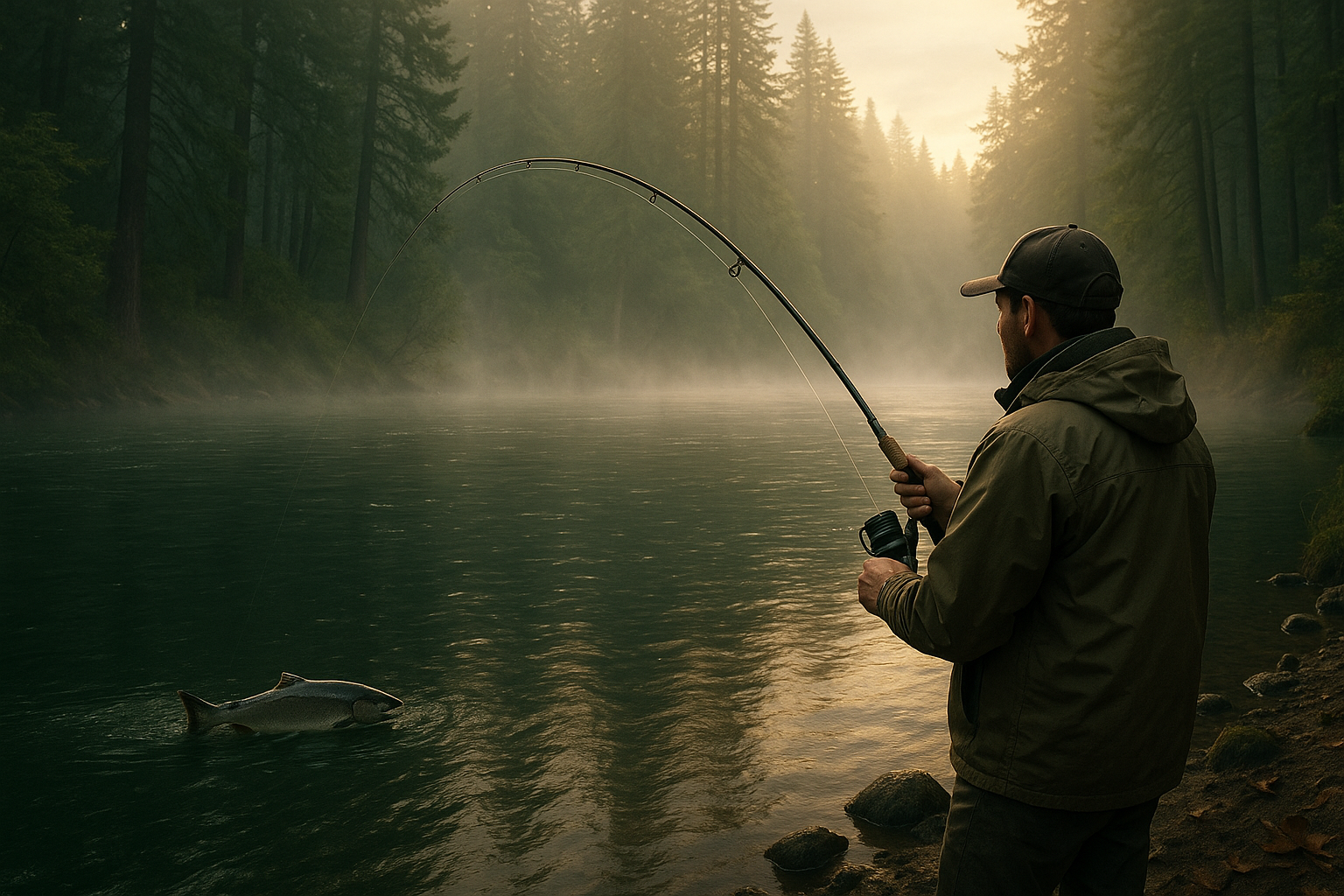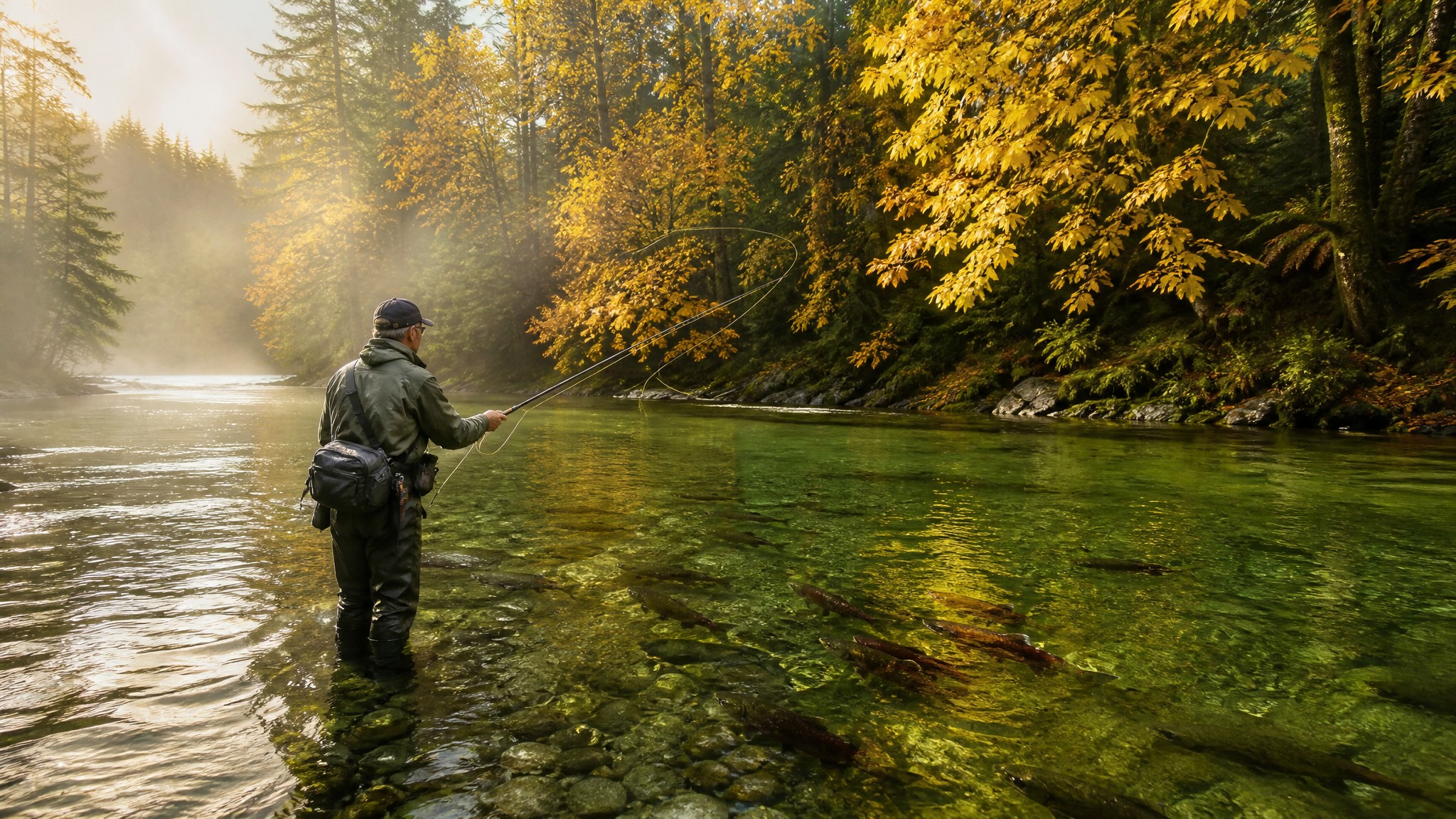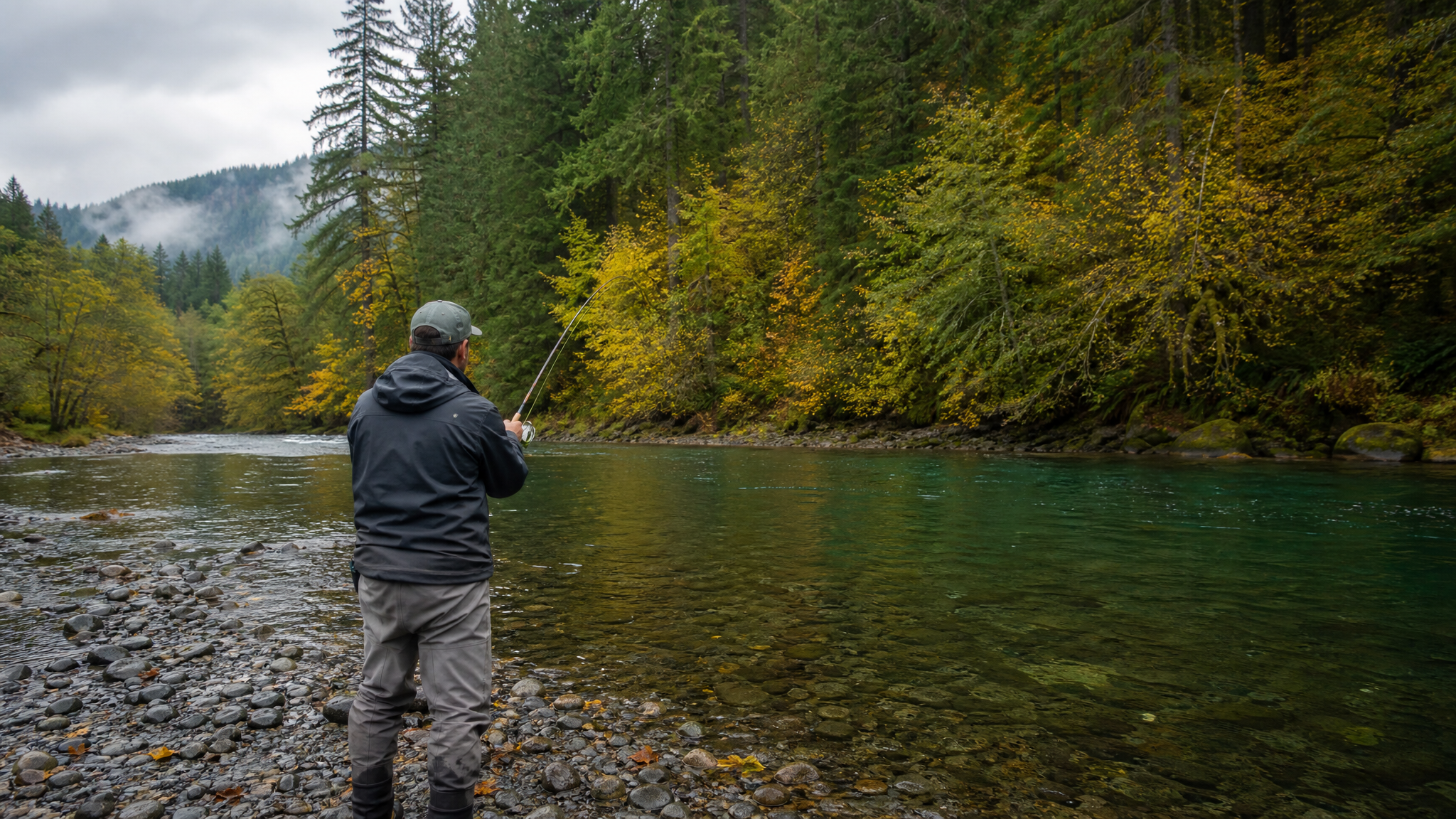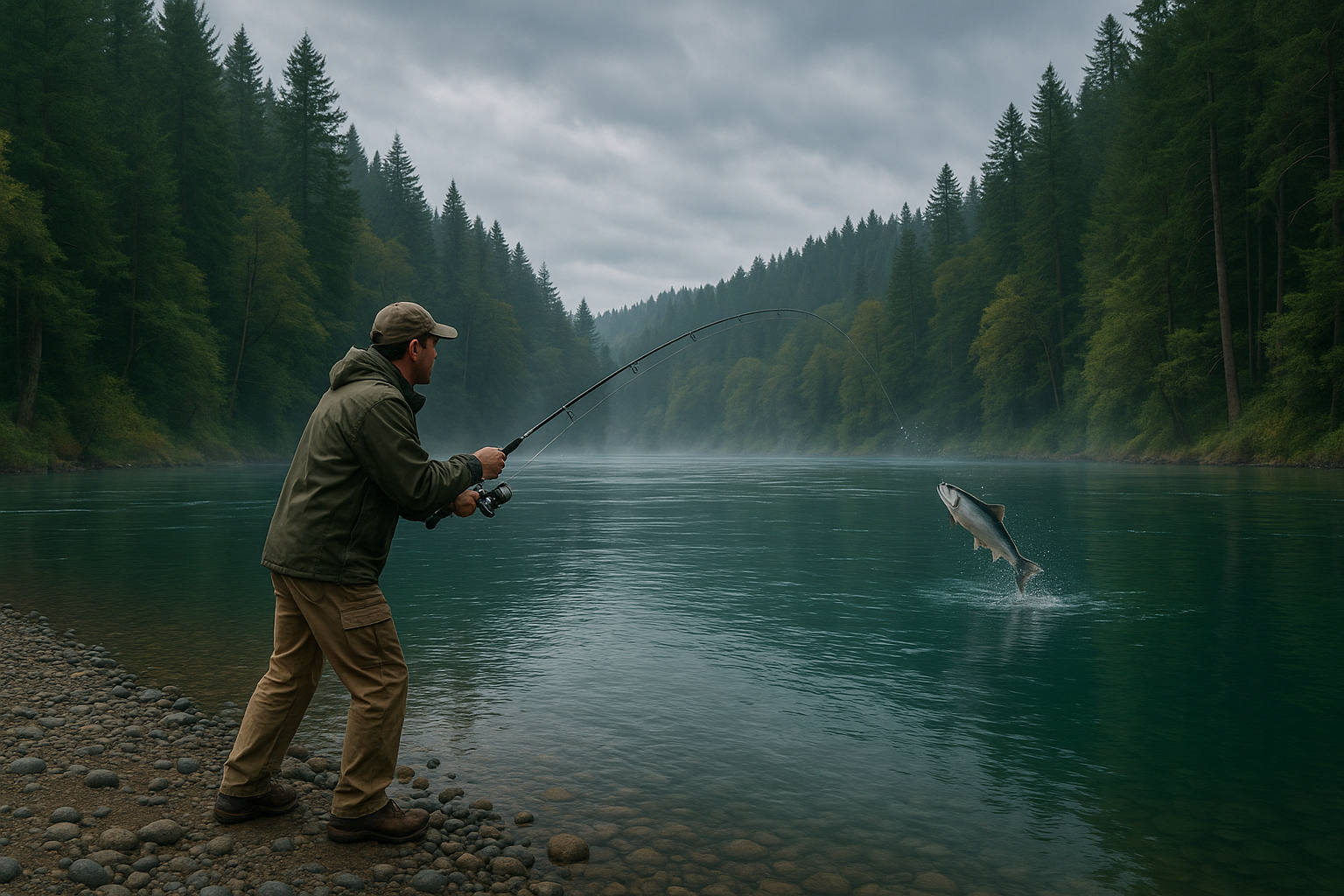
September on the Oregon coast means one thing to serious salmon anglers: coho. While most attention falls on the famous north coast rivers — the Tillamook tribs, the Nestucca, the Wilson — the main stem Umpqua River from Scottsburg down to Reedsport offers some of the best and most accessible bank fishing in the state. It's underrated, often uncrowded, and when the fish are in, it's a tidal estuary fishery that can deliver fast action for savvy anglers who time the tides correctly.
Understanding the Umpqua Coho Run
Coho salmon (Oncorhynchus kisutch) begin entering the Umpqua estuary from the Pacific in earnest starting in late September, with the bulk of the run moving through October and into November. Unlike chinook, which push hard upstream early, coho tend to stack in tidewater and the lower estuary for days or even weeks, staging on incoming tides before pushing upriver in pulses triggered by freshets — the first heavy fall rains that drop from the coastal mountains and cloud the river.
The main stem Umpqua below Scottsburg is influenced by tidal action, meaning water levels and direction of flow are governed as much by the ocean as by upstream flows. This tidal dynamic is actually a gift to bank anglers: fish move predictably, riding incoming tides upstream and resting in deep holes and eddies on the outgoing.
Key Access Points and Bank Fishing Spots
Scottsburg County Park
The town of Scottsburg marks the upper tidal limit of the lower Umpqua, making it one of the prime staging areas for coho before they push further into the North and South Umpqua forks. Scottsburg County Park provides free bank access along a generous gravel bar and a concrete boat launch. During high tides, fish move directly past this bank. This is your best bet early in the run when fish are still relatively fresh from the ocean.
Sawyer Rapids and the Rock Slides
A few miles downstream from Scottsburg, a series of bedrock outcroppings and riffles create natural holding lies. These rock-studded slots are visible from Highway 38, and a short scramble gets you to productive bank positions. Target the seam water behind boulders where coho rest between tidal pushes. Access is rough but the fish hold here in numbers.
Reedsport and the Estuary Flats
At the river's mouth near Reedsport, the Umpqua widens into classic estuary habitat. The Winchester Bay area and the jetty environs attract both salmon and sea-run cutthroat trout. Bank anglers working the channel edges near the boat ramps can intercept fresh-run coho on incoming tides. The fish here are bright silver and explosive fighters — as fresh as they come.
Tactics That Work in Tidal Water
Timing Your Tide
Everything on the tidal Umpqua revolves around the tide chart. Download a tide app or check NOAA's Reedsport gauge before you go. The incoming tide (flood) is your money window — fish ride it upriver, often stacking in front of your feet with almost no warning. Plan to be on the bank one hour before the tide turns and fish through the peak. The outgoing (ebb) still produces, but less predictably.
Spinners and Spoons
For bank anglers covering water, a heavy Blue Fox Vibrax or Mepps Aglia in chartreuse, silver, or pink does the work. Cast upstream and across, allowing the spinner to swing through the current on a taut line. Size 4 and 5 spinners match the tidal flows without fouling on the bottom. When the water colors up after rain, switch to a larger, chartreuse blade to maintain visibility.
Drift Fishing with Eggs
Once you've located a hole where fish are staging, drift fishing a cured salmon egg cluster under a pencil float is deadly. Use a 15-20 lb fluorocarbon leader, a size 2 or 4 octopus hook, and enough split shot to maintain a dead drift just above the bottom. Drift through the same slot repeatedly — coho in tidal water often won't hit on the first pass but will nail it on the third or fourth when the scent trail builds.
Twitching Jigs
Pink or white marabou jigs, 1/4 to 3/8 oz, worked on a 7-foot medium-action rod are a sleeper tactic for tidal coho. Cast the jig into slack water on the edge of a seam and twitch it back with a strip-pause retrieve. This technique shines in calmer stretches of the estuary where presentation over power is the game.
Regulations and Licensing
Before you hit the water, verify the current ODFW regulations for the Umpqua Basin. Coho regulations on the main stem Umpqua can include season-specific closures, retention rules that distinguish hatchery from wild coho (clip your hatchery fish by the missing adipose fin), and bag limits that change year to year based on run forecasts. Always carry a current Oregon angling license with a combined angling tag or a salmon-specific endorsement.
What to Bring
- Medium-heavy 9–10 foot rod rated for 15–25 lb line for bank casting
- Baitcasting or heavy spinning reel with 20 lb monofilament or braid backing
- Selection of spinners (Blue Fox #4 and #5 in silver, chartreuse, orange)
- Cured salmon egg clusters or sand shrimp for drift fishing
- Waders with studs for gravel bar access — the Umpqua bottom is slick
- Net — coho are powerful fish and bank netting saves tags
- ODFW regulation pamphlet and current fishing report from the Winchester Bay bait shops
The Bigger Picture
The main stem Umpqua is one of those rivers that rewards anglers who do their homework. Call the tackle shops in Reedsport before you drive — they'll tell you if fish are in the estuary or still stacking offshore. Check the ODFW fishing report for run strength. And keep your eye on the sky: the first real rain event of September often triggers a major push of fish into the system within 24–72 hours.
While the famous rivers of the Tillamook and Lincoln County get the press, the Umpqua estuary delivers coho that haven't been hammered. That translates to fish willing to bite, willing to run, and spectacular eating quality when you make it home. If you haven't made this drive, September is the time to change that.