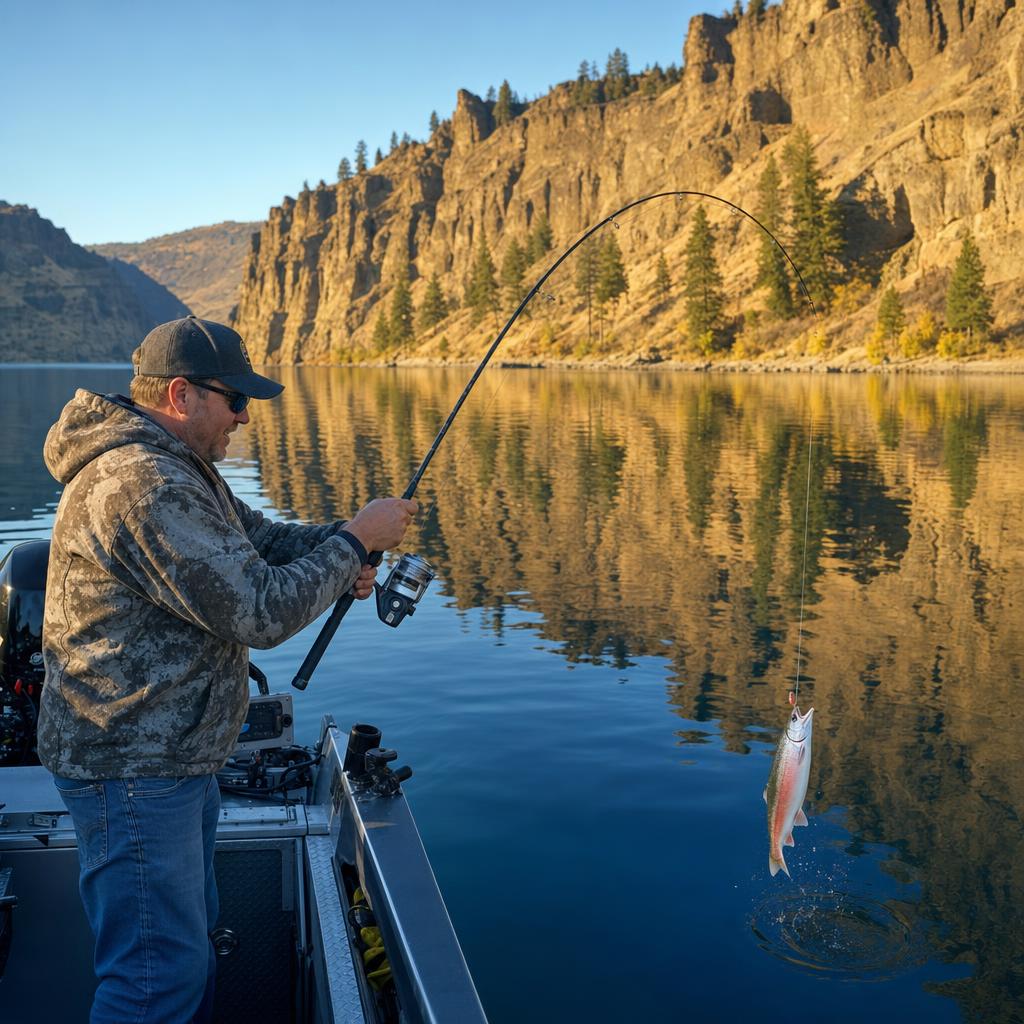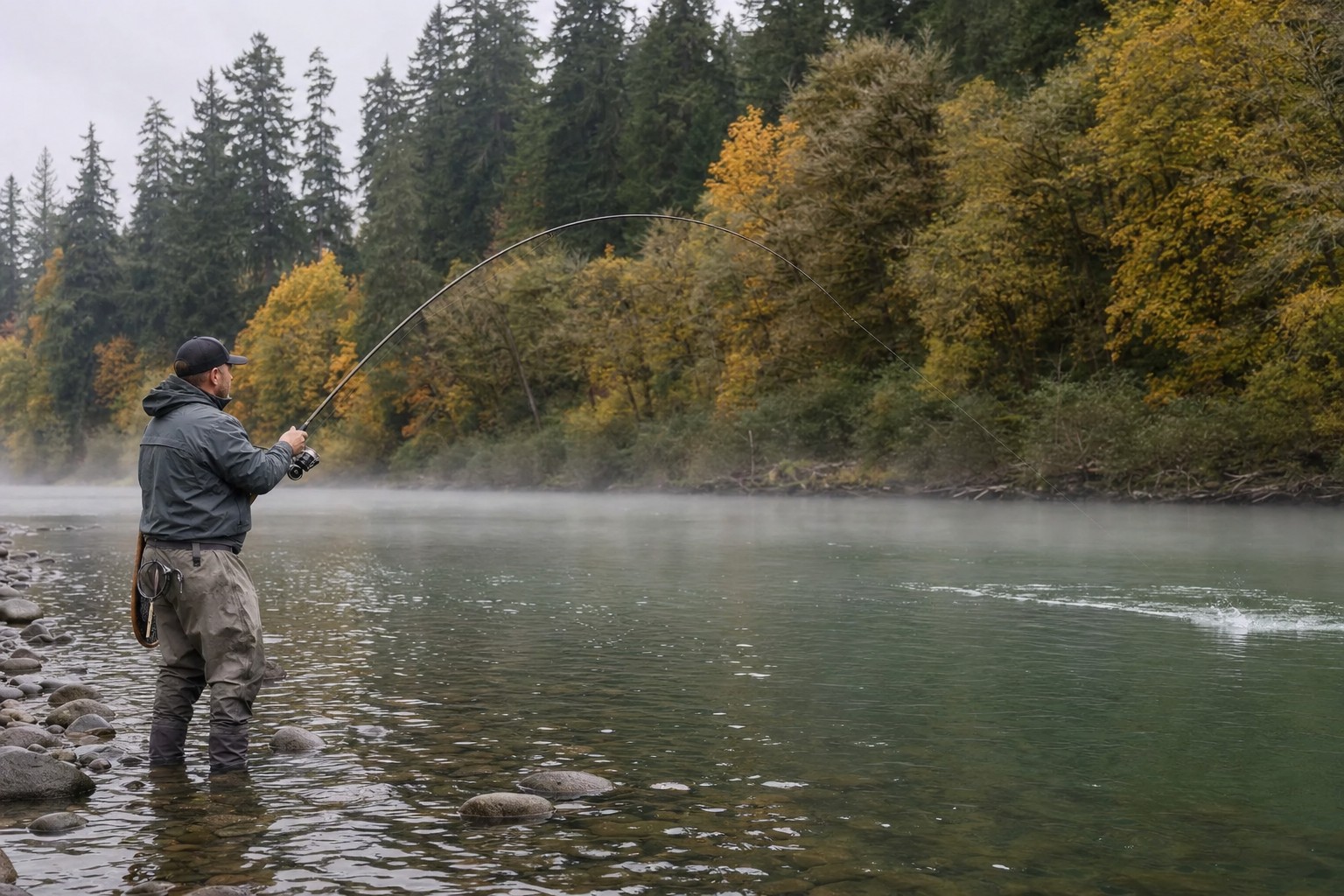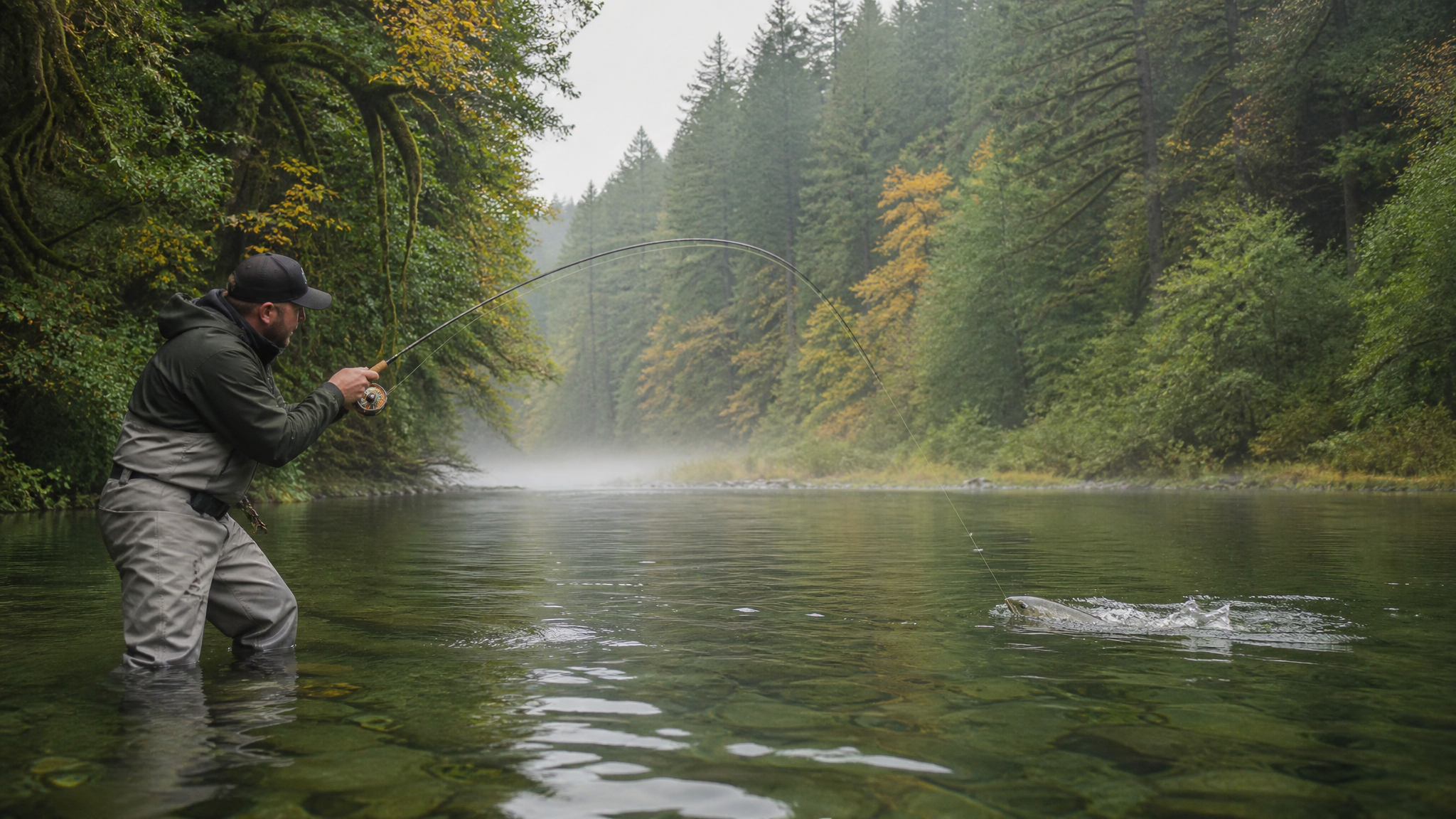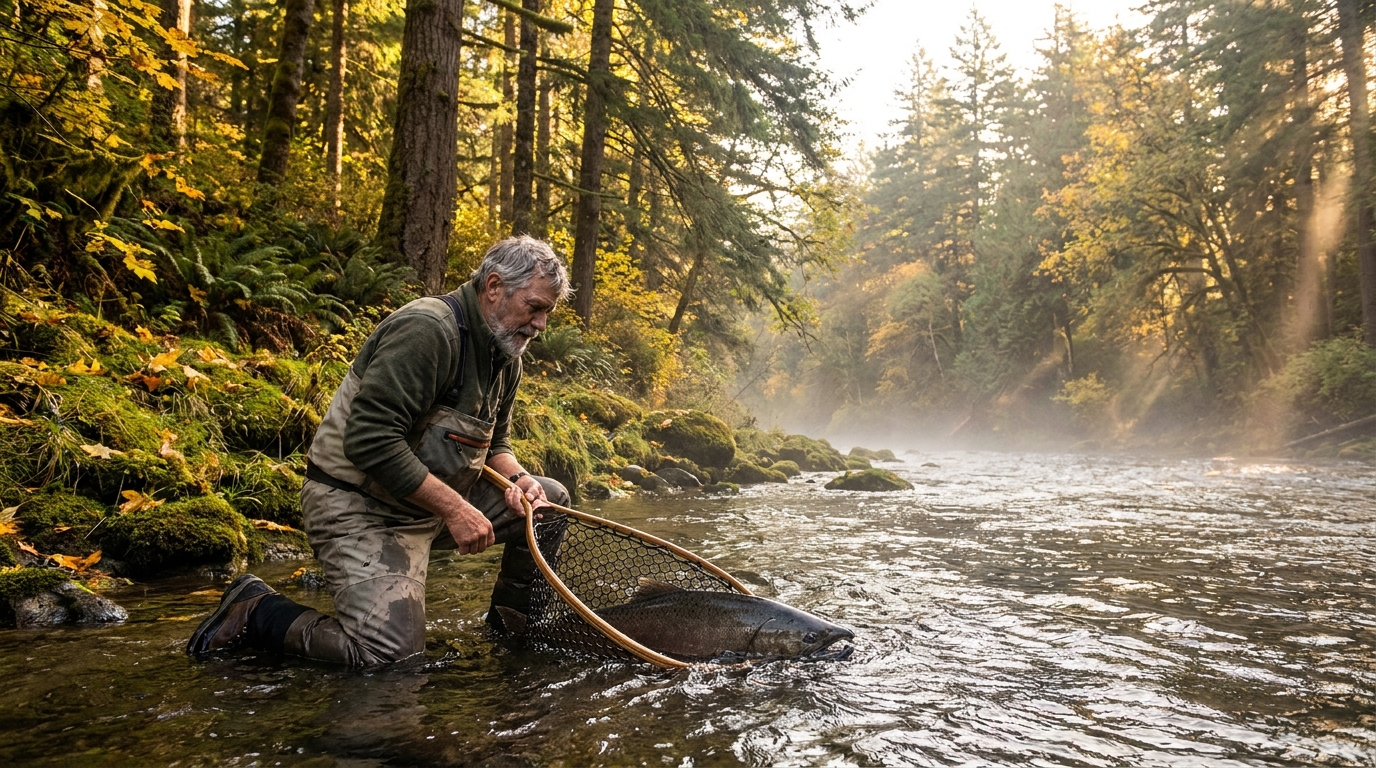
If you fish salmon on the Oregon coast and you haven't put in serious time on the Nehalem River, you're missing one of the most productive and scenic fall Chinook runs in the state. The Nehalem flows roughly 120 miles from the coast range to Nehalem Bay near the small town of Wheeler, and from late September through November it carries a strong run of both hatchery and wild Chinook that gets surprisingly little pressure compared to the Wilson or Nestucca.
Run Timing and What to Expect
The Nehalem's fall Chinook run typically begins entering the bay in mid-September, with peak river fishing from early October through mid-November depending on rainfall. Fresh fish push upriver hard on the first significant fall rains — usually after a half inch or more in a 24-hour period. When the river bumps and colors slightly, the fish move, and that's your window.
The Nehalem runs almost entirely through private timber land and small coastal communities, which keeps pressure lower than rivers closer to Portland metro. The fish are often well-rested by the time they reach mid-river holding water, which translates to aggressive strikes and clean, chrome-bright hatchery fish.
Key Access Points
- Nehalem Bay State Park Boat Ramp — The primary launch for estuary and lower river fishing. Excellent for tidewater Chinook on the incoming tide, August through September.
- Wheeler Boat Access — In the town of Wheeler, a paved launch puts you on productive mid-estuary water near the Highway 101 bridge.
- Foss Road Drift — Upriver from the estuary, this section of river holds large numbers of fish staging before pushing into the upper mainstem. Bank access is limited but drift boat fishing is excellent.
- Miami River Confluence — Where the Miami River enters the Nehalem is a classic holding lie. Fish stack here waiting for water conditions to move upriver. Best fished from a jet sled or drift boat.
Gear and Rigging
The Nehalem is primarily a bait and hardware river. Most locals and guides run a standard back-bouncing rig — 1.5 to 3 ounces of lead depending on current, with a 30 to 36-inch leader of 20-pound fluorocarbon and a single 4/0 or 5/0 Octopus hook. Cured eggs remain the top bait by a wide margin, either in mesh bags or on a bare hook with sand shrimp.
For tidewater fishing and estuary work, spinners and spoons produce well on moving tides. A 1-ounce Blue Fox Vibrax in chartreuse or orange is a proven Nehalem pattern. Trolling anchovy under a diver or flasher setup is effective when fish are actively chasing bait in the lower bay.
- Rod: 9.5 to 10.5-foot medium-heavy spinning or casting rod rated 15–30 lb
- Reel: Baitcaster or level-wind with solid line capacity and a smooth drag
- Main line: 30-pound braid with a 20-pound fluorocarbon leader
- Terminal: 4/0–5/0 Gamakatsu Octopus red, size 4 barrel swivel, appropriate lead
Reading the River
Fall Chinook on the Nehalem are lies-and-transitions fish. They hold in the deep, slower water behind boulders and on outside bends, then move when conditions change. After a rain event, concentrate your effort on the tail-outs and transitions between deep pools and faster runs — these are the highways the fish use when actively traveling. When the river drops and clears, go deep and slow, working your bait right on the bottom through the deepest available water.
Water temperature matters more than many anglers realize. Nehalem Chinook are most active and aggressive when water temps sit between 48 and 56°F. When temps drop into the low 40s on a cold snap, slow your presentation down and downsize your leader. When temps are on the warmer end early in the season, fish the shaded banks and deep slots in the cool morning hours.
Regulations and Retention
Always check the current Oregon Sport Fishing Regulations before heading out — Chinook regulations on coastal rivers can change mid-season based on run strength. The Nehalem typically allows retention of hatchery Chinook (adipose fin-clipped fish) with daily bag limits of one to two fish depending on the year and zone. Wild Chinook must be released. Mark every fish you keep clearly and report your catch through ODFW's angler survey system when prompted.
A valid Oregon fishing license with a Combined Angling Tag is required to fish for salmon on the Nehalem. Saltwater endorsement may apply depending on where you fish.
Final Thoughts
The Nehalem River doesn't get the magazine coverage of the Wilson or the name recognition of the Rogue, but for the angler willing to do a little homework and invest time learning the water, it’s one of the most rewarding fall Chinook rivers on the entire Oregon coast. Plan your trips around fall rain events, bring fresh-cured eggs, and go midweek when you can. The fishing is better and the ramps are quieter.