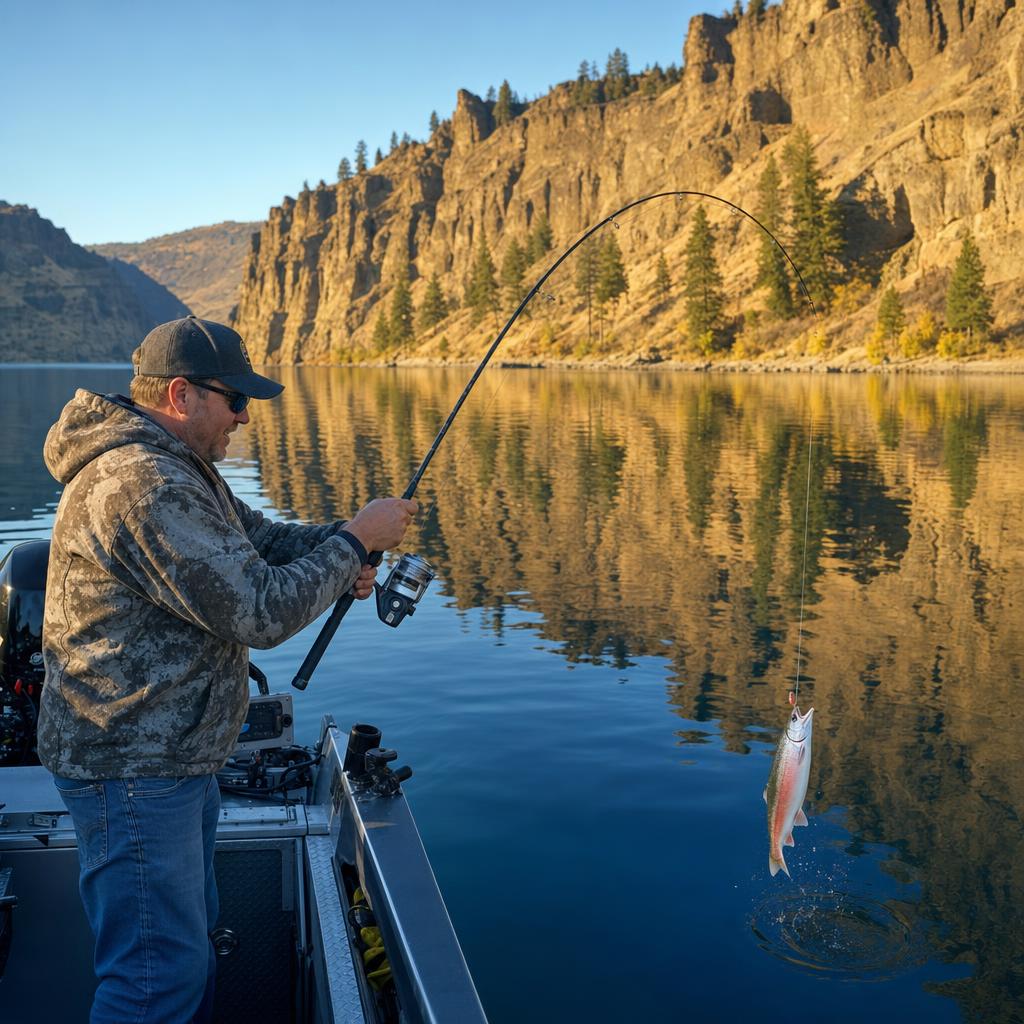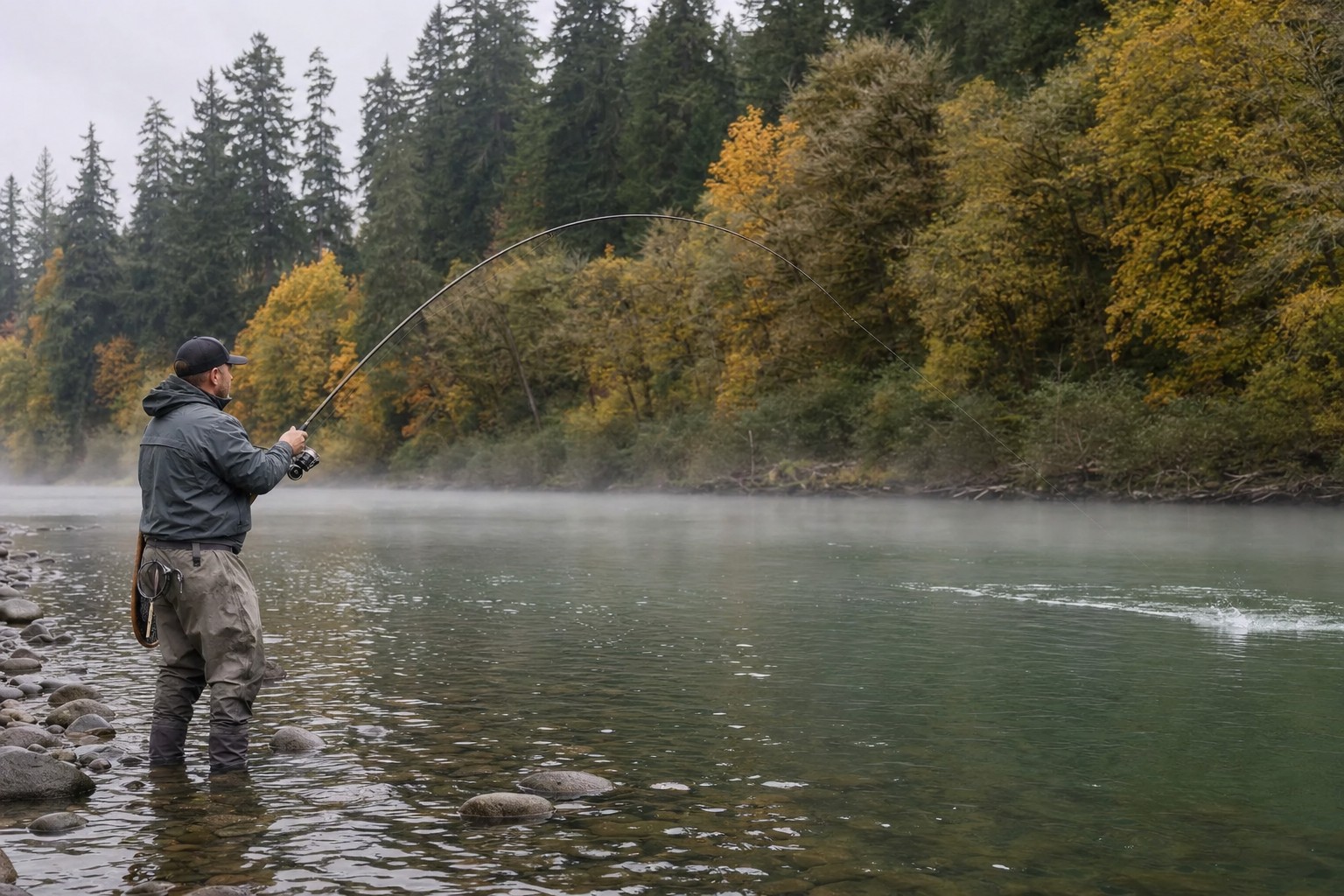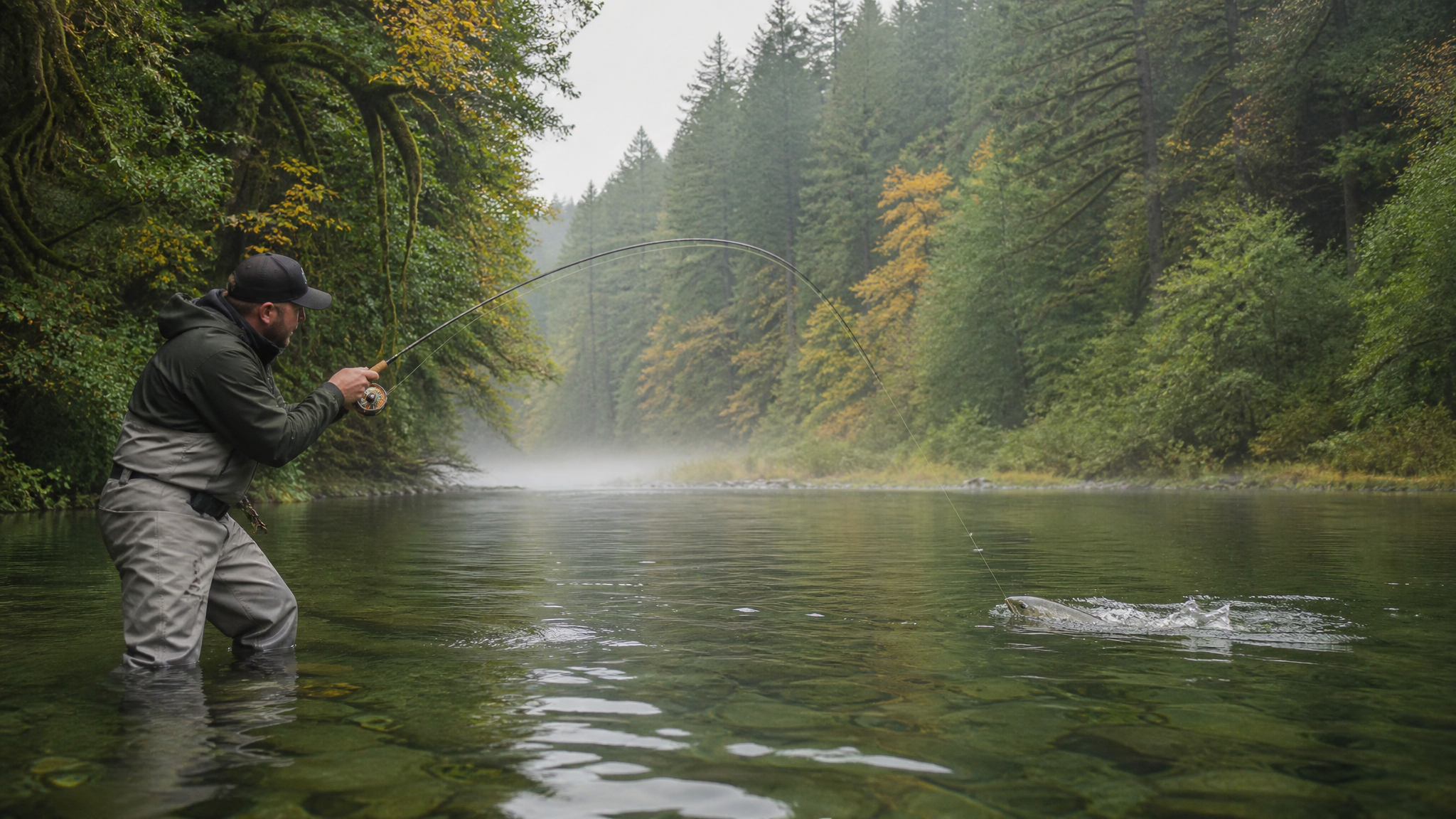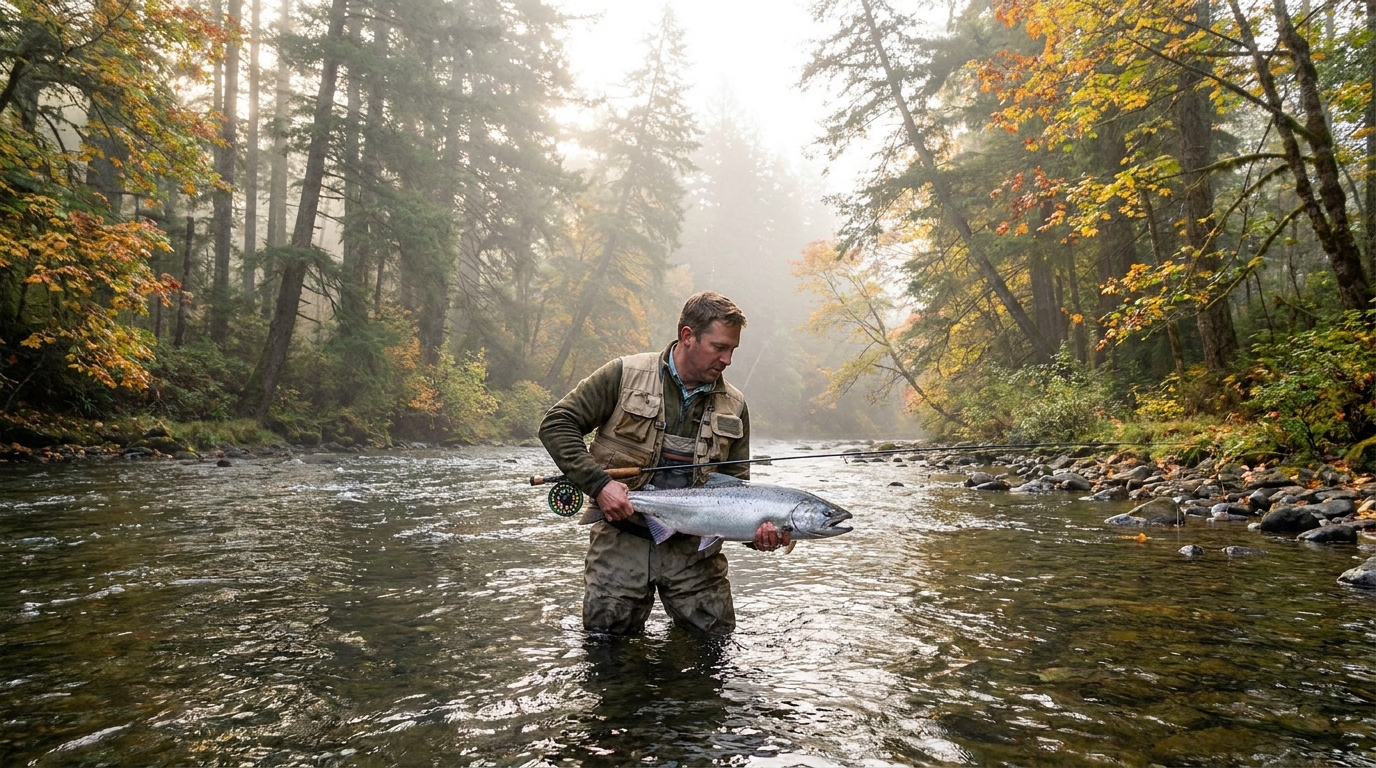
Ask most Oregon salmon anglers to name the top fall Chinook rivers on the north coast and you'll hear the Tillamook, the Wilson, maybe the Trask. The Nestucca rarely makes the list. That's a mistake — and one you should be happy your neighbors keep making.
The Nestucca River drains the Coast Range southwest of McMinnville, entering the Pacific at Pacific City through the tidal estuary near Nestucca Bay. It runs roughly 120 miles from its headwaters in the Siuslaw National Forest to the ocean, with the fishable lower 30 miles offering the best salmon access. Fall Chinook begin stacking in the tidewater in late August and push upriver through September and into October. In a good year, this river punches well above its size.
Season Timing and Run Strength
The Nestucca's fall Chinook run is a mix of hatchery and wild fish. ODFW operates the Nestucca River Hatchery near Cloverdale, which anchors the hatchery component of the run. Expect the best fishing from mid-September through mid-October, with peak action typically arriving with the first significant October rains that blow out the cobble bars and stain the water to that perfect coffee-cream color every salmon angler dreams about.
Check ODFW's weekly fishing report for the Nestucca before heading out — run strength varies year to year, and the department sometimes adjusts bag limits mid-season based on adult returns. In recent seasons, the Nestucca has performed consistently well compared to the more heavily pressured Tillamook Bay tributaries.
Access Points and Where to Fish
The lower Nestucca from Hebo downstream to the tidewater offers the most consistent access. Key spots include:
- Farmer's Bridge (near Cloverdale): Classic bank fishing hole with a gravel bar on the south side. Walk downstream from the bridge for less company. This stretch produces fish throughout the season.
- Hebo Lake Road pullouts: Numerous informal access points where the river runs close to the road. Longer walks yield lighter pressure.
- Nestucca Bay estuary (Pacific City): Boat fishers work the incoming tide hard in early season when fish are still staging in saltwater. The spit area near Pacific City's dory launch is a popular spot for anchoring and plunking.
- Upper river (above Hebo): Smaller water, later in the season. Bank access requires more hiking but fishing pressure drops dramatically. Wild fish dominate here — check regulations carefully for retention rules on wild Chinook.
Tactics for Nestucca Chinook
The Nestucca is narrow enough in most sections that long casts are unnecessary. Most fish are taken within 30 feet of the bank. Standard drift fishing with eggs under a float or free-drifted on a sliding sinker rig works well. Side-drifting from a sled is popular on the lower river with guided operations.
Bait
Cured salmon eggs are the gold standard. Sand shrimp — either whole or paired with eggs on a two-hook corkie rig — consistently produce fish, especially in stained water. Keep your presentation modest: Nestucca fish see pressure once the word gets out, and a golf-ball-sized cluster will be ignored where a nickel-sized offering gets eaten.
Hardware
Blue Fox spinners in chartreuse or hot orange produce fish during low, clear conditions early in the season. Kwikfish and Flatfish plugs wrapped with cured sardine are deadly when the river is dropping after a rain and fish are actively pushing upriver. Work plugs tight to the far bank from an anchored position in the slot.
Fly Fishing
The Nestucca offers legitimate fly fishing opportunities for fall Chinook, particularly from Cloverdale upstream. Two-handed switch and Spey rods in 8–9 weight handle the conditions well. Intruder-style patterns in orange and black, as well as large comets and bunny leeches, draw strikes. Fish the inside seams and softer water adjacent to the main current — Chinook in river systems rest in predictable lies and will move to eat a well-presented fly.
Regulations to Confirm Before You Go
Before fishing the Nestucca, confirm current regulations on the ODFW website. Key items to verify:
- Bag limit for adipose fin-clipped (hatchery) Chinook
- Retention rules for unclipped (wild) Chinook — these change season to season based on run strength
- Any emergency closures in the upper river
- The tidewater boundary location, which determines which ruleset applies
An Oregon angling license with a Combined Angling Tag is required. Your salmon tag covers your annual limit. Wardens work coastal rivers hard during fall Chinook season — keep your license and tag on your person.
Gear Summary
- 9 to 10-foot medium-heavy spinning or baitcasting rod
- 20–30 lb braid main line, 15–20 lb fluorocarbon leader
- Bait: cured eggs, fresh or frozen sand shrimp, sardine for plug wraps
- Corkie and yarn assortment in pink, chartreuse, and orange
- 3/8 to 3/4 oz pencil lead and slinky weights
- Waders and cleated wading boots — the Nestucca has slippery basalt in sections
- Long-handled landing net: fall Chinook are powerful fish in cold, fast water
The Bottom Line
The Nestucca River is everything the best coastal Oregon rivers are supposed to be: forested, fishable from the bank, productive, and still quiet enough that you can have a run to yourself if you put in the scouting effort. Hit it in October when the rains kick in and fish are stacking in the lower holes, and you'll wonder why you spent opening weekend fighting for elbow room on the Wilson.
Do your homework with ODFW reports, keep your presentation natural, and be ready to move if you're not getting bit. The Nestucca rewards anglers willing to walk past the first obvious hole. Good luck out there.