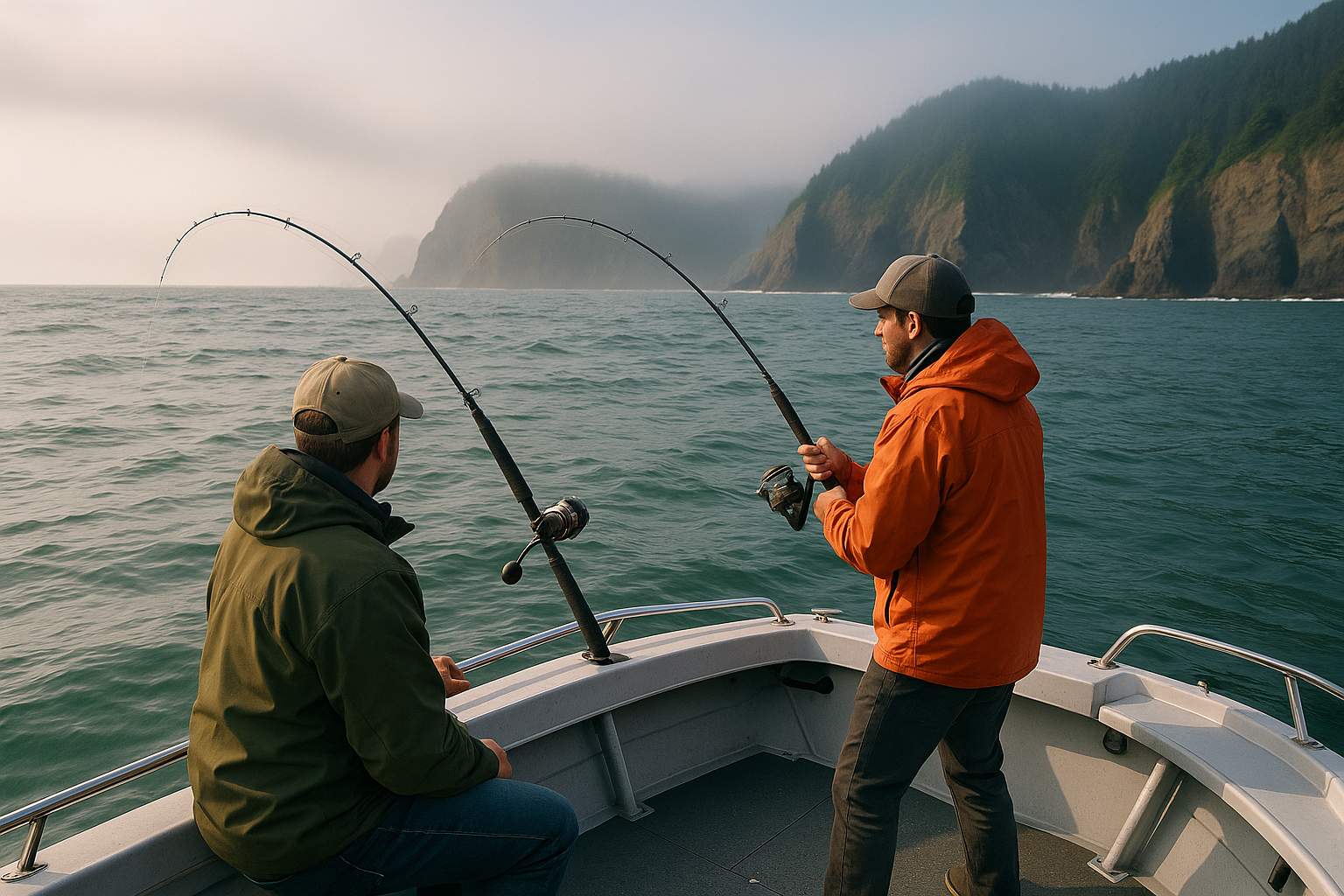
If you own or can charter a boat and you're not offshore out of Newport or Depoe Bay in September, you're missing Oregon's most exciting saltwater fishing of the year. Coho salmon — bright, acrobatic, and hard-fighting — stage just outside the surf zone as they wait for autumn rains to swell the coastal rivers. For a two- to four-week window in September, they are stackable and willing, and the fishing can be absolutely lights-out.
Understanding the Fishery
Oregon's Lincoln County coast — home to both Newport (Yaquina Bay) and Depoe Bay — sits at the geographic sweet spot for interceping multiple coho stocks. Fish bound for the Siletz, Yaquina, Alsea, and Siuslaw Rivers all funnel through this stretch of coast. Add hatchery returns from Salmon River and the broader Columbia basin stocks that travel nearshore, and September can produce coho in numbers that are hard to find anywhere else on the Oregon coast.
These fish are not deep-water offshore fish — they're running the nearshore zone, typically in 30 to 120 feet of water within five miles of the beach. That puts them well within reach of smaller boats, and it makes the fishery approachable for anglers who don't own an offshore tuna rig. A 16- to 22-foot aluminum or fiberglass boat with a reliable outboard is all you need.
Launch Points and Bar Crossings
Newport (Yaquina Bay): The most practical launch for the central Oregon coast. The Yaquina Bay bar is generally manageable compared to some Oregon bars, but check the bar condition report from the Coast Guard before launching — swell and tidal stage matter enormously. The Newport Bayfront has multiple launch ramps and fuel. A 4–6 mile run north or south of the jetties puts you in prime coho water.
Depoe Bay: The smallest harbor on the Oregon coast, but arguably the most convenient for nearshore fishing — the bar is short, protected, and the coho are almost literally in the cove some days. Boat size is limited by the harbor entrance (roughly 24 feet is the practical max width). Launch early; parking and ramp space are limited. The advantage is that you're fishing in quality water within minutes of launch.
Always monitor NOAA marine forecasts (marine.weather.gov) and the Coast Guard bar condition hotline. September brings the first autumn swells to the Oregon coast, and conditions can change quickly. A 3-foot swell at 10 seconds is fishable; 5 feet at 8 seconds is not for most small boats.
Tackle and Rigging
The Bread-and-Butter Setup
Nearshore coho trolling rigs haven't changed much in decades, and that's because they work. The standard Oregon setup is:
- Rod: 8–9 foot medium-heavy trolling rod, rated 15–30 lb
- Reel: Level-wind conventional with line counter, or spinning reel in the 4000–6000 range
- Mainline: 20–30 lb monofilament or 30 lb braid with a 20 lb mono leader (50 feet minimum)
- Flasher: 8 or 11-inch chrome or UV flasher (Luhr-Jensen or Hot Spot)
- Leader: 24–36 inches of 20 lb fluorocarbon from flasher to lure
- Lure: Hoochie (squid) in chartreuse/white, chrome spoon (2–3 inch Coyote or Coho Killer), or anchovy in a Rhys Davis teaser head
Hoochies in chartreuse and white are the September standard on the Lincoln County coast. UV-reactive patterns — especially in low-light morning conditions — have been proven fish-catchers for years. Don't overthink it. Chartreuse flasher, 27-inch leader, small white or chartreuse hoochie. That combo catches coho from the Washington line to the California border.
Depth and Speed
Coho in September nearshore Oregon water are almost always in the top 40 feet of the water column, and frequently in the top 20. Start with your gear running at 25–35 feet using a sinker release or inline weight (4–8 oz) ahead of the flasher. Trolling speed should be 2.5 to 3.5 knots — coho want a faster presentation than chinook, and the flasher action at that speed is ideal.
Watch your depth sounder constantly. Baitfish schools (usually anchovies or herring) will show as thick bands on the screen. Coho stack below and adjacent to bait — if you mark bait at 25 feet, run your gear at 30.
Finding Fish Without a Guide
The Oregon Department of Fish and Wildlife posts weekly fish counts and catches online at myodfw.com. The Newport port sampling station reports are invaluable — they tell you what's being caught, what lures are working, and how deep. Check these Friday afternoons before a weekend trip.
Oregon's nearshore coho fishery also has a strong community on local Facebook groups and the Northwest Sportsman forums. Newport-area anglers are generous with general location information — look for GPS coordinates shared in the 44°35'–44°40'N latitude range and 5–10 miles offshore as a starting point.
Regulations for 2026
Oregon nearshore salmon regulations change annually and are managed in coordination with the Pacific Fishery Management Council. For 2026, verify current rules at myodfw.com before heading out. Key items to confirm:
- Open/closed dates for your target area
- Daily bag limit (typically 2 coho per angler)
- Size minimums (usually 16 inches for hatchery coho)
- Adipose fin clip requirement (hatchery fish only in most Oregon offshore zones)
- Required gear (barbless hooks in some areas)
A valid Oregon saltwater fishing license and a Combined Angling Tag are required. Non-residents need an Oregon non-resident license.
On the Water: September Tips
Launch early — coho bite best in low-light conditions, and a 5:30 AM departure out of Newport has you on fish by 6:15. Work structure: the underwater reefs and kelp lines north of Newport near Otter Rock hold bait and fish consistently. The 20-fathom (120-foot) ledge running roughly parallel to the beach is a reliable starting troll.
When you hook up, slow the boat and circle back through the same area. Coho school tight — where there's one, there are more. Don't burn through a school by speeding up after a hookup.
Keep a tight drag. Coho are acrobatic fighters that will run, jump, and throw hooks on a slack line. Use a net — trying to lip a coho is asking for a lost fish. And have a cooler with ice waiting: coho bleed and cool down quickly for the best possible table quality.
September nearshore coho out of Newport and Depoe Bay is Oregon ocean fishing at its most rewarding. The bar crossings are short, the fish are close, and when it's on, it's as good as anything the Pacific Northwest coast has to offer.