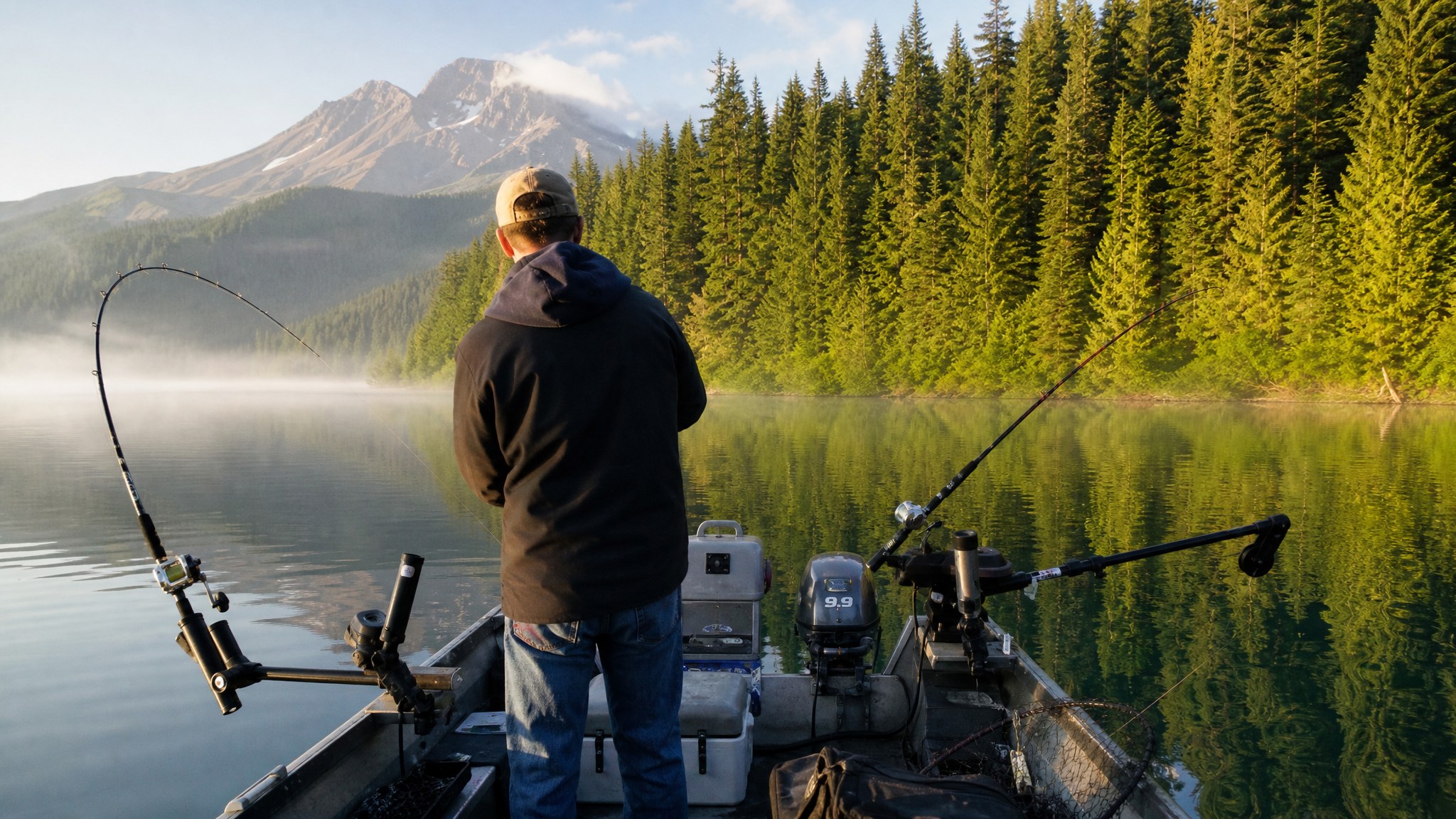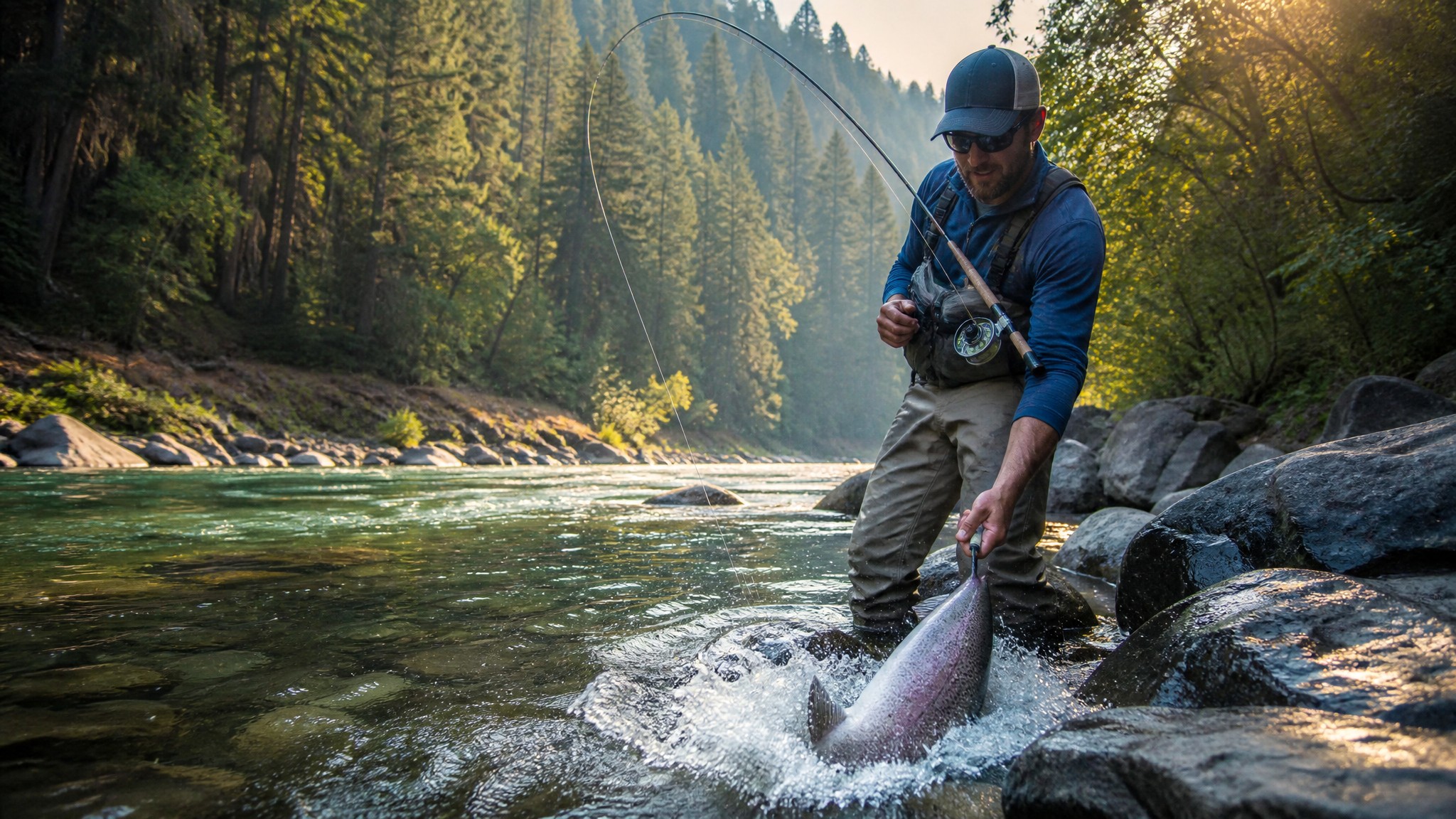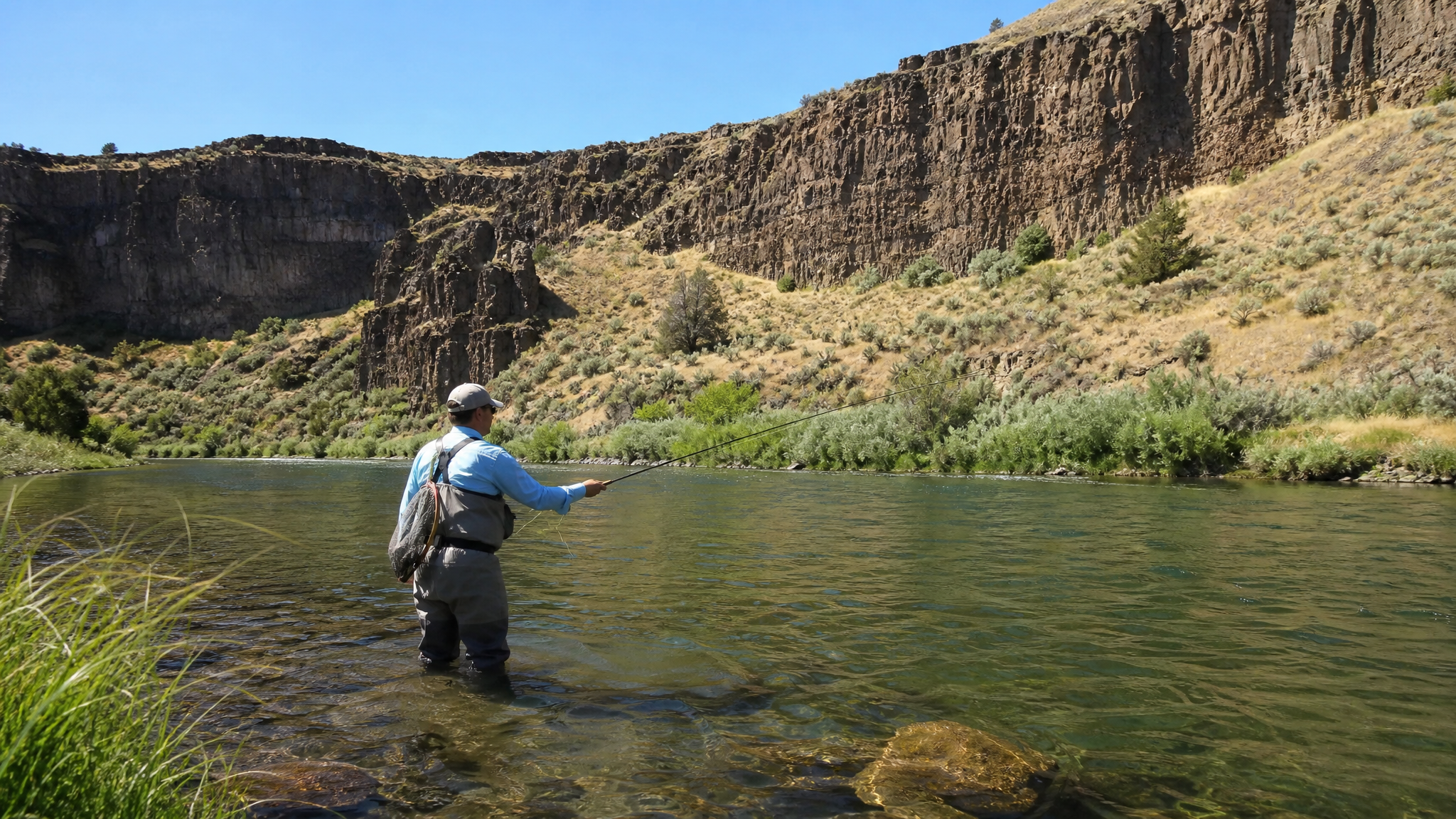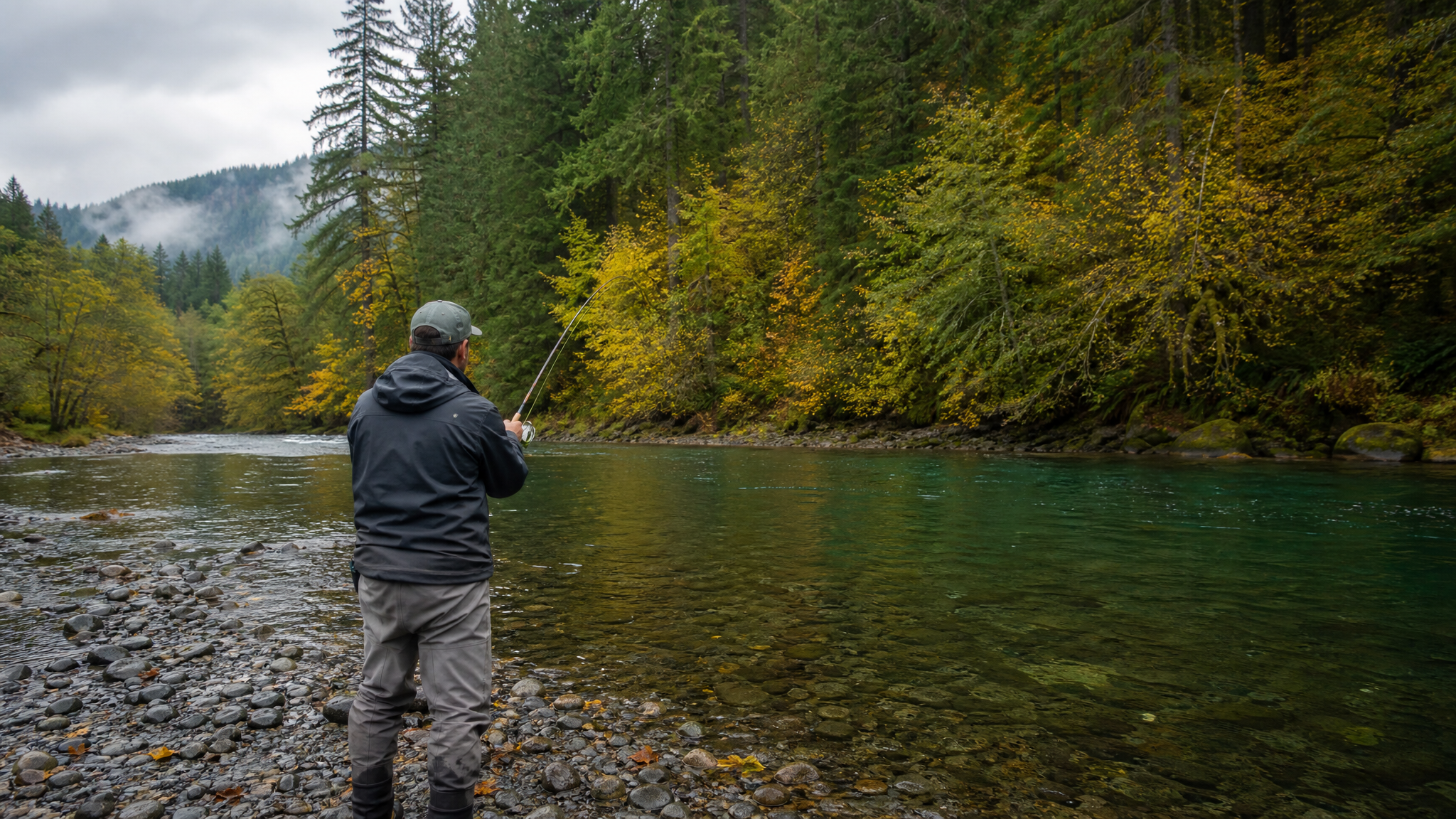
The North Santiam River doesn't get the press of the Deschutes or the Rogue, but for Willamette Valley anglers looking to put fall chinook in the freezer without fighting a crowd, it's one of the most productive bank fisheries in the state. From late August through October, hatchery king salmon push up from the main Willamette into the North Santiam's cool, green water, staging in deep holes and runs that are well within reach of a spinning rod, a lawn chair, and a well-tied egg loop.
Run Timing and ODFW Counts
Fall chinook begin entering the lower North Santiam as early as late August, with numbers building through September and peaking in the first two weeks of October. The North Santiam below Detroit Dam is managed for both hatchery and wild fish, with ODFW fish counts at Minto Trap (near Mehama) updated weekly during the season — check the ODFW recreational counts page before each trip to see whether fish are moving.
The window of peak opportunity is usually September 15 through October 15. After heavy rains blow the river out in mid-October, conditions can be difficult, but clearing water often brings a fresh push of fish. The season typically runs through December 31 on the lower river, though check current ODFW regulations for exact dates and retention rules before heading out.
Key Access Points
The North Santiam below Detroit Dam offers more than 40 miles of accessible bank fishing water. These are the spots that consistently produce:
- Fishermen's Bend Recreation Site (near Mill City): Run by Marion County Parks, this is the single best bank access point on the river. Deep holes just upstream of the campground hold fish from late August onward. Restrooms, parking, and campsites available — shows up on ODFW fish retention reports consistently.
- North Fork Park (Lyons): Just above the confluence of the North and South Santiam, this stretch has deep tailouts and gravel bars that fish well during early morning hours. Good wading access for those willing to work the river.
- Mehama Bridge Area: Pull-outs on both sides of the river near Mehama give access to a long riffle-to-hole transition that stacks fish during peak migration. The Oregon Department of Fish and Wildlife operates the Minto Trap nearby — you'll often see a biologist or two working the area, and they're generally happy to share what the counts are showing.
- Stayton Area: The lower river near Stayton sees heavy hatchery returns but also receives pressure from valley anglers. Fish it early in the morning on weekdays for the best experience. The North Santiam Sport Fishermen's Association has done extensive habitat restoration work in this stretch.
- Confluence with the Willamette (near Jefferson/Buena Vista): The last few miles before the Willamette hold staging fish well into November. Access via Buena Vista Ferry Road and adjacent gravel bars on the east bank.
Gear and Terminal Tackle
The North Santiam is a relatively compact river — not the wide braid of the Columbia — so your tackle selection should reflect close-quarters bank fishing in moderate current.
Rod and Reel
A 9- to 10.5-foot medium-heavy spinning or casting rod rated for 15–25 lb line is the standard setup. Pair it with a beefy spinning reel holding 200 yards of 20 lb monofilament, or spool up with 30 lb braid and a 20 lb fluorocarbon leader for low-visibility water. Many local anglers use level-wind baitcasting reels for back-bouncing and side-drifting, which offers better feel in heavy current.
Bait Rigs
- Cured eggs on an egg loop: The standard and still the best. Chartreuse-cured eggs in a small to medium cluster are the go-to when fish are actively moving. Natural-colored (pink/orange) cures work better in clear, low water. Tie a size 2 or 4 Gamakatsu Octopus hook on a 20-inch fluorocarbon leader and drift the bait through the head of a run.
- Sand shrimp: Ghost shrimp or grass shrimp fished under a pencil lead on a sliding sinker rig. Excellent for slower holes in off-color water.
- Kwikfish or Flatfish with sardine wrap: Plug fishermen working the North Santiam from bank or boat use K14 and K15 Kwikfish wrapped with thin strips of sardine fillet. The combination of plug action and scent is devastatingly effective in moderate current. Fish the plug from the bank by tying off to a snag and letting the plug work the current while you wait.
- Spin-N-Glo with egg cluster: A size 2 or 4 Spin-N-Glo in chartreuse, orange, or flame tied above a small egg cluster is an excellent hybrid presentation for side-drifting.
Reading the Water
Fall chinook on the North Santiam prefer deep, slow-moving water adjacent to moderate current. Look for the following:
- Deep holes immediately downstream of major riffles — fish use the riffle to orient and then drop into the hole to rest
- The seam between fast and slow current along inside bends
- Any submerged log or boulder that creates a hydraulic break — fish hold behind structure in cold water
- The deep trench along cut banks on outside bends, especially in the Mehama and Lyons sections
First and last light are most productive. North Santiam chinook become very boat- and angler-shy by midday, especially during low, clear conditions typical of late September in an average precipitation year.
Regulations Reminder
Always verify current ODFW regulations before fishing. The North Santiam has specific retention rules for wild (unclipped) fish — typically, only adipose fin-clipped hatchery chinook may be retained. Carry a current copy of the Oregon Sport Fishing Regulations and know how to identify a hatchery fish on the water. Licenses and Combined Angling Tags are required.
Local Knowledge
Stop in at Fishermen's Marine and Outdoor in Salem or the local shops near Stayton for current reports. The North Santiam holds fish when other rivers are blown out after early fall storms — it clears faster than most valley rivers due to its rocky substrate. If the Santiam mainstem is running brown, head upstream: the North Fork is often fishable within 24–36 hours of a rain event.
Fall chinook on the North Santiam are not a secret, but they're not a circus either. Weekday mornings in early October, with a fresh cluster of eggs and a bit of patience, this river will put salmon on your table reliably year after year.