Ask most Oregon steelheaders where they're headed in July and you'll hear the Deschutes, the Rogue, or the Sandy. Mention the North Santiam and you'll get a puzzled look—which is exactly why you should be fishing it. This mid-Willamette Valley tributary carries a legitimate run of wild summer steelhead, offers miles of accessible wade water, and sees a fraction of the pressure that hammers the name-brand rivers. If you're willing to do a little homework, the North Santiam can be one of the most rewarding summer steelhead fisheries in the western Cascades.
The Run: What to Expect in Summer
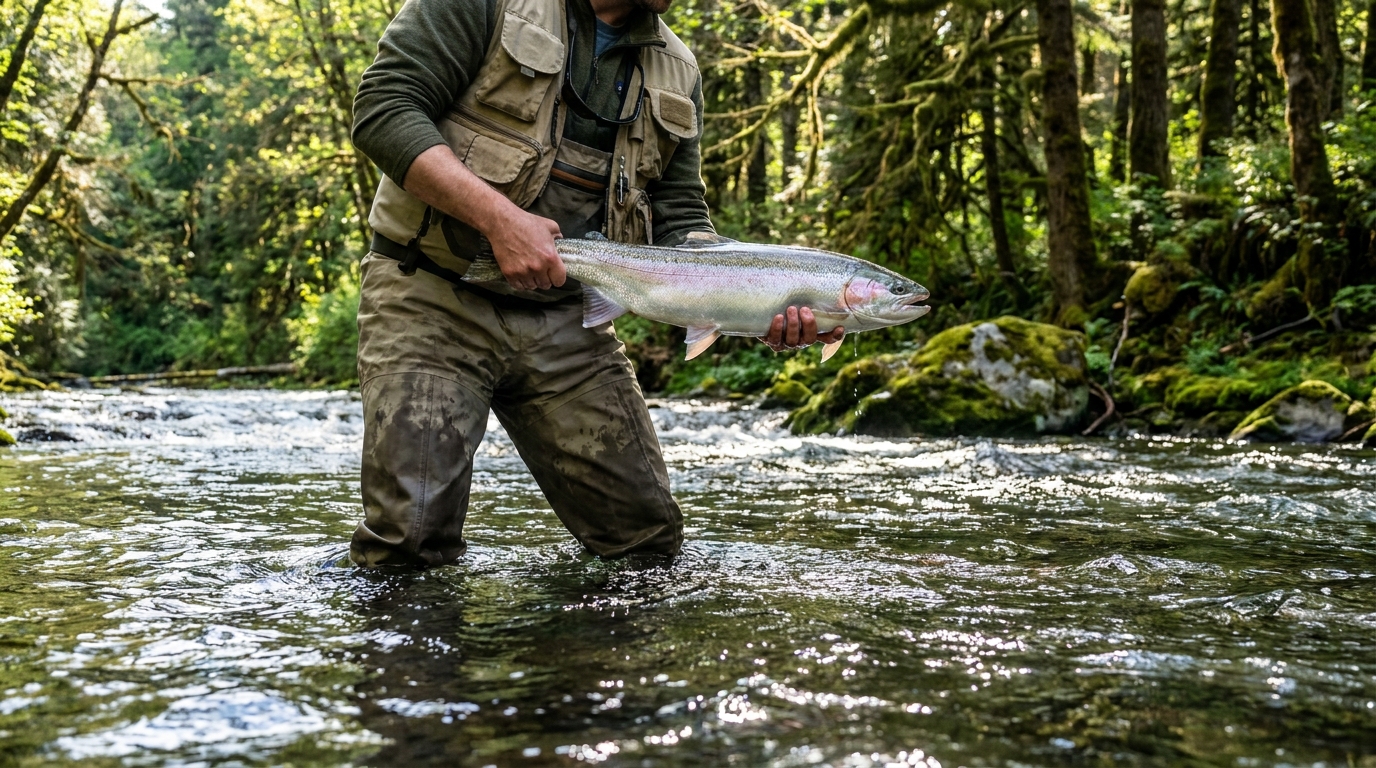
North Santiam summer steelhead are hatchery-supported but also carry a component of wild fish, which are catch-and-release only under ODFW regulations. Hatchery fish typically enter the system from June through August, with peak numbers showing in July when river temperatures stabilize below the critical 68°F threshold. Wild fish are identified by their intact adipose fin—handle them gently, keep them wet, and get them back in the current fast.
The run isn't massive by Pacific Northwest standards, but the fish are chrome-bright, acrobatic, and hard-fighting. A typical North Santiam summer steelhead runs 6–10 pounds, with occasional fish pushing 12–14 pounds from the larger, later-entering wild component.
Access Points and Key Stretches
The most productive wade water on the North Santiam lies between the town of Lyons and the Mehama area, roughly following Oregon Highway 22. Several key spots to note:
- Mehama Bridge: The downstream boundary of the best summer run water. A gravel bar on river-left allows good access to a long riffle that holds fish on their upstream push.
- Fishermen's Bend Recreation Site: Run by BLM, this campground provides excellent riverside access and sits above a long pool-and-run complex that concentrates fish during low summer flows.
- Packsaddle County Park: Public access to a deep outside-bend pool. Fish stack here when upstream water warms. Hit it early morning before temperatures climb.
- North Fork confluence: The confluence area where the North Fork joins the main stem holds fish year after year. Work both channels during early morning or overcast conditions.
Gear and Presentation
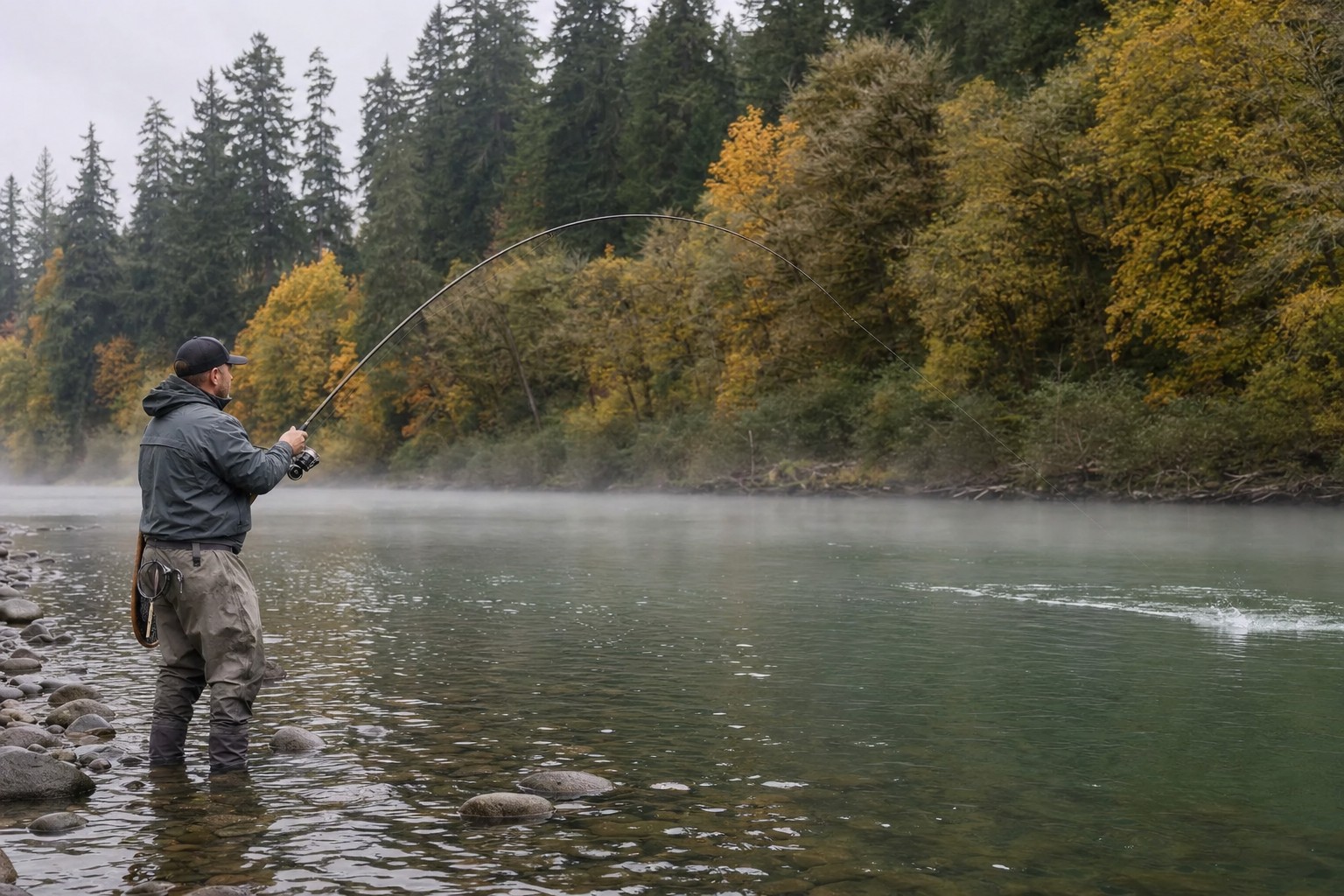
Summer steelhead in low, clear water demand a lighter touch than winter fishing. For wade fishing the North Santiam in July, consider this setup:
- Rod: 9–10 foot, 7-weight single-hand or 11–12 foot switch rod for two-handed swinging
- Line: Floating or intermediate scandi head with a short poly leader in clear conditions; full-sink tip when fish are holding deep in pools
- Leaders: 10–12 feet of fluorocarbon, tapering to 8–10 lb tippet
- Flies: Keep it simple—Intruder-style patterns in black/blue or purple/black on clear days; brighter pink or orange in off-color water
For conventional gear anglers, the North Santiam responds well to side-drifted jig-and-float rigs using pink or cerise marabou jigs in 1/4 oz. Work the seams where fast water meets slow. Spinners also produce—a #3 or #4 Blue Fox Vibrax in silver or gold is a reliable choice when the fish aren't interested in finesse presentations.
Reading Summer Low-Water Conditions
By mid-July the North Santiam typically drops to its lowest flows of the year. Summer steelhead shift their behavior dramatically in low, warm water. Fish early and late—the most productive window runs from first light until 9:00 AM and again from 6:00 PM until dark. Midday fish tuck under shade, in the deepest pools, and along undercut banks where temperature is marginally cooler.
Watch your thermometer. ODFW recommends anglers voluntarily stop fishing when water temperatures exceed 68°F. Beyond being an ethical guideline, it's also practical advice: stressed fish in warm water don't fight well, and post-release survival drops sharply above that threshold. The Mehama USGS gauge provides real-time temperature and flow data—check it before you leave the driveway.
Regulations You Need to Know
- Wild steelhead (unclipped, intact adipose) are catch-and-release only—no exceptions
- Hatchery steelhead (clipped adipose fin) may be retained: 2 fish per day, 20-inch minimum
- Check the ODFW Sport Fishing Regulations for current season dates—the North Santiam can have closure windows during critically low flow or high-temperature periods
- A valid Oregon fishing license and Combined Angling Tag are required
The Experience
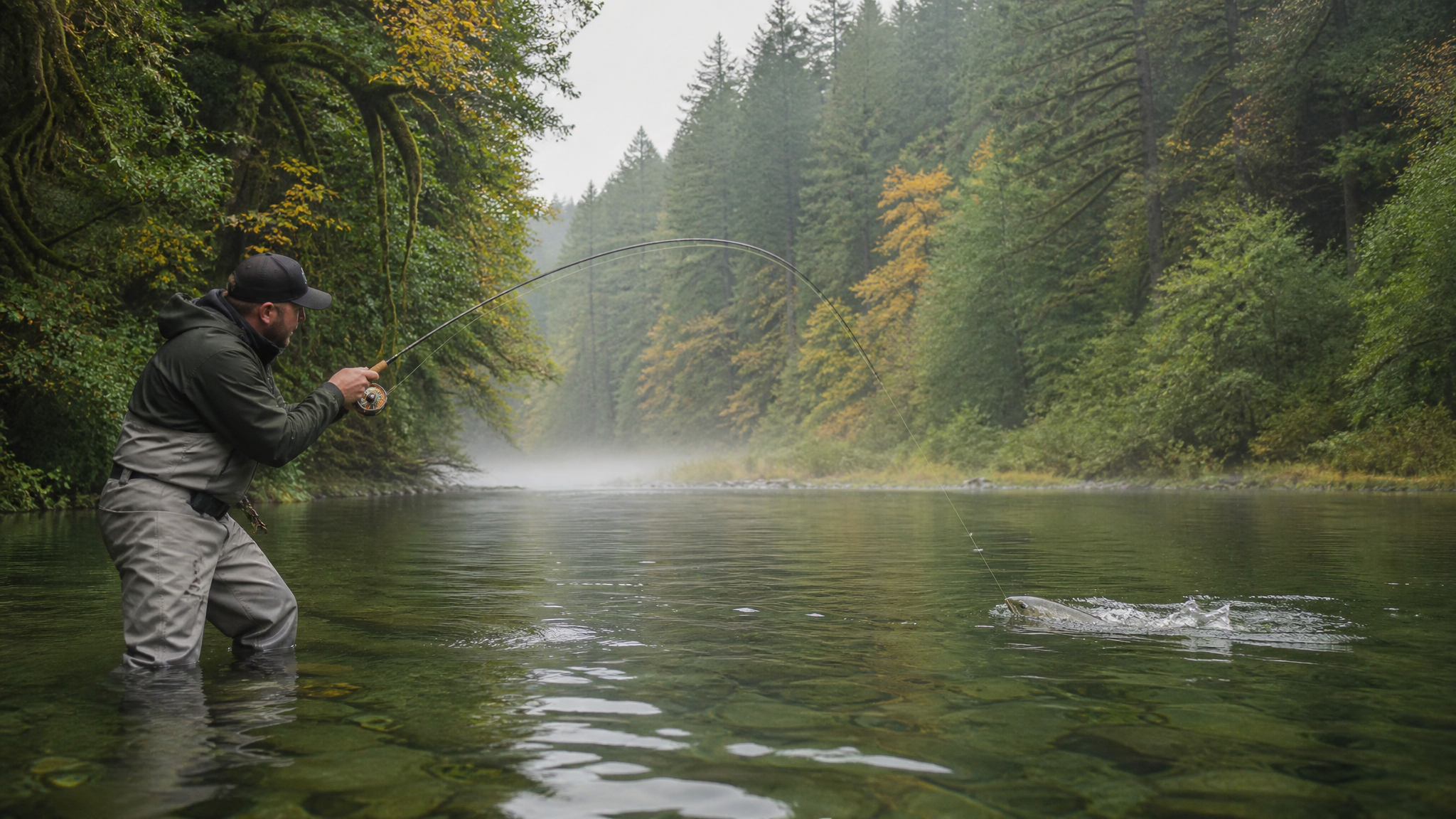
There's something different about fishing a river where you might wade all morning without seeing another angler. The North Santiam is that river. Osprey work the pools upstream of you. The Douglas fir canopy holds the morning cool longer than it should. When a summer steelhead takes your swung fly and goes airborne in the middle of a run you thought was empty, it feels like a secret you stumbled into.
The fish are there. Most people just haven't stopped to look.