No duck on the Pacific Flyway turns more heads than the northern pintail. The drake in full plumage—chocolate brown head, white breast stripe running up the neck, long elegant tail feathers that give the species its name—is the kind of bird that makes waterfowlers stop mid-conversation when it swings through the decoys. Pintail are also among the most wary ducks you will ever hunt, which is part of what makes them so worth chasing.
Oregon sits squarely in the Pacific Flyway, and the state’s mix of coastal estuaries, Willamette Valley wetlands, and the high desert marshes of the Klamath Basin and Malheur National Wildlife Refuge draws pintail numbers that few states can match during the peak migration. If your duck hunting has been limited to mallards and teal, expanding your pursuit to pintail will add a new dimension to every outing from September through January.
Understanding Oregon Pintail Regulations
The northern pintail has faced population pressure over the past two decades, and USFWS has responded with conservative limits that fluctuate year to year based on annual breeding surveys. In recent seasons, the pintail limit has been one bird per day on the Pacific Flyway, separate from the general duck limit. This is not a bird you can harvest in volume—it’s one that demands selective shooting and a clear eye for identification before the trigger breaks.
Oregon’s regular duck season typically opens in late October for most zones, with the early teal season offering a September opportunity. Pintail do move through Oregon during the September teal window, but the bulk of the migration builds in November and peaks in December when Arctic and northern Canadian birds pile into the state’s major wetland systems. Always confirm current regulations at the ODFW website before the season, as pintail limits can change between years.
Where to Find Pintail in Oregon
Pintail are open-country birds. Unlike mallards, which will jam into flooded timber and tight water, pintail prefer large, shallow marshes and flooded agricultural fields with clean sight lines in every direction. They are nervous by nature, and they want to see what is coming from a long way off.
- Willamette Valley: The network of state wildlife areas along the valley floor—Fern Ridge, Ankeny, Baskett Slough, and William L. Finley NWR—holds good pintail numbers from November through January, particularly when early storms push birds south from the Canadian prairies.
- Klamath Basin: Lower Klamath and Tule Lake NWRs on the Oregon-California border are legendary among Pacific Flyway waterfowlers. At peak migration, pintail concentrations here can be almost incomprehensible in scale. Hunting access is managed through a permit draw system, so plan well ahead.
- Malheur NWR and Harney County: The high desert wetlands of southeast Oregon hold large numbers of early-season pintail before the freeze pushes them south. October and early November can be exceptional before the basin locks up.
- Columbia River estuary and coastal bays: Tillamook Bay, Coos Bay, and the Columbia mouth all see pintail working the intertidal zones during high tides. These coastal birds are often freshly arrived migrants and can be less pressured than valley birds.
Decoy Spreads for Pintail
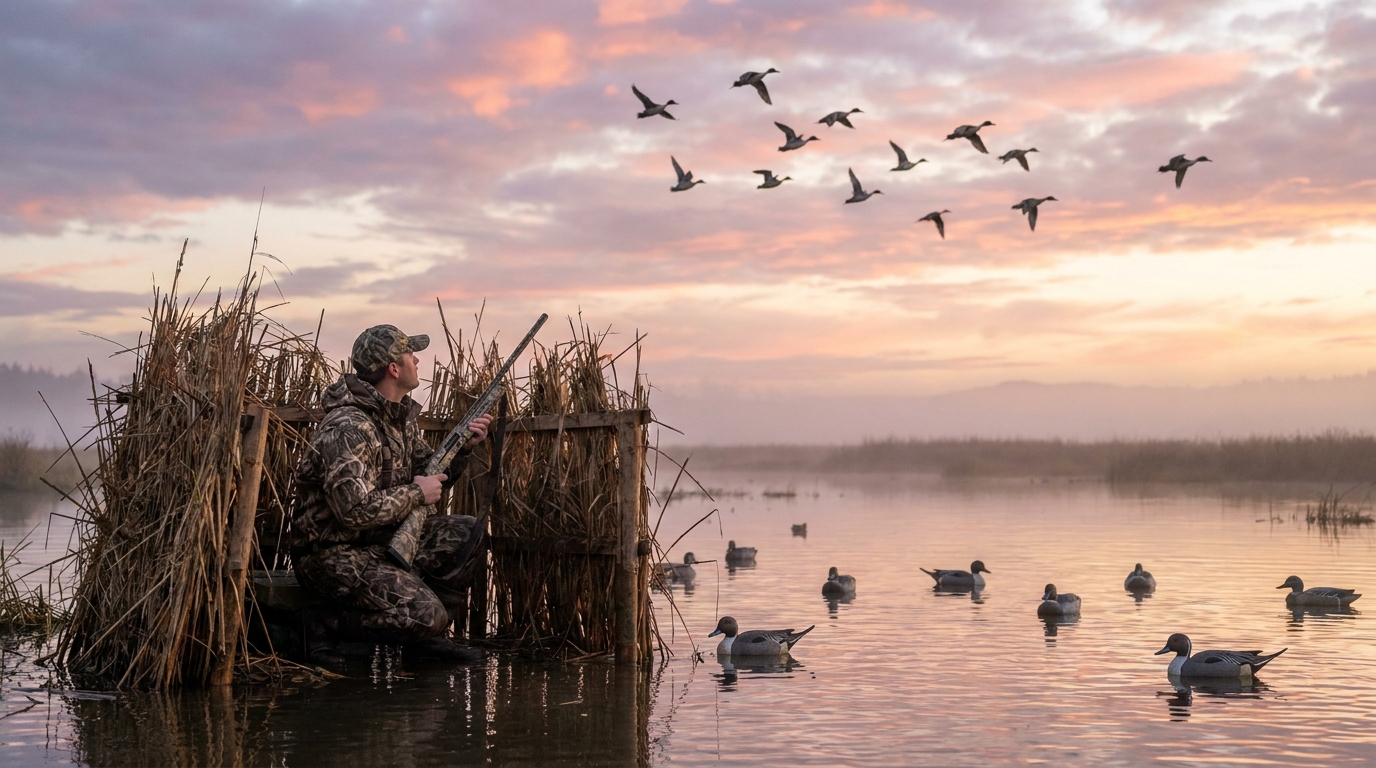
The single most important adjustment you can make for pintail is scaling up your spread. These ducks commit to open, confident-looking situations. A dozen mallard decoys in a tight pod is not what they are looking for. Put out a minimum of 30 to 40 decoys, and if you have the blocks, push toward 60 or more in a big marsh setting.
Use pintail-specific decoys in your spread—the long-tailed silhouette of a drake pintail decoy creates a visual trigger that will pull birds from a distance. Run your spread in a loose J or U configuration with the opening into the wind. Pintail like to land at the far edge of a spread and swim in, so leave a generous landing zone rather than clustering your blocks tightly.
Motion matters enormously. A jerk rig or spinning-wing decoy placed at the downwind edge of your spread creates the kind of surface disturbance that signals active, feeding birds to cautious pintail. In most Oregon zones, spinning-wing decoys are legal during the regular season—confirm local rules, as regulations can vary between units.
Calling Pintail
Pintail are not mallards, and calling them the same way will flare educated birds. The drake pintail produces a soft, two-note whistle—quiet and conversational. Hen pintail make a raspy, low quack distinct from a mallard hen. Light calling works best: a few soft whistles to announce your presence, then let the decoys do the work. High-volume calling and aggressive hail calls will kill your chances more often than not.
When birds are locked and finishing, go completely quiet. Pintail that stall on their final approach have often been burned before—let them commit without pressure.
Guns and Loads for Pintail
Pintail are large, athletic birds with heavier bone structure than teal and comparable to a big mallard. They do not fold easily with marginal hits. Use steel shot in No. 2 or No. 1 for close work and BBB if you are pushing 40-yard shots. Bismuth and Heavyweight TSS in smaller shot sizes work well for hunters seeking tighter patterns at medium range.
Keep your shots disciplined. With a one-bird limit, there is no margin for wounding losses. Pick a single bird, confirm your identification—that distinctive long neck and pointed tail are visible even at distance—and break a clean shot before the gun swings to the next bird.
Hunting pintail well in Oregon takes patience, scouting, and a willingness to set up correctly for the most demanding ducks on the flyway. When a flock of sprigs locks their wings and spirals into your spread on a cold November morning, there is nothing else quite like it in bird hunting.