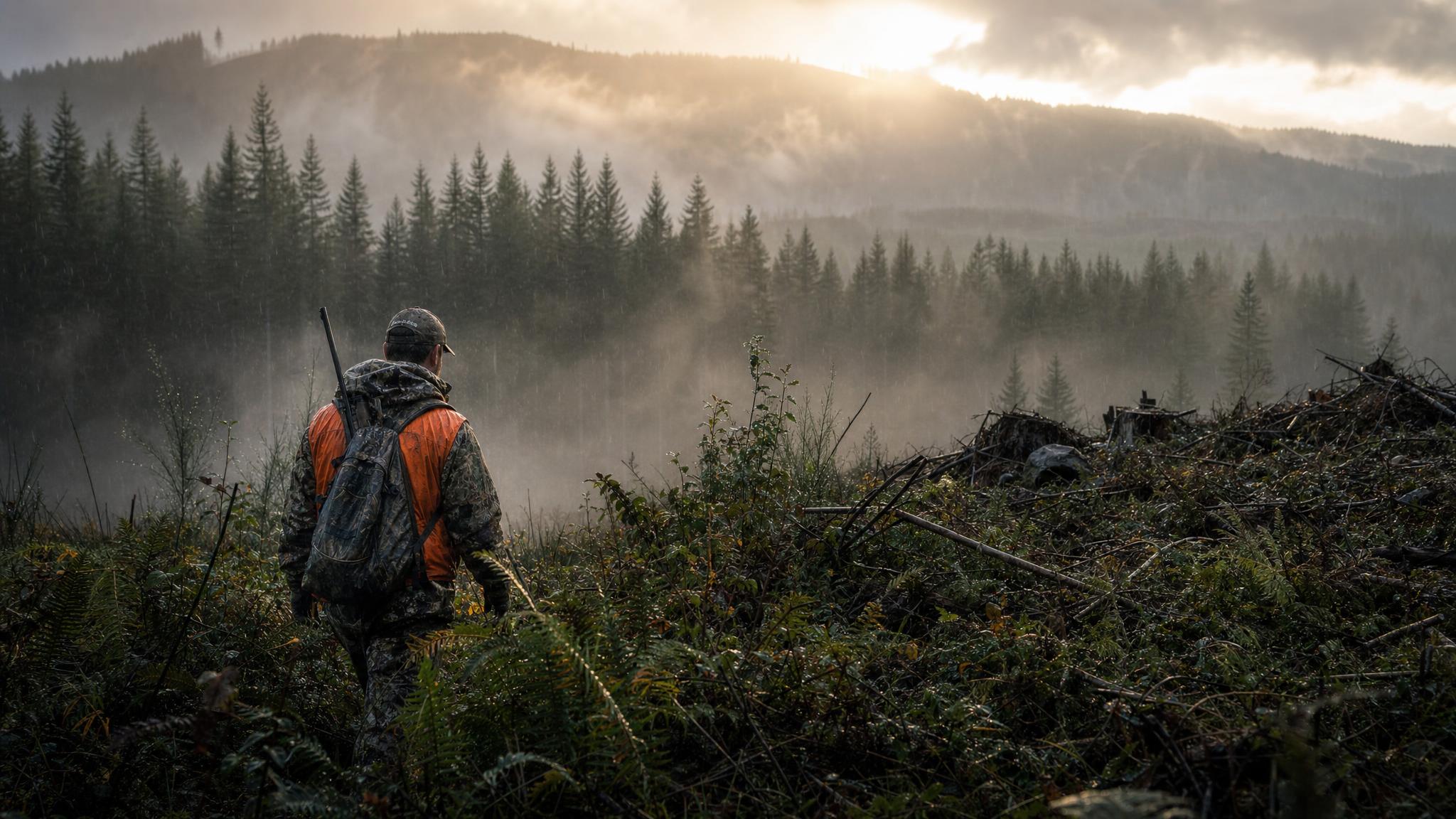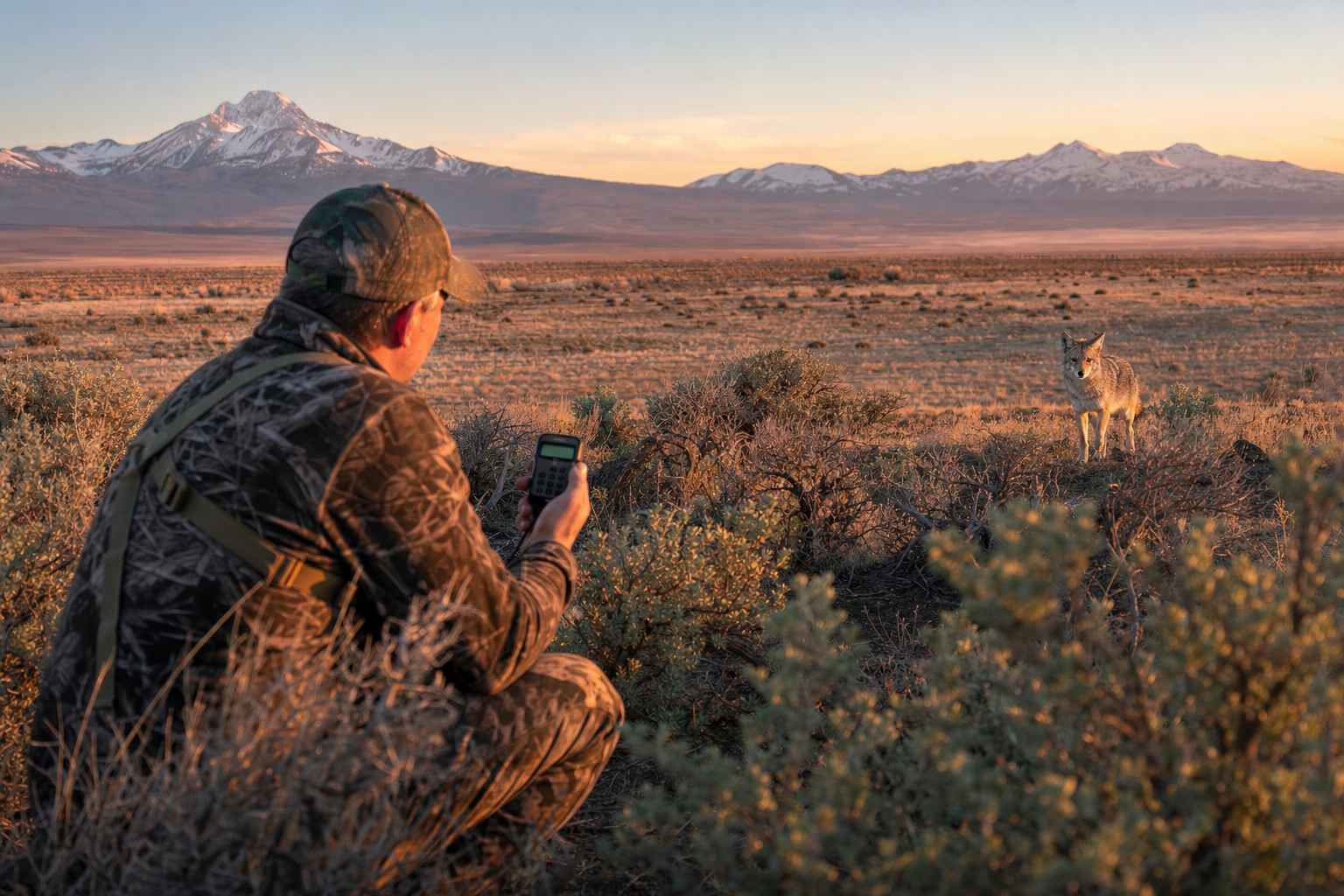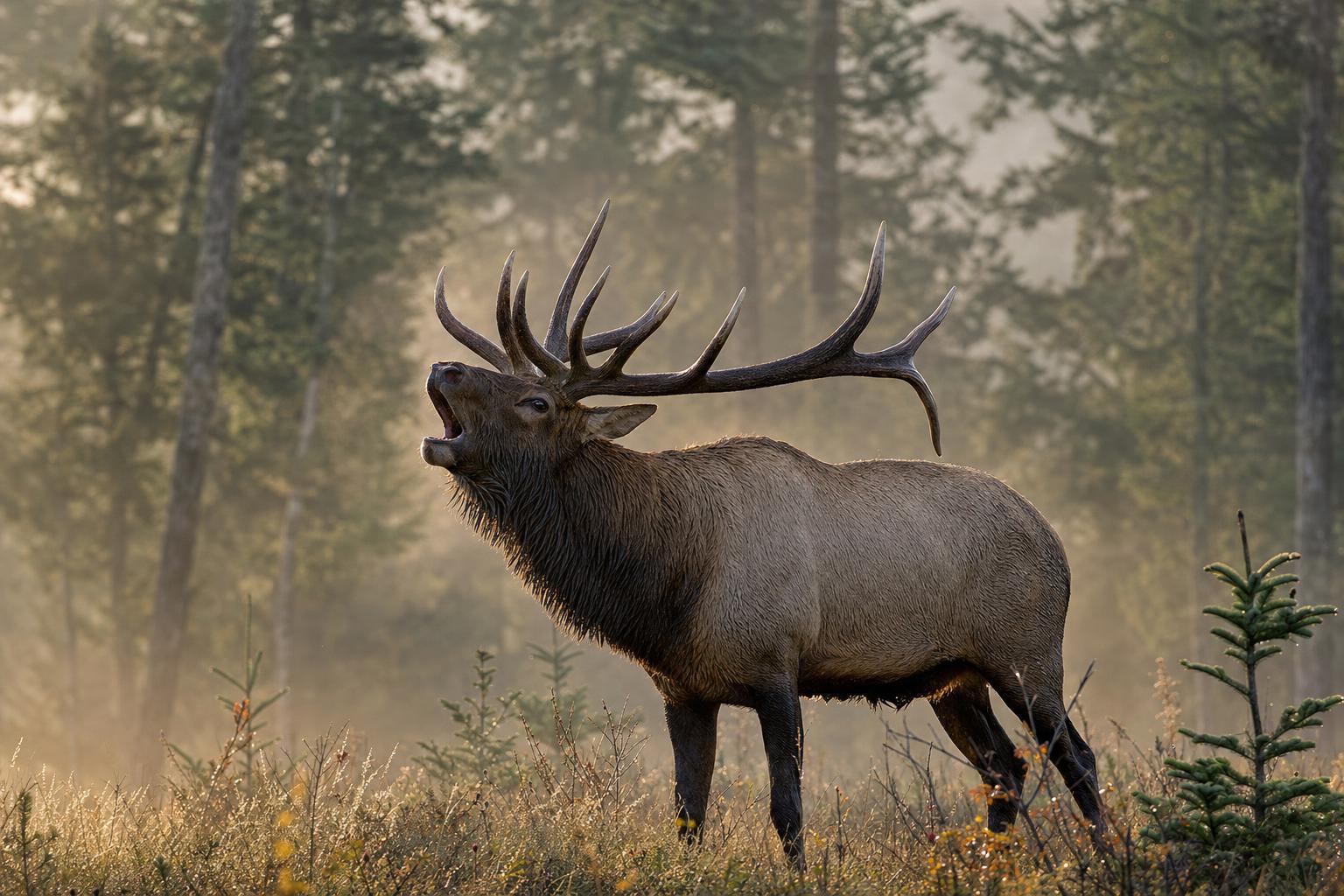
The name says it all. The Desolation Unit sprawls across a rugged section of north-central Oregon — rimrock canyons, sagebrush flats, juniper ridges, and BLM ground that stretches for miles without another truck in sight. This is not a unit that gets written up in hunting magazines. That's exactly why it deserves your attention.
For archery mule deer hunters willing to do the legwork — both the digital scouting at home and the boot-leather work in July heat — the Desolation Unit offers legitimate opportunity at mature bucks on public land. OTC archery tags apply, the draw odds for rifle seasons are moderately competitive, and the archery opener in late August aligns with velvet bucks still in summer patterning before the crowds of rifle season push them into their nocturnal, post-pressure behavior.
Unit Overview and Terrain
The Desolation Unit covers roughly 1.2 million acres in Wheeler and Grant counties, centered around the John Day River drainage south of Fossil and west of Spray. The John Day River cuts through the unit from east to west, and the surrounding terrain is classic high desert canyon country: rimrock benches at 3,000–4,000 feet, steep south-facing slopes covered in bunchgrass and sage, north-facing drainages holding scattered pockets of juniper and mountain mahogany, and isolated springs that concentrate deer during the dry summer months.
The unit holds a good resident mule deer population, with a mix of younger bucks on BLM ground and mature deer that learn to use the terrain to their advantage. The best country is north of the John Day River along the Fossil-Spray corridor, where broken rimrock and canyon systems provide both cover and water. Bucks in this unit are classic canyon deer — they live in the vertical, bed in the shade of rim overhangs during the day, and feed on the benches above and below.
July Scouting Strategy
The best investment you can make for your August archery hunt is a July scouting trip — or at minimum, a week of serious digital homework. Here's how to approach it:
Digital Scouting
- Load OnX Hunt and mark every spring, seep, and water source on BLM ground — in July, water is everything
- Identify north-facing slopes at the 3,000–4,500 foot elevation band — this is where bucks bed midday in the Desolation's heat
- Look for rimrock systems with benches below — classic transition habitat where bucks move from bedding to feeding
- Check for finger ridges that run between canyon drainages — these are natural travel corridors at first and last light
In-Person Scouting
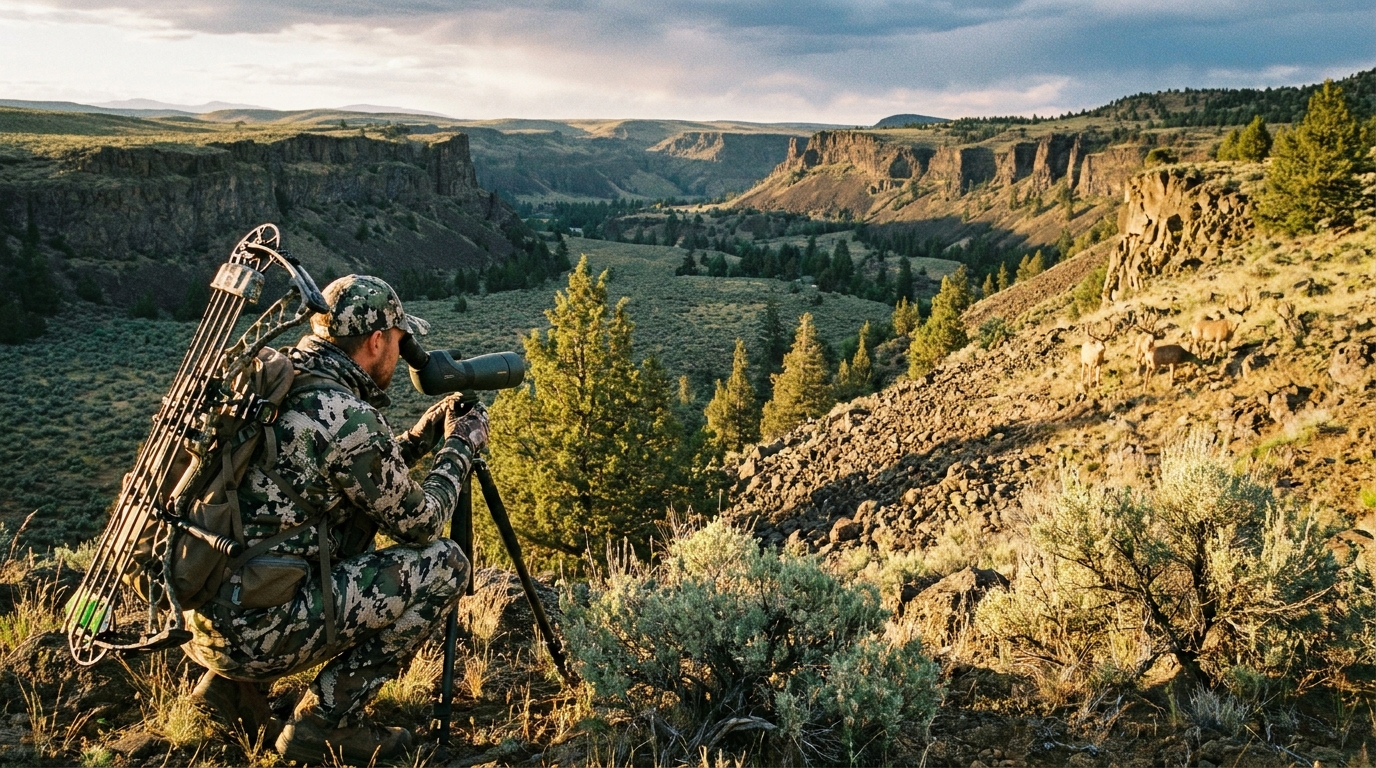
- Glass from high points in the early morning hours — bucks are feeding on benches and slopes before the heat pushes them to shade
- Be at your glassing point by 5:30 AM and stay until 9:00 AM; afternoon glassing resumes around 6:30 PM
- Use at least 10x binoculars and a quality spotting scope — you need to be able to read country from a distance without spooking deer
- Note water source usage — tracks, trails, and rubs near springs tell you which bucks are using which water
Summer bucks in the Desolation are often grouped in bachelor herds through July. Don't just look for a single deer — glass for groups of two to five bucks, identify the target animal, and then figure out his daily pattern.
Access and Public Land
Access in the Desolation Unit is a mix of BLM open ground and checkerboard private — use OnX to identify public parcels before you drive. The Service Creek area off Highway 19 provides one of the best entry points into the northern unit, with BLM ground accessible by foot from the highway. The John Day River Road (County Road 402) parallels the river and opens access to canyon country from multiple pullouts.
Note that summer road conditions on USFS and BLM two-track roads can vary significantly by year — what's passable in a high-clearance rig in June may be rutted out or washed in certain sections. Always confirm road status with the Prineville BLM Field Office before relying on a specific route.
Hunting the August Archery Opener
Oregon's archery deer season in the Desolation Unit typically opens in late August. At that time, mature bucks are still in velvet or just beginning to shed, and they're largely patternable — following the same bedding, feeding, and watering routes they've used all summer. The window before the velvet rub is your golden opportunity.
Effective Tactics
- Water hunting: Set up a ground blind or saddle tree near a confirmed water source at least 3–4 days before the opener, minimizing disturbance. Morning and evening sits near active springs are the most consistent producer in this unit.
- Spot and stalk: Glass from distance, mark a buck, then execute a methodical stalk using terrain for concealment. Wind is critical — thermals in canyon country move uphill in the morning and downhill as it cools; plan your approach accordingly.
- Saddle hunting: In canyon terrain with juniper and mahogany pockets, a lightweight treestand or saddle system in a tree overlooking a natural bottleneck between canyon and bench can intercept bucks on their evening move.
Heat, Water, and Summer Survival
Late July and August temperatures in the John Day country regularly hit 95–105°F by midday. Deer hunting in this environment demands the same respect you'd give any backcountry summer endeavor. Carry at minimum 4 liters of water per day; more if you're glassing and hiking aggressively. Meat care is paramount — bring a quality cooler, freeze your ice blocks before the trip, and have a game bag system that can move a dressed deer quickly in the heat. A processed mule deer in 100°F weather spoils fast. Be ready to work quickly and efficiently after a successful shot.
Why the Desolation Unit
It's not glamorous. It's hot, the roads are rough, and the country demands physical effort that a lot of hunters aren't willing to put in. But the Desolation Unit rewards those who do the homework. Mature bucks on public ground. No crowds. Country that looks the same as it did fifty years ago. That's getting harder and harder to find in Oregon — which means if you've got an OTC archery tag burning a hole in your vest, this might be exactly the unit you've been looking for.