Drive south from Bend on Highway 31 past La Pine and the landscape opens up into something ancient and austere: juniper flats, rim rock benches, and the volcanic remnants of Fort Rock itself rising from the sagebrush like a crumbling coliseum. This is Lake County mule deer country, and the Fort Rock Unit is one of Oregon's quietly productive over-the-counter archery tags.
Unit Overview
The Fort Rock Unit covers a broad swath of south-central Oregon centered on the Fort Rock Valley, running east past Christmas Valley and bumping up against the edge of the Christmas Lake Valley Unit. Elevations range from the 4,200-foot valley floor to the 5,500-foot rims of Winter Ridge and the Fremont-Winema National Forest's northern edge.
Public land access is excellent. BLM manages large blocks throughout the unit, with the Deschutes National Forest providing additional ground along the northern and western edges near Newberry Volcano. Private land is present in the valley floors, but the benches and rimrock where deer actually spend summer and early fall are predominantly public.
Why Fort Rock Gets Overlooked
This unit doesn't show up on the lists of Oregon's best mule deer draws because it doesn't need to — the archery tag is over-the-counter. That means any licensed Oregon hunter can buy a deer tag and hunt here without a draw. Most hunters with serious OTC mule deer ambitions head to the more famous Steens Mountain or Beatys Butte country. Fort Rock's less dramatic terrain attracts less attention, and the deer know it.
Pressure is light, especially during the first week of the August archery season. You can glass entire basins for days without seeing another hunter. In an era when every elk unit in the state seems crowded, that's worth something.
Deer and Habitat
Fort Rock bucks are classic Great Basin mule deer — wide frames, heavy bases, and the stout body weight that comes from a diet of bitterbrush, mountain mahogany, and forbs. A mature 4x4 in this unit will tape 150–165 inches, with genuine 170-class deer turning up every season.
In early August, bucks are still in velvet and congregating in bachelor groups on north-facing slopes and shaded rimrock below the ridgelines. They feed heavily in the morning and evening, retreating to bedded positions in juniper shade by mid-morning. The pattern is reliable and repeatable, which makes systematic glassing extremely effective.
Key Habitat Features to Target
- North-facing sage flats at 4,800–5,200 feet: Look for bucks feeding on bitterbrush just below the rim in the morning hours. Spotting scopes are essential here.
- Rimrock bench edges: Deer bed in juniper just below the rim and travel along benches. Catch them moving to water in the evening.
- Water sources: Fort Rock country is dry. Stock ponds and spring-fed creeks concentrate deer movement, especially in late August heat. Locate water on satellite maps before your trip — the deer won't be far.
- Mountain mahogany thickets: Big bucks use dense mahogany for bedding cover. Moving through these quietly in the afternoon can produce close-range encounters.
Scouting Strategy
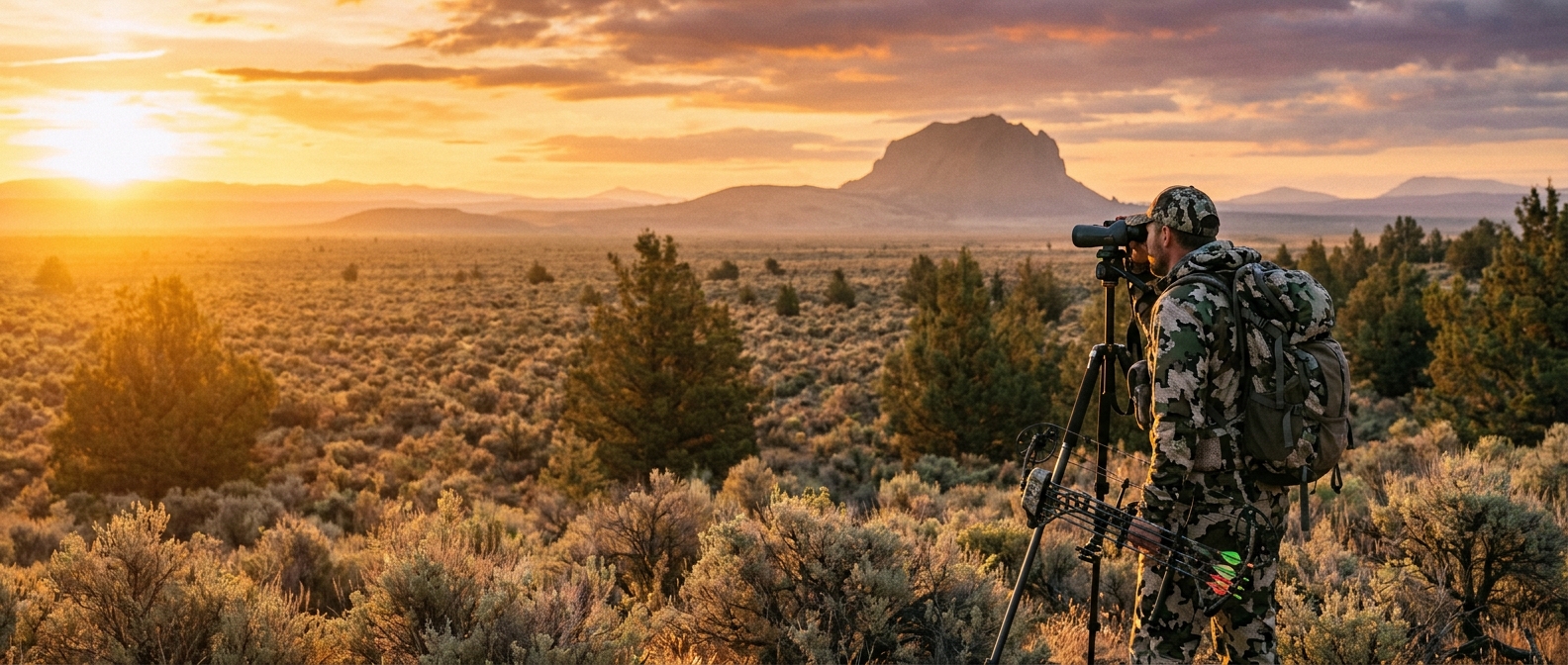
The Fort Rock Unit rewards pre-season glassing. Make the drive in early July and spend two or three evenings glassing from rims above the valley floor. You're looking for velvet bucks in bachelor groups — they're easy to find in July and will hold consistent home ranges through the August opener.
Use onX Hunt to identify BLM parcels, locate two-track access roads, and mark water sources. The forest roads off Highway 31 and Christmas Valley Road provide good glassing elevation if you know where to look. Fort Rock State Natural Area itself is off-limits to hunting but serves as a landmark for orienting to the surrounding public land.
Archery Tactics
The Fort Rock Unit is spot-and-stalk country. Calling works during the September rut, but the August archery season requires a different approach: patient observation, careful wind management, and committed stalks.
- Glass first, move second: Spend 70% of your time behind glass. Moving through country blind in the high desert burns time and bumps deer you never knew were there.
- Stalk into the wind: Thermals in the open desert rise in the morning and fall in the evening. Plan your approach accordingly. A midday stalk on a bedded buck should come from above and into the thermal-driven downhill breeze.
- Close to 40 yards or walk away: Open terrain means deer can watch you from 200 yards and be gone before you close the distance. If you can't get a clear approach path to within ethical archery range, back out and wait for the deer to move.
- Water hole setups: Hanging a ground blind near an isolated water source 10 days before the season opens is legal on BLM land in this unit and can be extremely productive when temperatures spike above 95°F in August.
Camp and Access
Christmas Valley, roughly 15 miles east of Fort Rock, has fuel and a small general store. Plan to be self-sufficient. BLM dispersed camping is permitted throughout the unit — pull off on a two-track, set up camp, and you're legal. No developed campgrounds are needed.
Cell service is limited to nonexistent once you leave the highway. Download onX maps offline before leaving home and carry a paper USGS topo as backup. A satellite communicator is worth the investment in country this remote.
Season Dates and Regulations
The Fort Rock Unit archery deer season opens with Oregon's general archery season in August and runs through the end of the month. Confirm current dates and any unit-specific restrictions with ODFW Region 4 (Lakeview office). The tag is purchased as part of Oregon's general deer tag — no special draw required.
The Fort Rock Unit won't win any social media contests. It's not the Steens. But it offers something increasingly rare in Oregon: public land mule deer hunting with almost no competition, genuine trophy potential, and the kind of high desert solitude that reminds you why you started hunting in the first place.