The Izee Unit sits in the John Day country of central Oregon — a sprawling mix of private ranchland, BLM ground, and Malheur National Forest timber that most elk hunters overlook in favor of flashier units to the north and east. That's a mistake. The Izee holds a healthy population of Rocky Mountain elk, sees relatively light archery pressure compared to units like the Chesnimnus or Silvies, and offers genuine DIY public land opportunity for hunters willing to do their homework.
Unit Overview
The Izee Unit covers roughly 1.6 million acres of terrain in Grant and Harney Counties, bounded roughly by the John Day River drainage to the north and the Malheur River system to the south. Elevations range from around 2,500 feet in the valley bottoms to over 7,000 feet in the Aldrich Mountains on the western edge. The unit is named for the small community of Izee — a dot on the map on Highway 395 that marks the rough geographic center of some excellent elk country.
The majority of accessible public land falls within the Malheur National Forest's Prairie City and John Day Ranger Districts, with significant BLM ground on the eastern and southern flanks. The forest provides thermal cover, water, and hiding areas that elk use throughout the archery season. The BLM country opens up into rimrock breaks and high desert benches where bulls can sometimes be glassed at long range — and then stalked across open terrain.
Elk Distribution and Seasonal Patterns
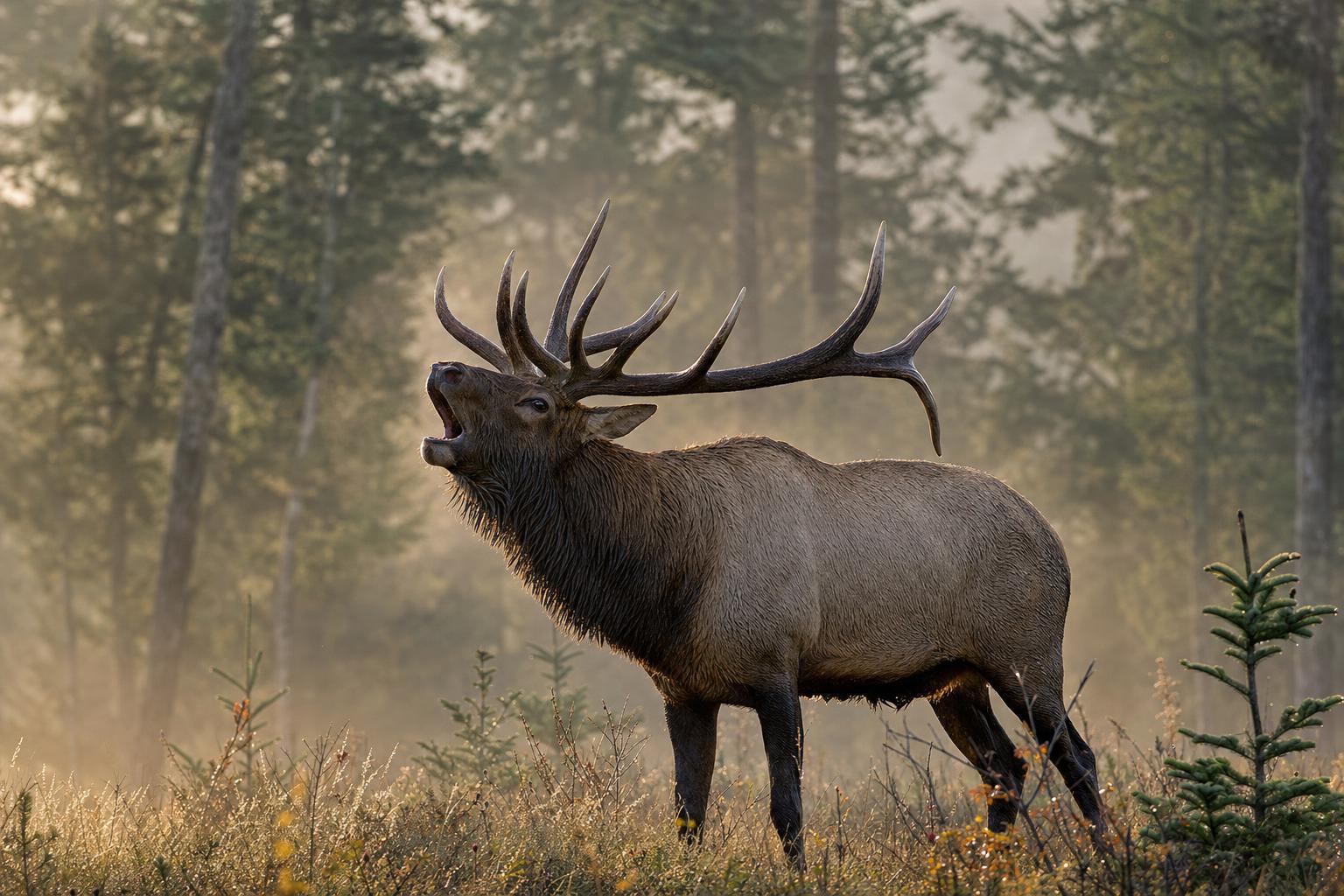
Oregon's archery elk season typically opens in late August, and in the Izee Unit that timing aligns with bulls still in hard or early velvet transition, sometimes moving in bachelor groups before the rut fully ignites. By the second week of September, bulls in the Aldrich Mountains and the upper John Day drainages will be bugling with increasing regularity. The rut peaks in the Izee around the third week of September, which falls near the end of the archery season — giving dedicated hunters a legitimate window to call bulls in close.
In early season (late August), locate elk at water. The unit is drier than the Cascades, and water sources concentrate elk predictably. Springs and small stock tanks on the Malheur National Forest draw elk at first and last light. Identify these sources on Gaia or OnX during your pre-season digital scouting — look for springs shown on USGS topo layers, then verify them on satellite imagery by the presence of green vegetation and game trails converging from multiple directions.
By mid-September, elk behavior shifts from routine to rut-driven. Bulls that were predictable and patternable in August become unpredictable and vocal. This is when aggressive calling — cow calls, estrus calls, and challenging bugles — starts producing results. The Aldrich Mountain drainages on the west side of the unit funnel elk movement and concentrate bugling activity as bulls work their range boundaries.
Access and Logistics
Prairie City is the practical base for the Izee Unit. It's a small town off Highway 26 with basic services — fuel, groceries, a few motels — and it's roughly centered between the Aldrich Mountains and the eastern John Day country. The Malheur National Forest Prairie City Ranger District office can provide current road condition information and fire closure updates, which are important in dry August years.
Forest roads FR-13, FR-16, and the Monument Drive corridor provide the primary vehicle access into the national forest. A high-clearance 4WD is strongly recommended; some of the best hunting areas require navigating unmaintained two-track roads. In wet years, these roads become treacherous after late-summer thunderstorms — check conditions before committing.
For hunters willing to pack in, the upper drainages off the Aldrich Crest hold elk that see almost no hunting pressure. A 3 to 5 mile pack-in with a spike camp positioned near a reliable spring can put you in position for morning and evening hunts without burning miles on the road system. This is where the Izee rewards effort.
Calling Strategy
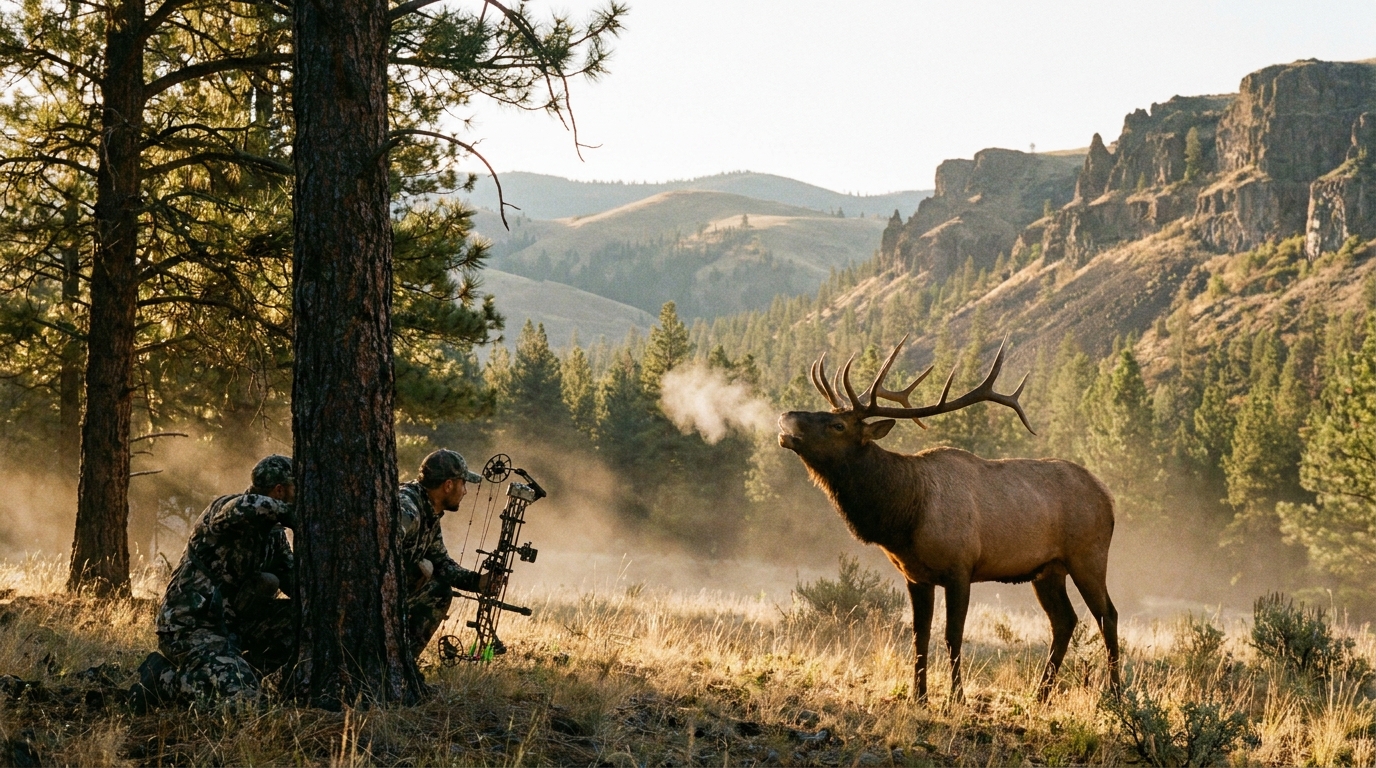
In the early rut phase, start conservatively. Cow calls and quiet location bugles work well for locating bulls without educating them. Once a bull responds, read his mood. An elk that's cutting distance aggressively wants a fight — escalate your calling, get aggressive, and have your shooter positioned 30 to 40 yards in front of the caller. A bull that hangs up at 80 yards and won't commit is either henned up or pressured. Back off, wait, and try a different approach the next morning.
The Izee's elk haven't seen the calling pressure that some of the more famous Oregon units accumulate over years of heavy hunting. Bulls here can still be called in on basic sequences that would get you ignored on an overpressured unit. That's a genuine advantage — use it, but don't abuse it. If you work an area hard for two or three days without success, move. The unit is big enough to find fresh country.
Tags and Draw Odds
The Izee Unit offers both general archery elk tags (available over-the-counter for Oregon residents) and limited-entry controlled hunt tags for specific areas within the unit boundaries. The general archery tag is your starting point — it covers the vast majority of public land in the unit and gives you full season access. Check the ODFW regulations for current controlled hunt boundaries and application deadlines if you're targeting a specific high-density area within the unit.
The Bottom Line
The Izee Unit won't make the "best elk units in Oregon" lists in the hunting magazines, and that's exactly why it's worth your attention. The elk are there, the public land access is real, and the hunting pressure — particularly with a bow — is modest enough that you can still find unpressured bulls responding to a bugle. Do your pre-season scouting, get your boots into the drainages before the opener, and plan to be in the Aldrich Mountains or the upper John Day country when the bulls start sounding off in September. This is what public land elk hunting is supposed to feel like.