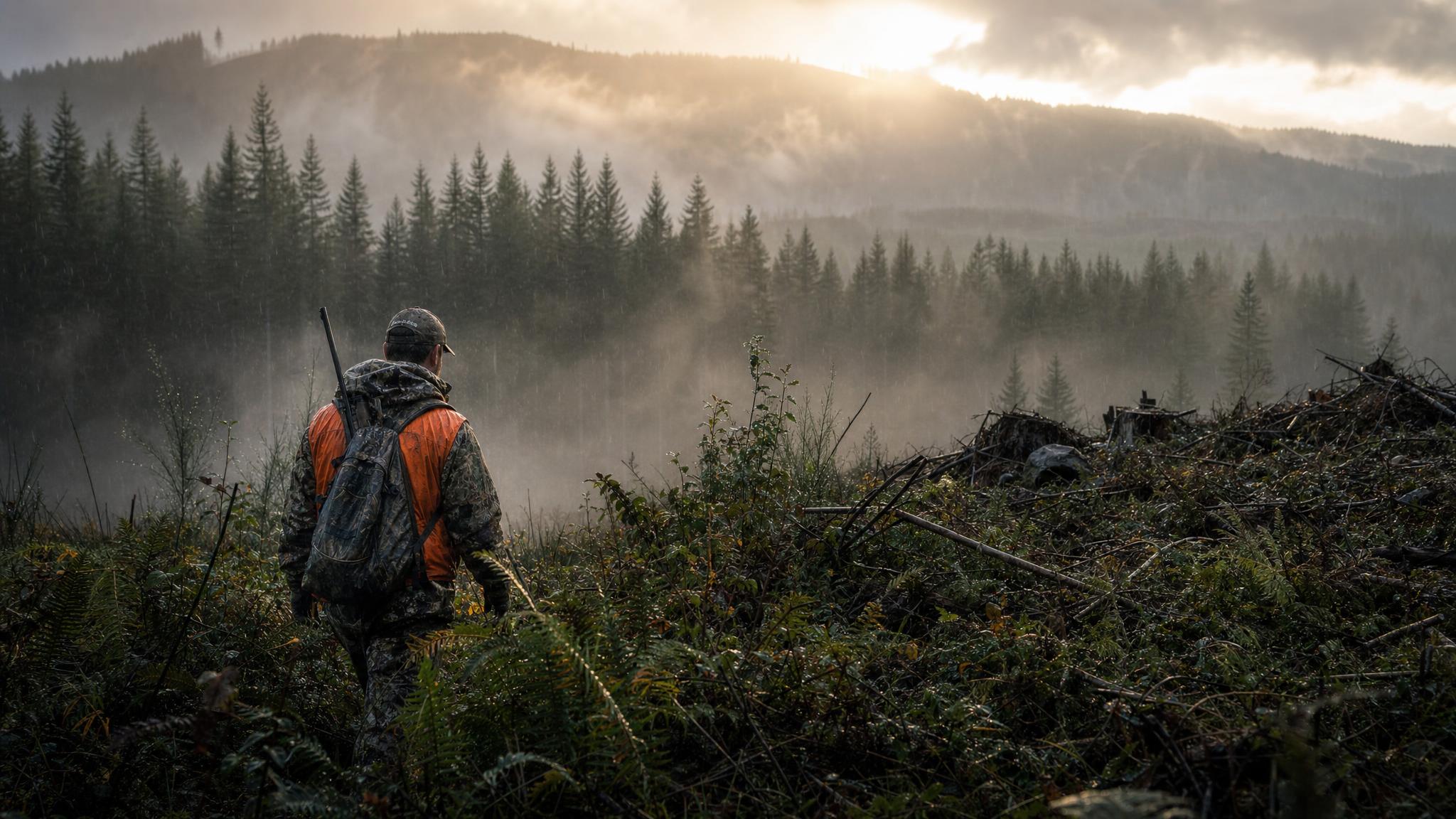
Baker County's Keating Unit doesn't come up in most Oregon archery mule deer conversations. Hunters gravitating toward the headline units — Steens, Hart Mountain, Jordan Valley — tend to overlook this corner of northeast Oregon. That's a mistake. The Keating Unit holds a solid population of mule deer with genuinely mature bucks, good public land access, and terrain that rewards the spot-and-stalk bowhunter who's willing to work for it.
The Unit at a Glance
The Keating Unit sits in Baker County, bounded roughly by the Powder River drainage to the north and the Burnt River country to the south. Elevations range from sagebrush flats near 2,500 feet in the lower valleys to ponderosa pine and mixed conifer ridges approaching 6,000 feet. This diversity creates excellent habitat — deer feed in the agricultural edges and low sage country at dawn and dusk and retreat to timbered north-facing slopes during the heat of the day.
Public land in the Keating Unit is a patchwork of BLM ground interspersed with private ranch parcels. This requires homework with the onX Hunt app or USFS/BLM surface management layer to identify accessible ground. The good news: there's more BLM than many hunters realize, and accessing it via the right forest roads opens up country that rarely sees another bowhunter in August.
August Archery Opener: Timing and Conditions
Oregon's general archery deer season opens in mid-August, and in the Keating Unit that means hunting in warm, dry conditions with bucks still carrying velvet. Velvet mule deer in August are on a predictable routine — they're focused almost entirely on feeding and maintaining summer ranges. Their behavior is less erratic than during the rut, and if you can find the right food sources and water, you can pattern a buck.
Look for does and fawns to lead you to high-quality habitat. Where you find concentrated doe activity, bucks are usually nearby. In the Keating Unit's lower elevations, look for bucks near alfalfa fields and irrigated pastures just before legal shooting hours. Higher up, look for deer browsing bitter brush and bitterroot on open south slopes in the evenings.
Glassing Strategy
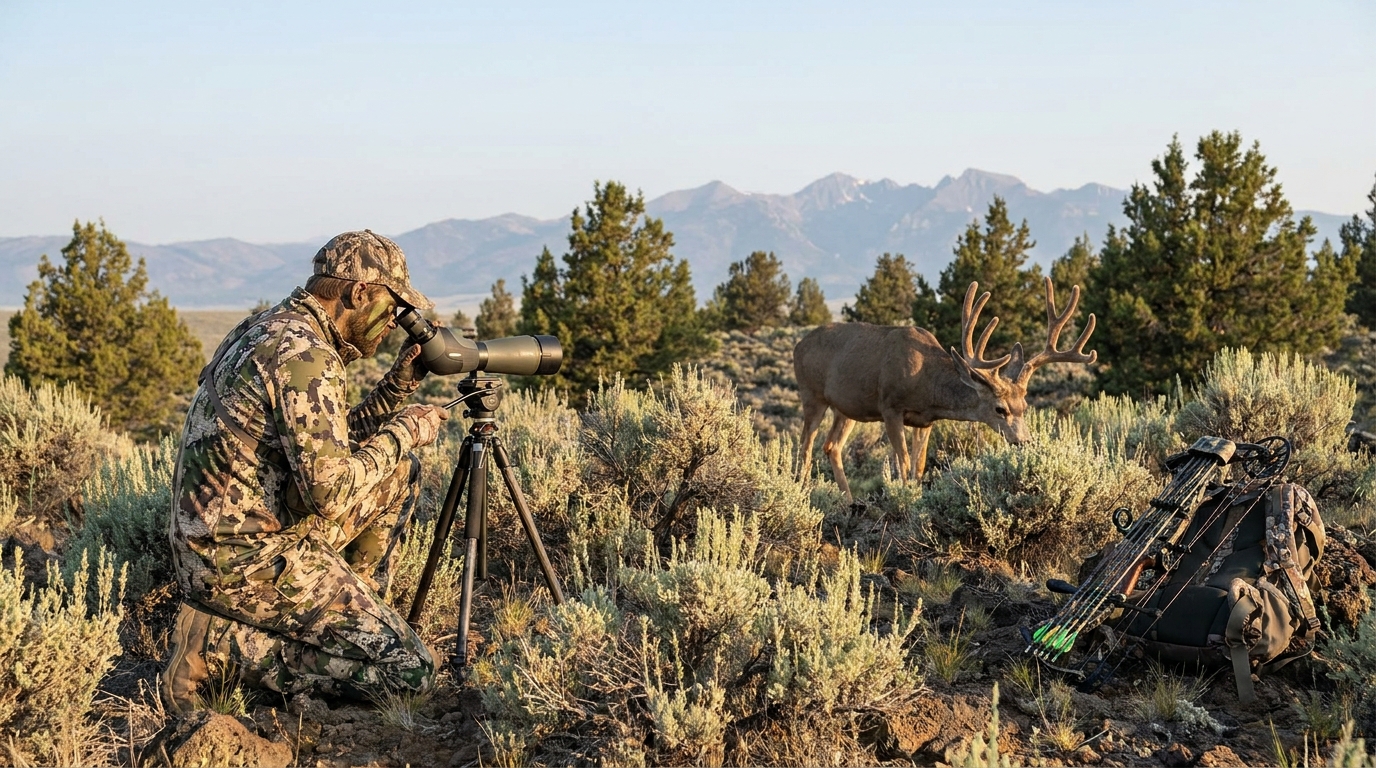
This is spot-and-stalk country. Bring quality glass — at minimum a 10x42 or 10x50 binocular and a 20–60x spotting scope on a quality tripod. Set up on vantage points that allow you to cover large amounts of terrain before committing to a stalk. The best glassing sessions happen from 30 minutes before sunrise to about 9:00 AM, and again from 4:00 PM until dark.
Glass systematically. Cover the open faces, then shift to the edges of brush draws, then spend time on the shade pockets under juniper and ponderosa. Big mature bucks in August tend to stay in the shadows during daylight hours. You're often looking for the glint of an antler or the horizontal line of a deer's back against vertical brush.
Stalk Execution in Mixed Terrain
Stalking mule deer is equal parts wind management and boot discipline. In the Keating Unit's varied terrain, thermals shift with temperature changes — uphill in the morning as the land heats, downhill in the evening as it cools. Plan your stalk approach to keep the thermal in your favor throughout.
- Always identify a last known position and use terrain features to close distance without skylining yourself
- Wear rubber-soled boots and move only when the deer's head is down and feeding
- Keep the sun at your back when possible — deer eyes struggle with backlit movement
- Set your rangefinder before the final approach — getting a range during the shot window costs you the stalk
- Close to under 40 yards before stopping; 50+ yard shots in open terrain on alert deer are a recipe for a miss or a poor hit
Water Sources as Ambush Points
August in Baker County is hot and dry. Natural water sources concentrate deer in predictable places. Locating stock tanks, springs, and seeps on BLM land and setting up a lightweight ground blind or using a natural hide nearby can be an extremely productive strategy during heat waves. Deer typically water in the afternoon and again just before dark. Bring a portable blind for midday setup and be in position by 2:00 PM on hot afternoons.
Camp and Access Logistics
The Keating Valley and surrounding roads provide dispersed camping opportunities on BLM ground. Four-wheel-drive capability isn't required to access most of the unit, but high-clearance helps on the rougher two-tracks. Fuel up in Baker City before heading out — the small communities in the valley have limited services.
Cell coverage is spotty throughout much of the unit. Download your maps offline in onX before leaving town and carry a paper backup. File a float plan with someone who knows where you're camping.
Realistic Expectations
The Keating Unit isn't a trophy factory, but it produces real bucks. A mature 3x3 or 4x4 with a 24–26 inch spread is a realistic archery target, and every few years a true 30-inch-plus buck shows up on someone's wall. The unit doesn't get the pressure of the more famous high-desert units, which means the deer are less educated and more huntable. For a bowhunter who wants genuine solitude and legit mule deer country without a multi-year points draw, the Keating Unit deserves a look.