Ask most Oregon bowhunters where to find whitetail deer on public land in the northeastern part of the state, and you'll hear about the Chesnimnus Unit in the Wallowas, maybe the Wenaha-Tucannon corridor. Few will mention the Mt. Emily Unit — a compact stretch of Blue Mountains terrain west of La Grande that holds a genuinely strong whitetail population and sees a fraction of the pressure that the more famous units absorb each August opener.
Understanding the Mt. Emily Unit
The Mt. Emily Unit sits immediately west and northwest of La Grande in Union County, bordered roughly by the Grande Ronde River to the north and the Umatilla National Forest to the west. The unit includes both private agricultural land in the valley bottoms and extensive blocks of public forest on the benches and ridges above. It's the interface between these two landscapes — where ponderosa parkland meets wheat fields and hay meadows — that makes this unit exceptional whitetail habitat.
Whitetail deer in this country are not the same animal you'll find in the Midwest. They're educated, timber-oriented, and keyed to the landscape in ways that demand a different hunting approach than the classic food-plot-and-treestand game. But the fundamentals of whitetail behavior — scrapes, rubs, travel corridors, water sources — all apply, and the public land access here is better than most hunters realize.
Scouting Strategy: July Glass and Digital First
July is the time to do your homework before August's archery opener. Start with OnX Hunt or Gaia GPS to identify public land parcels adjacent to private ag ground. Pay particular attention to any creek drainages — Catherine Creek, the upper Morgan Lake area, and the timbered benches above the Ladd Marsh Wildlife Area all deserve close attention.
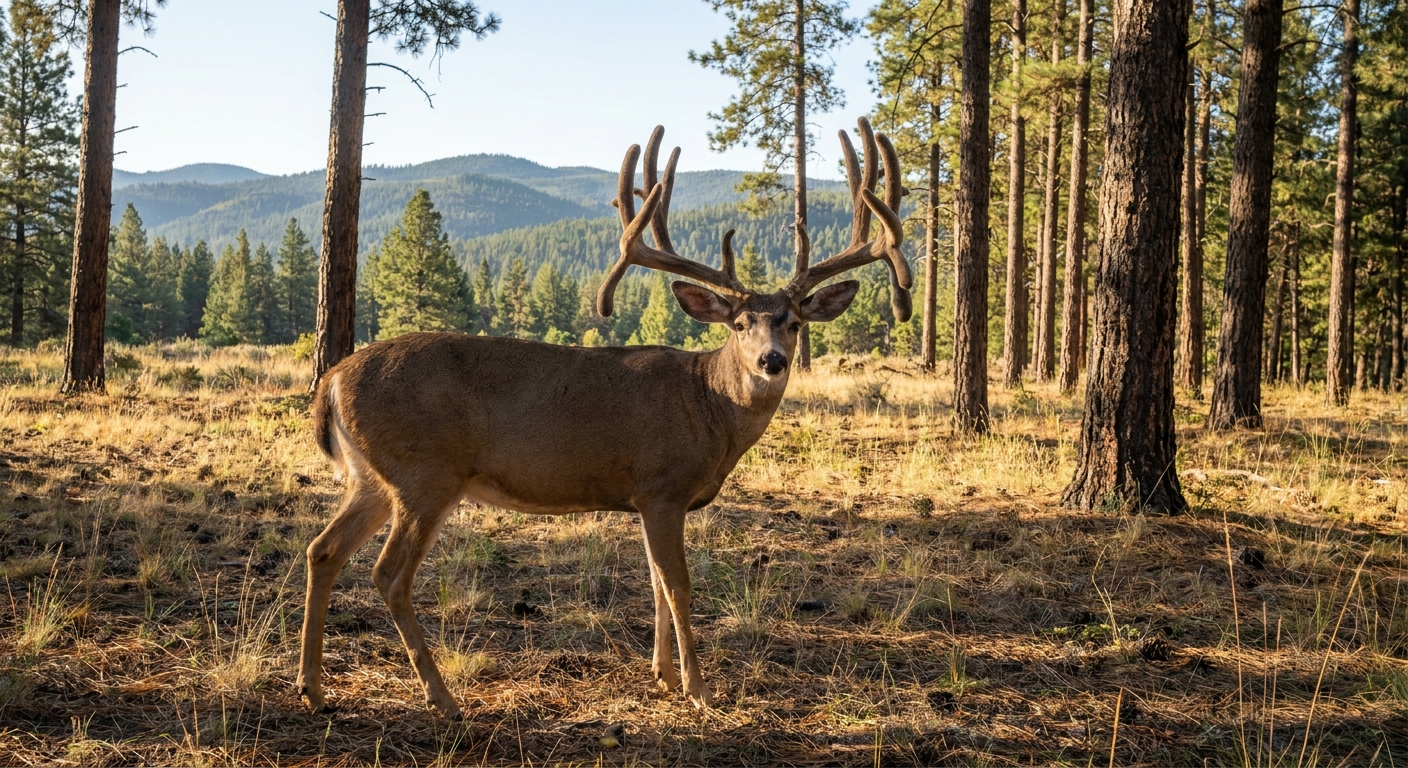
Glass from roads in the mornings and evenings to identify deer transitioning between timber bedding and open feeding areas. Velvet bucks will be visible if you're patient with the glass. Note their travel routes — you're looking for the edge transitions, not the open fields themselves, since that's where you'll hang your stand or saddle.
Once you've spotted deer from a distance, use aerial imagery to identify terrain pinches, saddles, and creek crossings where deer movement funnels. These locations hold value all season and are worth the extra effort to find pre-season rather than bumping deer during the opener.
Stand Placement and Access
Whitetail in the Mt. Emily Unit bed in the timber and feed in openings — but unlike western mule deer, they tend to use the same travel routes day after day unless pressured. This predictability is your biggest advantage. A well-placed hang-on stand or saddle setup in a proven travel corridor, accessed carefully from downwind, can produce repeated encounters.
Look for rubs on ponderosa pine trunks along benches above the 3,500-foot elevation line. Fresh rubs in late July indicate buck home ranges and give you a starting point. Confirm with a cellular trail camera if you're willing to make the setup trip before the season.
Entry and exit routes matter enormously. Plan to approach stands from below, using creek drainages to break your silhouette and carry your scent away from bedding areas. Hunt mornings from stands that cover movement toward timber, afternoons from setups overlooking feeding edges.
Calling and Rattling in August
August whitetail bucks are in velvet and not yet in the pre-rut mindset, but they're social and will respond to soft grunt calls and even light antler tickling if you're patient. Don't overdo it — a single soft contact grunt every 20-30 minutes is enough to pull a curious buck off his travel route without spooking him.
Doe bleats can also work early in the season when does are still grouping up in bachelor herds with the bucks. A decoy — a small doe silhouette — paired with a grunt call has closed the deal on more than one August whitetail in this type of country.
Practical Gear for the Mt. Emily Archery Season
- Tag: Oregon Archery Deer tag (general) — valid in the Mt. Emily Unit; verify Zone designation with ODFW
- Weapon: Compound bow, traditional bow, or crossbow (check current crossbow authorization seasons)
- Stand access: Hang-on stands and saddle systems work best; climbing stands are limited by ponderosa diameter
- Scent control: Critical — whitetail noses are unforgiving in still-air timber conditions
- Water: Carry a filter — springs and creek crossings are present but treat all backcountry water
- Maps: MVUM (Motor Vehicle Use Map) for Umatilla National Forest, OnX for ownership overlays
The Advantage of Going Underrated
The Mt. Emily Unit won't be in the hunting magazines, and most tags go unfilled by hunters who spend more time staring at their phones than glassing hillsides. But for the archer willing to do pre-season work — glass, scout, hang cameras, and access carefully — this unit offers genuine opportunities at mature public-land whitetail bucks in some of the most beautiful ponderosa parkland in the Pacific Northwest. That combination is rarer than you think.