Ask most Oregon bowhunters where to chase blacktail deer and you'll hear the same handful of answers — the Siuslaw, the BLM country south of Roseburg, the fog-choked ridges above the Umpqua. The Tillamook Unit rarely makes that list. That's a mistake, and one that hunters willing to do the legwork are quietly benefiting from.
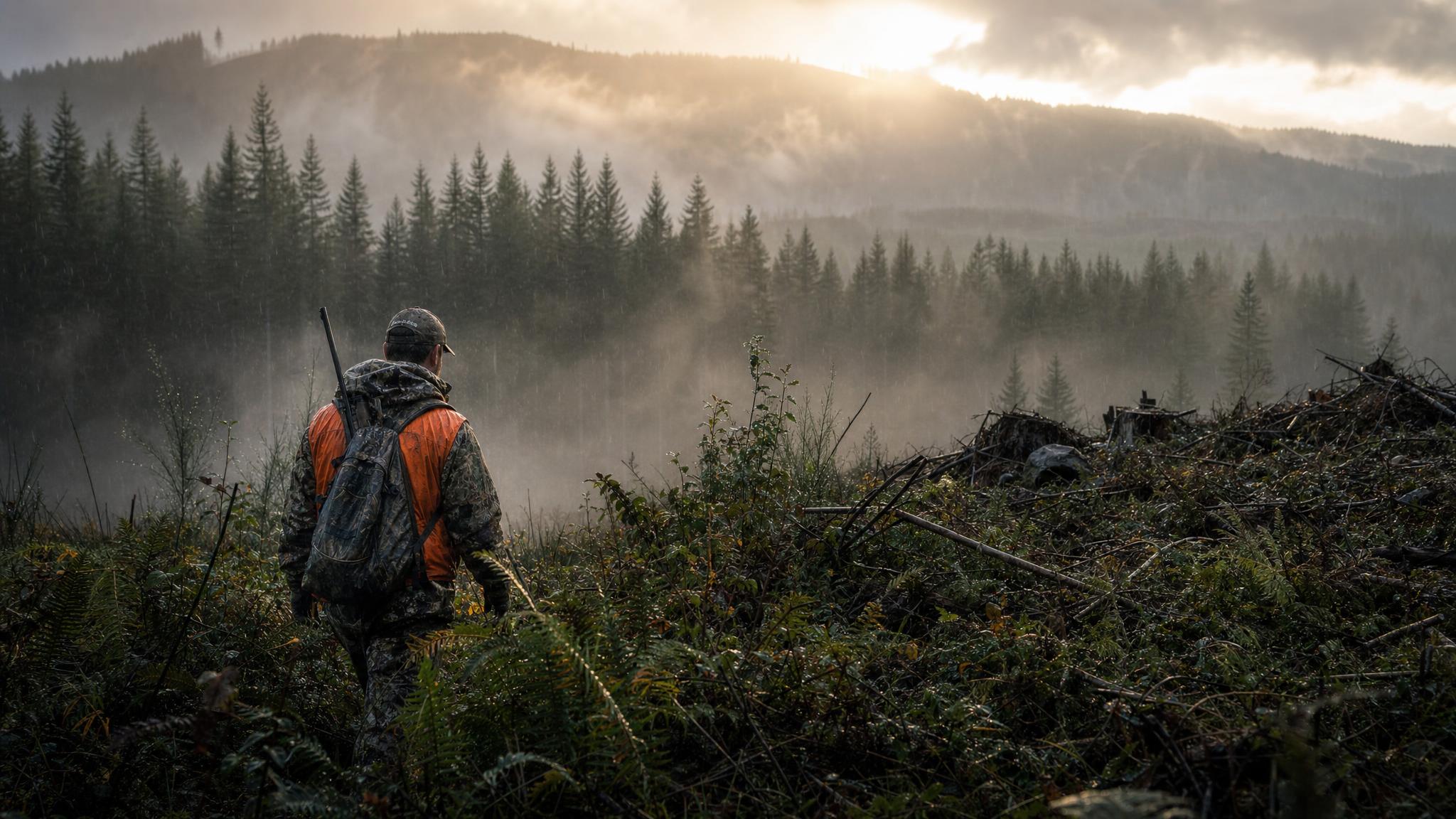
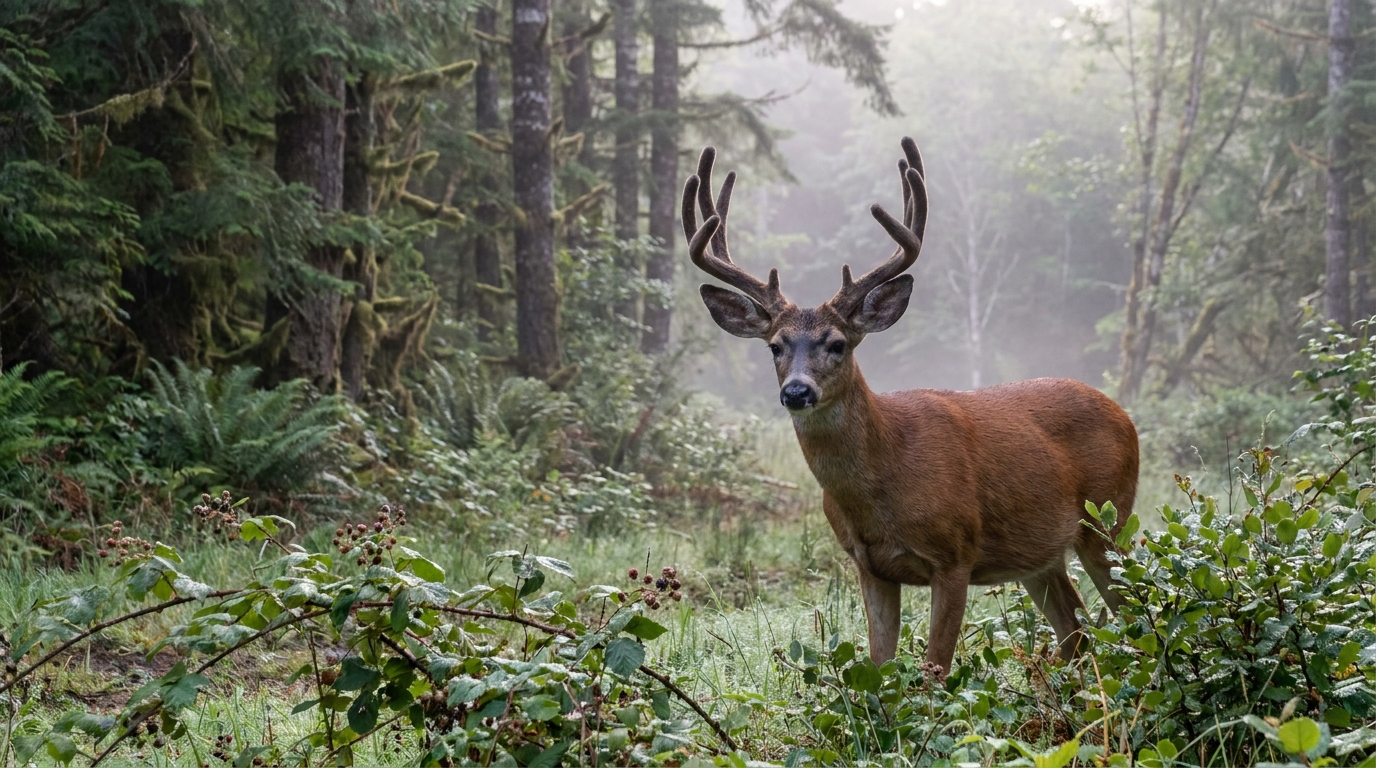
The Tillamook Unit covers roughly 1.1 million acres of Tillamook State Forest, Coast Range BLM, and scattered private timber holdings from the base of the Coast Range west to salt air. It's wet, vertical, and demanding country. It's also full of Columbia blacktail deer that have never seen an orange vest.
Why the Tillamook Unit Is Underrated
The Tillamook gets bypassed for three reasons: access confusion, terrain intimidation, and the persistent myth that the clearcut-and-second-growth country west of the Cascades can't produce trophy blacktails. All three are beatable.
Access points exist throughout Tillamook State Forest on a network of well-maintained gravel logging roads. Most roads are open to licensed motorized access during the August archery season. The forest's interactive road map at oregonforests.org is a critical planning tool — download it before you go, because cell service in most of the unit is non-existent.
The terrain is demanding but readable. The key is understanding how blacktails use coastal clearcuts and second-growth timber differently than whitetails or mule deer use their respective country.
How Blacktails Move in Clearcut-and-Timber Country
Columbia blacktail bucks in the Tillamook Unit pattern predictably through August, at least until hunting pressure enters the equation. They feed in clearcuts — specifically, in the browse-heavy margins where 3- to 12-year-old regeneration meets older timber — during low-light periods. They bed in the dense second-growth timber during daylight, often within 50 to 150 yards of the feeding area.
The sweet spot for archery hunters is fresh clear-cuts aged 3 to 8 years. These cuts are jungle-thick with blackberry, bracken fern, red alder, and young Douglas fir — exactly the browse menu blacktail bucks prefer in summer. Find a cut in this age class, find water nearby (a seep, a small creek, or even a perennial wet spot), and you've likely found deer.
Older clearcuts (10+ years) are transitioning to second-growth timber and lose their value quickly. New cuts (0-2 years) lack adequate browse and typically hold does with fawns, not mature bucks.
Scouting the Tillamook Unit Before August
July is the window. The coastal Coast Range is hot and dry enough to make scouting productive, and bucks are still in full velvet — easy to pattern before they harden up and shift behaviors heading into early September.
- OnX Hunt: Layer the Oregon blacktail zone boundaries over satellite imagery and look for the mosaic of clearcut ages that concentrate deer. Color variations on satellite imagery tell you cut age at a glance — the lighter, brushy patches are your targets.
- Google Earth Pro: Use the historical imagery timeline to estimate clearcut age. A cut that appeared bare in 2016-2018 satellite imagery and shows heavy brush in current imagery is in the ideal 8-10 year age class.
- Boot Scouting: There is no substitute. Drive the forest roads in the early morning and glass clearcut edges. In July, bucks in full velvet feed well into mid-morning, and spotting a mature 3x3 or 3x4 blacktail in July sun on a Coast Range hillside is one of the genuinely spectacular things Oregon deer hunting offers.
- Trail Cameras: Run cameras on field-edge trails, especially those connecting timber bedding areas to clearcut feeding zones. Focus on transition zones with active deer sign — fresh tracks, rubs from the prior fall, scrape locations.
Stand Placement in Thick Coastal Timber
Ground blinds outperform treestands in a lot of Tillamook Unit country simply because suitable trees are often absent at optimal locations. The second-growth alder and young Doug fir that blacktails favor don't present great hang-on treestand options. When a suitable treestand tree exists — typically a legacy large-diameter Doug fir or cedar at a clearcut edge — hunt it. But don't let poor treestand options push you away from a location that's otherwise perfect.
Ground blind placement: set up 20 to 30 yards inside the timber, facing the clearcut edge. Get in before light. Blacktail bucks in August feed at first light and are often back in the timber by 8:00 AM. Evening hunts are more consistent on sunny days — deer emerge after the heat breaks, often 60 to 90 minutes before last light.
Scent control in the wet Coast Range environment is extremely important. Moisture carries human odor aggressively, and the prevailing onshore wind in Tillamook County can swirl and switch in ways that punish careless hunters. Run activated carbon or ozone-treated clothing, hunt with the wind, and don't convince yourself the morning thermals are reliable in coastal terrain — they aren't.
Archery Regulations for the Tillamook Unit
The Tillamook Unit falls under the Western Oregon archery deer season, which typically opens on the last Saturday of August and runs for approximately five weeks. Check ODFW's current regulation booklet for exact dates — they can shift year to year.
Legal buck definition in most of the Western Oregon archery unit requires a forked antler (two points minimum) on at least one side. Fork-horned yearlings are legal, but most serious bowhunters are chasing 3-point or better coastal blacktails. The Tillamook Unit carries a healthy population of mature bucks in the 100-120 inch Boone and Crockett class — exceptional deer for coastal Oregon.
A Columbia River Gorge Unit deer tag does not cover Tillamook. You need a Western Oregon deer tag. Apply during the ODFW draw if you want a rifle tag; Western Oregon archery tags are available over the counter at sporting goods stores and online through ODFW's licensing system.
Gear Notes for Wet-Coast Bowhunting
August in the Tillamook Unit is warm and often dry compared to the rest of the year, but come prepared for rain. Evening coastal fog and occasional early-season rain events are par for the course. A lightweight rain shell packed into your daypack has saved more archery seasons than any broadhead selection argument ever will.
Wear gaiters. The brush in 5-to-8-year clearcuts will soak you from the knees down within 50 yards of stepping off a road. Wet feet kill hunts.
The Tillamook Unit rewards hunters who invest in pre-season legwork. Show up with a pinned location, a wind-conscious stand setup, and a solid shot sequence, and this overlooked piece of Oregon coast country will deliver a blacktail you'll never forget.