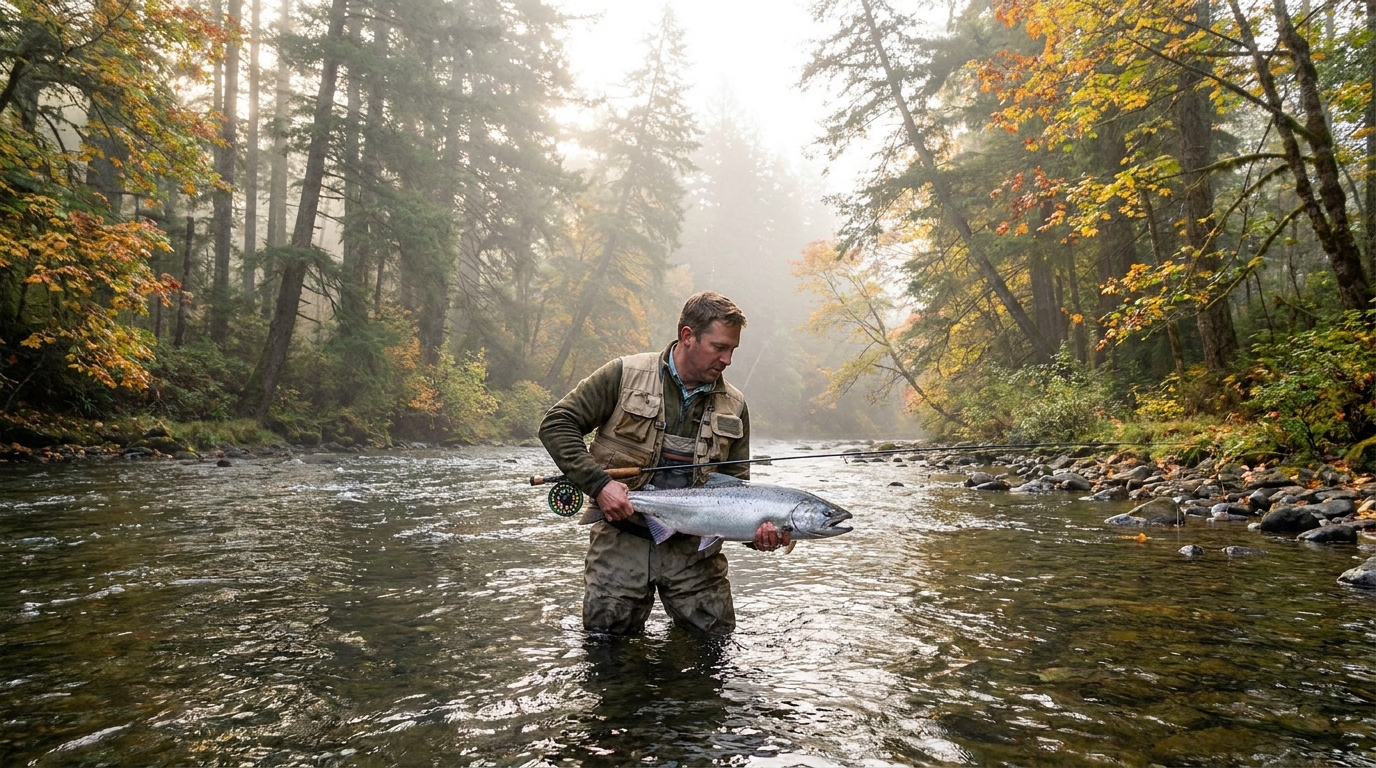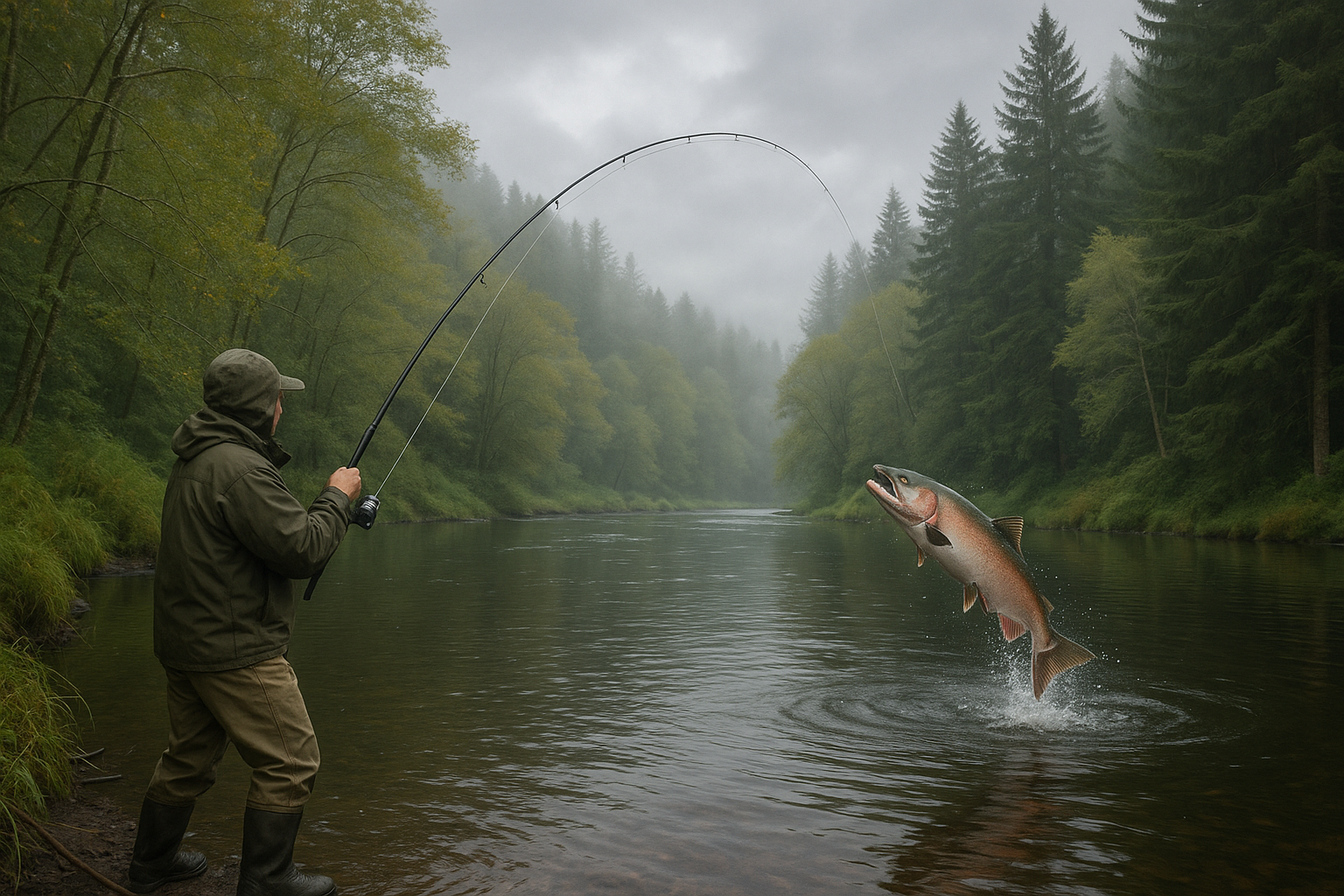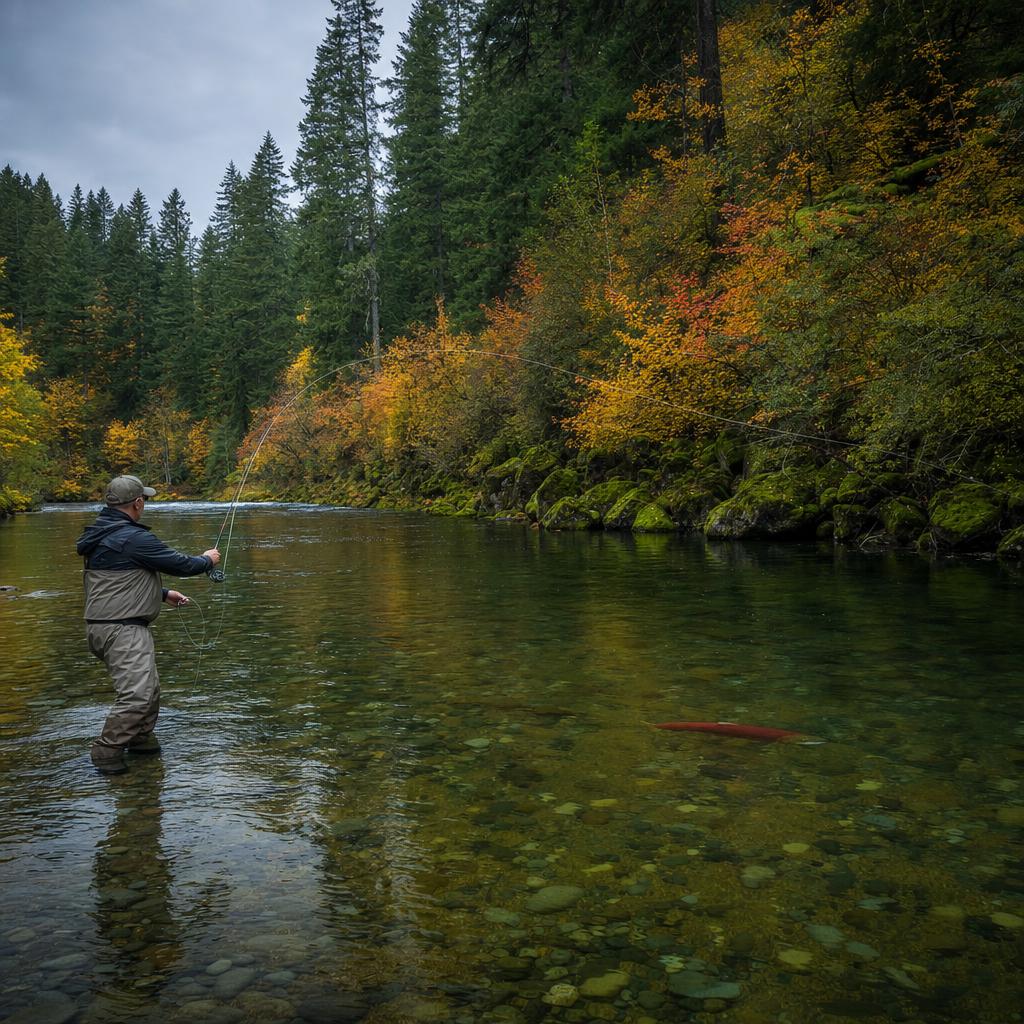
The Sandy River is Portland's backyard salmon fishery, and every September it delivers one of the most accessible fall Chinook runs on the Oregon coast. Less than an hour from downtown Portland, the Sandy offers bank anglers a legitimate shot at trophy bright fish — chrome kings pushing 20 to 40 pounds — without a boat, a guide, or a long drive into the Cascades. If you've never fished the Sandy in fall, this year is your year.
Understanding the Sandy River Fall Chinook Run
Sandy River fall Chinook are primarily hatchery fish returning to the Bonneville Hatchery on the lower river and to the Sandy Hatchery above Oxbow Park. The run typically builds through late August, peaks in September and early October, and tapers off by November. Fish enter the river at the Columbia confluence near Troutdale and push upstream steadily, so the timing of your bite depends on which section of river you're fishing.
The lower Sandy — from the mouth up to Revenue Bridge — sees fish earliest. Mid-Sandy from Revenue Bridge to Oxbow Park catches fish through the heart of September. Upper Sandy runs from Oxbow to the hatchery and holds fish well into October. Follow the run upstream as the season progresses for consistent action.
Best Bank Access Points
Oxbow Regional Park
Oxbow is the crown jewel of Sandy River bank fishing. The park sits along a sweeping bend of the river and provides paved parking, restrooms, and easy trail access to long stretches of productive water. The inside bends and tailouts below the main channel hold staging fish that rest before pushing upstream. Arrive early — Oxbow gets crowded on weekends, and the best holes fill before 7 a.m.
Revenue Bridge
Revenue Bridge on SE Revenue Road near Gresham is a local favorite. The pool below the bridge concentrates fish during mid-river pushes. Park in the pullout on the south side and work both banks. The riffle above the bridge also produces fish willing to chase a spinner through moving water.
Dodge Park
Located in the town of Sandy on Ten Eyck Road, Dodge Park offers walk-in access to a deep mid-river pool that holds fish from early September through October. The park has a boat ramp but bank fishing is productive along the tree-lined far bank accessible via footbridge. This hole produces best during low-light conditions at dawn.
Lewis and Clark State Recreation Area
At the lower end of the run, this park near Troutdale provides access to water where fresh-run fish first enter from the Columbia. Early September fish here are the brightest and strongest — true chrome Chinook that haven't been in fresh water long. The mouth area can be crowded, but walking upstream from the park finds less pressure.
Proven Techniques for Sandy River Chinook
Back-Bouncing Roe
Nothing outproduces cured salmon roe on the Sandy, particularly in the deeper holes and pools where fish stage and rest. Rig a 3/0 to 5/0 egg hook on 20-pound fluorocarbon leader with enough lead to hold bottom. Let the weight bounce downstream naturally along the river floor, keeping tension on the line. When a Chinook picks up the egg cluster, you'll feel the line go heavy — resist the urge to set hard; let the fish turn and load the rod before sweeping upstream.
Cure your own eggs using borax or Fire Cure in chartreuse or natural pink. Sandy River fish respond particularly well to milky, juice-releasing eggs. Tie your roe in small clusters on spawn sacks using netting cut-offs for cleaner presentation in clear water.
Side-Drifting Plugs
Kwikfish and Flatfish in K14 and K15 sizes produce well when wrapped with sardine fillet. Anchor above a hole and let the plug work downstream, diving and wobbling at the depth where fish hold. Chartreuse, orange, and Fire Tiger are proven colors on the Sandy. If you're fishing from the bank, set up at a point where you can control drift angle and keep the plug running through the productive zone for extended periods.
Spinners and Spoons
In September when flows are moderate and visibility is good, larger spinners in No. 5 and No. 6 Blue Fox or Mepps sizes work well in the riffles and tailouts above pools. Silver and chartreuse blade combinations excite fresh fish. Cast across and slightly upstream, retrieve at a pace that keeps the blade spinning without lifting out of the productive column. This technique covers water quickly and locates active fish.
Tackle and Gear Setup
- Rod: 9 to 10-foot medium-heavy action rated 15–30 lb, cork handle for sensitivity
- Reel: Level-wind baitcaster or large spinning reel with 200+ yards of capacity
- Main line: 30-pound monofilament or 40-pound braid
- Leader: 18–24 inches of 20-pound Maxima Ultragreen or Seaguar fluorocarbon
- Weights: 2 to 6 oz lead slinky weights or pencil lead — enough to hold bottom at current depth
- Hooks: Gamakatsu 3/0–5/0 octopus hooks in red or pink for egg fishing
Regulations You Need to Know
Check current ODFW regulations before every trip — the Sandy River can have in-season regulation changes based on returning fish counts. As of the 2026 season, the Sandy River is open to salmon fishing from the mouth to Marmot Dam site, with specific retention rules for hatchery-marked fish. Adipose fin-clipped fish may be retained; wild fish must be released unharmed. Check the daily bag limit (typically 2 adult Chinook per day) and be aware of any emergency closures posted on the ODFW website.
A current Oregon angling license with a salmon and steelhead tag is required. Licenses are available at most Gresham and Sandy sporting goods stores or online through My ODFW.
Timing Your Trip Right
The best Sandy River Chinook fishing in September happens on rising or stable tides pushed from the Columbia, and the two to three days following a light rain that freshens the river. Overcast skies and slightly elevated flows concentrate fish in predictable lies. Dawn and the first two hours of morning light are consistently the most productive period — fish move and feed actively in low light before settling into resting lies by mid-morning.
Water temperature matters too. Sandy River Chinook move and stack most aggressively when water temps sit between 48°F and 58°F. A remote temperature sensor or early-morning reading from your wading thermometer helps time your effort. When temps climb above 60°F during late summer low flows, fish stress quickly — check ODFW's voluntary angling closure recommendations and consider targeting different hours or locations.
Make the Most of a Classic PNW Fishery
The Sandy River fall Chinook fishery is everything that's great about Pacific Northwest salmon fishing: wild, accessible, productive, and set against backdrop of towering Douglas firs and basalt canyon walls. You don't need a drift boat or a guided trip — a good pair of wading boots, a quality rod, and a morning's patience will get you into fish. Pack lunch, arrive at first light, and work the water methodically. The Sandy rewards those who show up and put in the time.