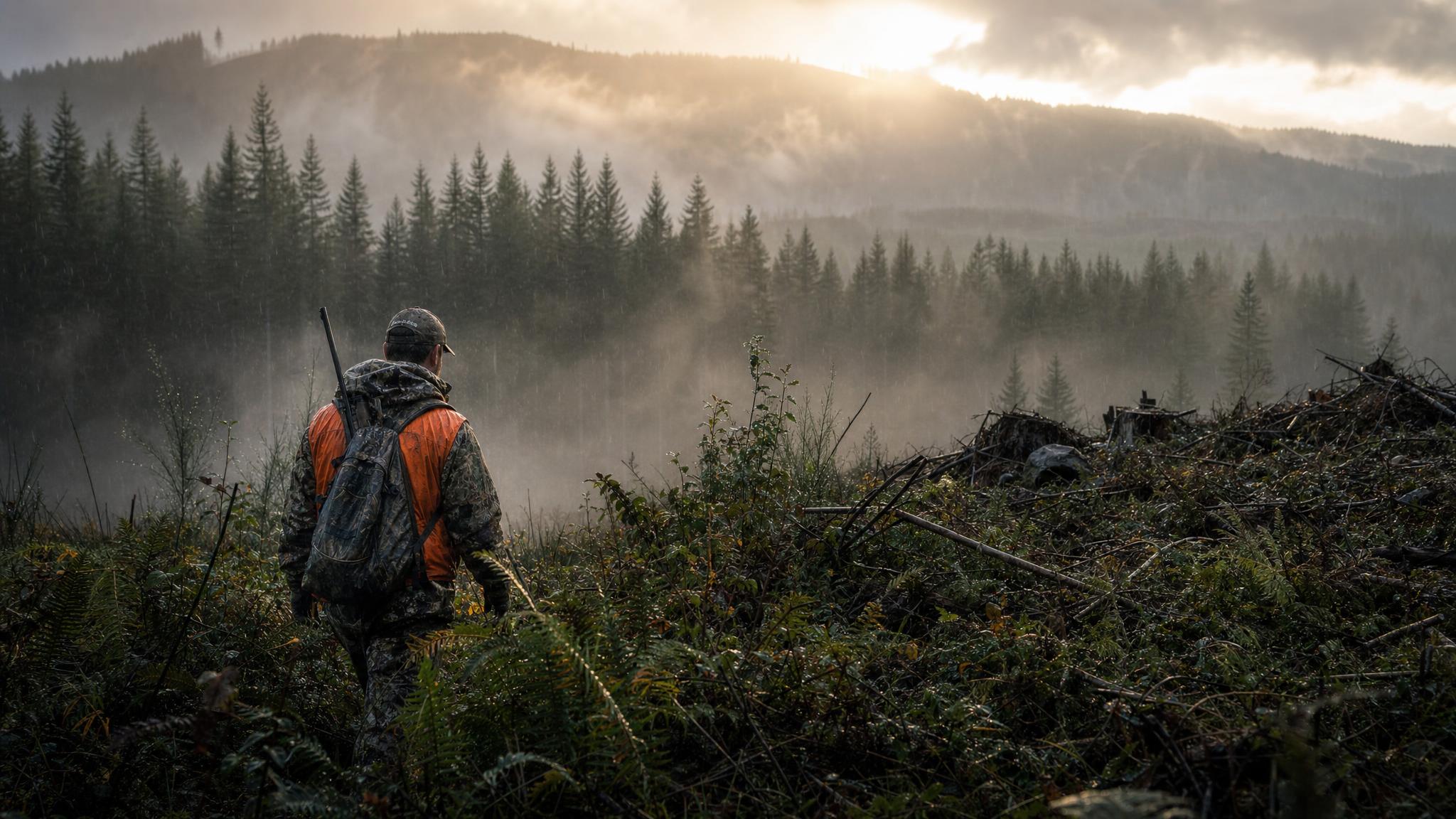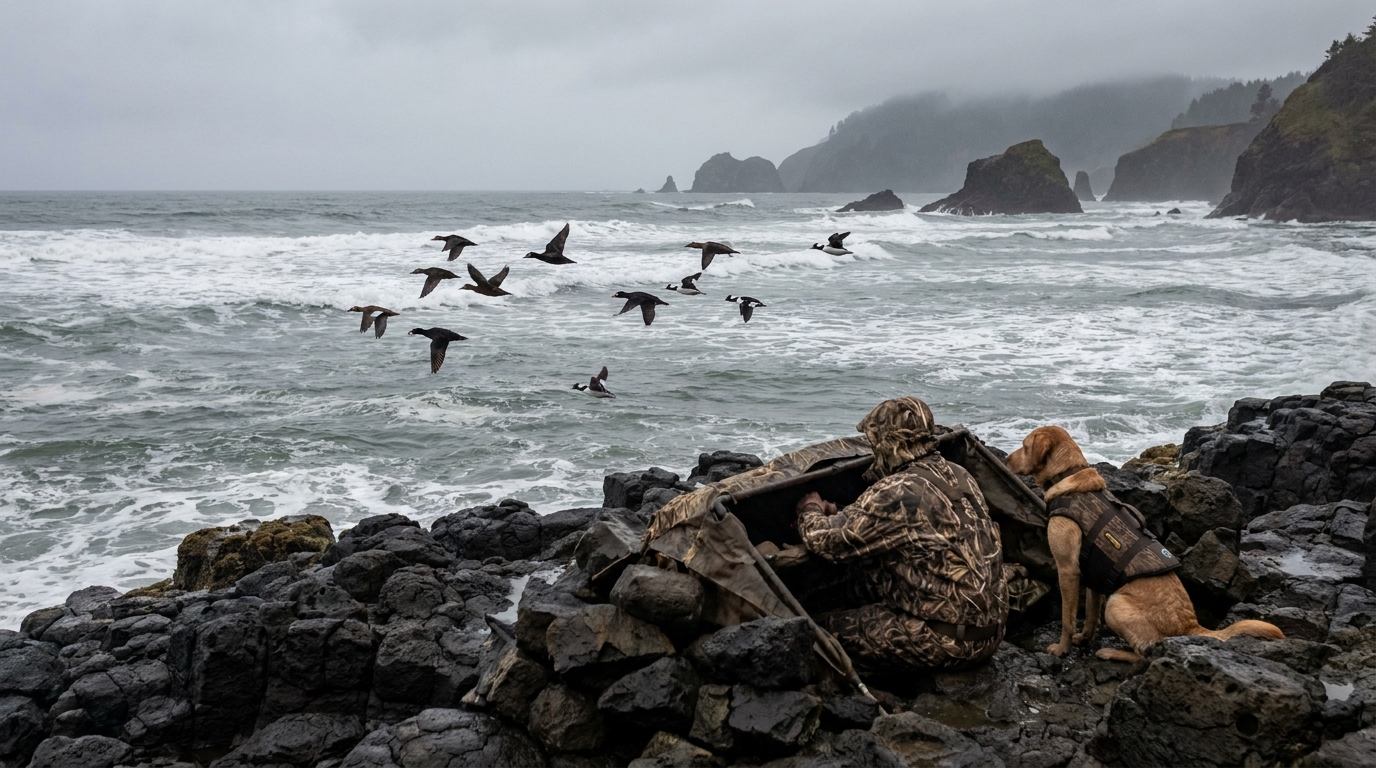
There's a specific kind of hunter who wakes before 4 AM, drives to the Oregon coast in a cold November rain, sets up a layout blind on a wave-slicked rocky point, and considers this an excellent way to spend a Tuesday. Sea duck hunting is not for everyone — it's cold, physically demanding, and the birds are harder to decoy than any mallard you've ever chased. But if you've spent enough time behind a call watching Canadas work a field and started feeling like something was missing, the salt spray and crashing surf of an Oregon sea duck hunt might be exactly what you've been looking for.
Oregon's Sea Duck Species
The three species you'll encounter most consistently on the Oregon coast are surf scoters, white-winged scoters, and buffleheads. Black scoters are present but less common. Harlequin ducks appear in huntable numbers in a few specific locations, particularly around rocky jetties and offshore structure in Clatsop and Lincoln Counties — but check current regulations carefully, as harlequin seasons can be restricted or closed depending on population monitoring.
- Surf Scoter: The most abundant sea duck on the Oregon coast. Big, heavy birds that decoy reasonably well with the right spread. The white patches on the head make them unmistakable in flight.
- White-Winged Scoter: Slightly larger than surf scoters, with a distinctive white secondary patch visible in flight. Often mixed in with surf scoter flocks along open beach and bay mouths.
- Bufflehead: Small, fast, and deceptively difficult to hit. Buffleheads work the quieter bay water and calmer stretches of coast. Their small size and erratic flight make them a genuine shooting challenge.
- Harlequin Duck: Arguably Oregon's most beautiful waterfowl. Harlequins haunt jetties and rocky shoreline, diving in churning surf that would intimidate a lab. When seasons are open, they're a bucket-list bird for serious coastal waterfowlers.
Where to Hunt
Sea duck hunting on the Oregon coast is largely a public land opportunity, which is one of its underappreciated advantages. The beach below the mean high tide line is public in Oregon, and ODFW manages waterfowl hunting along most of the coast. Key areas include:
- Columbia River Mouth and Clatsop Spit: The mouth of the Columbia sees enormous concentrations of scoters during the fall and winter migration. Fort Stevens State Park provides access, and the jetties at the river mouth hold birds consistently from October through January.
- Tillamook Bay entrance and bay mouth: The rock jetties at Tillamook Bay are classic bufflehead and scoter habitat. Birds work the jetty rocks and the bay mouth on tidal current changes.
- Yaquina Bay and Newport jetties: The south jetty at Newport is one of the most accessible sea duck locations in Oregon. Scoters and buffleheads frequent the jetty rocks and the open ocean immediately offshore.
- Coos Bay entrance: The north and south jetties at Coos Bay offer productive sea duck shooting with good vehicle access.
Decoys, Setup, and Calling
Sea duck decoys are heavier, more durable versions of standard duck decoys — they need to handle ocean swell, wave wash, and a constant pounding from surf and rocks. Foam-filled GHG or Avery sea duck decoys are worth the investment. Rig them with heavy anchor lines (at least 3x the water depth), using 2-ounce or heavier pyramid sinkers in areas with surge. A dozen to 18 scoter decoys and 6 bufflehead decoys covers most setups.
Calling sea ducks is different from calling puddle ducks or even divers. Scoters respond to a low, raspy purr rather than the high-pitched quacks you'd use on mallards. Dedicated scoter calls are available, but many hunters find that birds work naturally to decoys without much calling at all — sea ducks rely heavily on visual cues from feeding flocks. Motion decoys or a jerk line that creates surface ripple can make a significant difference on calm days.
Shotguns and Loads
Scoters are big, dense-feathered birds that absorb punishment. Use a 12-gauge minimum, and load heavy. Non-toxic shot is required for all waterfowl hunting. The standard sea duck load in Oregon is:
- Steel: 3.5-inch BB or 3-inch BB for scoters at medium range. Bismuth or tungsten for tighter choke setups.
- Bismuth: Excellent choice for the rocky environments where full choke setups risk damage from steel. Bismuth is non-toxic, dense, and safe in any choke constriction.
- Choke: Modified or improved-modified for steel. Full or extra-full for bismuth or tungsten at longer ranges.
Sea duck shooting is often close — birds working jetty rocks and decoys can come in at 15 yards — but decoying shots mix with pass shooting opportunities at 40+ yards. Being comfortable at a range of distances and having the discipline to let marginal shots go is part of the game.
Safety and Logistics
The Oregon coast is dangerous terrain for hunters. Never turn your back on the surf. Rogue waves, surge on jetty rocks, and rapidly changing weather are genuine hazards. Always hunt with a partner when working jetties or rocky shoreline. Wear a PFD if you're near the water's edge, and dress for immersion even if you're not in a boat. Neoprene waders, a quality rain shell, and hand warmers are not optional equipment — they're survival gear on a November Oregon coast morning.
Why Bother?
Sea duck hunting is hard. The birds are challenging, the conditions are brutal, and the eating is an acquired taste. But there's something deeply satisfying about working birds in some of Oregon's most dramatic coastal scenery — the crash of surf, the cry of gulls, a flock of scoters materializing out of the sea fog and dropping to your blocks. It's a different kind of hunt, and once it gets in your blood, the mallard blind starts feeling a little ordinary.