Ask most Oregon hunters about small game and they'll mention pheasant, quail, or maybe chukar. Bring up snowshoe hares and you'll often get a blank stare. That's a shame, because Lepus americanus — the snowshoe hare — is one of the most abundant, widely distributed, and underutilized game animals in the Pacific Northwest. Oregon's high-elevation forests hold healthy populations that see almost zero hunting pressure, offer year-round seasons in most of the state, and provide some of the most exciting small game action available outside of bird season.
Know the Animal
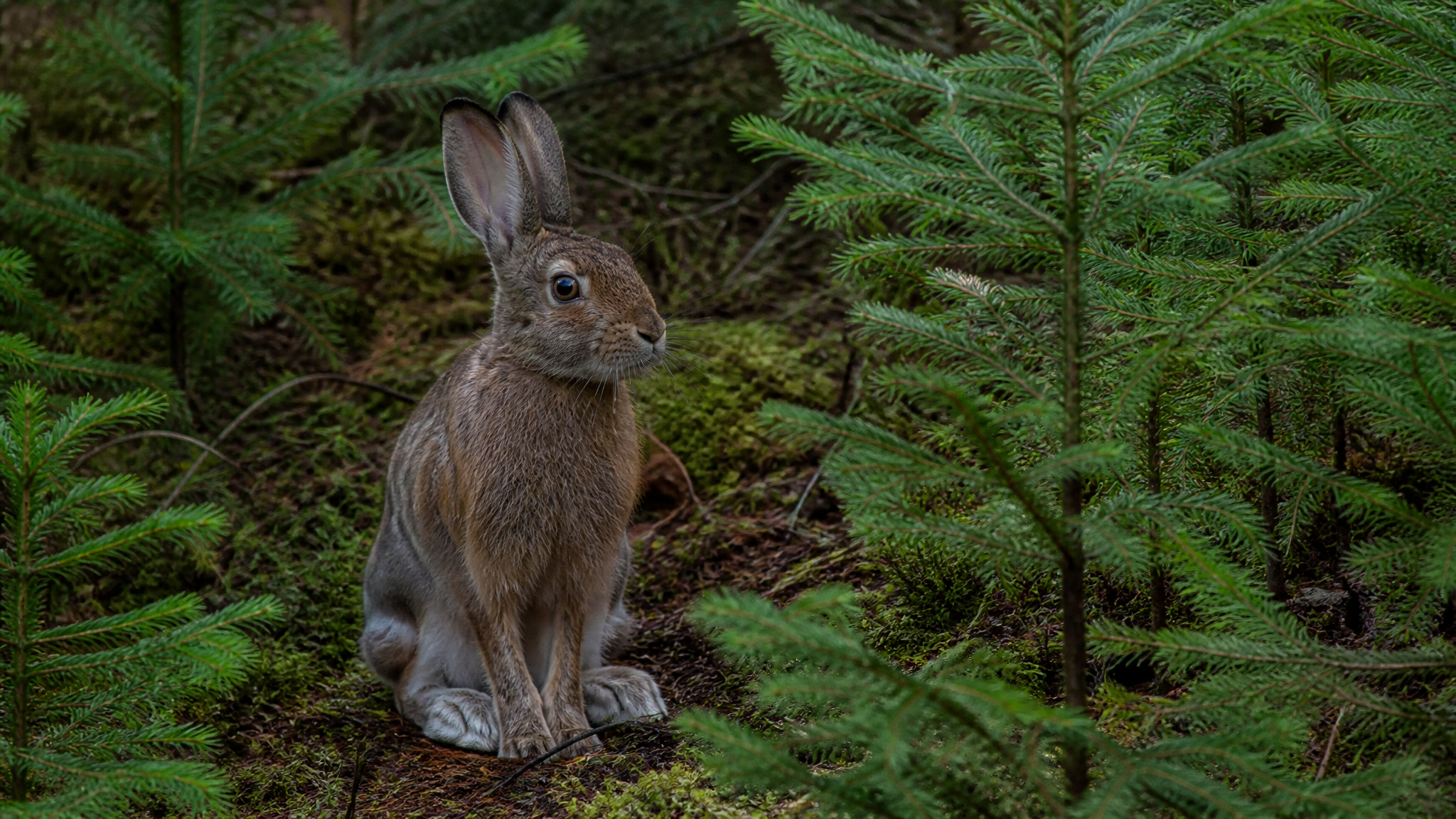
Snowshoe hares are substantially larger than cottontails — a big boomer can tip 4 pounds — with oversized hind feet that act as natural snowshoes and allow them to travel efficiently through deep powder that would bog down most predators. Their most famous trait is their seasonal color change: brown in summer and fall, transitioning to white by December, then back to brown in spring. This molt is triggered by photoperiod, not temperature, which means you'll sometimes find chalk-white hares sitting in a snowless October forest — conspicuous and easy to spot for the hunter who's looking.
Populations are famously cyclical, peaking roughly every 8–11 years before crashing due to food depletion and predator pressure. Oregon's Cascade and Blue Mountain populations are generally less dramatic in their cycles than the famous Yukon booms and busts, but you'll notice significant year-to-year variation in numbers depending on where you hunt and how recent the last peak was. When hares are high, you can jump a dozen animals in a morning. When they're low, you'll work for every one.
Where to Find Them in Oregon
Snowshoe hares in Oregon are a high-elevation animal. They inhabit dense coniferous forests above roughly 3,000 feet in the Cascades and above 4,500 feet in the drier Blue Mountains. The key is cover — dense, tangled vegetation that provides both food and protection from aerial predators. Look for:
- Young conifer regeneration in clearcuts: 5- to 15-year-old clearcuts growing back into dense stands of young Douglas fir, true fir, and hemlock create ideal hare habitat. The Mount Hood, Willamette, and Deschutes national forests all contain vast amounts of this type of habitat, much of it on public land with no special permit required.
- Riparian thickets at elevation: Willow, alder, and young aspen along stream courses above 3,500 feet in the Cascades hold hares year-round. They feed heavily on the bark and twigs of these species in winter.
- Spruce-fir transition zones: In the Blue Mountains and Wallowas, the zone where Engelmann spruce and subalpine fir take over from ponderosa pine is prime hare country. The Umatilla and Wallowa-Whitman national forests hold excellent populations in good years.
- Lodgepole pine forests: Dense lodgepole stands, particularly around Wickiup and Davis areas in the Deschutes National Forest, are classic hare habitat. The thick understory of these stands offers the security cover hares need to survive in the presence of bobcat, lynx (rare in Oregon), great horned owls, and goshawks.
Hunting Methods
Jump Shooting on Foot
The most accessible method — push through dense cover and take hares as they flush. Move slowly, stop frequently, and change direction unpredictably. Hares often sit tight and rely on camouflage rather than running immediately. A sudden stop often triggers a flush from an animal that would have otherwise stayed hidden indefinitely. Work the edges of brush piles, blowdowns, and the thick vegetation at the margins of clearcuts. A .22 LR rifle or a 20-gauge shotgun loaded with #4 or #6 shot are the two standard choices — the rifle rewards precise shots in open timber, while the shotgun forgives the fast, erratic flush through brush.
Hunting with Dogs
Beagles are the traditional partner for snowshoe hares, and for good reason. A good beagle will push a jumped hare in wide circles, bringing it back past the waiting hunter — the same technique used for cottontails, but adapted to the larger loop patterns and faster pace of snowshoe hares in heavy timber. The combination of a solid beagle pack, dense Cascade forest, and a few inches of snow is one of the finest small game experiences the Pacific Northwest offers. Dogs need to be in good physical condition for high-elevation terrain — the clearcuts and fir thickets where hares live are steep and demanding.
Snow Hunting
After the first significant snowfall, hare hunting enters its best phase. Fresh snow reveals tracks, and hare trails become obvious highways through the cover. An experienced hunter can read a set of tracks to determine direction of travel, approximate age, and likely destination. Follow a fresh track into a brushy draw and you have better than even odds of finding the animal at the end of it. White hares on white snow are still surprisingly hard to spot — look for the dark eye and the ear tips, which show the black tips even in winter plumage.
Regulations Overview
In Oregon, snowshoe hares are classified as game mammals. The general season runs from September 1 through March 31 statewide, with a daily bag limit of 5 and a possession limit of 10. No special tags or drawings are required — a standard Oregon hunting license covers hares. Always verify current ODFW regulations before heading out, as specific rules can change between seasons.
On the Table
Snowshoe hare is outstanding table fare, particularly animals taken in fall before the full transition to winter pelage. The meat is lean and mild — closer to chicken than the strong flavor some people associate with jackrabbit. Young animals can be pan-fried. Mature animals are best braised slowly in a cast-iron Dutch oven with onions, juniper berries, and a cup of whatever you're drinking that evening. Pressure cooker method works well for late-season hares in cold country, reducing what might otherwise be tough, well-muscled meat to something fork-tender in under an hour.
If you've been skipping snowshoe hares on your way to the elk unit or the duck blind, it's time to reconsider. These animals offer serious hunting in spectacular high-country terrain, require zero special permits, and deliver excellent eating. Pack a .22, wear waterproof boots, and push into the clearcut edges above 4,000 feet. You'll be surprised what you've been walking past.