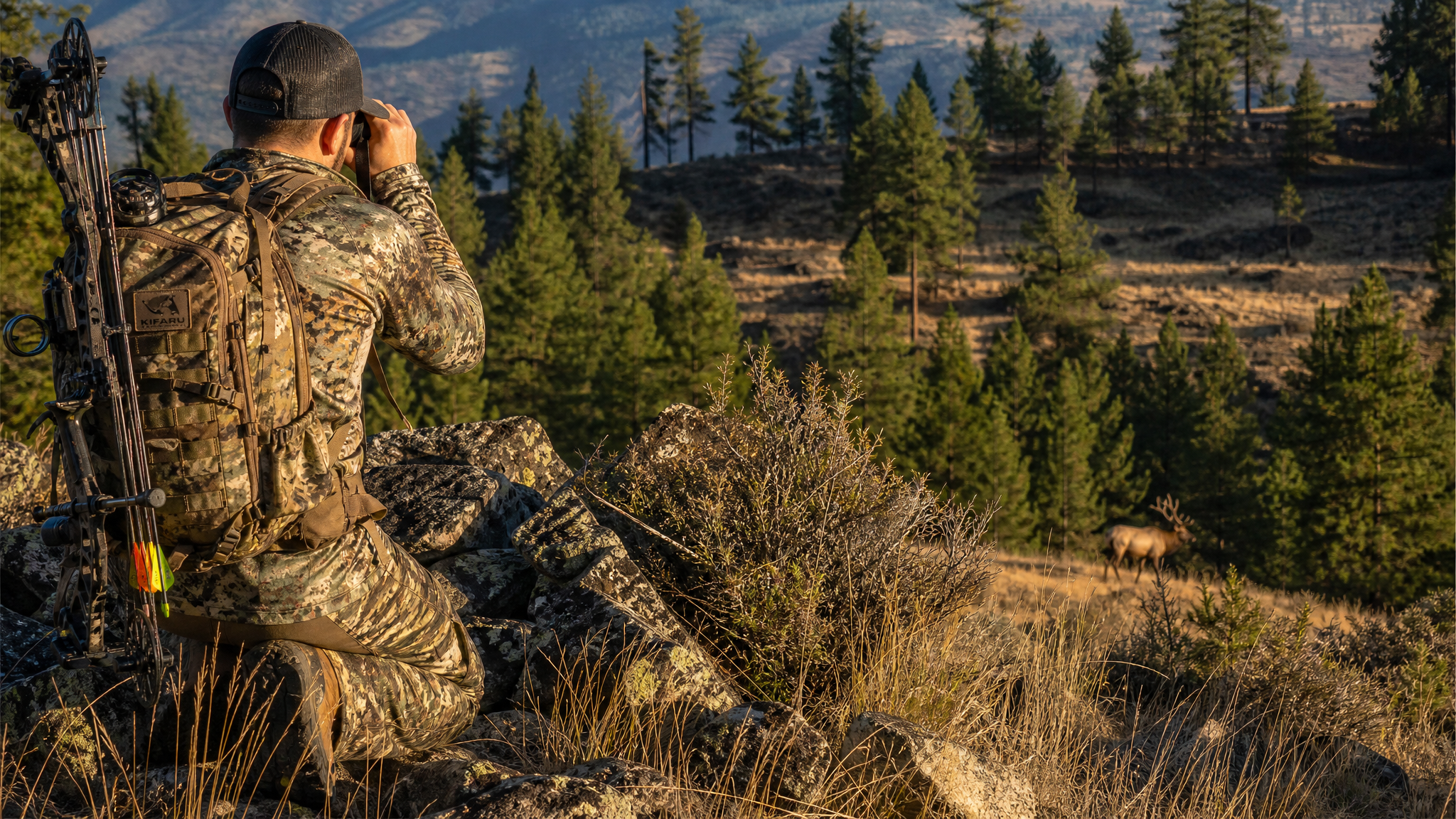
There is a particular kind of quiet that settles in when you're camped alone at 5,800 feet in Oregon's Blue Mountains, miles from a trailhead, with nothing but a bivy, a bow, and whatever you're able to kill to eat. It's not for everyone. But if you're drawn to the self-reliant end of elk hunting — where you carry every ounce in and every pound of meat out — solo backcountry archery elk is the most demanding and rewarding game Oregon offers.
This guide is about the logistics: how to set up a camp that keeps you functional, healthy, and ready to hunt hard for five to seven days without help.
Shelter: Light, Weather-Proof, and Wind-Stable
Don't overthink shelter. In Oregon's high country in late August and early September, you need something that handles afternoon thunderstorms, unexpected cold snaps, and morning condensation. You don't need a wall tent — that's for base camps with stock animals and partners to carry it.
The two best solo options:
- Single-wall silnylon or DCF tarp with bivy: Ultralight, versatile, pitchable in a wide range of terrain. The combination of a 7x9 ft tarp and a waterproof bivy covers most conditions and weighs under 2 lbs. Requires skill with pitch angles and guylines.
- Mid-style shelter (e.g., Seek Outside Revolution or similar): Slightly heavier but much more livable in sustained rain or wind. Can heat with a small titanium stove insert for cold nights. Worth considering for hunts over a week or in high-elevation units like Chesnimnus or Minam.
Site selection matters more than shelter brand. Find a flat, drained site with natural wind protection. Never camp in a drainage bottom — cold air pools there, and you'll wake up in 28°F fog even on August nights when the ridge was 50°F.
Food: High Calorie, Low Weight, Easy Prep
You will burn 4,000–6,000 calories per day during a hard solo elk hunt. Most hunters underplan food and start rationing by day four. Don't. Pack 3,000–3,500 calories per day minimum, and skew toward fat and protein, not carbohydrates alone.
Reliable Solo Elk Hunt Food System
- Breakfast: Instant oatmeal with whole milk powder and a packet of almond butter (500–600 cal). Takes 3 minutes. Eat it while glass-panning at first light.
- Midday (field snacks): 2–3 oz of hard salami, 1 oz nuts, a RX Bar or similar (600–700 cal total). No cooking, no stopping.
- Dinner: A Mountain House Pro-Pak or Backpacker's Pantry entree plus instant mashed potatoes with olive oil and cheese powder (800–1,000 cal). Hot food matters mentally at the end of a long day.
- Extras: Instant coffee, electrolyte tablets (Nuun or LMNT), a few packs of hot cocoa for cold mornings.
Total pack weight for 7 days of food: approximately 14–16 lbs. Use an Ursack or hang your food — black bears in Oregon's elk country are numerous and bold by late summer.
Water: Filter Religiously, Carry Enough
Oregon's elk country generally has reliable water in August from snowmelt springs and creek drainages, but late-summer dry years can surprise you. Always know where your next water source is before you move camp. Carry a Sawyer Squeeze or BeFree filter for unlimited on-demand water, and a 2-liter capacity minimum. Pack iodine tablets as backup — if you're glassing all day from a ridge with no nearby water, you need to hydrate before you get there.
Meat Care: The Critical Variable
Killing a bull solo is only half the problem. Getting the meat out in edible condition is the other half — and in late August at lower elevations, heat is your enemy.
Field Dressing and Quartering
Move fast after the shot. A mature bull needs to be gutted or quartered within 60–90 minutes in temperatures above 50°F. Practice your quartering sequence before the season — the Hide-On Quarter method (removing the four quarters, backstraps, neck meat, tenderloins, and skull) works well solo and minimizes contact with the gut cavity.
Essentials:
- A quality fixed blade with a 4–5 inch blade (e.g., Benchmade Steep Country, Stone Glacier Skinner)
- A folding bone saw for the pelvis and sternum
- 20+ heavyweight game bags (Stone Glacier or KUIU game bags, not cheap mesh)
- Nitrile gloves (a whole box)
- Paracord for hanging meat
Cooling the Meat
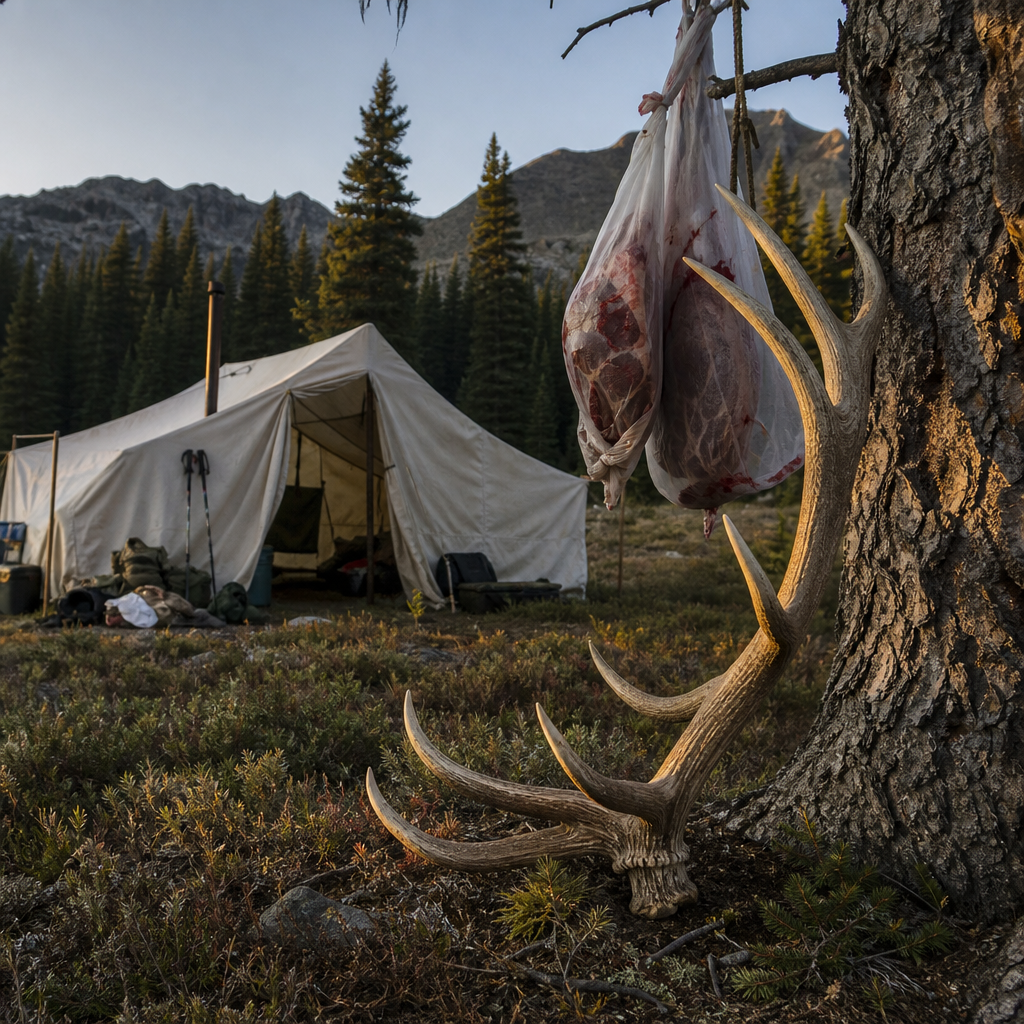
Hang your quarters in the shade, off the ground, in breathable game bags. If night temperatures drop below 40°F, you have a window — the meat will cool overnight and you can pack out in the morning cool. If temperatures stay above 50°F at night, you may need to prioritize packing out immediately rather than waiting. Know your window before you pull the trigger.
At higher elevation units (Minam, Eagle Cap, Wallowas), August nights reliably cool to the mid-30s. At lower desert-edge units (Silvies, Ochoco), a warm front can keep night lows in the 50s. Check long-range forecasts before your hunt and factor this into your go/no-go decision on shot selection.
The Pack System
For solo meat packing, frame matters. A quality load-hauling pack — KUIU Pro 7200, Mystery Ranch Metcalf, or Seek Outside Divide — is not optional. You'll likely need 2–4 trips to pack out a quartered bull depending on distance and terrain. Plan for it. Mark your meat tree on your GPS before you leave it, and pack the most temperature-sensitive cuts (backstraps, tenderloins) on your first load out.
The Payoff
Every piece of gear you carry solo is a problem you solve before you leave the trailhead. The planning is part of the hunt. When it all works — when you've called in a bull, made a clean shot, broken him down alone in the dark, and hauled 200 lbs of meat back to your truck over two days — it's a hunt you'll reference for the rest of your life.
Oregon's backcountry elk units offer genuine wilderness hunting. The elk are there. The question is whether your camp is ready to capitalize.